
Business
Right of Response to Caritas Sri Lanka

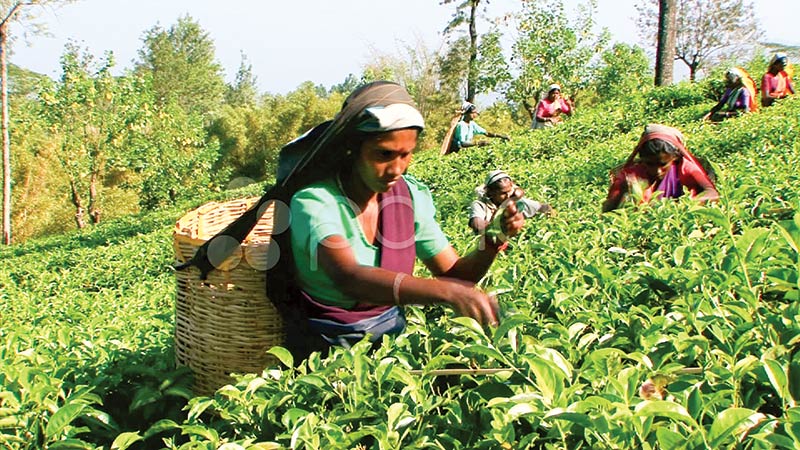
We refer to the published studies by Caritas Sri Lanka titled Research Study on the Culture and Identity of the Plantation Community in Sri Lanka and Right to Education of the Children of the Plantation Community.
At the outset, we express our appreciation to the Catholic Bishops Conference and Caritas Sri Lanka for their interest and recommendations aimed at creating an enabling environment for preserving and promoting the culture and identity of plantation communities. We recognize that the recommendations in these publications encompass a wide range of areas, including inclusive development policies, education and awareness programs, cultural preservation funding, legal protection, economic empowerment, and the promotion of culture-based tourism. While we respect the commitment of Caritas to these communities, we believe the data used in their reports should be revisited to reflect today’s on-the-ground realities. Our goal is to offer updated information so that all stakeholders can align on how best to support plantation communities most effectively today.
In that regard, we note that many of the statistics cited in the report are based on research that dates as far back as 2003/2004, failing to account for the significant progress and developments made in plantation communities since then. As the Planters’ Association of Ceylon, which represents the interests of Regional Plantation Companies (RPCs) in whose estates reside an estimated 42% of Malaiyaha Tamil community, we are compelled to clarify these points and provide a more accurate representation of the current state of these communities. We also acknowledge that further investment and effort is required from all stakeholders, including the Government in order to drive meaningful progress on the several issues. We caution however, that placing the responsibility solely with plantation companies who are only capable of operating within the constraints of employer-employee relationships fails to hold all other stakeholders accountable for their role and capacity to drive broader progress.
Accordingly, we believe It is important at the outset to address the continuous references of this community as Indian-origin Tamils (IOT). While historically, many have referred to this group as Indian-origin Tamils (IOT), today, they are recognized as Sri Lankan citizens with full political and civic rights. As proud Sri Lankans, it’s vital to celebrate the rich diversity within our nation. The Tamil community, with roots in India, is an essential part of our shared heritage. While the term IOT does hold historical and cultural significance, using it exclusively can overshadow the strides this community has made over many generations to achieve these rights, and establish their own identity as Sri Lankans. The term IOT therefore perpetuates an outdated and exclusionary narrative that risks undermining their rightful inclusion within Sri Lankan society. Now commonly referred to as the Malaiyaha community, they are an integral part of the nation’s socio-economic fabric. With a population of approximately 960,000—20% of whom form a vital, actively contributing workforce – which is increasingly transcending the plantation industry.
Education sector challenges
The assertion that education within plantation communities remains chronically underfunded is misleading. With the nationalization of schools, they were incorporated into the mainstream education system. Over time, the education system has undergone significant advancements, supported by consistent government initiatives. This progress underscores the evolution of schooling facilities and the broader education framework, which now aligns with the national mainstream education standards.Since 1977, when the government assumed responsibility for these schools, there has been a steady expansion, and today 863 schools operate within plantation areas.
In parallel, the Regional Plantation Companies (RPCs) with the support of Plantation Human Development Trust (PHDT), have collaborated—often with donor assistance—to establish 1,200 Early Childhood Development Centers (CDCs). These CDCs, staffed by trained professionals, provide not only foundational education for young children but also critical nutritional and developmental support. Through scholarship programs, RPCs have within the means available to them further facilitated opportunities for higher education, with over 100 students from plantation communities entering Government universities each year. With greater support, such positive initiatives could be drastically amplified. While we acknowledge that resource constraints continue to pose challenges, we also wish to give equal and fair emphasis to the tangible gains already achieved. By building on these successes, we aim to ensure that schools serving plantation communities are strengthened, rather than diminished, as Sri Lanka collectively addresses its nationwide education funding needs.
Similarly, health outcomes within RPC-managed plantations have seen vast improvements due to targeted interventions led by RPCs with the support of PHDT. The infant mortality rate, which the publications erroneously state as 60.6%, is now 9.07% under RPC-led estates, aligning closely with national averages. Undernutrition, another cited issue, has also received significant attention, with several targeted programmes having been launched aimed at ensuring comprehensive maternal and child health support to communities within the estates. As a result of these practices, current prevalence of moderate and severe undernutrition stands at 15.57% and 3.9%, respectively, a significant improvement over previous decades.
The studies also portray the housing situation within plantation estates inaccurately. The line rooms, which were historically used for worker accommodation, have been systematically upgraded or replaced under RPC-led initiatives. Over 140,000 housing units have been reroofed, ensuring improved living conditions. In addition, more than 60,000 families now reside in individual/improved housing units with modern facilities. Furthermore, 230,000 individual latrines have been constructed, significantly enhancing sanitation and hygiene within these communities. These ongoing development programs have transformed living conditions, ensuring privacy, sanitation, and dignity for plantation workers and their families. We also note that cultural and identity-related challenges faced by plantation communities are not ignored. RPCs have actively worked to preserve cultural practices while facilitating integration into broader Sri Lankan society. Programs focusing on community engagement, cultural events, and skill development have helped foster a sense of belonging and empowerment. The work carried out by the RPCs with the support of PHDT, trade unions, and government authorities, has been instrumental in driving these advancements. Through this tripartite collaboration, RPCs have achieved measurable progress in improving the quality of life across all facets, including education, healthcare, housing, and economic opportunities.
The Planters’ Association wishes to clarify that the report does not capture the true nature of plantation communities within RPC-managed estates, unfairly painting a negative picture of the entire sector without considering the substantial improvements led by RPCs. This demarcation is necessary to ensure a fair and accurate understanding of the progress made and the ongoing commitment to the welfare of plantation communities.
(The Planters’ Association of Ceylon)

When you think of sharks in Sri Lanka, your mind probably goes to the sleek blacktip reef sharks gliding through the reefs of Pigeon Island. But what most people don’t realise is that Sri Lanka is home to over 100 species of sharks and rays—ranging from reef dwellers and open-ocean giants to mysterious deep-sea, with some juvenile bull sharks being found even in freshwater!. They’re scattered across almost every part of the coastline, from coral reefs and estuaries to muddy lagoons and inland waterways. Yet despite their presence, these fascinating creatures remain deeply misunderstood and largely unprotected in national conservation efforts.
Chances are, if you’ve eaten karawala (dried fish) in Sri Lanka, you’ve possibly eaten shark—without even knowing it. Shark meat often ends up in local markets with no species names, and no questions asked. But here’s the catch: unlike fast-growing fish like sardines or mackerel, most sharks and rays grow slowly, mature late, and have very few offspring. Some only give birth once every couple of years. That means that their populations are usually precarious and they are sensitive even to small-scale fishing operations, which push their populations into serious decline. And in Sri Lanka, while vessel sizes are smaller in comparison to many developed countries, the number of vessels combined with their fishing techniques has resulted in the depletion, and in the case of sawfishes, a likely local extinction.
That’s where Important Shark and Ray Areas (ISRAs) come in. ISRAs are a global science-based tool designed to designate places that matter most for sharks, rays, and chimaeras. They aren’t marine protected areas and don’t come with legal restrictions—but they highlight critical habitats based on rigorous scientific criteria. These include areas used for breeding, feeding, migration, or home to rare, threatened, or range-restricted species.
In 2024, after a thorough review and vetting process, five (of the seven) proposed areas from Sri Lanka were formally designated as ISRAs
Bathalangunduwa Island, located on the fringes of the shallow coastal Puttalam Lagoon and off the coast of Wilpattu National Park in northwestern Sri Lanka, qualifies as an ISRA based on the presence of the threatened Winghead Shark (Eusphyra blochii). This area meets two ISRA criteria: it supports a vulnerable species and functions as a reproductive habitat.
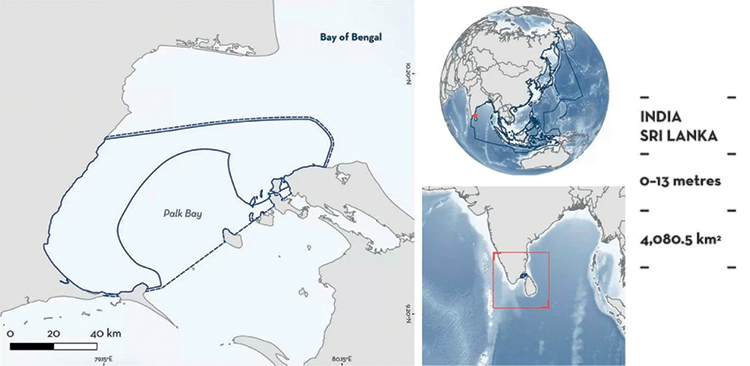
Palk Bay, a shallow, semi-enclosed water body shared between India and Sri Lanka, qualifies as an ISRA due to the presence of multiple important species. These include the threatened Shorttail Whipray (Maculabatis bineeshi), the range-restricted Sharpnose Guitarfish (Glaucostegus granulatus), and reproductive populations of the Grey Sharpnose Shark (Rhizoprionodon oligolinx). This was one of the few trans-boundary ISRAs covering both Indian, and Sri Lankan waters.
-
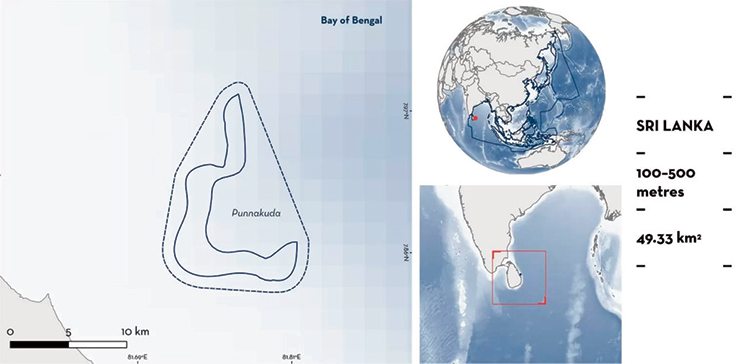
- Punnakuda ISRA
-

- Pigeon Island ISRA
-

- Pasikuda & Kalkudah ISRA
-
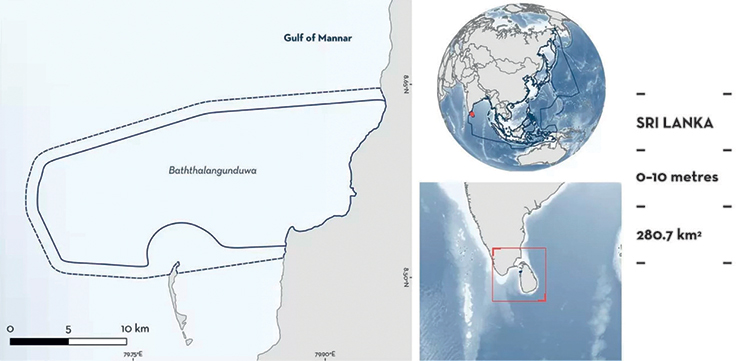
- Baththalangunduwa ISRA
Pasikudah & Kalkudah, a coastal stretch in Sri Lanka’s Batticaloa District, is known for its coral reefs and nearshore shark activity. This ISRA qualifies due to the presence of threatened and range-restricted species, such as the Stripenose Guitarfish (Acroteriobatus variegatus).
Punnakuda Canyon, a deep-sea canyon located just offshore from Pasikudah & Kalkudah and beyond the boundaries of the coastal ISRA, qualifies based on the presence of threatened and range-restricted deep-sea species, including the Indian Swellshark (Cephaloscyllium silasi).
Pigeon Island, the only ISRA in Sri Lanka that overlaps with a Marine Protected Area—the Pigeon Island Marine National Park—qualifies due to the presence of threatened species and undefined aggregations, notably the Blacktip Reef Shark (Carcharhinus melanopterus).
These areas are already designated ISRAs. In addition to this Sri Lanka also has two “Areas of Interest”; Koddiyar Bay and Hikkaduwa.
While these ISRAs don’t enforce protection on their own, except for Pigeon Island, which happens to overlap with an already established National Park, they’re a vital starting point. They help guide where marine protected areas might be placed, where fishing regulations could be refined, and where development should tread carefully. For Sri Lanka, ISRAs offer a powerful chance to align conservation and fisheries planning before it’s too late.
Most importantly, ISRAs are created using available scientific knowledge. Organisations like Blue Resources Trust (BRT) were able to contribute to the designation of ISRA’s due to long-term monitoring of shark and ray fisheries across the country. BRT has built the largest dataset on Sri Lankan sharks and rays, thanks to contributions from the Tokyo Cement Group, the Save Our Seas Foundation (SOSF), the Marine Conservation and Action Fund (MCAF) of the New England Aquarium, the Hong Kong Ocean Park Conservation Foundation (OPCFHK), the Prince Bernhard Nature Fund, amongst others.
By designating our ISRAs, Sri Lanka now has the recognition to make smarter, science-led decisions for the ocean’s most vulnerable species.
As shark and ray populations decline under pressure from overfishing, habitat loss, and climate change, knowing where they still have a chance to thrive is the first step toward saving them. Through ISRAs, Sri Lanka can take the lead in showing how conservation and coastal livelihoods can go hand in hand.
To explore ISRA maps and learn more, visit: https://sharkrayareas.org

HNB PLC, one of Sri Lanka’s leading private banks, has been named the Official Banking Partner for the 92nd edition of the annual “Battle of the Saints” cricket encounter between St. Joseph’s College and St. Peter’s College. The highly anticipated match is scheduled to take place from March 19 to 21, 2026, at the iconic Sinhalese Sports Club (SSC), continuing a celebrated tradition in Sri Lankan school cricket.
HNB’s Managing Director and CEO, Damith Pallewatte, said the bank is proud to support an event that embodies the spirit, discipline, and unity of Sri Lanka’s youth. “School sports play a vital role in shaping confident leaders and resilient communities. Partnering the 92nd edition of this iconic encounter is part of our commitment to nurturing young talent and empowering the next generation of Sri Lankans to achieve their full potential,” he stated.
The 92nd Battle of the Saints promises to be another thrilling chapter in the history of Sri Lanka’s school cricket, with HNB ensuring that its legacy continues by supporting both sporting excellence and the holistic development of young Sri Lankans.
Business
Britol and GP Certified Drive a Revolutionary Shift with the Introduction of Certified Recycled Plastics in FMCG Packaging
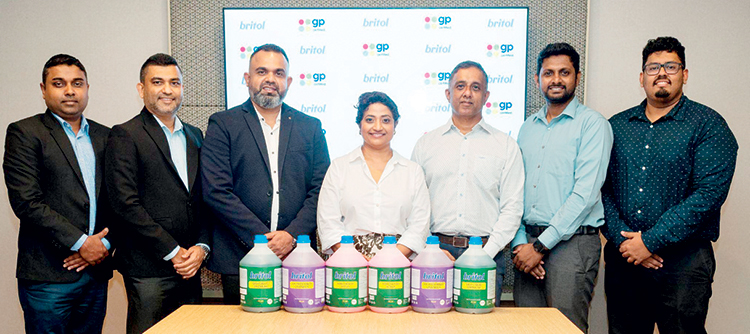
In a revolutionary step towards sustainable manufacturing, reducing plastic pollution and creating local jobs,, Britol and the Antler Group of Companies partnered with GP Certified to integrate certified recycled plastics into large-scale production of their products.
This initiative marks a significant milestone in the plastics and recycling industry. Most brands in Sri Lanka use virgin plastics to produce their plastic packaging – everything from a shampoo to a toilet bowl cleaner is packaged in a bottle made with plastic that is imported, used once and discarded. Marking an impactful departure from business as usual, the Antler Group of Companies now uses safe, ethically produced and cost-effective GP Certified recycled plastics to replace up to 40% of the imported virgin with locally recycled plastics in some of their Britol range of products. .
Speaking on the milestone, Ms Ashani Jayasinghe, the Chairman at Antler Group of Companies stated that “For over 4 decades, sustainability has guided Antler’s journey, shaping how we innovate, manufacture and lead. Through the GP Certified programme, Antler and Island Climate Initiative is setting new standards. A standard that enables manufacturers, partners and communities, to take part in a circular environmentally responsible system.”
Echoing this sentiment, Mr. Chaminda Rajapakse, Managing Director of GP Certified, expressed: “This partnership with Antler represents a critical step in mainstreaming certified recycled plastics within the FMCG sector. This milestone directly supports the rollout of Extended Producer Responsibility (EPR) in Sri Lanka by providing FMCG companies with a credible, local compliance pathway. GP Certified enables brands like Britol to meet EPR obligations through verified recycled content, traceability, and accountable downstream processing, reducing reliance on offsets or non-circular disposal. By linking compliant producers with certified recyclers, GP Certification helps translate EPR from a regulatory requirement into a practical, scalable market mechanism that strengthens domestic recycling and closes the loop.”
This collaboration underscores the shared vision of GP Certified and Antler to drive the circular economy forward, inspiring industries to embrace certified recycled materials as the new norm.
This initiative was supported by the PLEASE project which was funded by the World Bank and implemented by the South Asia Co-operative Environment Program (SACEP).

ISRAs of Sri Lanka – Protecting Hidden Shark and Ray Hotspots

HNB Sponsors 92nd Battle of the Saints as Official Banking Partner

Britol and GP Certified Drive a Revolutionary Shift with the Introduction of Certified Recycled Plastics in FMCG Packaging

Highest-Ever Profit by NSB in 2025

Fast-track fuel supply for exporters says EDB chief

Dharmaraja Rugby Rising from Lake View to Restore a Historic Legacy

‘Dates have the highest sugar content to fight Coronavirus’

Sunday Island 27 December – Headlines

#SundayIsland 17th December – Headlines

Sunday Island – 28th March

Sunday Island Headlines – 21 March

Sunday Island – 21st February – Headlines
-

 Business6 days ago
Browns EV launches fast-charging BAW E7 Pro at Rs. 5.8 million
-

 Life style7 days ago
From culture to empowerment: Indonesia’s vision for Sri Lanka
-

 News4 days ago
CIABOC questions Ex-President GR on house for CJ’s maid
-

 Life style7 days ago
Ranjith Fernando celebrates cricketing journey with Hob Nails to Spikes
-

 News5 days ago
Sri Lankan marine scientist Asha de Vos honoured at UNGA opening
-

 Features6 days ago
Achievements of the Hunduwa!
-

 Latest News7 days ago
QR code system will be implemented for fuel with effect from 06.00 a.m. today (15th)
-

 News5 days ago
Australian HC debunks misleading travel risk claims for Sri Lanka