
Opinion
Rendezvous with Patrick and Diplomacy

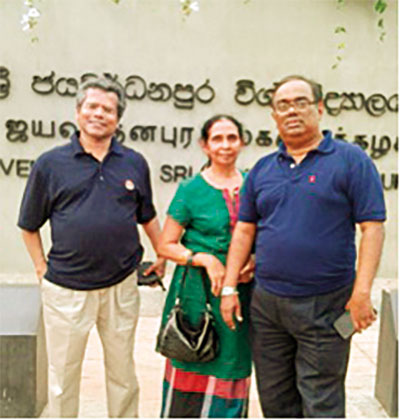
Illustrious Alumnus of Sri J’pura Wins the Lifetime Achievement Award in the United States
by Dr. Sunil Nawaratne
The Sri Lanka Foundation in California has selected Prof. Patrick Mendis for its prestigious Lifetime Achievement Award among Sri Lankan professionals living overseas. He is among the youngest to receive this honour for his distinguished academic career, award-winning diplomatic service, and philanthropic activities in the United States and Sri Lanka.
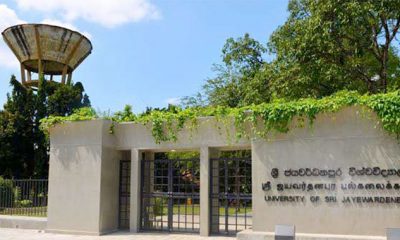
Prof. Patrick Mendis is widely known to thousands of alumni and educators for his eponymous annual financial prize at the University of Sri Jayewardenepura. In the United States, he has also established scholarships for students at the University of Minnesota and Harvard—two of his other alma maters.
Patrick and I are alumni of the University of Sri Jayewardenepura. Over the years, we have stayed connected, crossed our paths during my postgraduate studies in Japan, and often got together with our friends and alumni whenever he visited his family in Sri Lanka.
In the late 1970s, Patrick won a highly selective American Field Service (AFS) scholarship to study at Perham High School in Minnesota. Upon graduating with a U.S. diploma, Patrick returned to attend the University of Sri Jayewardenepura where we first met in the early 1980s.
He earned the coveted First Class Honours degree in Bachelor of Science from the Faculty of Management Studies and Commerce. As he completed his secondary education in the United States, Patrick often sought counsel and guidance from his Canadian and American Fulbright professors who visited our university. These visiting professors offered him scholarships for postgraduate studies in Canada and the United States. But Patrick returned to his AFS family in Minnesota, which he proudly considers his “birthplace” in America.
Minnesota is one of the coldest and snowiest among the 50 states; the tropical Sri Lanka by comparison is one-third the size of this beautiful “Land of 10,000 Lakes.” Patrick evidently fell in love with “Minnesota Nice,” as he described the generosity of its industrious and gentle people.
Patrick progressed to work at the Minnesota House of Representatives. He later received the Hubert Humphrey fellowship and the Notre Dame scholarship to complete his master’s and doctoral degrees at the Hubert H. Humphrey School of Public Affairs and the University of Minnesota.
While teaching at the University of Minnesota in the early 1990s, Patrick endowed two annual scholarships at Sri J’pura. These scholarships were later combined into the Dr. Patrick Mendis Prize to reflect his own outstanding achievements in management studies, leadership accomplishments in sports, and numerous contributions to the World University Service as its president in Sri Lanka. Patrick would explain that the annual prize is a fulfilling way to give back and to inspire the next generation of leaders and managers to do things better than he did.
In the subsequent years, I focused on my career in the fields of business management, government service, and higher education in Sri Lanka while Patrick ventured into international diplomacy, teaching, and conducting research at Harvard, Oxford, Yale, and other universities. At Harvard, he finished his mid-career Executive Leadership Programme at the John F. Kennedy School of Government. As a visiting faculty member, he later returned to serve as a Rajawali senior fellow at the Harvard Kennedy School and a research associate of the Fairbank Center for Chinese Studies at Harvard.
More importantly, however, Patrick blended his academic pursuits with public service in the United States government, the World Bank, and the United Nations.
While studying in Minnesota, the government of Sri Lanka appointed Patrick to the United Nations as its first Youth Ambassador to represent Sri Lanka at the First UN International Year of the Youth (IYY) in New York. Ambassador Karunasena Kodituwakku, then the Vice Chancellor of the University of Sri Jayewardenepura, recommended Patrick to President Ranil Wickremesinghe, then the Minister of Education. For his leadership at the United Nations, the UN Secretary General honored him with the UN Medal for the IYY.
Patrick began his American government service in the United States Senate Foreign Relations Committee during the Ronald Reagan administration. Congressman Gerry Connolly, a former Senate colleague and now his congressional representative from Virginia, writes: “Dr. Patrick Mendis is a highly respected foreign policy scholar, an award-winning public servant, and American diplomat. Patrick and I served in the Senate Foreign Relations Committee.”
After government service, he returned to academia. Patrick then served as a distinguished senior fellow and affiliate professor of public and international affairs at the Schar School of Policy and Government at the George Mason University in Virginia. While serving as the Vice President of the Osgood Centre for International Studies and a visiting foreign policy scholar at the Paul H. Nitze School of Advanced International Studies at the Johns Hopkins University in Maryland, he authored books, published articles, and lectured on UN affairs.
At the U.S. Department of State, he was assigned to serve as the chairman of the interagency policy group on science and technology in the Bill Clinton administration. Under the George Bush administration, the late Secretary of State Colin Powell appointed him to the Bureau of Educational and Cultural Affairs as its secretariat director to manage the Fulbright, Humphrey, and other international exchange programmes. Patrick also served as an advisor to the United States Delegations to the United Nations.
During the Barack Obama administration, Patrick was appointed as a Commissioner to the U.S. National Commission for UNESCO at the Department of State. His tenure ended when the Donald Trump administration withdrew from the UN.
United States Senator Chris Van Hollen, who grew up in Sri Lanka but now represents Maryland, describes his friend: “Patrick has contributed years of dedicated service to our country, and has been recognised for his academic achievements, outstanding government career, and important philanthropic work.”
During his service at the Department of State, Patrick also taught MBA courses at the University of Maryland. Through the University of Maryland Global Campus, Patrick previously worked as a military professor in the NATO and the Indo-Pacific Commands of the Pentagon with a range of teaching tours in England, Germany, Italy, Japan, Spain, South Korea, and Turkey.
After returning to Washington, D.C., Patrick has also worked in various federal agencies in the United States government.
Senator Amy Klobuchar from Minnesota, a former presidential candidate, explains her fellow Minnesotan this way: “Dr. Mendis is a respected leader and award-winning public servant, teacher, and diplomat” who has served in “the U.S. Departments of Agriculture, Energy, Defense, and State.”
Over the years, the University of Minnesota has recognised Patrick with the Alumnus of Notable Achievement (ANA) Award, the Harold Stassen Award for UN Affairs, and the Hubert Humphrey Leadership Award. The Minnesota Magazine described the illustrious American as “a scholar and a diplomat” for his leadership in government service. Patrick was honored with the Benjamin Franklin Award by the U.S. Department of States and the USDA Graduate School
Award for Leadership and Service by the U.S. Department of Agriculture.
Patrick has worked in—and travelled to—more than 130 countries. His lifetime achievements are yet to come. Patrick is currently serving as a distinguished visiting professor of transatlantic relations at the University of Warsaw in Poland as well as a distinguished visiting professor of global affairs at the National Chengchi University in Taiwan. He is a fellow of the World Academy of Art and Science.
Patrick has also lectured at the Sir John Kotelawala Defence University and other Sri Lankan universities in Colombo, Jaffna, Kelaniya, and Sri Jayewardenepura.
As highlighted in this narrative, it is truly a distinct honour to have such an eminent alumnus as a steadfast friend in the United States. His American journey from Sri Lanka has indeed shown us the value of education and the power of diplomacy beyond national boundaries for a better world for all of us.
*Dr. Sunil Nawaratne, an alumnus of the University of Sri Jayewardenepura, is the Director-General of the National Institute of Education and a former permanent secretary to the Ministry of Higher Education in Sri Lanka.








Opinion
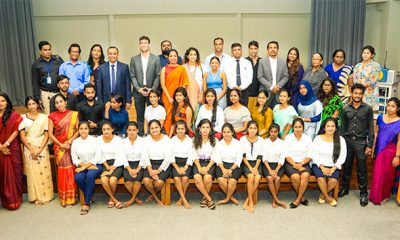
From the Lecture Hall to the Global Market: How Sri Lankan students are mastering the “Gig Economy”


Have you ever wondered how a university student, between heavy textbooks and late-night study sessions, manages to earn a professional income in US dollars? It sounds like a dream, but for thousands of Sri Lankans, it’s becoming a daily reality through online freelancing.
A recent study published in the Ianna Journal of Interdisciplinary Studies has pulled back the curtain on this digital revolution. By interviewing 21 successful student freelancers across Sri Lanka, researchers have mapped out exactly what it takes to turn a laptop and an internet connection into a thriving career.
The Rise of the “Earn-as-you-learn” Era
In Sri Lanka, the number of online freelancers has exploded from about 20,000 in 2016 to over 150,000 today. While our traditional education system often focuses on preparing students for 9-to-5 office jobs , these students are diving into the “Gig Economy” a digital marketplace where they sell specific skills, like graphic design or programming, to clients all over the world.
The Secret Sauce for Success
So, what makes some students succeed while others struggle? The research found that it isn’t just about being good at coding or design. Success comes down to six “Core Pillars”:
· A Growth Mindset: The digital world moves fast. Successful students don’t just learn one skill; they are constantly updating themselves to ensure they don’t become “outdated”
· The Balancing Act:
How do they handle exams and clients? They don’t use a magic wand; they use strict time management. Many work late into the night (from 6 p.m. to midnight) to accommodate international time zones.
· The Power of “Hello”:
Since most clients are in the USA or UK, strong English and clear communication are vital. It’s about more than just talking; it’s about negotiating prices and building trust.
· Proactive Problem Solving:
Successful freelancers don’t wait for things to go wrong. They update their clients regularly and fix issues before they become headaches.
Why This Matters for Sri Lanka
Right now, our universities don’t always teach “how to be a freelancer”. This study suggests that if we integrate freelancing modules and mentorship into our degree programs, we could significantly reduce graduate unemployment. It’s a way for students to gain financial independence and bring much-needed foreign currency into our economy while still in school.
You Can Do It Too
If you’re a student (or the parent of one), the message is clear: the global market is open for business. You don’t need to wait for graduation to start your career. With a bit of flexibility, a willingness to keep learning, and a proactive attitude, you can transition from a learner to an earner.
The Research Team Behind the Study
This groundbreaking research was conducted by a dedicated team from the Department of Business Management at the SLIIT Business School (Sri Lanka Institute of Information Technology). The authors of the study include:
· Lihini Niranjana Dasanayaka
· Thuvindu Bimsara Madanayake
· Kalana Gimantha Jayasekara
· Thilina Dinidu Illepperuma
· Ruwanthika Chandrasiri
· Gayan Bandara
by Ruwanthika Chandrasiri

In an article titled “India shaping-up as model ‘swing state” (The Island 29.01.2026) Lynn Ockersz says, “Besides, this columnist would go so far as to describe India as a principal ‘Swing State.’ To clarify the latter concept in its essentials, it could be stated that the typical ‘Swing State’ wields considerable influence and power regionally and globally. Besides they are thriving democracies and occupy a strategic geographical location which enhances their appeal for other states of the region and enables them to relate to the latter with a degree of equableness. Their strategic location makes it possible for ‘Swing States’ to even mediate in resolving conflicts among states”.
A ‘swing state’, as in elections, should be able to decisively influence the final outcome. In the context in which India is recognised as a ‘swing state’ the final outcome should first be regional and then, if possible, extend to the rest of the world. And the desirable outcome must entail regional peace, cordial relations and economic stability which would constitute the most vital needs for any part of today’s world. Military power should not feature in the equation, for more often than not, such power is used to brow beat into submission the weak and the poor.
India no doubt is growing fast to be a global economic power and militarily also it is way ahead of the region. Its democracy, in the sense that democracies are measured in today’s world, also may be as the columnist says “thriving”. However, periodical elections, however fair they could be, should not be the sole criterion to judge democracy. If democracy cannot solve the problem of inequality it may lose its credibility as a mode of good governance. As a means of finding who rules, the system may be satisfactory but the other vital components of democracy, such as equitable wealth distribution, if lacking, the system may not serve its purpose.
Inequality in India is among the highest globally, with the top 1% owning nearly 40% of national wealth and the top 10% holding roughly 65% of total wealth and 58% of income. While the economy grows, the bottom 50% receives only 15% of the income. This disparity, driven by wealth concentration and low female labour participation, persists across class, caste, and gender. The income gap between the top 10% and the bottom 50% remained stable, with no significant reduction in inequality over the last decade.
India ranks very low in gender parity (127 out of 146 countries in the Global Gender Gap Report 2023). Female labour force participation is very low, at 15.7% (though government data suggests 41.7% by including agriculture and unpaid work). Women earn significantly less than men, working 53 hours per week compared to 43 for men. Inequality is intensified by existing social divides based on caste, religion, region, and gender. Access to healthcare is limited for many, with 63 million people pushed into poverty annually due to costs. Approximately 74% of India’s population could not afford a healthy diet in 2023. Roughly 64% of the total Goods and Services Tax (GST) in India comes from the bottom 50% of the population, whereas only 4% comes from the top 10% (Global Inequality Report 2024).
This sad state may not be the fault of democracy but the economic system of all so called democratic countries. The other three countries, Indonesia, South Africa and South Korea, that the columnist has named as suitable to be ‘swing states’ are no better. Neoliberalism and democracy are increasingly viewed by critics as an “evil nexus” or a destructive pairing, where the logic of the free market—privatisation, deregulation, and austerity—subverts the principles of democratic self-governance and social equality.
However, my main argument concerns the more important qualities that a country must possess to qualify as a ‘swing state’; the capacity to lead from the front in campaigning for peace and cordiality in the region. In this regard India fails miserably. The past with regards to good neighbourliness, where mighty India is concerned, tells a sad story. How it tried to solve the ethnic problem in Sri Lanka may be etched in the minds of those who lived in that era. The “parippu-drop” followed by gun-boat diplomacy saved the LTTE enabling it to continue with its murderous terrorism aimed at dividing the country. It was India who provided the initial “infra-structure” for training of terrorists who waged a thirty year war in Sri Lanka, committing brutal genocide against the Sinhalese and Muslims and not sparing the Tamils as well. India did not lift a finger to stop the bloodletting. Then it rammed the 13th A down our throats as a solution to the problem but did not keep to its terms and conditions which required it to disarm the LTTE. 13th A hangs over our head like the Sword of Damocles and India doesn’t fail to remind us about it from time to time. And we are burdened with the white elephant of provincial councils. Moreover, evidently India continues to interfere in our internal affairs, apparently colluding with the US, it may have had a hand in the regime change in Sri Lanka in 2022 (Shamindra Ferdinando, The Island, 04.02.2026). Another matter that appears to be perniciously secretive is that the Indian government doesn’t want the Sri Lankan government to reveal to its people the contents of the defence agreement it has entered into with the latter, as if people didn’t matter !
Now that tiny Sri Lanka is weakened and pliable after suffering multiple crises, India comes to its aid at the slightest mishap, very much like the hero who comes to the rescue of the damsel in distress, seemingly competing with other suitors. It doesn’t want the damsel to fall into the arms of China, given its geopolitical beauty.
Take the case of the other neighbours of India, does it have the capacity to swing, for instance, Pakistan into at least a position of less animosity. And what about its eastern neighbour, Bangladesh? They can’t even play cricket. Relations between India and Bangladesh, are currently under severe strain as of early 2026, driven by the ousting of former Prime Minister Sheikh Hasina, who has been given asylum in India to the chagrin of Bangladesh. Tensions are high due to attacks on diplomats, stalled visa services, water disputes, and alleged interference. The unresolved sharing of the Teesta River and other transboundary rivers remains a major contention, with Bangladesh accusing India of managing these to its detriment. Concerns exist in New Delhi regarding Bangladesh strengthening ties with other nations like Pakistan, seen as a shift away from Indian influence (Altaf Moti, 2026).
Coming back to the conflict with its western neighbour Pakistan, since the 1947 partition, both countries have claimed Kashmir, a region inhabited by a majority Muslim population but initially ruled by a Hindu Maharaja, leading to wars in 1947, 1965, and 1999. India accuses Pakistan of supporting militant groups in Kashmir, a claim Pakistan denies, which has frequently led to military escalations, such as the 2019 Pulwama incident and 2025 strikes. The Indus Waters Treaty is under strain, with potential for conflict over control of water resources. Both nations are nuclear-armed, raising international concerns about regional stability. Recent tensions included increased cross-border firing, drone warfare, and suspected militant attacks in Kashmir, leading to retaliatory missile strikes. The conflict remains a major geopolitical issue, with tensions frequently escalating due to nationalist sentiment and a lack of diplomatic progress (Britanica, 2026).
Another matter of relevance is that India-Pakistan-Afghanistan relations are defined by a complex, triangular, and competitive dynamic. Following the 2021 Taliban takeover, India has adopted a pragmatic, security-focused approach, delivering humanitarian aid to Afghanistan via Iran to circumvent Pakistan. Meanwhile, Pakistan-Afghanistan ties have deteriorated over border disputes, prompting Kabul to seek warmer relations with India as a counterweight to Islamabad. Without formally recognising the Taliban, India has re-established a technical mission in Kabul to secure its interests, monitor anti-India groups, and maintain developmental influence, which directly challenges Pakistan’s historical influence in the region. Is such manoeuvring of regional relations a virtue of a ‘swing state’!
Paradoxically, India is developing a special friendship with the murderous regime of Netanyahu in Israel focussing on defence and anti-terrorism. Indian prime minister is planning to visit Israel towards the end of this month which would obviously boost the image and credibility of a ruler who has committed genocide of the Palestinians. The barb no doubt is intended to prick Pakistan. Could such a country bring peace to the region, which it must if it is to qualify as a ‘swing state’.
India seems to have good relations with its northern neighbour, little Nepal, though minor but persistent issues remain. Disputes, notably regarding the Kalapani-Limpiyadhura-Lipulekh area, have caused tensions. Nepal has, from time to time, requested, a revision of the 1950 Treaty, viewing it as unbalanced. Growing influence of other foreign powers (particularly China) in Nepal poses a strategic challenge for India.
The other northern neighbour, the giant, is a different kettle of fish. India has fought several wars with China and there are frequent border skirmishes. The rivalry between these two giants is second only to that between the US and China. The war for markets, influence and hegemony between these countries may one day tear the world apart.
India seems to be having border disputes with most of its neighbours. Fortunately, we have no common border with it but there is Katchatheevu, on which they have recently made a claim.
India being the big brother must take the initiative to resolve the disputes it has with its neighbours and work towards lasting peace in the region. The inability to do so reflects, more than the external factor, the internal depravity that plagues its politics. One has only to listen to its political leaders during election times to gauge the depth of racism they descend to in order to swing the votes. This phenomenon is more evident in their own ‘swing states’. This racism cannot be confined to its borders, it has to cross the borders and be projected to the neighbourhood, if the politicians are to appear to be truly patriotic. Thus, the border disputes and acrimony continue.
If peace, cordiality and economic stability are the desirable goals for the region – one cannot think of anything more important than these – India may not be the ‘swing state’ that could give leadership to the struggle that would finally bring these qualities to the region.
by N. A. de S. Amaratunga
Globalisation exposes weakness and failed governance; and invites intervention – A message to all inept governments everywhere
The government of Burkina Faso has shattered the illusion of party politics, dissolving every political party in the nation. Its justification is blunt: parties divide the people, fracture sovereignty, and allow corrupt elites to hijack the sacred powers that belong to the citizenry.
This is not an aberration. It is the recurring disease of fragile states. Haiti, Somalia, Sudan, Venezuela, Sri Lanka—their governments collapse under the weight of incompetence, leaving their people abandoned and their sovereignty hollow. These failed states do not merely fail themselves; they burden the world. Their chaos spills across borders, draining the strength of nations that still stand.
Globalisation does not forgive weakness. It exposes it. And as global opinion hardens, a new world order is taking shape—one that no longer tolerates decay. The moment of rupture came when US President Donald Trump seized Nicolás Maduro from his Venezuelan hideout and dragged him to face justice in America.
Predictably, the chorus of populists cried “oil!” They shouted about imperialism while ignoring the rot of Maduro’s failed government and his collapse in legitimacy. But the truth is unavoidable: if Venezuela had been competently governed, Trump would never have had the opening to topple its leadership. Weakness invited conquest. Failure opened the door.
Singapore offers the perfect counterexample. It is perhaps the best-governed nation on earth, and for that reason it is untouchable. Strong governance is the only true shield of sovereignty. Without it, sovereignty is a brittle shell, a flag waving over ruins.
Trump’s precedent will echo across continents. China, Russia, India—regional powers are watching, calculating, preparing. The message is unmistakable: Sovereignty is conditional. It is not guaranteed by history or by law. It is guaranteed only by strength, by competence, by the will to govern effectively.
This is the revolutionary truth: nations that fail to govern themselves will be governed by others. The age of excuses is over. The age of accountability has begun. Weak governments will fall. Strong governments will endure. And the people, sovereign and indivisible, will demand leaders who can protect their destiny—or see them replaced by those who can.
By Brigadier (Rtd) Ranjan de Silva
rpcdesilva@gmail.com

Sooryavanshi 175 makes India six-time Under-19 world champions

Mighty India meet multicultural USA in polarised World Cup

At least 31 killed, dozens wounded in Islamabad mosque blast

The SSC finally steps out of the sunshine and into the floodlights

SAARC journalists meet in New Delhi

Governor of Gujarat met with Sri Lanka PM to discuss exposition of Devnimori Relics

‘Dates have the highest sugar content to fight Coronavirus’

Sunday Island 27 December – Headlines

#SundayIsland 17th December – Headlines

Sunday Island – 28th March

Sunday Island Headlines – 21 March

Sunday Island – 21st February – Headlines
-

 Business7 days ago
Hayleys Mobility ushering in a new era of premium sustainable mobility
-
 Business4 days ago
SLIM-Kantar People’s Awards 2026 to recognise Sri Lanka’s most trusted brands and personalities
-
 Business7 days ago
Advice Lab unveils new 13,000+ sqft office, marking major expansion in financial services BPO to Australia
-
 Business7 days ago
Arpico NextGen Mattress gains recognition for innovation
-
 Business6 days ago
Altair issues over 100+ title deeds post ownership change
-

 Editorial7 days ago
Govt. provoking TUs
-

 Business6 days ago
Sri Lanka opens first country pavilion at London exhibition
-

 Business5 days ago
All set for Global Synergy Awards 2026 at Waters Edge