
Opinion
‘Reconciliation initiative – the bigger picture’: A response


Rear Admiral (Dr.) Sarath Weerasekera, MP
Dr. Nirmala Chandrahasan (NC), in her article “Reconciliation initiative – the bigger picture” published in The Island of 25 November, recommends measures for “reconciliation” effort of the government. At the beginning she says, “To my mind, the most important question to be resolved is whether this country is to be regarded as a Sinhalese Buddhist state, where all the other ethnic, religious groups are treated as guests, or as a multi-ethnic, multi-religious secular country where all citizens have equal rights”.
First of all, let me ask NC whether she knows of any citizens in this country, belonging to any ethnic group, who don’t enjoy the same rights as others? If so, she must submit it with proof in her next article.
The majority community in SL are Sinhalese (74%) and majority Sinhalese are Buddhists (80%). The Sinhalese have protected Theravada Buddhism in its pristine form throughout the history.The Sinhalese have lived in Sri Lanka, and during all the invasions, starting from Kalinga Magha/Cholas to British, it was the Sinhalese Buddhists who fought against the invaders. Under the colonial rule all those who were brutally murdered, hanged, raped, lost properties were the Sinhalese Buddhists.
In an aeriel view of the island shows thousands of pagodas, temples built by the Sinhalese thousands of years ago. It bears testimony that this has been a Buddhist country right throughout.
During the war, even pregnant mothers and infants were massacred by terrorists in Gonagala, Ampara. When the Temple of the Sacred Tooth in Kandy was attacked or more than 200 Buddhist worshippers (mostly women) at Anuradhapura Sri Maha Boddhi were mercilessly killed by terrorists. But the Sinhalese never took revenge.
Some Tamil MPs claim that Sinhalese have no right to live in North while living safely and happily with the Sinhalese in Colombo. A few TNA MPs with the help of a mob forcibly stopped the renovation work of 2000-year-old Kurundi Temple at Mullaitive, and prevented the Chief Prelates from even offering flowers to the ancient dagoba. But those TNA MPs could come to Colombo, attend the parliament and return to Jaffna safely. We also know that most of the lucrative trades/businesses are dominated by Tamils/Muslims and the customers are mainly Sinhalese.
If the Sinhalese Buddhist majority had been bigoted people, the situation would have been different. They are, in general, a tolerant people and if they say this is a Sinhala Buddhist country, it is in that spirit only, and they have no intention of marginalising or the other ethnic/religious groups.
NC then goes on to allege that on the pretext of archaeology and Buddhist ruins, Tamil speaking farmers in the area are being dispossessed of their lands. In fact, these very valuable archaeological sites are destroyed using bulldozers and are lost forever to the nation. It is all because those “Tamil speaking farmers” that NC is talking about, do not consider them as their heritage.
NC also complains about “Sinhala Only” Act of 1956 and says it was one of the root causes of ethnic tensions in SL. There was nothing called “Sinhala Only” Act but an “Official Language” Act (No. 33 of 1956). It was meant to return the status of Sinhala Language that the three colonial invaders usurped for 443 years!
Sinhala had been the official language used before the colonial rule while Buddhism was the state religion. Tamil was never an official language during the rule of kings; nor was it the language of administration during British rule. Hence it cannot be argued that in making Sinhala the official language, the Tamils were discriminated. The demand to make Sinhala language the official language after Independence was solely to rectify the injustices the Sinhalese had suffered at the hands of foreign invaders and had nothing to do with denying Tamils as Tamils never enjoyed official status for Tamil language ever.
This Act proclaimed that Sinhala language shall be the one official language of Ceylon. The act was to come to effect on 1st January 1964 while provisions were made for the reasonable use of Tamil language by special provision Act of September 1958.
SWRD Bandaranaike, a Sinhalese, brought the “social disabilities “Act 1957 to prevent such discrimination against the Tamils belonging to the socially disadvanged castes. Anyone trying to blame the Sinhalese for discriminating against Tamils on the “Sinhala Only” issue, must first explain why some Tamils opposed the 1957 “Social Disabilities” Act, which criminalised caste-based discrimination.
The reaction of the Tamil leaders to the 1956 Official Language Act was very mild compared to their strong objection to the Social Disabilities Act where the Tamil leaders even travelled all the way to UK to urge the UK government to annul it!
If the Official Language was the root cause of the Sinhala Tamil conflict, why should Bandaranaike/ Chelvanayagam pact in 1957 continue to maintain Sinhala as official language but promote only devolution? This was how devolution brought in as a “solution” to a bogus “ethnic problem”. In actual fact Tamil leaders started demanding a separate Tamil state from British Empire way back in 1947, well before the 1956 Official Language Act.
NC says the passage of a law disenfranchising the upcountry Tamils was proof of harassment of Tamils by the Sinhalese.
The colonial invaders started many plantation projects and they brought in indentured labourers mostly from South India, referred to as Indian Tamils. The argument that the Indian Tamils were disenfranchised was wrong because they were not citizens of SL in the first place. SL awaiting Independence did not wish to keep them and India (Nehru) did not wish to take them back because 3.5 million indentured Indian labourers scattered all over the world would have also had to be brought back.
SL had every right to decide how to keep people belong to another nation. Under the citizenship Act of 1948, only 5000 out of about 800,000 Indian labourers were able to show two generations residence in Ceylon. Then came the Indian and Pakistan Residents citizenship Act of 1949, where they only had to show seven to 10 years residence in Ceylon. Even then only 134,000 qualified out of original 800,000. In Neru/Kothalawala pact in 1954, Sirima/Shasthri pact in 1964 and Sirima/India pact in 1974, India agreed to receive more than 50% Indian Tamils back to India, implying official acceptance of India that she was responsible for the Indian nationals in SL. However, repatriation was under way till it was stopped by JRJ and practically every remaining Indian Tamil became a citizen of SL.
Because of citizenship, matters improved for the upcountry Tamils. They got better schools, social benefits and opportunities outside the estates.
Therefore, the whole argument of disenfranchisement of Tamils is invalid. In fact, for whatever reason, we have treated them better than some other countries under similar circumstances. There are up to one million ethnic Koreans living in Japan today, almost half of whom do not have Japanese citizenship. A large proportion of this population are descendants of migrant workers brought over as cheap labor during World War II.
NC compares the civil war in USA with the 30 years of war against terrorists in SL and says that like in the aftermath of USA civil war, a war memorial should be built for the LTTE as well, as a measure of reconciliation!
The American civil war was between Northern states of the Union and the Southern states, which formed a confederacy by the states that had seceded. The economy of the confederacy was based on slaved labour as against the industrialised Northern states. The confederacy wanted to perpetuate slavery and to be independent from the Union, and the Union wanted slavery abolished. White people fought on both sides. It is ridiculous if someone tries to compare the American civil war in 1860 with the fight we had with LTTE, which resorted to terrorism to create a separate state in the North. The LTTE mercilessly massacred not only innocent Sinhalese (including pregnant mothers and infants) and Muslims, but also moderate, educated Tamil scholars and politicians who opposed them. The mere suggestion of a war memorial for the dead terrorists is an insolent insult to all of them.
In Malaysia Bumiputra concept is in force. It recognises a special position of the Malay majority provided in their constitution, in particular Article 153.
The Malay majority in Malaysia is 69% and Malay Reserve Land can only be owned and controlled by Malays and it is impossible to be legally released to non-Malays. All Malays are Muslims. In today’s Malaysia, state funds, including tax payers money, is used to further the cause of Islam. There are Islamic schools, Islamic courts and Islamic finances.
In SL the Sinhalese majority is more than 72% and there is nothing similar to Bumiputra concept where the Sinhalese Buddhists are given special provisions or preferences over other communities.
But yet they are blamed of discrimination! In fact, if there is any discrimination, it is the other way a round. The Sinhalese and the Muslims cannot buy any land in Jaffna and it is a fact. But a Tamil is free to buy any land anywhere in the country and no one protests. There had been “ethnic cleansing” in the North in which all the Sinhalese and the Muslims who lived there were driven away and not allowed to return. What about the equal rights of them, NC?
The Tamil leaders had been struggling for a separate state well before 1956 Official Language Act and 1983 riots. They created an ethnic based political party, “All Ceylon Tamil Congress” in 1944 implying that they didn’t want to live in harmony with other communities. In 1936, they demanded 50-50 representation on parliament (for which Soulbury commission responded as “mockery of democracy”) and Chelvanayagam formed ITAK in 1948 with the objective of forming a “separate Tamil State”. In 1977, the TULF asked the Tamils for a mandate to secede as a separate state of Tamil Elam and armed militancy began in the early 70s. A separate state was their dream even before we got independence from British. Hence a” grievance” like “Tamils have no other option other than asking for a separate state or a federal state because, they don’t see themselves as equal citizens in this nation” is not real.
If reconciliation is re-establishing friendship/friendly relations and harmony between communities, what has been the contribution of Tamil politicians towards reconciliation so far? Is it by portraying Sinhalese Buddhists majority as selfish, dishonest, incorrigible group of people who don’t like to grant equal rights to minorities? Or, is it by continuing to harp on “federalism” ? Or, is it by maliciously preventing building a Buddha statue at the famous Nagadeepa Temple at Nainativu island in the North, to mention a few.
I agree with NC on her statement that “reconciliation cannot be a one-sided effort and both communities must be willing to make the effort”. True, both communities must contribute towards it. So for a start, I would like to suggest that Dr. Chandrahasan, who is supposed to be a strong supporter of “reconciliation initiative”, request all Tamil schools and preschools in the Northern Province to include at least one Sinhala cultural item (a song or a dance ) in their school cultural functions like others do with a Tamil item in almost all the Sinhala schools and preschools. It would definitely go a long way!

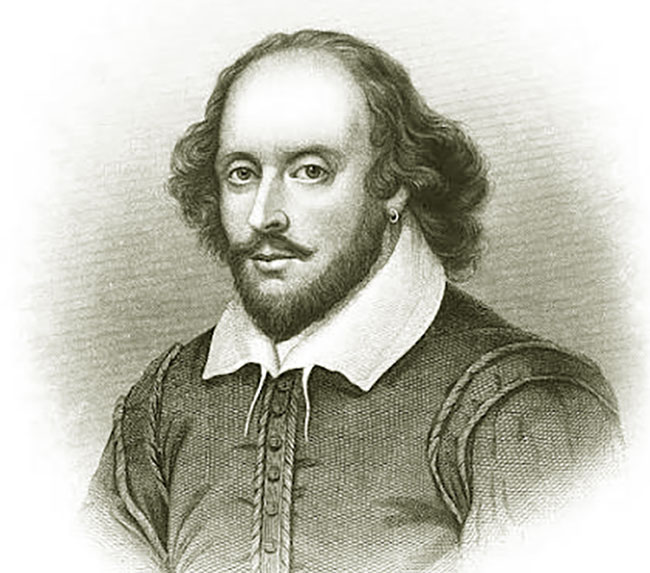
There seems to be a striking similarity between ancient Greece and modern Britain. Both countries remain paradoxes of history. Greece was a small city state constantly at war with neighbouring countries. It did not have a big army, but it had considerable sea power. However, Greece was a leading state over the whole of the Mediterranean. In fact, Greece was once a super power in the Western world.
Britain was very powerful in the 19th century. British justice was administered in Africa, India and Ceylon. British factories flourished in many countries and schoolchildren started reading R.L. Stevenson’s ‘Treasure Island’ and the works of Rudyard Kipling. What Ralph Waldo Emerson said in the 1850s is still valid today. He said, “If there’s one test of national genius universally accepted, it is success; and if there be one successful country in the universe for the last millennium, that country is England. It is the best of actual nations.”
In World War I, Britain faced a crushing defeat. Eventually, the British Empire was reduced to a Commonwealth. World War II shattered the image of Britain further. Although Britain lost much of its power, it continued to be an influential country. Even after achieving independence, India retained English as an official language. The British parliament system is well established in many Commonwealth countries. Some people still wonder how England still exercises its influence over the minds of men and women.
Staying power
There are many powerful countries in the world today such as the United States, Russia and China. Although England is not a super power, she has staying power. According to Oliver Wendell Holmes, a good part of greatness is simply being there. For that matter, England has been there for many centuries. So far no other country has been able to defeat her. As a result, sometimes we wonder whether we can have a world without England.
England has had an unwritten Constitution for a very long time. Other countries have emulated her political institutions. The British people have an established church with complete religious freedom. Although there are social classes in Britain, there has been no major clash among them. Unlike in many other countries, there are only two leading political parties in England. When the Labour Party is in power, the government is not subservient to labour. Similarly, when the Conservative Party is in power, the government is not conservative.
Most British colonies in the East including India and Ceylon did not sever the cultural and emotional links with Britain and retain them even after achieving independence. India became independent in 1947, but she decided to retain English as an official language. By doing so, India produced a number of English writers such as R.K Narayan. However, Ceylon did not give English any official status and treated it as a link language. As a result, students paid less attention to learning English. They were made to understand that everything can be done by learning Sinhala and Tamil. We have failed to produce English writers in the calibre of J. Vijayatunga who wrote ‘Grass for my feet.’
Politically shrinking
The United Kingdom is politically shrinking. However, its influence vibrates throughout the world. English has brought many nations together. There is a common understanding among countries that share the English language and literature. William Shakespeare’s dramas are staged in countries such as China where English is not an official language. People have come to the conclusion that English has become a broker of ideas and institutions.
England is not an aggressive country. However, if provoked, it can deliver a mortal blow to its enemy. British Prime Minister Margaret Thatcher showed her mettle as the iron lady. Britain held the fort against the might of Napoleon Bonaparte who ruled France. The country can still boast of a heavy moral credit. The British stick to their international agreements. The power of England draws mainly from its language. British people say ‘It’s right’ when it is right’. When it is not right, they say, ‘It’s not right.’ Meanwhile English occupies a pre-eminent place in world languages. All the research work in many parts of the world is available in English. You can learn any subject easily through English.
Apart from the language, people respect British standards which are technical specifications and quality benchmarks developed by the British Standards Institution. The United Kingdom’s independent national standards body was established in 1901. It maintains over 37,000 standards covering industries such as construction, manufacturing and technology ensuring safety and reliability.
British English
Standard British English is the variety of English that has undergone codification to the point of being socially perceived as the standard language associated with formal schooling, language assessment and official print publications. For historical reasons dating back to the rise of London in the ninth century, the form of language spoken in London and the East Midlands became the Standard English used in schools, universities, literature and law.
British English functions as one of the two major foundational and standard varieties of the English language alongside American English. It serves as a primary reference point for spelling and grammar. It acts as a global standard, and international institutions are often defined by specific pronunciation.
Most Sri Lankan doctors primarily move to England for postgraduate training, higher specialisation and better career prospects. They are driven by superior training infrastructure, world-class facilities and globally recognised qualifications.
To sum up, when you think of learning an international language, there is no alternative to English. If you wish to read literature, you cannot ignore eminent English dramatists and poets such as William Shakespeare and John Milton. Many leading Sri Lankans like S.W.R.D. Bandaranaike were Oxford University products. Therefore, English deserves to be made an official language in Sri Lanka.
By R.S. Karunaratne
The Department of Cultural Affairs has once again called authors, and publishers to lodge their entries for selection of the prestigious State Literary Awards 2026.The criteria and conditions required and notified in the public domain, makes it mandatory for the literary work to be printed and published prior to submission for consideration of the awards. There is absolutely no provision for writers to submit their work in Manuscript form.
Where does that leave the financially impoverished writers who are talented, creative and wish to submit a well edited typescript of their work as manuscript for consideration of the State Literary Awards? In a literary environment that encourages a proliferation of self-published books of all forms and features presented by vanity publishers who have their eye on the purse of the author than on literary merit and artistic excellence, it is easy to show that you are an ” established writer” by spending your cash abundantly towards glossy covered books which the printing industry and fawning publishers will lap up with greed.
Even the Gratiaen Prize in Sri Lanka, sponsored by world-renowned Michael Ondaatje allows for Manuscript entries together with published books. Significantly, the manuscript entries that win the prize are assisted to publish their work which is part of the winnings. Many a young, aspiring writer with little funds who won the Gratiaen Prize on merit, but had submitted their entry in manuscript form have been thereby encouraged to submit their work on merit basis only.
It is a fact that the Commonwealth Short Story Prize, a massive state-supported initiative across 56 nations accepts only unpublished short fiction. Further, several countries in the world have established national or state level literary prizes that specifically accept unpublished manuscripts to provide equity in discovering new talent and supporting national literature without bias or favour. In Australia, Jamaica, Philippines, major national awards organised by the State for literature, specifically accept unpublished manuscripts for consideration.
Let’s face the truth. The printing costs are escalating. There is little demand in Sri Lanka for literary work in the English Language in particular. Traditional Publishing where the literary work is reviewed and assessed for talent and creativity and thereafter published is seldom found. The reviews and critical analysis of literary works are rare. But publishers make a pile by pandering to the vanity of aspiring writers who have the financial clout to pay their way through to being featured in prestigious award ceremonies and accolades. Thereafter, their substandard works get a further fillip by bearing the label of “Won the State Literary Award for Literature”! It is a cycle of literary charlatans and their pimps in the publishing industry for whom the price that is paid for publishing and not Meritocracy is the sine-qua-non.
Is this the level playing field promised by the NPP Government and their Marxist protagonists? A government that was voted into power on the platform of affording fair opportunity and equality seems to discriminate in favour of the Haves against the Have- nots in the cultural department to say the least! Anil Fernando

English literature offers a rich heritage of wonderful ideas and thoughts. The reader can be intellectually uplifted. It brings refreshing new vistas and stimulating new ideas. However, this English literature has to be first introduced to the student in order to fire up his or her interest and be made aware of this rich source of culture. Students of basic English as a second language work hard and learn all the hum-drum mechanics of the language, for which they get tested and graded. But importantly, nae crucially, this should be followed up with intellectual rewards for the students’ efforts – which, of course, is the enjoyment of the works of literature of the many great writers in the English language. This is the great payoff, the great dividend for all their efforts but this, apparently goes missing.
One of the obvious reasons for the lack of “follow through” may be lack of time allocated in the curriculum – or, perhaps, more darkly, the teachers’ own lack of knowledge of the great range of good reading materials produced by the countless generations of literary geniuses who have gone before. Such writers have laid down for us a heritage of glorious literary works in books and essays, all of which are to be found in any good library. It is thought that much of this good literature ought to be introduced to all students of English, “full stop,” as part of developing a knowledgeable and cultured society. (Isn’t that what we want?) Reading English literature should bring an intellectual enrichment to all those willing to drink from this Bacchanalian horn of plenty.
It must be said finally, that it can be fairly expected that most young people, especially those learning English as a second language, are totally unaware of the many outstanding pieces of writing that propel English to stand tall amongst the rest. That is, students need to be first introduced to great writings and have a spark of interest ignited in these great works of literature.
For example, by being introduced to “Daffodils,” a short descriptive poem by William Wordsworth, the student can get some very pleasant ideas to think on.
Do not overlook Conan Doyle’s “Sherlock Holmes” detective stories, each one captivating the reader’s attention right to the end. It is by these short stories that the novice reader can first consolidate his power of reading.
For light reading Jerome K. Jerome’s book “Three Men in a Boat” is suggested. On one occasion he goes to the library suffering from a slight hay-fever (allergy) seeking a cure. He consults a book, “Lexicon of Pharmacology”, and recoils in horror as his symptoms fit most of those diseases described in the book! He concludes he cannot live much longer and staggers home to rest and recuperate! This is a well related tale in the book – although seemingly quite implausible!
Similarly, by having the poem meanings explained, e.g. “What is Life if Full of Care?” by William Henry Davis – how he regrets that we humans are always in a hurry, too busy to notice or see the delights of nature, and scenes of natural beauty, e.g., a young woman’s smile as she passes by; we have no time to make friends and even kiss her. Regrets! Explaining this to students would bring a certain intellectual insight.
John Keats’s poem, “Ode to Autumn” is another great work describing the ripening fruits of the autumn season and how nature as a living being, brings to fruition all the good things of a rural landscape quietly humming with warmth after a hot summer.
Again, it is likely necessary to explain to a young, Sri Lankan mind the meaning of the descriptive poetry found in this magnificent poem.
This is the real English to be tasted and then swigged at lustily in pleasure and satisfaction, not some writing airing historical grievances for children to study!
1970 British Cohort Study
It should be observed here that the ‘1970 British Cohort Study’ followed 70,000 people to examine various aspects of their lives. One result discovered was that if a young person reads a lot, it develops his/ her general intelligence no-matter his parents; it makes him smarter.
It was also noted that reading brings life-long benefits; it improves mood, it helps with social skills, increases empathy, reduces anxiety, protects against depression and slows brain decay, the study found.
But these days many young people never gain a great competence in reading English; the fear is that standards are falling. This is bringing poorer critical thinking, less depth of personality and less empathy for others which has the result of a more turbulent society.
People are urged to switch off their headphones and read more of what they like – try reading the newspapers!
Priyantha Hettige

Kusal Perera in as Sri Lanka bowl; Marsh returns for Australia

Jacks the star as England qualify for Super Eights with nervy win

Navy seizes 02 Indian fishing boats poaching in northern waters

Ramadan 2026: Fasting hours around the world

Omarzai’s all-round brilliance hands Afghanistan their first win of the World Cup

We will not allow anyone to drag the country backward by inciting racism. — PM

‘Dates have the highest sugar content to fight Coronavirus’

Sunday Island 27 December – Headlines

#SundayIsland 17th December – Headlines

Sunday Island – 28th March

Sunday Island Headlines – 21 March

Sunday Island – 21st February – Headlines
-

 Life style2 days ago
Marriot new GM Suranga
-

 Midweek Review6 days ago
A question of national pride
-
 Features2 days ago
Monks’ march, in America and Sri Lanka
-

 Business6 days ago
Autodoc 360 relocates to reinforce commitment to premium auto care
-
 Opinion5 days ago
Will computers ever be intelligent?
-
 Features2 days ago
The Rise of Takaichi
-
 Features2 days ago
Wetlands of Sri Lanka:
-

 Business15 hours ago
Ministry of Brands to launch Sri Lanka’s first off-price retail destination