
Sports
Ranindu leaves for FIDE Chess World Cup

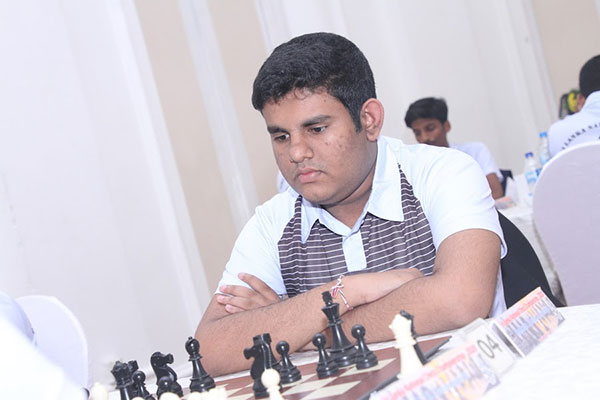
Ranindu set to meet Grand Master Oparin Grigoriy
National chess champion Ranindu Dilshan Liyanage was schedule to leave for Russia for the FIDE Chess World Cup 2021 today. According to the Chess Federation of Sri Lanka, the Ananda College player has become the first Sri Lankan male player in history to participate in such an event.
Sachini Ranasinghe participated in the Women’s World Cup in 2012.
The top 206 players in the world participate in this championship which is played on a knockout basis. It is played during a period of one and half months to find the best in the world. All top chess players in the world including the current world champion Magnus Carlson have confirmed their participation. The event starts with the Opening Ceremony to be held on July 11, in Sochi, Russia and the first round will commence on July 12.
Thanks to the new qualification system of FIDE, Sri Lanka got the opportunity to send a player to the World Cup 2021 on the country’s rating strength. According to Chess Federation of Sri Lanka the National Selection Committee planned to conduct a selection trial for Ranindu Dilshan Liyanage and the top ranked player Harshana Thilakarathne. CFSL said that Harshana had withdrawn due to some health reasons making way for Ranindu to grab the valuable opportunity.
Ranindu is set to meet 90th ranked Russian Grand Master Oparin Grigoriy in the first round.
Ranindu won the National Chess Championship title in October 2020 convincingly. Then he came back strongly to win the Sri Lanka Chess Grand Prix 2021.


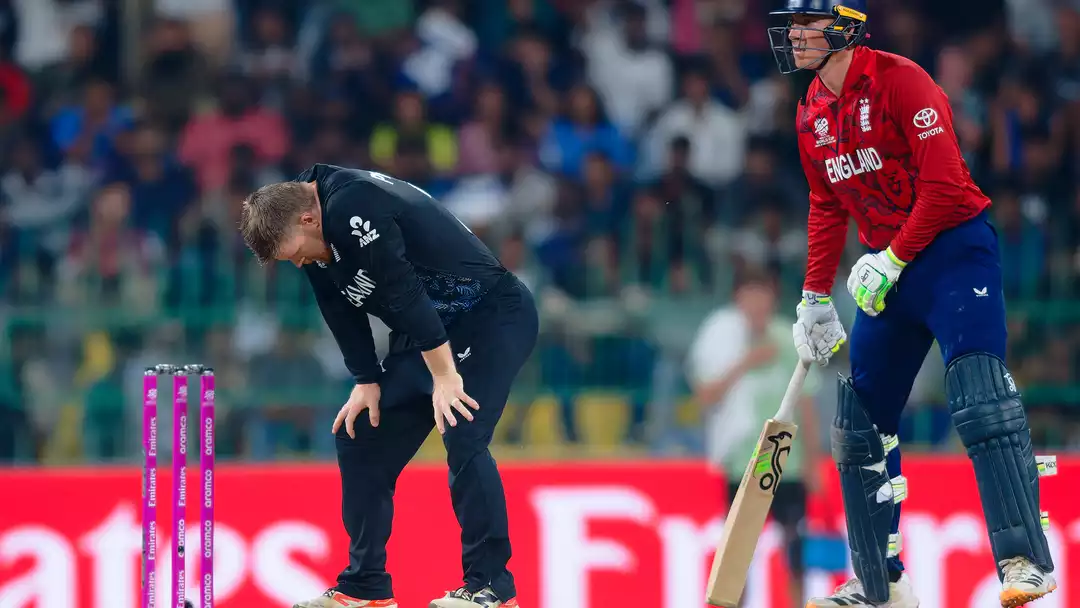
[Cricbuzz]

Pakistan’s habitual desperate net-run-rate calculations towards the tail-end of a group stage have thrown up another classic. In what is a dead-rubber for already-eliminated hosts Sri Lanka, Pakistan have been given a faint shot at staying alive in the T20 World Cup, thanks to a surprise comeback win for England over New Zealand. New Zealand boast a vastly superior net run rate (1.390) to Pakistan’s (-0.461), so for Salman Agha’s men to progress to the semi-finals, they must win today [Saturday] by around 64 runs, or chase any Sri Lankan target in about 13.1 overs. Those, for Pakistan, are the only numbers that matter in Pallekele.
That should, in theory, change the somewhat conservative approach they have taken through the middle overs. Frankly put, Babar Azam’s place in this T20I set-up was getting hard enough to argue for in regular T20I circumstances, but within these constraints is borderline unjustifiable. He, however, is not the only player whose strike-rate ceiling is limited, with captain Salman Agha similarly struggling this tournament, and indeed over the broader span of his T20I career.
However, Pakistan are yet to show any evidence of an ability to rack up a win of that sort of scale at this tournament so far. Indeed, Pakistan have never won by that margin against a Full Member at a T20 World Cup when batting first, and only once – in 2009 – when chasing. The slower surfaces of Sri Lanka compared to the flatter pitches in India make a path to such a victory more complicated, as does a Pakistani middle order that doesn’t boast elite power hitting, and Saim Ayub’s faltering form. But it’s a chance nonetheless, and at ICC events, sometimes that’s all Pakistan ask for.
There’s little other than pride at stake for Sri Lanka, whose tournament started with such promise, only to peak and fall away after a glorious win over Australia. They have lost their last three matches, and were the first side to be knocked out in the Super Eight. Pakistan’s qualification scenarios mean little to them, and they’ll want to demonstrate they are more than foil for Pakistani glory, or a roadblock to their progression.
The story, though, is of what Pakistan can possibly achieve, and whether they can thwart New Zealand’s progress to yet another ICC tournament semi-final.
A lot of Sri Lankan players will invariably be moved on after this T20 World Cup, but one who is set to form the core of the side for the next generation is Dunith Wellalage. The 23-year old left arm spinner’s competitive attitude makes him one of a short list of Sri Lankan players to have come out of this tournament with his reputation bolstered, and he has an ever-improving skill-set to go with it. He is yet to play a T20I against Pakistan, having missed their Asia Cup clash, flying home for a family bereavement. But with a surfeit of right-hand batters in Pakistan’s top order, he could find himself deployed early on as he was against New Zealand, perhaps to nip Sahibzada Farhan in the bud at the outset.
Salman Agha should perhaps be under more scrutiny than he is, having endured an indifferent tournament with the bat and an uninspiring one as captain. The questions swirling around his fitness for the format will only intensify after he let games drift with the ball against India and England, while his attempted aggression with the bat at No. 3 continues to feel feigned rather than organic. He has scored 60 runs in five innings at this tournament, 38 in one innings against Namibia. If Pakistan exit tamely, it is hard to envision him hanging on to the armband, and perhaps even his role in the side. However, Saturday perhaps represents one final chance for him to take control of his destiny.
Sri Lanka faced plenty of criticism for their meek capitulation against New Zealand, but as the tournament closes out, wholesale changes are not likely. Kusal Mendis suffered hamstring stiffness against New Zealand and is unlikely to play, with Kamil Mishara returning as wicketkeeper-batter.
Sri Lanka (probable): Pathum Nissanka, Kamil Mishara (wk), Charith Asalanka, Pavan Rathnayake, Kamindu Mendis, Dasun Shanaka (capt), Dushan Hemantha, Dunith Wellalage, Dushmantha Chameera, Maheesh Theekshana, Dilshan Madushanka
Shaheen Afridi’s performance against England makes it likely he will keep his spot. If Pakistan are to stick to two specialist seamers on this surface, it makes it a straight shootout between Naseem Shah and Salman Mirza. What’s less certain is how the equation changes Pakistan’s batting line-up. So far, they have been reluctant to drop Babar Azam, or play Khawaja Nafay. Any caution needs to go out of the window as they battle to stay alive.
Pakistan (probable): Sahibzada Farhan, Saim Ayub, Salman Agha (capt), Babar Azam/Khawaja Nafay, Fakhar Zaman, Shadab Khan, Usman Khan (wk), Mohammad Nawaz/Faheem Ashraf, Shaheen Afridi, Salman Mirza/Naseem Shah, Usman Tariq
[Cricinfo]


96TH BATTLE OF THE MAROONS
Open bat Nethul Edirimanne rose to the big occasion wth an unbeaten century as Ananda College posted 325 for five wickets at stumps on day one of the 96th Battle of the Maroons Big Match at the SSC ground on Friday.
Decidng to bat first, Ananda found Edirimanne holding their top order together as he built up useful partnerships in each session.
Edirimanne had just a single half century against his name this season and Ananda’s entire batting line up had just two centuries. Edirimanne batted through to the close of play and remained unbeaten on 150.
It was not only his highest score but also the highest score by an Anandian.
He had faced 254 balls by stumps and had stroked 14 fours and a six in his knock.
The days highest partnership -126 runs for the fifth wicket- was put on by Edirimanne and Ovin Perera who scored 53 runs before being given out lbw to Dunitha Anusara.
Perera scored six fours.
While Danindu Sellapperuma (33) and Sharada Jayaratne (37) contributed with 30s, Himira Kudagama made 24. Skipper Kithma Widanapathirana’s dismissal for two runs was the only dissapointment for Ananda on an otherwise fruiful opening day.
For Nalanda Osanda Pamuditha took two wickets.

Hanoi’s most popular street could kill you

At least 11 killed after military plane carrying banknotes crashes in Bolivia

Six balls that changed the night

“We welcome investors and tourists visiting Sri Lanka who contribute to strengthening economic and cultural ties”– PM

A ‘delicate’ balance for Canada and a ‘win-win’ for Modi as Carney visits India

Pakistan face stiff but straightforward equation for semi-final qualification

‘Dates have the highest sugar content to fight Coronavirus’

Sunday Island 27 December – Headlines

#SundayIsland 17th December – Headlines

Sunday Island – 28th March

Sunday Island Headlines – 21 March

Sunday Island – 21st February – Headlines
-

 Features6 days ago
Why does the state threaten Its people with yet another anti-terror law?
-

 Features6 days ago
Reconciliation, Mood of the Nation and the NPP Government
-

 Features6 days ago
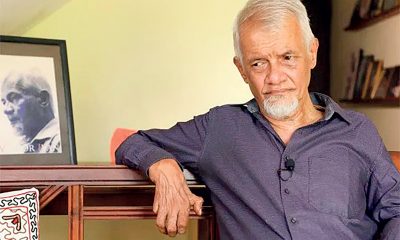
Victor Melder turns 90: Railwayman and bibliophile extraordinary
-

 Features5 days ago
LOVEABLE BUT LETHAL: When four-legged stars remind us of a silent killer
-
 Features6 days ago
Victor, the Friend of the Foreign Press
-

 Business5 days ago
Seeing is believing – the silent scale behind SriLankan’s ground operation
-

 Business5 days ago
Bathiya & Santhush make a strategic bet on Colombo
-

 Features6 days ago
Barking up the wrong tree