
Features
R.E. de Alwis (1891-1945) – Lake House’s scoop-getter in the DR Wijewardene era

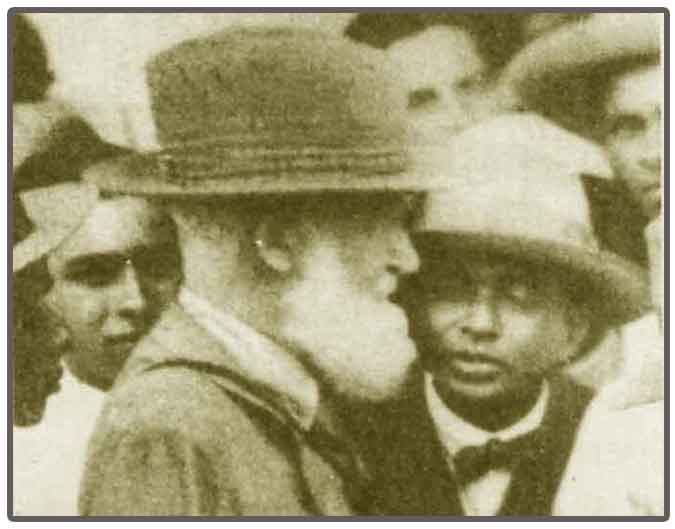
(Excerpted from Selected Journalism by HAJ Hulugalle)
R.E. de Alwis, one of the greatest newspaper men Ceylon has produced, died 25 years ago (when this book was published) on April 13. The news of his death came to his colleagues with a shock as he was at the peak of his career as a journalist and apparently in good health.
I say he was a great newspaperman not merely because he was a remarkably conscientious and successful reporter. He literally lived for his newspaper and one might even say died for it by driving himself too hard. There were better writers and desk-men in the office, but it was Alwis who carried the flag and made the sorties across new and disputed frontiers. He helped more than anyone else to put the “Daily News” in front as a journal of news. As a character he could have come straight out of Philip Gibbs’ “Street of Adventure” which was a newspaper classic 50 years ago.
Alwis had served briefly in two short-lived newspapers, the “Ceylonese” and the “People”. They were hard times. The editorial staff used to wait at the gate for anyone coming with a death notice to find the price of a dinner.
With his employment by D.R. Wijewardene about 1919, he seemed to have entered his spiritual home with a chief after his own heart. There were more experienced reporters with a sound knowledge of shorthand on the staff but Alwis was anxious to make an immediate impact. This he did by concentrating on getting front page news, a task in which he enjoyed the cooperation of the best news-getter in the establishment, the boss himself. A time came when every first-class “scoop” was promptly rewarded with a bonus.
Alwis had a disarming boldness which opened many official doors to him. When he met Mr. George Bernard Shaw at the Grand Oriental Hotel (now the Taprobane), he asked: “Mr. Shaw, are you going round the world because the world cannot go round you?” The great mean gave him one of his fetching smiles and asked in turn: “Young man, where did you get that from?”
As the star reporter Alwis met all the celebrities who came to Ceylon, such as Lloyd George, Georges Clemenceau, Ramsay MacDonald and Mahatma Gandhi. But his forte was the exclusive and often sensational news story to be splashed on the front page. During the agitation for constitutional reforms a secret memorandum was sent by those who were opposed to the reform, to the Colonial Office in Whitehall. In the Legislative Council the Colonial Secretary refused to table a copy. He was fully confident that none of the signatories would give it. Alwis was able to obtain a copy surreptitiously from a member of the household of Sir Ponnambalam Ramanathan. Sir Ponnambalam was one of the instigator’s of the memorandum.
It was often good fun tracking a piece of news with him. When I was editor of the paper he came to my room one day with the information – obtained no doubt from Mr. D.S. Senanayake, though he rarely disclosed his sources truthfully – that Sir Bernard Bourdillon, the Chief Secretary at that time was about to be transferred elsewhere. I had seen in “The Times” of London that the Governor of Uganda was about to retire. I asked Alwis to telephone Sir Bernard at Nuwara Eliya, where he was on holiday, to find out whether he was going to Uganda.
Alwis did so, to be told that there was no foundation whatever for such a surmise. Two weeks later I sent Alwis a telegram, congratulating him on his “scoop.” He did not know whether I was referring to the birth of his eldest son, which had occurred during the previous night, or to something else. What happened was that I had received a letter from Sir Bernard Bourdillon apologizing for his denial of the news. He assured me that he had no idea he was going to Uganda and wondered how we had got the information before he did.
Until Alwis joined the “Daily News” the paper carried very little news as such. Meetings were reported at great length, official reports were published in full and there were columns and columns of the attendance at weddings and funerals. Government information was carefully guarded by European officials. A reporter in the “Ceylon Morning Leader” V.B. Ernst, who had a brother-in-law at the Colonial Secretary’s office, often obtained exclusive news of appointments and transfers. Mr. Armand de Souza, the able editor of that paper, had contacts with the higher officials and was sometimes able to get something special for his news columns.
Alwis raided the same field and made his presence felt. But it was after Mr. D.S. Senanayake was elected to the Legislative Council that Alwis emerged as a news-gatherer par excellence. Senanayake’s friendship with D. R. Wijewardene made his task easier. “D.S.” was the Secretary of the unofficial block in the Council and the most active member of its Finance Committee which had all the inside information of what went on in the Government.
Alwis was soon on friendly terms not only with Senanayake’s friends and allies but also with some of the European officials, the most important of whom was Sir Wilfrid Woods, Colonial Treasurer and later Financial Secretary. Woods, who had a crusty sense of humour, regarded Alwis as a new phenomenon and found time for him. He pumped Alwis for news of “D.S,” Oliver Goonetilleke and Kotelawala, and their machinations. What Alwis gathered from Sir Wilfrid he passed on to “D.S.”
When Senanayake became a Minister in the State Council Alwis was always at hand to get information from him and keep him informed of what went on in political circles. When the Minister had his lunch brought to his office the sweet, which he was not allowed to eat, was always kept for Alwis.
There was indeed no politician of any importance who did not welcome Alwis. He was quite capable of discussing Vedantic philosophy and the Christian gospels with Sir Ponnambalam Ramanathan, singing fish with E.R. Tambimuttu and Catholic politics with H.A.P. Sandarasegara and Father Long. Anyone who gave him news was his friend and he rewarded his informant with small favours from his more influential patrons.
In the office he often managed to upset his fellow-workers by his mysterious movements, his furtive relations with important persons and his readiness to work long hours. There were certain institutions which could not be criticized in his presence with impunity, among them the Roman Catholic Church, the proprietor of the “Daily News” and Mr. Senanayake’s political circle. Loyalty, he often repeated, was greater than love. For the majority of his colleagues journalism was a way of earning a living; to him it was a way of life.
He was never in a hurry to hand in his “copy”, a practice which irritated the sub-editors, Orion de Zylva in particular, who were in a hurry to catch their trains. Alwis who started his working day in the morning, almost invariably caught the last train. For the paper, he scorned delights and lived laborious days. When his family was on holiday he lingered in the office to make telephone calls to his informants or to write a letter to his wife. When there was a big news story in hand he waited till the pages were closed and the paper was put to bed.
He was the born journalist. When he died a great newspaper man passed. I was his editor for seventeen years and his colleague for a much longer period and am glad to be able to pay this tribute to his memory.
(This article, headlined ‘Story of a reporter’ first appeared in the Ceylon Daily News on April 13, 1970)











The 2004 Asian Tsunami erupted the day after Christmas. Like the Boxing Day Test Match in Brisbane, it was a boxing day bolt for Indonesia, Thailand, Sri Lanka, India and Maldives. Twenty one years later, in 2025, multiple Asian cyclones hit almost all the old victims and added a few more, including Malayasia, Vietnam and Cambodia. Indonesia and Sri Lanka were hit hard both times. Unlike the 2004 Tsunami, the 2025 cyclones made landfalls weeks before Christmas, during the Christian Season of Advent, the four-week period before Christmas preparing for the arrival of the Messiah. An ominously adventus manifestation of the nature’s fury.
Yet it was not the “day of wrath and doom impending … heaven and earth in ashes ending” – heavenly punishment for government lying, as an opposition politician ignorantly asserted. By that token, the gods must have opted to punish half a dozen other Asian countries for the NPP government’s lying in Sri Lanka. Or all those governments have been caught lying. Everyone is caught and punished for lying, except the world’s Commander in Chief for lying – Donald J. Trump. But as of late and none too sooner, President Trump is getting his punishment in spades. Who would have thought?
In fairness, even the Catholic Church has banished its old hymn of wrath (Dies irae, dies illa) that used to be sung at funerals from its current Missals; and it has on offer, many other hymns of peace and joy, especially befitting the Christmas season. Although this year’s Christmas comes after weeks of havoc caused by cyclonic storms and torrential rains, the spirit of the season, both in its religious and secular senses, will hopefully provide some solace for those still suffering and some optimism to everyone who is trying to uplift the country from its overflowing waterways and sliding slopes.
As the scale of devastation goes, no natural disaster likely will surpass the human fatalities that the 2004 Tsunami caused. But the spread and scale of this year’s cyclone destruction, especially the destruction of the island’s land-forms and its infrastructure assets, are, in my view, quite unprecedented. The scale of the disaster would finally seem to have sunk into the nation’s political skulls after a few weeks of cacophonic howlers – asking who knew and did what and when. The quest for instant solutions and the insistence that the government should somehow find them immediately are no longer as vehement and voluble as they were when they first emerged.
NBRO and Landslides
But there is understandable frustration and even fear all around, including among government ministers. To wit, the reported frustration of Agriculture Minister K.D. Lalkantha at the alleged inability of the National Building Research Organization (NBRO) to provide more specific directions in landslide warnings instead of issuing blanket ‘Level 3 Red Alerts’ covering whole administrative divisions in the Central Province, especially in the Kandy District. “We can’t relocate all 20 divisional secretariats” in the Kandy District, the Minister told the media a few weeks ago. His frustration is understandable, but expecting NBRO to provide political leaders with precise locations and certainty of landslides or no landslides is a tall ask and the task is fraught with many challenges.
In fairness to NBRO and its Engineers, their competence and their responses to the current calamity have been very impressive. It is not the fault of the NBRO that local disasters could not be prevented, and people could not be warned sufficiently in advance to evacuate and avoid being at the epicentre of landslides. The intensity of landslides this year is really a function of the intensity and persistence of rainfall this season, for the occurrence of landslides in Sri Lanka is very directly co-related to the amount of rainfall. The rainfall during this disaster season has been simply relentless.
Evacuation, the ready remedy, is easier said than socially and politically done. Minister Lal Kantha was exasperated at the prospect of evacuating whole divisional secretariats. This was after multiple landslides and the tragedies and disasters they caused. Imagine anybody seriously listening to NBRO’s pleas or warnings to evacuate before any drop of rainwater has fallen, not to mention a single landslide. Ignoring weather warnings is not peculiar to Sri Lanka, but a universal trait of social inertia.
I just lauded NBRO’s competence and expertise. That is because of the excellent database the NBRO professionals have compiled, delineating landslide zones and demarcating them based on their vulnerability for slope failure. They have also identified the main factors causing landslides, undertaken slope stabilization measures where feasible, and developed preventative and mitigative measures to deal with landslide occurrences.
The NBRO has been around since the 1980s, when its pioneers supplemented the work of Prof. Thurairajah at Peradeniya E’Fac in studying the Hantana hill slopes where the NHDA was undertaking a large housing scheme. As someone who was involved in the Hantana project, I have often thought that the initiation of the NBRO could be deemed one of the positive legacies of then Housing Ministry Secretary R. Paskaralingam.
Be that as it may, the NBRO it has been tracking and analyzing landslides in Sri Lanka for nearly three decades, and would seem to have come of age in landslides expertise with its work following 2016 Aranayake Landslide Disaster in the Kegalle District. Technically, the Aranayake disaster is a remarkable phenomenon and it is known as a “rain-induced rapid long-travelling landslide” (RRLL). In Kegalle the 2016 RRLL carried “a fluidized landslide mass over a distance of 2 km” and caused the death of 125 people. International technical collaboration following the disaster produced significant research work and the start of a five-year research project (from 2020) in partnership with the International Consortium on Landslides (ICL). The main purpose of the project is to improve on the early warning systems that NBRO has been developing and using since 2007.
Sri Lankan landslides are rain induced and occur in hilly and mountainous areas where there is rapid weathering of rock into surface soil deposits. Landslide locations are invariably in the wet zone of the country, in 13 districts, in six provinces (viz., the Central, Sabaragamuwa, Uva, Northwestern, Western and Southern, provinces). The Figure below (from NBRO’s literature) shows the number of landslides and fatalities every year between 2003 and 2021.
Based on the graphics shown, there would have been about 5,000 landslides and slope failures with nearly 1,000 deaths over 19 years between 2003 and 2021. Every year there was some landslide or slope failure activity. One notable feature is that there have been more deaths with fewer landslides and vice-versa in particular years. In 2018, there were no deaths when the highest number (1,250) of landslides and slope failures occurred that year. Although the largest number in an year, the landslides in 2018 could have been minor and occurred in unpopulated areas. The reasons for more deaths in, say, 2016 (150) or 2017 (250+), could be their location, population density and the severity of specific landslides.
NBRO’s landslide early warning system is based on three components: (1) Predicting rainfall intensity and monitoring water pressure build up in landslide areas; (2) Monitoring and observing signs of soil movement and slope instability in vulnerable areas; and (3) Communicating landslide risk level and appropriate warning to civil authorities and the local public. The general warnings to Watch (Yellow), be Alert (Brown), or Evacuate (Red) are respectively based on the anticipated rainfall intensities, viz., 75 mm/day, 100 mm/day; and 150 mm/day or 100 mm/hr. My understanding is that over the years, NBRO has established its local presence in vulnerable areas to better communicate with the local population the risk levels and timely action.
Besides Landslides
This year, the rain has been relentless with short-term intensities often exceeding the once per 100-year rainfall. This is now a fact of life in the era of climate change. Added to this was cyclone Ditwah and its unique meteorology and trajectory – from south to north rather than northeast to southwest. The cyclone started with a disturbance southwest of Sri Lanka in the Arabian Sea, traversed around the southern coast from west to east to southeast in the Bay of Bengal, and then cut a wide swath from south to north through the entire easterly half of the island. The origin and the trajectory of the cyclone are also attributed to climate change and changes in the Arabian Sea. The upshot again is unpredictability.
Besides landslides, the rainfall this season has inundated and impacted practically every watershed in the country, literally sweeping away roads, bridges, tanks, canals, and small dams in their hundreds or several hundreds. The longitudinal sinking of the Colombo-Kandy Road in the Kadugannawa area seems quite unparalleled and this may not be the only location that such a shearing may have occurred. The damages are so extensive and it is beyond Sri Lanka’s capacity, and the single-term capacity of any government, to undertake systematic rebuilding of the damaged and washed-off infrastructure.
The government has its work cutout at least in three areas of immediate restoration and long term prevention. On landslides warning, it would seem NBRO has the technical capacity to do what it needs to do, and what seems to be missing is a system of multi-pronged and continuous engagement between the technical experts, on the one hand, and the political and administrative powers as well as local population and institutions, on the other. Such an arrangement is warranted because the landslide problem is severe, significant and it not going to go away now or ever.
Such an engagement will also provide for the technical awareness of the problem, its mitigation and the prevention of serious fallouts. A restructuring could start from the assignment of ministerial responsibilities, and giving NBRO experts constant presence at the highest level of decision making. The engagement should extend down the pyramid to involve every level of administration, including schools and civil society organizations at the local level.
As for external resources, several Asian countries, with India being the closest, are already engaged in multiple ways. It is up to the government to co-ordinate and deploy these friendly resources for maximum results. Sri Lanka is already teamed with India for meteorological monitoring and forecasting, and with Japan for landslide research and studies. These collaborations will obviously continue but they should be focused to fill gaps in climate predictions, and to enhance local level monitoring and prevention of landslides.
To deal with the restoration of the damaged infrastructure in multiple watershed areas, the government may want to revisit the Accelerated Mahaweli Scheme for an approach to deal with the current crisis. The genesis and implementation of that scheme involved as many flaws as it produced benefits, but what might be relevant here is to approach the different countries who were involved in funding and building the different Mahaweli headworks and downstream projects. Australia, Britain, Canada, China, Italy, Japan, Sweden and Germany are some of the countries that were involved in the old Mahaweli projects. They could be approached for technical and financial assistance to restore the damaged infrastructure pieces in the respective watershed areas where these countries were involved.
by Rajan Philips ✍️

Here is what you can do!
Comedy and the ability to have a good laugh are what keep us sane. The good news to announce is that there are many British and American comedy shows posted up and available on the internet.
They will bring a few hours of welcome relief from our present doldrums.
Firstly, and in a class of its own, are the many Benny Hill shows. Benny is a British comedian who comes from a circus family, and was brought up in an atmosphere of circus clowning. Each show is carefully polished and rehearsed to get the comedy across and understood successfully. These clips have the most beautiful stage props and settings with suitable, amusing costumes. This is really good comedy for the mature, older viewer.
Benny Hill has produced shows that are “Master-Class” in quality adult entertainment. All his shows are good.
Then comes the “Not the Nine o’clock news” with Rowan Atkinson and his comedy team producing good entertainment suitable for all.
And then comes the “Two Ronnies” – Ronnie Barker and Ronnie Corbett, with their dry sense of humour and wit. Search and you will find other uplifting shows such as Dave Allen, with his monologues and humour.
All these shows have been broadcast in Britain over the last 50 years and are well worth viewing on the Internet.
Similarly, in The USA of America. There are some really great entertainment shows. And never forget Fats Waller in the film “Stormy Weather,” where he was the pianist in the unforgettable, epic, comedy song “Ain’t Misbehavin”. And then there is “Bewitched” with young and glamorous Samantha Stevens and her mother, Endora who can perform magic. It is amazing entertainment! This show, although from the 1970s was a milestone in US light entertainment, along with many more.
And do not overlook Charlie Chaplin and Laurel and Hardy, and all the Disney films. Donald Duck gives us a great wealth of simple comedy.
The US offers you a mountain of comedy and good humour on Youtube. All these shows await you, just by accessing the Internet! The internet channel, ‘You tube’ itself, comes from America! The Americans reach out to you with good, happy things right into your own living room!
Those few people with the ability to understand English have the key to a great- great storehouse of uplifting humour and entertainment. They are rich indeed!
by Priyantha Hettige

Presidential Mobile Service at Matara amid JVP terror
Like most Ministers, Mr. Athulathmudali over programmed himself. In this respect his was an extreme case. He was an early riser and after his morning walk and the usual routines of a morning, was ready for business by 6.30 a.m. In fact he once shocked an IMF delegation by fixing the appointment with it at this hour. The delegation had to be persuaded that they had heard right, and that the appointment was indeed for 6.30 a.m. and not 6.30 p.m. This desire to get through much as possible during a day inevitably led to certain imbalances. Certain matters which needed more time did not get that time, whilst at the level of officials, we felt that we needed more time with him, and quality time at that.
I had spoken to him several times on this subject. He always had good intentions and wanted to give us more time. But with his political, social and even intellectual responsibilities in regard to speaking engagements of a highly professional nature, it was not often possible to find this time. This situation was highlighted in a comic way, when one day on hearing that the minister had arrived in office for a short time, I grabbed some important papers which I wanted to discuss with him, and made for his room. When I entered, I found three officers, with files in their hands milling outside the door of the washroom. The minister was inside.
I suggested that we might as well form a queue outside the door, a queue which I also joined. An official who came after me also joined the queue. When the minister opened the door, to his great astonishment, and then to his amusement, he found five senior officials, including his Secretary lined up outside the bathroom door! It was funny and we made it funny. But the underlying intentions were quite serious, and we wanted to send him a message that we wanted more time with him. We had to however grab moments such as these in order to keep the flow of work going.One day he good humouredly said, “You all swamp me as I come in,” to which I lightly replied “As a distinguished lawyer you should know that possession is nine-tenths of the law, and now we are in possession of both your room and your attention.” Mr. Athulathmudali chuckled.
An important requirement under Mr. Athulathmudali was a report that had to be submitted to him if any official under his Ministry went abroad on official business. The report had to be reasonably brief, more analytical than descriptive and wherever possible or relevant contain specific recommendations in regard to the betterment of the officer’s area of work. Since the Ministry was quite large, a considerable number of officials went abroad for seminars, study tours, research collaboration, conferences, negotiations and so on. There were, therefore a significant number of reports coming to him. Many of these he read, and on some, he commented or asked questions or sought clarifications. What amazed us was how he found the time. His main enemy was time and he battled it with persistence and determination. Most of us were also in a similar position, and in this, his powerful example was a source of encouragement.
Duties not quite pleasant
As mentioned in several places in these memoirs, a senior public servant’s or a Secretary’s job is not always a pleasant one. At the level of the hierarchy of officials the buck stops with you. Thereafter, when necessary, battling the minister becomes your business. I used to insist to my officials that I needed a good brief. I was not prepared to go and start an argument with a minister unless I was in possession of the full facts. Interpretation was my business. But I needed verifiable facts and authentic figures. Officers who worked with me were soon trained to comply with these requirements. After that was done, if there was any flak, it was my business to take it upon myself. On one such occasion, I had to speak rather firmly to the acting Minister, Mr. G.M. Premachandra. He was young, energetic and even aggressive and was somewhat of a “stormy petrel.” He was an effective speaker in the Sinhala e and could be a formidable debater.
When he became State Minister for Food, he took it upon himself to probe everything. He started getting involved in administrative matters, the implications of which he did not understand, and the details of which he had no time for. During the course of these he not only started criticizing officials liberally, but also employed innuendo to suggest that they were corrupt. When interested parties got to know this, they fed him with halftruths and sometimes plain lies. This naturally confirmed the suspicions in his own mind. He blindly felt around and got hold of some tail and thought that was the elephant. The State Secretary, Mr. Sapukotana, an experienced and balanced official tried his best to advice the minister of the consequences of his actions.
Senior officials in the Food Department were being kept off balance much of the time. Paralysis as creeping into the decision making process. No one was taking decisions because taking decisions risked misinterpretation, suspicion and innuendo. The Deputies were pushing papers up to the Food Commissioner, and soon the Food Commissioner was pushing papers up to the State Secretary. Matters were getting really serious, because delays in calling for and deciding on tenders, attending to commercial disputes and so on were bound to have a serious effect on the availability of timely food supplies, and the maintaining of food security.
Mr. Sapukotana kept me informed from time to time of the developing situation. He tried his best to handle it without disturbing me. But it gradually came to a point that we were both of the view that my intervention was necessary. I took an opportunity that presented itself after a “mini cabinet” meeting which Mr. Premachandra chaired as Acting Minister. I asked him whether he would stay back for a moment. His Secretary seemed embarrassed to stay, but I asked him also to sit. Thereafter, I politely but firmly explained to the minister, the consequences of his actions.
I asked him whether he was aware that nobody was prepared to take a decision in the food sector. I pointed out that should disaster strike, Minister Athulathmudali would certainly ask him for an explanation. I told him further, that in such a contingency, that we as officials will have to tell the truth to the minister. The acting minister listened in silence. I wondered as to what forces of counter attack were gathering in his breast. He did not have the reputation of bowing meekly to a challenge and here I was calling into question his entire approach to his work.
Ultimately when he spoke, he said something that we least expected and which took us completely by surprise. He said that he listened carefully to me; he said that until now he had not realized the gravity of the situation that his actions were precipitating. Then to my great astonishment he said: “You have given me advice like a parent, like a father. Even parents don’t always give such good advice. I will act according to your advice.” Mr. Sapukotana and I were rendered speechless. This was one more of the many experiences I had in public service, where the totally unexpected had occurred.
Through my experience I have been convinced that one should not shirk one’s duty to advice ministers. This duty has to be performed in the public interest and one should not be deterred by possible consequences. However, there is a way and manner of giving this advice. One has to be polite. One should not adopt a confrontational attitude. In my experience, some of these “consequences” which people fear are more imagined than real, and ministers and politicians do not always act according to their perceived public characteristics. On this occasion Mr. Premachandra was a case in point.
Presidential Mobile Service – Matara
The second Presidential Mobile Service was to be held at Matara on November 3, 1989. This was a time of intense JVP activity when the country was gripped by fear. The decision to hold the service in Matara in the deep south was it a sense a challenge to the JVP. Rumours were rife that they would disrupt activities. We were to leave during the early morning of Nov. 3 and this itself was scary. In fact the country had reached a stage where there was very little traffic on the roads after about 9 p.m. We had now to leave for Matara to face an unknown situation leaving home around 4.30 in the morning.
When we left, we noticed that there was hardly any traffic on the roads. All around was in pitch darkness. Even some of the street lights were not functioning. It was quite eerie. We made our way past numerous check points at a couple of which we were stopped.
All this was not a comfortable experience. One felt apprehension. I was booked at the Weligama rest house but when I reached it I found that the power had been disrupted by the JVP during the previous night. We would have to be without lights or fans. But what was far worse was that the disruption of power had affected the pumping of water and the toilets could not be flushed.
The rest house was in short uninhabitable. The authorities there informed us that power would be restored by evening. But none of us had confidence that this would be done or if done, that it would not be disrupted again during the night. Some of us therefore decided to make alternative arrangements, which were not easy to make. Most of the hotels in the vicinity of Matara and even somewhat beyond had already been booked. Eventually, after a diligent search and with the assistance of friends, I found myself a room at Koggala Beach hotel.
This was an immense relief. In fact, it turned out to be much more than mere relief because of the interesting crowd of public servants in occupation. They were a jolly group of story tellers who had a variety of the most hilarious anecdotes to retail, which spared no one. When we reached the hotel at the end of a tiring day, we were able to forget the grim reality outside. Perhaps we really needed to laugh our cares away. Most of us had been subjected to considerable strain for a significant period of time.
At the mobile service itself in the Rahula College premises where the service was held was almost completely deserted on the first day. People were afraid to defy a JVP ban on attending. On the second day however the dam burst. People flocked in from all quarters and directions jamming the space and facilities available. Long queues formed outside areas allocated to all Ministries. The people themselves had suffered due to the disruption of their lives and activities, and when some relief seemed available, one day was all they could contain themselves however dire the threat. They voted with their feet.
On that second day we couldn’t finish at 5 p.m. There were so many people that hours were extended till 6.30 p.m. By the time we got back to our hotels, it was well past 8 p.m. Usually, the third day of the service was a half day, where we finished by 1 p.m., had lunch and started for home. But because of the lost first day and the crowds, the third day was extended to 5 p.m. But that was the official time. Many of us were stuck till about 7 p.m. We did not want to abandon the people still in the queue and who were now looking pretty desperate that they would not be attended to. They had suffered much. This meant once again traveling in the dark, this time to get home.
(Excerpted from In Pursuit of Governance, autobiography of MDD Peiris)

No Christmas miracle for England as Australia make it 3-0 to retain the Ashes in 11 days

Showers will occur in the Eastern, Uva and Central provinces and in Polonnaruwa and Hambantota districts.

Steps are being taken to abolish the Executive Presidency and establish a Parliamentary System of Government – Prime Minister

The full speech delivered by President Anura Kumara Dissanayake in Parliament (2025-12-19)

Lawyers slam NPP Mayor for claiming judicial powers

Electricity consumers oppose going to WB to cover CEB losses from Ditwah, instead of using funds in its kitty

‘Dates have the highest sugar content to fight Coronavirus’

Sunday Island 27 December – Headlines

#SundayIsland 17th December – Headlines

Sunday Island – 28th March

Sunday Island Headlines – 21 March

Sunday Island – 21st February – Headlines
-

 Midweek Review5 days ago
How massive Akuregoda defence complex was built with proceeds from sale of Galle Face land to Shangri-La
-

 News4 days ago
Pope fires broadside: ‘The Holy See won’t be a silent bystander to the grave disparities, injustices, and fundamental human rights violations’
-

 News4 days ago
Pakistan hands over 200 tonnes of humanitarian aid to Lanka
-
 News5 days ago
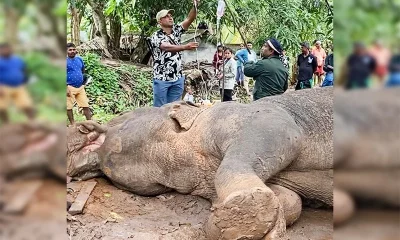
Burnt elephant dies after delayed rescue; activists demand arrests
-

 Business3 days ago
Unlocking Sri Lanka’s hidden wealth: A $2 billion mineral opportunity awaits
-

 Editorial5 days ago
Colombo Port facing strategic neglect
-

 News3 days ago
Army engineers set up new Nayaru emergency bridge
-

 News5 days ago
Sri Lanka, Romania discuss illegal recruitment, etc.