
Editorial
Puzzling reshuffle

Tuesday 17th August, 2021
There has been a mini Cabinet reshuffle. One is at a loss to understand the rationale, if any, behind it. People would have been happy if at least one half of the Cabinet had been sacked. What made President Gotabaya Rajapaksa reshuffle only a few members of his ministerial team?
Pavithra Wanniarachchi, who held the health portfolio, has been appointed the Transport Minister. The Health Ministry drew heavy flak, on her watch, for its poor response to the pandemic. Wanniarchchi also blotted her copybook by promoting a shaman’s herbal concoction, which was touted as a cure for Covid-19, and failing to take timely action to contain the pandemic. But the question is whether she was given the freedom to do what needed to be done to manage the health emergency. If she is blamed for the failings of the Health Ministry, shouldn’t she be given a part of the credit for the country’s successful vaccination drive? Will the ills of the Health Ministry go away with her exit? What made the government think Keheliya Rambukwella, as the new Health Minister, would succeed where Wanniarchchi did not? Did he succeed as the Media Minister?
Sports Minister Namal Rajapaksa has got another ministerial portfolio—Development Coordination and Supervision, whatever that means. Why has he been entrusted with an additional responsibility? Has he performed exceptionally well in his present capacity? What has been his outstanding contribution to sports?
Prof. G. L. Peiris, who held the education portfolio, has been appointed the Minister of Foreign Affairs. Dinesh Gunawardena, who was the Foreign Minister, is now the Minister of Education. The Education Ministry has had to solve a teachers’ salary issue that has remained unsolved for decades. Not even Prime Minister Mahinda Rajapaksa has been able to sort it out in spite of having had talks with teachers’ trade unions. An attempt to rectify teachers’ salary anomalies will open a Pandora’s box with those in other services taking to the streets. So, how is Dinesh going to solve this seemingly intractable problem, and reopen schools and universities?
Prof. Peiris served as the External Affairs Minister under the previous Rajapaksa government. But the challenges that the incumbent government faces on the diplomatic front are too difficult for him to overcome. The Western bloc is all out to have a war crimes tribunal set up here, and will do everything in its power to tame or even destabilise the government, which is considered pro-Chinese.
Gamini Lokuge, who was the Minister of Transport, has been made the Minister of Power. We thought he would be appointed the Health Minister because he seems to know better than doctors; a few months ago, he had a lockdown in Piliyandala lifted, claiming that the spread of the pandemic could be curbed without the area being closed. His knowledge of public health being superior to that of doctors, doesn’t he deserve the Health portfolio?
As for electricity, Lokuge may know a power cable from a telephone line but that does not qualify him to be the minister in charge of the power sector, which is a highly specialised field. This does not mean the Minister of Power should necessarily be an engineer, but he or she should be knowledgeable enough to understand what is going on in this vital sector, and what needs to be done to improve it.
The Ministry of Power was functioning reasonably well, on Dullas Alahapperuma’s watch, compared to most other ministries. Why was Dullas removed from there and made the Media Minister? Are the Rajapaksas undermining senior politicians from Matara so that a member of their clan in Parliament, representing the same district, could emerge stronger there?
Dullas, a former journalist, is sure to gel well with journalists. But the government’s hostility towards the independent media may have a corrosive effect on his relations with the media personnel. Moreover, the task of controlling the state media institutions, which are political minefields, is as dangerous as shaving with a cut-throat razor in darkness. Dullas had better find a gorget to protect his throat.
The mini Cabinet reshuffle exemplifies a local saying; it is ‘like changing pillows as a cure for a headache’.



The International Monetary Fund (IMF) has told Sri Lanka some home truths, the most disconcerting one being that economic recovery is beginning to lose momentum. It has attributed this situation to post-disaster disruptions, the West Asia conflict and rising global oil prices. These three factors are causing high inflationary risks, the IMF has said, warning that economic growth in 2026 could drop to 3% from 5% in 2025. Not that these facts were unknown to the government, the Opposition and the public, but dispassionate statements made by the IMF are credible and more impactful.
The parlous state of Sri Lanka’s economy is also due to several other factors, such as a sharp drop in tourism receipts, vehicle imports that helped revive the automobile sector and boost state revenue but took a heavy toll on foreign reserves, a huge increase in diesel consumption by oil-fired power plants to compensate for a generation loss caused by a coal procurement racket at Norochcholai, and staggering disaster recovery costs.
Problems like external pressures on the economy, caused by foreign conflicts, etc., are obviously beyond Sri Lanka’s control, but other causative factors could have been tackled much better. Vehicle imports should have been regulated properly, with a balance being maintained between revenue generation and the stability of foreign currency reserves.
The JVP-NPP government is apparently driven by a desire to brag that it has ‘filled the state coffers” and done much better than its predecessor on the economic front. It should have restricted vehicle imports and nonessentials much earlier at the first signs of trouble to ease mounting pressure on the rupee. Procrastination is the thief of forex. Measures taken to address the rupee and foreign currency crises must complement each other to help achieve the broader goal of economic stability and growth.
After weeks of dilly-dallying, the JVP-NPP government has taken some action to curtail the foreign exchange outflow. However, its efforts to reduce the national oil bill are far from satisfactory. Expenditure on fuel imports is the largest item in Sri Lanka’s import basket, comprising around 20% of the total import bill on average annually over the past 10 years, according to the Central Bank data. So, reducing the oil bill is half the battle in strengthening the country’s foreign currency reserves. The government should intensify its focus on increasing power generation from renewable sources and encouraging rooftop solar projects across the country while developing the public transport sector to reduce fuel consumption significantly.
The IMF can only assist in achieving economic stability, and sustained growth has to be achieved through a far-reaching reform drive. The biggest challenge before the JVP-NPP government is not holding the Opposition at bay but preparing the country for the task of straightening up the economy, instead of making more promises and promoting the “hand-out culture” in the name of social welfare. Most of all, corruption must be eliminated and austerity measures adopted in keeping with the promises of the JVP/NPP.
The IMF has reportedly indicated support for temporary fiscal easing in 2026 to accommodate relief measures linked to external shocks and reconstruction spending following Cyclone Ditwah, but the government is expected to return to stricter fiscal targets from 2027 onward. This kind of reprieve is popularly called an interval in hell. The Opposition had better take cognisance of the harsh economic reality and stop promising the public the stars and the moon in a bid to recover lost ground. It does not seem to have an alternative strategy to stabilise the economy and spur growth. If it knows how to do so, let it be urged to reveal its plan for the benefit of the country. Mere rhetoric won’t do.
While out of power, the JVP/NPP, too, pretended to have a panacea for all economic ills of the country and won elections. It is now struggling to make good on its election promises, most of which remain unfulfilled. The Opposition ought to stop trying to dupe the public into believing that more relief can be granted while the economy is in the current state.

Saturday 30th May, 2026
The Joint Opposition (JO) has submitted a petition to the Commission to Investigate Allegations of Bribery or Corruption (CIABOC), calling for the suspension of CIABOC Director General Ranga Dissanayake and a high-level probe into his allegedly arbitrary and biased conduct. It has claimed that Dissanayake is misusing his position to further the interests of the ruling NPP led by the JVP, and the integrity of the CIABOC investigations has been undermined by his political bias and arbitrary actions.
There are arguments for and against the Opposition’s campaign against the CIABOC DG. Dissanayake himself has denied the allegations against him as baseless, and it is being argued in some quarters that he is in the Opposition’s crosshairs because of the ongoing investigations into corrupt deals under the previous governments. The JO has cited in support of its petition against Dissanayake an affidavit the late SriLankan CEO Kapila Chandrasena submitted to court through his lawyers, claiming that Dissanayake intimidated him.
Allegations against Dissanayake have not been substantiated, but they have adversely impacted the image of the CIABOC. Hence the need for a thorough investigation into the charges contained in the JO’s petition, which is now in the public domain.
There are various allegations against many state officials in key positions. Some officials of the Attorney General’s Department, the police top brass and some secretaries to ministries have also been accused of misusing their authority to advance the government’s political agenda. Some public officials’ partiality and servility to the government in power severely erode public trust in the institutions they represent and make a mockery of the constitutional safeguards in place to ensure their independence. Constitutional provisions alone cannot depoliticise public institutions; state officials in key positions must assert their independence from politicians and be above reproach.
The JVP was instrumental in having the 17th Amendment to the Constitution introduced in 2001, paving the way for the establishment of the Independent Commissions to safeguard the independence of key state institutions vis-a-vis political interference. In 2015, it campaigned really hard to have the 18th Amendment replaced with the 19th Amendment to restore the 17th Amendment in all but name. In 2022, it joined forces with other Opposition parties and civil society groups to do away with the 20th Amendment and bring in the 21st Amendment, which revived the constitutional mechanisms the 19th Amendment had put in place to free the state service from the clutches of politicians.
But today the JVP-led NPP government stands accused of manipulating the Constitutional Council to elevate its loyalists among public officials to key positions in the state service and pressuring officials to toe its line. The Sri Lanka Association of Divisional Secretaries and Assistant Divisional Secretaries has protested against a controversial government decision to provide “Clean Sri Lanka” coordinators, who are said to be JVP cadres, with offices inside Divisional Secretariats. It has written to President Anura Kumara Dissanayake opposing the government move and warning that such deployment of “Clean Sri Lanka” operatives will only undermine the independence of the public service. The JVP/NPP is accused of trying to establish a parallel administration as part of a strategy to perpetuate its hold on power.
It is imperative that the CIABOC conduct a thorough probe into the JO’s allegations against DG Dissanayake, in a transparent manner. That is the only way it can clear its name, if at all. If the allegations at issue go uninvestigated, they will undermine the integrity of the CIABOC, and provide a fresh impetus to the Opposition’s campaign.

Friday 29th May, 2026
How long the Provincial Councils (PCs) will remain unelected is anybody’s guess. All of them are currently under the provincial Governors appointed by the President. There have been five Presidents and four governments since the conclusion of the last PC elections held on a staggered basis between 2012 and 2014. The JVP-NPP government is under increasing pressure to hold the much-delayed PC polls. The NPP’s National Policy Framework, A Thriving Nation: A Beautiful Life, promises to hold the PC elections within one year of forming a government. But the government is now wary of holding elections because its performance at last year’s local LG polls fell below its expectations just seven months after its spectacular win at the 2024 general election.
The Opposition has sought to capitalise on what is described as the government’s fear of elections. It is cranking up pressure on the JVP/NPP to stop trotting out lame excuses and hold the PC elections.
JVP General Secretary Tilvin Silva caused quite a stir the other day by declaring that funds allocated by Budget 2026 for the PC elections had been spent on disaster relief and therefore PC elections could not be held this year. The Opposition and Election monitors lashed out at the government for its efforts to postpone the PC polls on some flimsy pretext. The NPP politicians have since claimed there are funds for elections but stopped short of specifying when the PC polls will be held.
Now, the Election Commission says it is ready to conduct the PC polls soon if Parliament passes a law, enabling it to do so under the PR system instead of the Mixed Proportional system. The Treasury says it is ready to release funds. The Opposition says it is ready to face an election, but the JVP/NPP is not ready. It is unbecoming of a government that flaunts its two-thirds majority in Parliament to postpone elections.
Ironically, the Opposition political parties that castigate the JVP-NPP government for delaying the PC polls helped the UNP-led Yahapalana government amend the Provincial Council Elections Act in a deplorable manner and postpone the PC polls indefinitely. The JVP fully backed the Yahapalana administration, which avoided an election in 2017 for fear of suffering a midterm electoral defeat.
At a Joint Opposition media briefing on Wednesday, the UNP proposed that all Opposition parties close ranks and form a common electoral front to defeat the government in the next PC polls. That strategy has worked in the cooperative society elections, where the Opposition turned the tables on the government in many areas. Those contests serve as electoral weather vanes, indicating the direction of political winds. Opposition parties have gained control of many cooperative societies by preventing a split in the anti-government vote. That is no mean achievement for the Opposition.
However, the dynamics of contests and voting patterns do not remain constant at different elections, and therefore the question is how advisable it is to extrapolate a trend from the cooperative society elections and political alignments related to them.
The difficulty of bringing Opposition parties under one banner became evident on Wednesday itself. The SJB and the SLPP were not represented at the Opposition media briefing, according to press reports. It may be too early to say whether they, too, will join the grand Opposition alliance in the offing, but bringing a diverse group of politicians together to contest elections is a Herculean task.
Electoral alliances, formed by strange bedfellows with competing ambitions and espousing different ideologies are fissiparous and fragile. They tend to collapse even after being elected to power, plunging political institutions into chaos. History is full of such instances. The fate that befell the so-called National Unity government, or the Yahapalana administration, as it was popularly known, is a case in point. Three years into office, the uneasy alliance between the UNP and the SLFP collapsed, rendering that government dysfunctional to the extent of endangering national security. It is hoped that the government will muster the courage to hold the PC polls before long and that no councils will end up hung.

‘Disappointing’ – Sangakkara on Sam Curran turning out for Surrey with IPL still on

Truck carrying Afghan returnees from Pakistan flips on highway, killing 18

PSG beat Arsenal to win back-to-back Champions League titles after shootout

What Hegseth’s comments at Shangri-La Dialogue say about US foreign policy

Home comfort vs championship pedigree as Gujarat Titans and Royal Challengers Bengaluru collide in IPL 2026 final

Minhas’ record-breaking debut sets up handsome Pakistan victory

‘Dates have the highest sugar content to fight Coronavirus’

Sunday Island 27 December – Headlines

#SundayIsland 17th December – Headlines

Sunday Island – 28th March

Sunday Island Headlines – 21 March

Sunday Island – 21st February – Headlines
-
 News6 days ago
Police probe underway to ascertain links between criminals deported from UAE and local politicians
-
 News5 days ago
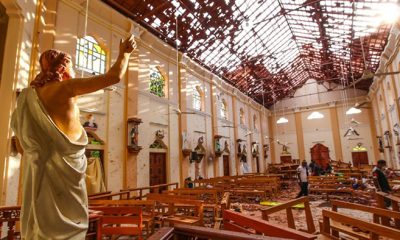
Easter Sunday carnage: Court told Maulana’s statement cannot be accepted without cross-examination
-
 News1 day ago
IMF urges Lanka not to meddle with exchange rate
-
 Opinion5 days ago
Undermining the democratic political framework
-
 News5 days ago
UK passport holder hiding here wants to have deportation order rescinded to leave without blemish
-

 Features2 days ago
The Division Bell Mystery
-
 News6 days ago
Dickoya double murder suspect arrested
-
 Midweek Review4 days ago
Israeli-US aggression won’t go unanswered -Iranian Ambassador