
Latest News
Pringle and Co stifle Nepal as Netherlands open their account

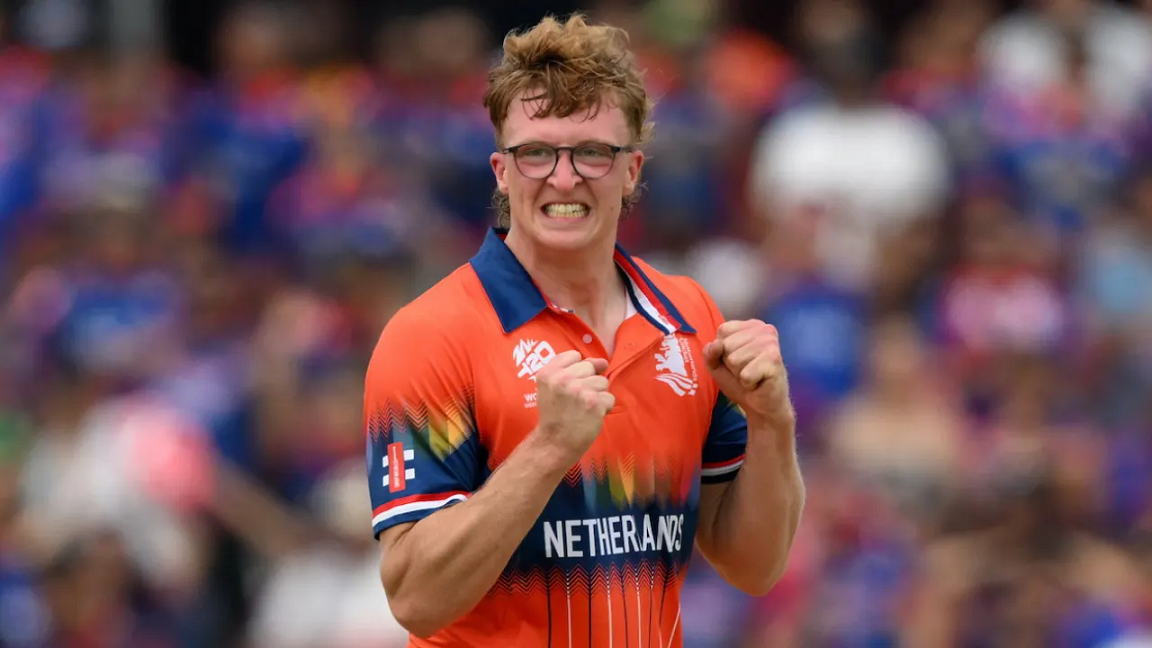
Tim Pringle and Logan van Beek’s three-wicket hauls backed up by Max O’Dowd’s patient half-century got Netherlands over the line in a nervy chase in their opening game of the T20 World Cup 2024, against a spirited Nepal in Dallas.
It was a rude welcome for Nepal in their first T20 World Cup in a decade, with the Netherlands bowlers putting up a fine show and bowling them out for a mere 106 in 19.2 overs. But Nepal weren’t done yet. They squeezed the Netherlands batters in the middle overs and took the chase into the 19th over. O’Dowd, however, held his own with an unbeaten 54. He rode his luck and made sure to take his side over the line by six wickets and eight balls to spare.
Early-morning rain and overcast conditions delayed the toss by 30 minutes and Netherlands captain Scott Edwards had no hesitations in bowling after winning the toss. The bowlers backed up their captain’s decision with Pringle, van Beek, Paul van Meekeren and Bas de Leede all getting among the wickets.
In reply, Nepal put up a fight but dropped a couple of crucial chances at key intervals.
The Grand Prairie Stadium can seat 7000 but the vocal Nepal fans made it feel a lot bigger, flocking in nice and early getting behind their team. But the overcast conditions assisted the Netherlands seamers and they got their first wicket through left-arm spinner Pringle, whose decision to keep giving the ball flight paid off as Aasif Sheikh’s thick outside edge found short third in the second over. Pacer van Beek then struck with his first ball, angling a length ball sharply back into Kushal Bhurtel and catching him plumb in front.
Fast bowler Vivian Kingma also found big movement as the Nepal batters found putting bat to ball an arduous task. In the first six overs, Nepal played and missed 17 of the 36 balls (47.22%), which is the highest for any team in a men’s T20I (for which ESPNcricinfo has ball-by-ball data available). They hit five fours but could only manage three singles and a two in the first six overs, as Nepal managed only 29 runs in the powerplay for the loss of two wickets.
Rohit Paudel, the youngest captain at a T20 World Cup at 21, kept his composure but lost partners at a steady rate. He pumped Kingma for a four over covers in the seventh over, but Pringle came back in his second over to remove Anil Sah, his attempted sweep only going as far as deep backward square leg. Kushal Malla hammered van Meekeren for a four over mid-off but fell three balls later trying a repeat of that shot, deceived by the slower offcutter and spooning the ball straight up.
Bas de Leede then got rid of Dipendra Singh Airee caught at slip as Nepal slipped to 53 for 5 after 11 overs. Paudel was busy during his 35 off 37 but ultimately perished giving Pringle his third wicket. Karan KC and Gulsan Jha added 22 off 17 balls for the eighth wicket – the second-highest stand of the innings – to push the score past 100. Van Beek ended the innings with a two-in-two.
Early wickets was the need of the hour, and Nepal managed that with Sompal Kami getting rid of Michael Levitt with his second ball, caught by the cover fielder. Both Kami and Karan kept the bowling tight conceding only four runs in the first 15 balls. Vikramjit Singh broke the shackles with two back-to-back fours but run-scoring remained slow. Nepal bowled 19 dot balls in the powerplay as Netherlands reached 36 for 1 after the first six.
It was going to get tougher for Netherlands in the middle overs, with the spinners coming into the equation. Airee conceded just a single in his first over after the powerplay, before taking out Vikramjit with a length ball that beat the batter’s attempted slog sweep and caught him in front. An over earlier Vikramjit was dropped at deep backward square leg by Kami, but he couldn’t cash in.
O’Dowd and Sybrand Engelbrecht tried to steady to ship in a 28-run stand before a run out brought about the latter’s end. O’Dowd struck a straight drive back at Kami, who expertly deflected the ball back onto the non-striker’s stumps and caught Engelbrecht short. Nepal conceded just 48 runs in the middle overs (6 to 15) making Netherlands fight for every run.
When Edwards fell cheaply, it felt Netherlands’ chase could go astray, but O’Dowd brought all his experience into play. He curbed his natural aggressive instincts and made sure he kept his end secure even when Netherlands went 40 balls without a boundary between the 12th and 18th overs. O’Dowd had a huge slice of luck when Paudel spilled a straightforward chance in the 18th over at long-off. He was on 40 at the time and Netherlands still needed 18 off 17, but the dropped chance seemed to ease his nerves. In the penultimate over, with Netherlands requiring 13 off 12, he smashed Abinash Bohara for a four and six to reach his 13th T20I fifty. De Leede then finished the chase with a four through covers, triggering a sigh of relief in the Netherlands camp and securing two crucial points.
Brief scores:
Netherlands 109 for 4 in 19.4 overs (Max O’Dowd 54*, Vikramjit Singh 22; Sompal Kami 1-18, Dipendra Singh Airee 1-6, Abinash Bohar 1-29) beat Nepal 106 in 19.2 overs (Rohit Paudel 35; Tim Pringle 3-20, Logan Van Beek 3-18, Paul Van Meekeren 2-19, Bas de Leede 2-22) by six wickets








Former first lady Shiranthi Rajapaksa, wife of former President Mahinda Rajapaksa was produced before the Hulftsdorp court, after being arrested by officers of the Commission to Investigate Allegations of Bribery or Corruption (CIABOC) and produce
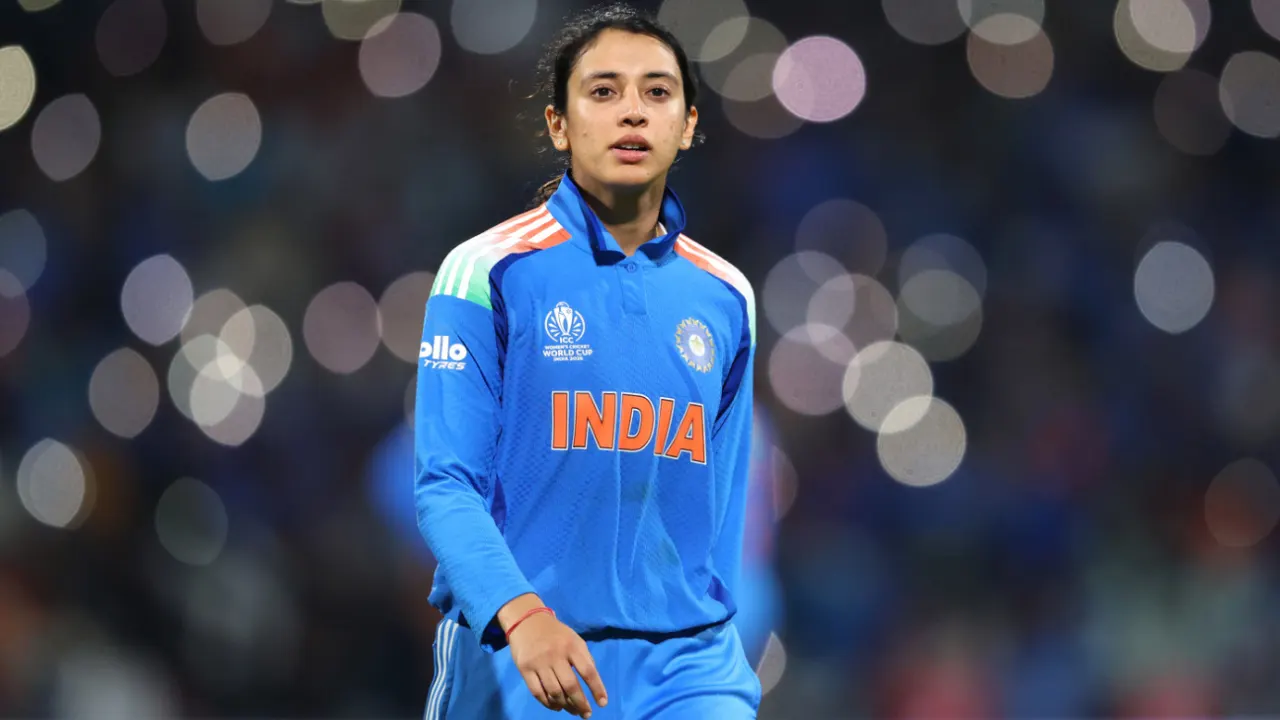
Smriti Mandhana has been named India’s all-format women’s captain on the same day Harmanpreet Kaur stepped down from the role after nearly a decade since she first took over.
Mandhana – vice-captain to Harmanpreet for much of this period – has previously led India in four ODIs and 18 T20Is, apart from captaining Maharashtra in domestic cricket and Royal Challengers Bengaluru in the Women’s Premier League.
Mandhana’s first assignment will be the limited-overs series against Zimbabwe beginning with the three T20Is in Raipur from October 16. On Tuesday, Mandhana was part of the selection meeting chaired by Amita Sharma to pick the squad for the tour.
Terming the appointment a “special honour”, Mandhana also acknowledged the contributions of her predecessor in her welcome note.
“I would also like to acknowledge Harmanpreet and the contribution she has made as captain over the years,” she was quoted as saying by the BCCI. “She has led the team with great commitment and has been an important part of our journey.
“I understand the responsibility that comes with this role and look forward to working with the team, learning along the way and giving my best to take Indian cricket forward.”
Mandhana’s appointment comes on the back of a review meeting held on Monday in Guwahati. Chaired by secretary Devajit Saikia, the meeting was also attended by Mandhana, Harmanpreet and head coach Amol Muzumdar to chart a roadmap forward, with an eye on next year’s inaugural Women’s Champions Trophy in February as well as the T20 World Cup and Los Angeles Olympics in 2028.
Mandhana, India’s best all-format batter, has been knocking on the doors for a while. Earlier this year, she led RCB to their second WPL title, in which she also top-scored in the final.
In September, she overtook Mithali Raj to become the leading run-scorer in women’s international across formats. Her 18 international hundreds are also the most in women’s cricket. She is also the first Indian woman to score centuries in all formats.
[Cricinfo]
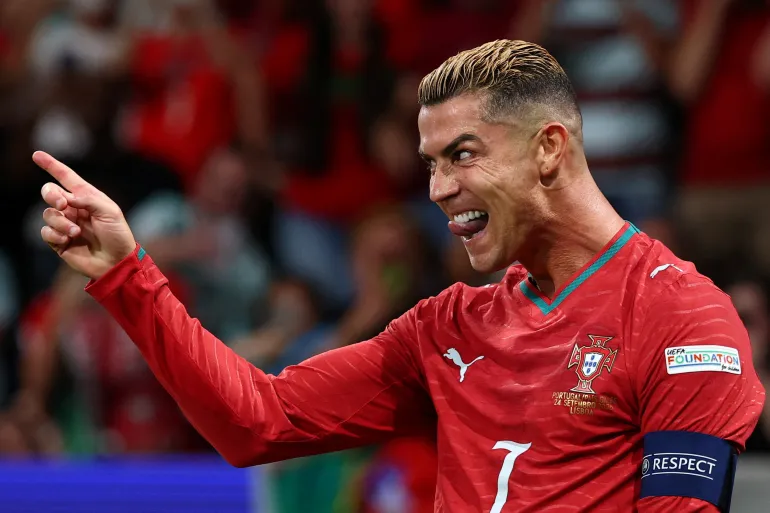
Cristiano Ronaldo has accused Portugal coach Jorge Jesus of twice breaking his word, saying a failed agreement to publicly explain his omission against Norway drove him out of the camp, but insisting he remained available after any punishment.
In a lengthy statement, the 41-year-old gave his account of the dispute that prompted his departure from Copenhagen before Portugal’s Nations League match versus Denmark last week.
Ronaldo said Jesus had agreed a plan under which the forward would miss the Norway and Denmark matches to manage his fitness. However, on the day of the Norway game, the coach told him he would play for 30 minutes.
“Everyone knows the rest. I warmed up from halftime onwards, watched the minutes tick by and wasn’t called on,” Ronaldo said.
“The manager had broken his word to me.”
Portugal’s captain and all-time leading scorer said a subsequent meeting with Jesus, attended by his club side Al Nassr’s sporting director Simao Coutinho, produced an agreement for the coach to clarify events at his next news conference.
According to Ronaldo, an eight-point document was prepared saying he had never demanded playing time, had respected Jesus’s decisions and that the coach asking him to warm up without bringing him on had been a mistake.
Ronaldo said the agreed notes did not require Jesus to apologise to him but said the coach’s public remarks bore no resemblance to their private discussion.
“It was the second time he had broken his word to me,” Ronaldo said. “I decided to leave the training camp without waiting for any further broken promises.”
The statement provided Ronaldo’s account, but on Sunday, after Portugal’s win over Norway, Jesus denied he had made any agreement with the player, nevertheless leaving the door open for his return.
The Portuguese Football Federation (FPF) did not immediately respond to a request for comment about Ronaldo’s statement.
Ronaldo apologised for failing to greet supporters after the Norway match and for leaving his teammates, accepting that his captaincy made his conduct more serious.
“The consequences of my actions must be assessed and punished by the Portuguese Football Federation,” he said.
Despite the rupture, Ronaldo said he was not limiting his international ambitions to a farewell appearance.
“If I’m physically fit, playing for my club – scoring goals, I hope – after serving whatever suspension is imposed on me, I’ll be available, as I’ve always been until now, to compete and win for our national team,” he added.
(Aljazeera)

Former first lady Shiranthi Rajapaksa arrested by CIABOC

U.S. Navy ship USS Tulsa arrives in Colombo for replenishment visit

Smriti Mandhana appointed India captain across formats

Ronaldo apologizes for Portugal walkout; says Jesus broke promise

Showers in the Western, Sabaragamuwa, Central, Uva, North-western and Southern provinces and in Anuradhapura and Mannar districts

Fuel crunch looms

‘Dates have the highest sugar content to fight Coronavirus’

Sunday Island 27 December – Headlines

#SundayIsland 17th December – Headlines

Sunday Island – 28th March

Sunday Island Headlines – 21 March

Sunday Island – 21st February – Headlines
-

 News6 days ago
US-assisted ‘Ice’ detection: NPC to examine IGP’s move to transfer drug-busting team
-

 Editorial6 days ago
Colombo Port drug bust: The plot thickens
-

 Editorial7 days ago
Drug busting, transfers and trust deficit
-

 Features4 days ago
The first woman in the foreign service or Ceylon Overseas Service it was then called
-
 News7 days ago
Sri Lankan facing death penalty in Saudi Arabia: Mano G appeals to Crown Prince
-

 Editorial5 days ago
Fuelling discontent and protest
-

 News2 days ago
Geneva takes up Sallay’s case and govt. ignores opportunity to answer accusations
-

 Latest News4 days ago
Tharindu Rathnayake, bowlers secure Asian Games Bronze for Sri Lanka