
Latest News
Afghanistan storm into Super Eight; New Zealand knocked out

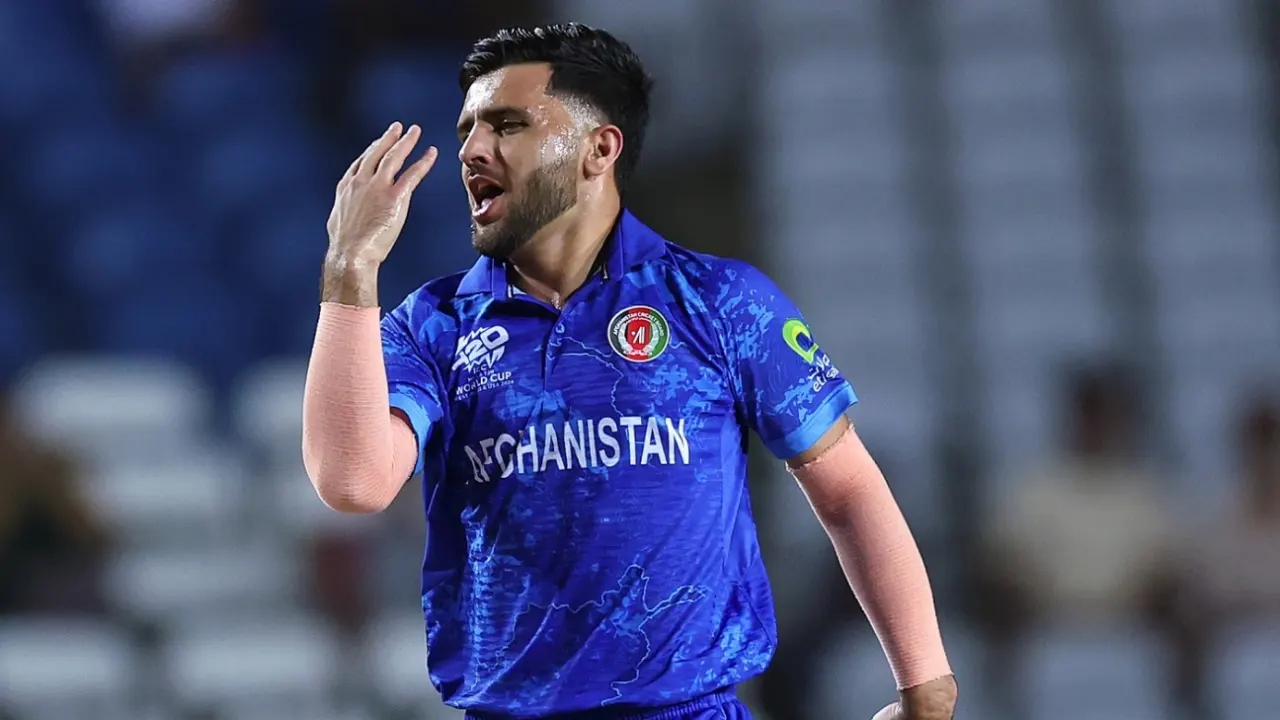
Afghanistan booked their place in Super Eight, thereby knocking New Zealand out of men’s T20 World Cup 2024 after a seven-wicket win over PNG in Tarouba.
Their win was set up by new-ball spells from fast bowlers Fazalhaq Farooqi and Naveen-ul Haq that saw PNG lose five wickets inside the powerplay. A total of four run-outs did not help PNG’s cause either as they were dismissed for 95.
Afghanistan romped home with 29 balls to spare with Gulbadin Naib staying unbeaten on 49. The result meant that for the first time since 2014, New Zealand bowed out before the semi-final stage of a men’s World Cup – ODI or T20.
With six points and a net run rate of 4.230, Afghanistan lead Group C.
A target of 96 would not have worried Afghanistan. Rahmanullah Gurbaz and Ibrahim Zadran had added century stands for the opening wicket in each of their first two games. Gurbaz had struck fifties in those outings. As a result, the middle order had barely had time in the middle. On Thursday, Afghanistan’s worst fears nearly came true.
Semo Kamea brought in for vice-captain Charles Amini, almost struck first ball when Ibrahim was ruled out lbw. He used the DRS to his benefit but lost his stumps three balls later while trying to attack an inswinger from Kamea. In the next over, fast bowler Alei Neo knocked over Gurbaz, who also charged down to heave one across the line. PNG could have put even more pressure on Afghanistan had wicketkeeper Kiplin Doriga hung on to Naib’s outside edge in the fifth over.
PNG were left to rue those chances on a surface with dry grass, which, as Daren Ganga had said in his pitch report, contributed to variable bounce. The proof was in Azmatullah Omarzai’s dismissal when a length ball from Norman Vanua barely got up and bowled him.
But Naib, in the company of Mohammad Nabi, countered the conditions to ensure Afghanistan faced no further hiccups.
PNG made almost the right start after being sent in. A double through fine leg, a single through point, a cut shot for four – they were ticking along without any risk. But it all went south when captain Assad Vala was run out in the second over. Going for the third run, his bat was in the air at the non-striker’s end when Gurbaz nailed a direct hit at the bowler’s end. Had Vala slid his bat, he would have been safe.
Farooqi then did what he does best: flummox batters with swing. He had Lega Siaka caught behind by Gurbaz diving full length to his right and then, on the next ball, Sese Bau also nicked one behind.
When Naveen got Hiri Hiri to chop one onto his stumps on the first ball of the fourth over, PNG had lost four wickets in nine balls. Batting first on a used surface that hosted the West Indies-New Zealand clash just 24 hours ago, that was handing over advantage on a platter.
When Naveen crashed through Tony Ura for his 50th T20I wicket, PNG were reduced to 30 for 5. PNG needed to bat a few overs safely at that point, and Chad Soper and Doriga did that for 24 balls while scoring 16 runs. But in the tenth over, both were guilty of ball-watching, which resulted in Soper being run out.
Doriga then used the slog sweep and sweep to rotate strike against Rashid Khan and Noor Ahmad. Neo punished the seamers when they bowled on his pads. The pair was effective without being enterprising and added 38 off 34 balls.
Once Doriga was done in by a wrong’un from Noor to be trapped lbw, PNG lost their last three wickets for just seven runs.
Brief scores:
Afghanistan 101 for 3 in 15.1 overs (Gulbadin Naib 49*; Alei Neo 1-26, Semo Kamea 1-16, Norman Vanua 1-18) beat Papua New Guinea 95 in 19.5 overs (Kiplin Doriga 27; Fazalhaq Farooqi 3-16, Naveen Ul-Haq 2-04, Noor Ahmad 1-14) by seven wickets
[Cricinfo]








President Anura Kumara Dissanayake today (20) paid his last respects to the remains of Most Venerable Kappetiyagoda Siri Wimala Thera, Anunayake of the Sri Lanka Ramanna Maha Nikaya and Chief Incumbent of the Rajopawanaramaya Temple in Gatambe, Kandy, who passed away.
The President visited the Rajopawanaramaya Temple in Gatambe, Kandy, where the remains of the Thera are lying, and paid his last respects. He subsequently expressed his deepest condolences to the Maha Sangha and the temple’s Dayaka Sabha, who are mourning the passing of the Thera.
Central Province Governor and Consultant Physician Dr Harsha Suranga Fernando, Kandy District Secretary Indika Udawatta and several others were present.
President’s Media Division (PMD)

India opener Shafali Verma has received an official reprimand and a demerit point for breaching Level 1 of the ICC Code of Conduct during the second T20I against Zimbabwe on Sunday.
Shafali, an ICC release said, breached Article 2.2 of the ICC Code of Conduct for Players and Player Support Personnel, which relates to “abuse of cricket equipment or clothing, ground equipment or fixtures and fittings during an International Match.”
It was Shafali’s first offence in a 24-month period.
The incident occurred in the 12th over of Zimbabwe’s innings when Shafali threw the ball into the ground in frustration after dropping a chance at mid-off offered by Chipo Mugeri-Tiripano off Sree Charani.
Shafali admitted the offence and accepted the sanction proposed by match referee GS Lakshmi, which meant there was no need for a formal hearing.
Level 1 breaches carry a minimum penalty of an official reprimand, a maximum penalty of 50% of a player’s match fee, and one or two demerit points.
India currently lead the three-match series 2-0 with the third game to be played on Tuesday evening. The T20Is will be followed by three ODIs in Vadodara from October 23.
(Cricinfo)

A total of 146 players will be competing for 27 available slots in the WPL 2027 mini auction on October 28 in Kochi. Of these, England batter Sophia Dunkley and Australia captain Sophie Molineux are the only two players who have listed themselves at the maximum base price of INR 50 lakh.
The auction pool has 119 Indian players, including 22 capped and 97 uncapped players, with 20 slots available for Indian players. The overseas pool has 27 players – 14 capped and 13 uncapped – including six from Associate teams, with seven slots available.
G Kamalini (released by Mumbai Indians), Kiran Navigre (released by U P Warriorz), Heather Graham and Jess Jonassen have registered at the second-highest base price of INR 40 lakh, while a total of 30 players have registered at INR 30 lakh.
Among the notable absentees are West Indies allrounder Deandra Dottin, who was released by UPW, and Australia legspinner Alana King, who was released by Delhi Capitals. Lizelle Lee, who was DC’s highest run-scorer last season, has also not listed herself after being released by the franchise.
What the teams look like going into the auction
Only two English players – Dunkley and Kira Chathli (INR 10 lakh) – have registered for the auction, with several others, including Danni Wyatt-Hodge, Alice Capsey, Dani Gibson, Lauren Filer and Linsey Smith opting to skip the WPL next year.
Cricinfo has learned that England are likely to play three T20Is in Sri Lanka in early February, which will clash with the final week of the WPL. While the ECB is likely to allow players to stay in India to complete the tournament, most players have instead chosen to prioritise their international commitments ahead of the Champions Trophy later that month.
The relatively low salaries on offer at the WPL are also understood to be a factor in many English players deciding not to register, with most internationals earning significantly more to play in the Hundred (up to £190,000 last year) than the highest permitted base price in the WPL of INR 50 lakh (£40,000 approx).
Molineux was part of the Royal Challengers Bengaluru [RCB] title-winning squad in 2024, and had bagged 12 wickets in ten games at an economy rate of 7.31. She was retained by RCB for the 2025 season but a knee injury ruled her out of the season. Dunkley, meanwhile, played for Gujarat Giants [GT] in 2023 before opting not to register for the 2024 season. She went unsold in the 2025 auction.
Among the premier internationals who have listed themselves for INR 30 lakh are Australia allrounder Grace Harris (released by RCB), Sri Lanka captain Chamari Athapaththu, South Africa left-arm spinner Nonkululeko Mlaba and South Africa allrounder Chloe Tryon.
UPW, who released nine players, will go into the auction with the biggest purse of INR 3.75 crore.
[Cricinfo]

Showers above 100 mm are likely at some places in the Western, Sabaragamuwa, Central, North-western, Northern and Southern provinces and in Anuradhapura district.

Low-quality coal causes power cuts: Ex-LECO Chief

Power cuts continue

GL stresses importance of post-war Shangri-La investment after CIABOC questions him

Coal inquiry gets extension until 16 December

Dilshan, Hirupama named best athletes at All Island Schools Games Athletics Championships

‘Dates have the highest sugar content to fight Coronavirus’

Sunday Island 27 December – Headlines

#SundayIsland 17th December – Headlines

Sunday Island – 28th March

Sunday Island Headlines – 21 March

Sunday Island – 21st February – Headlines
-

 Features3 days ago
Kotahena:A Small Enclave, An Extraordinary Legacy
-
 News4 days ago
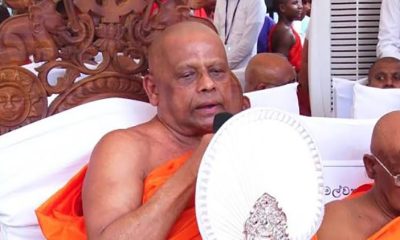
Asgiri Mahanayake calls for immediate release of Gnanasara Thera
-

 News3 days ago
Record 1,600 students take Russian Classical Ballet examination in Sri Lanka
-
 News6 days ago
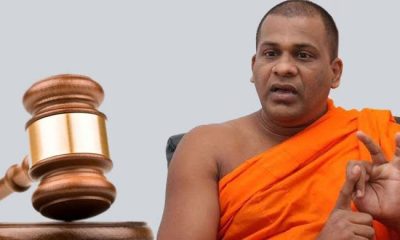
AC President recuses himself from hearing prison attire case pertaining to Gnanasara Thera
-
 News5 days ago
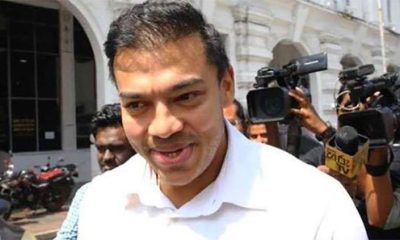
Naval officer testifies Yoshitha received Rs. 5.15 mn in salaries during SLN service
-

 News3 days ago
Karannagoda pushed for £24,536 for Yoshitha’s UK training, Court told
-

 Editorial5 days ago
Saving Anojan: Beyond Executioner’s Blade
-

 News6 days ago
CID informs Fort Magistrate’s Court investigation into money laundering case against Namal completed