
News
Prez reveals move to abolish Special Presidential Commissions


President Ranil Wickremesinghe has said that special presidential commissions should be abolished. Wickremesinghe, who is also the UNP leader, said that the Constitution should be amended further. Stressing the need to do away with special presidential commissions, President Wickremesinghe said that laws that violated the Constitution should be discarded. The President said so at the 76th anniversary celebrations of the UNP, held at the Sugathadasa Indoor stadium.
The following is the text of the statement issued by the Presidential Media Division: “President Ranil Wickremesinghe said that the first struggle is over and let’s start the second struggle to build the country from hereon.
:The President invited all the parties to join without any differences and said that it is not for him but for the next generation to succeed in the programme of building a powerful country.
“We have gathered today for the party’s anniversary celebrations, for the first time, after the Covid-19 pandemic. I would like to extend my sincere thanks to all of you. Not just for being here, today, but for having faith in the UNP, even during the difficult period. Therefore, I extend my gratitude to you all. Today we commemorate our past leaders D.S. Senanayake, Dudley Senanayake, Sir John Kotelawala, J.R. Jayewardene, R. Premadasa and D.B. Wijetunga who built this country. We have learnt from them and I am here as a result of what I have learnt from them.
I address you today as the 4th State Leader from this party. I am facing a different situation to what other UNP leaders had to face. I have no UNP government. I have no UNP parliament team. Today, we have to all come together in governing this country and with the support of several other parties, including the SLPP. Why? Because today we have to face a grave crisis. I don’t think the country had to face such a crisis in its history. The economy has collapsed and we have to find solutions. I have come in the middle of this crisis.
Today, unlike other UNP leaders, I am unable to make appointments. The people are pressurized and some can’t even afford three meals. They are unemployed. I can only give you sweat, effort and criticism. But, I boldly declare that with our sweat and effort, we will resurrect this country.Last year, we celebrated our anniversary, through zoom technology. That day, I made a special statement to those who participated. I told them that today the youth of this country despises politics. The government is hoodwinking the people and the Opposition is limited to only criticism.
The people expect a policy, based on politics. They expect modern politics, but none of us acknowledge it. Eventually, their frustrations grew and, in April, they commenced demonstrations. That was a peaceful struggle. They displayed their talents. They expressed their views on what their demands were. We all appreciated their struggle, whether we agreed with them or not. The youth of this country demanded a change, without taking up arms. But, continuing such peaceful struggles is not easy and the frontline groups started turning violent from within the struggle. Eventually, the youth left the struggle and the violent protesters took charge. Between the 09th and 13th of July they stopped the state governance and attempted to take over Parliament. When they did not succeed, the struggle faded. Due to the bad side of the struggle, even the good that came about was forgotten. Yet, despite the end of the struggle, the aspirations of the youth are not lost. These will be taken forward. As a government, we have submitted the 22nd Amendment to Parliament, for approval. It won’t stop there. I think the Constitution must be amended further. We need to remove the special presidential commissions. We have to remove the laws that violate the Constitution. There are several other factors that need to be done to strengthen the Constitution. The Constitution needs to be amended to rectify these factors, too.
We have initiated oversight committees with the inclusion of government and opposition members. They hold posts in the various sub-committees, as well. We must entrust them with responsibilities in order to take it further. The party leaders are in discussion, regarding this matter, with the Speaker. Further, monetary control by Parliament was strengthened. We intend to appoint three additional committees, apart from the existing committees, such as COPE and COPA, with the aim of overseeing revenue for the government, inspect bank accounts and restructure state enterprises.
Parliament will also get a budget office. But, the most important factor is the National Council. The National Council is a board comprising party leaders to agree on various matters. The Prime Minister informed me to try and complete this process, within this week. I am waiting to see these being done by Parliament. We also hope to introduce a new law to replace the Prevention of Terrorism Act. Similarly, we also intend to establish a Truth Commission. We also intend to introduce a Bill to enable equality between men and women. Another law would be introduced to grant government housing ,and a law to grant land deeds. Another law is expected to be introduced to address climate change and also a youth Parliament. Are these oppressions?
All these are done to strengthen the country. The most important proposal, however, is the public councils concept, introduced by our former Speaker, Karu Jayasuriya, which we have accepted. This will allow for the establishment of public councils (Jana Sabha) in every Grama Seva Division, similar to the Gramodaya concept, introduced by President Ranasinghe Premadasa. This will enable public opinion to be obtained through the 14,000 Grama Niladhari Divisions, without political bias, on various matters, including the law, Constitution and how best to develop their villages. This is a huge task carried out entirely on a voluntary basis. I assured the assistance of the government for this project and even have a law passed if required. We must engage in the country’s main matters with the assistance of the people, without political bias. We have told them to present their questions, collectively, and we will provide the solutions.
That is the biggest change. There are many other proposals. Similarly, we must think of the economy. We are facing a difficult time without fuel, fertiliser, etc. We can provide fuel, fertiliser and seeds in at least limited quantities, in order to carry on the country’s economy. Things don’t stop there. We have sought the assistance of the IMF. Then we need to obtain relief from our creditors and amidst all that we must ensure food security and for that we have commenced food security programmes in all 14,000 Grama Niladhari Divisions. The food that is produced in these villages, must be shared with everyone. There is a difficulty in producing food in the Western Province and we have urged the other districts to provide the required food for the Western Province.
This time we will provide you the fertiliser, fuel and seeds and I urge you to please provide us the biggest harvest this Yala season. Let’s all work together and eat rice together. The Agriculture Minister will coordinate these efforts.We must also earn foreign exchange and the best way to do that is by promoting tourism. We have entrusted that task to Minister Harin Fernando. Let’s all come together and accomplish this task and get more tourists.
Currently the production of this country is only 8.5% of the GDP. So how can we do anything? By 2024 we hope to increase this to around 15%, but that, too, is not enough. If we are to allocate the required allocations for health and education, etc., we need to increase it to at least around 19%. Therefore, today we must not only stabilize our economy because we can’t keep begging. Do we like to always beg? Irrespective of what race we belong to, we don’t like to be in debt. Our ancestors have taught us to always repay our debts, no matter how difficult. Let’s all get together and repay these debts. Let’s build a country free from debt. We need to work in houses in the Middle East to earn money. But let’s find other alternatives. Let’s get rich. Why can’t this country become rich? We have the resources. Let’s build a strong economy. We can’t allow anyone to obstruct us, let’s forge ahead. If Japan could capture the world market, why can’t we? If Korea could and Singapore which does not even have water, why can’t we. Let’s build a prosperous, wealthy, nation within the next 25 years. Let’s start it next year and take it ahead. I may not be around to see its end, but I want to build a good future for the youth of this country.
If our target is 25 years, then let us ironclad our policy framework and not allow anyone to change it each time a new group is elected. We will implement this 25-year plan, in five-year blocks. If we are to achieve this talk, we must unite. D.S. Senanayake’s aim was to unite everyone. He said irrespective of whether we are Sinhala, Muslim, Tamil, Burgher, or any race, we should all be able to say we are Sri Lankans. I like to add to that by saying no matter whether we are UNP, SLFP, SJB, SLPP, EPDP, JVP, Tamil Congress TNA or any party, let’s unite and build this country as we are children of one mother. I urge you all to unite for the sake of the country. Let’s start this journey together.The first struggle is over, let’s start our second struggle from here. Let’s unite and forge ahead fearlessly and build a glorious Sri Lanka.”








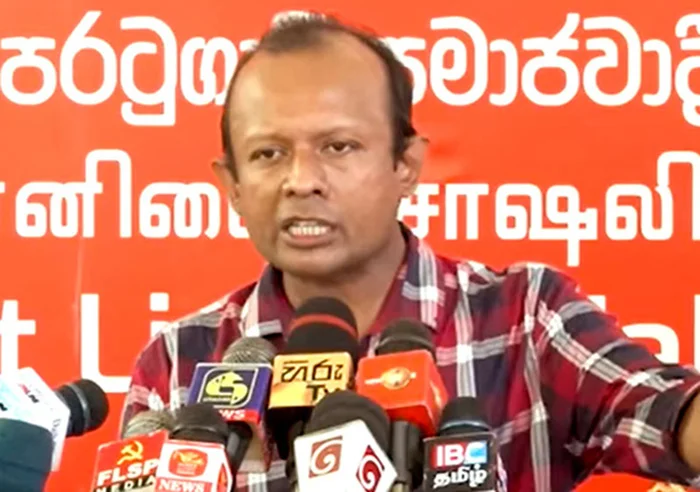
The Frontline Socialist Party (FSP) yesterday accused the government of seeking to use the proposed Protection of the State from Terrorism Act (PSTA) to suppress popular political activity, claiming that some of its provisions were more repressive than those of the Prevention of Terrorism Act (PTA).
FSP Education Secretary Pubudu Jayagoda told a media briefing, in Nugegoda, that the definition of terrorism in the Bill was so broad that it could be used to label almost any form of popular political activity as terrorism.
He said the Bill’s approach to defining terrorism was based largely on attempts to compel a government, or an international organisation, to do, or refrain from doing something, rather than on internationally recognised criteria, such as killings, causing serious bodily harm, kidnapping or acts intended to spread terror among the public.
Jayagoda also alleged that the Bill transferred substantial powers from the judiciary to the executive, while extending powers of arrest, investigation and detention to the armed forces, in addition to the police.
He claimed that the government had sought to portray the Bill as a replacement for the PTA while retaining or introducing provisions that could facilitate political victimisation and repression.
The FSP also questioned the government’s decision to proceed with the Bill, despite having previously sought public views on an earlier draft.
Jayagoda said a draft had been published earlier this year, with the period for public submissions ending on February 28, but the Bill subsequently gazetted was essentially the same draft with some provisions rearranged.
Jayagoda also referred to a letter reportedly sent by Attorney-at-Law Saliya Peiris, a member of a Committee, chaired by President’s Counsel Rienzie Arsecularatne, that had been appointed to draft the legislation. He said Peiris had stated, in the October 06 letter, that changes had been made to the draft prepared by the Committee.
“This means that even the Committee, appointed to prepare the Bill, was a deception,” Jayagoda alleged.
He said that the PSTA was fundamentally similar to the Anti-Terrorism Bill introduced by the previous government, in 2023, which the National People’s Power (NPP) opposed and challenged in court.
“If the NPP opposed that Bill then and is now bringing the same legislation before Parliament, the government must explain its position,” he said.
Jayagoda called on NPP MPs to oppose the PSTA in Parliament and urged trade unions and other groups to build a broad public movement against the legislation.
He challenged the government to an open debate on the Bill.
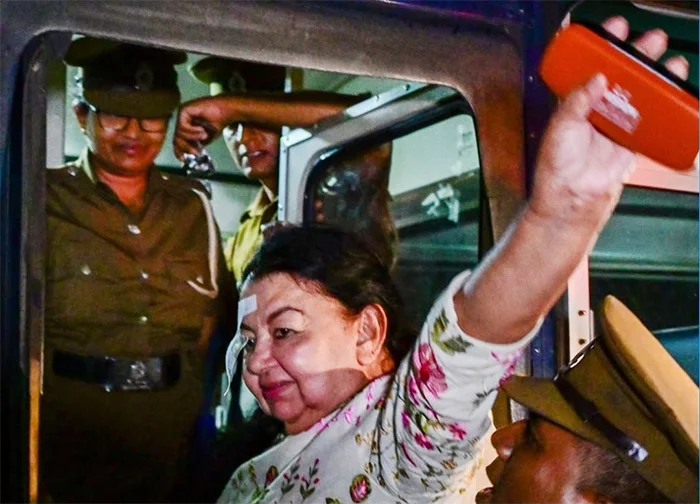
Former First Lady Shiranthi Rajapaksa was yesterday remanded until 13 October after being produced before the Colombo Magistrate’s Court following her arrest by the Commission to Investigate Allegations of Bribery or Corruption (CIABOC).
Shiranthi, wife of former President Mahinda Rajapaksa, was arrested at her residence on Poorwarama Road, Kirulapone, after CIABOC officers recorded a statement from her for nearly two hours.
According to the CIABOC, the arrest was made over allegations that Rs. 10 million obtained from the National Savings Bank through the Siriliya Saviya organisation was misappropriated.
The money was allegedly obtained to provide a Computed Tomography (CT) scanner to the children’s hospital. Investigators allege that the scanner was not provided and that the funds were instead unlawfully used.
CIABOC is investigating alleged offences under the Public Property Act and corruption-related provisions in connection with the transaction and other financial activities involving Siriliya Saviya, which was headed by Rajapaksa.
Rajapaksa returned to Sri Lanka on Monday night on a flight from Malaysia after travelling overseas for medical treatment. She left for Singapore on 16 September after being admitted to a private hospital in Colombo on 15 September following an illness.
She had been due to appear before the Financial Crimes Investigation Division (FCID) on 13 October in connection with its investigation into the financial affairs of Siriliya Saviya.
Meanwhile, her lawyers filed an anticipatory bail application before the Maligakanda Magistrate’s Court on Monday, seeking an order preventing her arrest in connection with the FCID investigation.
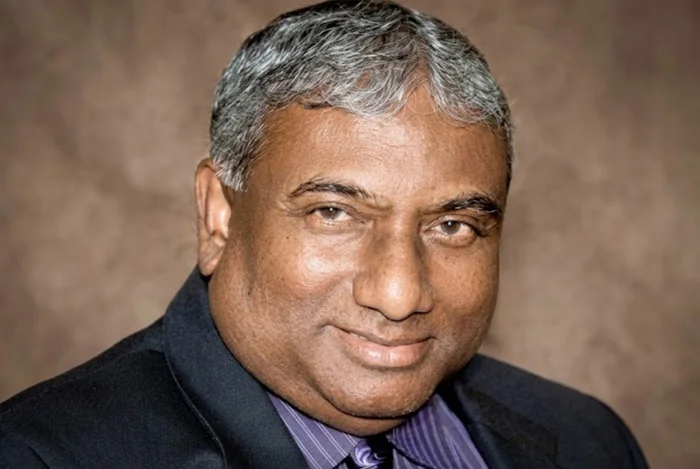
Former National Savings Bank (NSB) Chairman Pradeep Kariyawasam was yesterday granted bail by the Colombo Magistrate’s Court following his arrest by the Commission to Investigate Allegations of Bribery or Corruption (CIABOC).
Kariyawasam, husband of former Chief Justice Shirani Bandaranayake, was arrested in connection with the Bribery Commission’s investigation into the ‘Siriliya Saviya’ account linked to former First Lady Shiranthi Rajapaksa.
The investigation concerns financial activities involving the Siriliya Saviya initiative, which was headed by Rajapaksa, wife of former President Mahinda Rajapaksa.
CIABOC is continuing investigations into the alleged financial irregularities relating to the account.

Showers above 100 mm are likely at some places in the Western, Sabaragamuwa, Central, Uva and Southern provinces and in Anuradhapura district

PSTA worse than PTA: FSP

Shiranthi R remanded until 13 Oct.

Former NSB Chairman Kariyawasam granted bail

Katchatheevu row: India SC urges fishermen to avoid Sri Lankan waters

Remembering Juvenal, Coke, Acton and Machiavelli

‘Dates have the highest sugar content to fight Coronavirus’

Sunday Island 27 December – Headlines

#SundayIsland 17th December – Headlines

Sunday Island – 28th March

Sunday Island Headlines – 21 March

Sunday Island – 21st February – Headlines
-

 Editorial6 days ago
Colombo Port drug bust: The plot thickens
-

 Features4 days ago
The first woman in the foreign service or Ceylon Overseas Service it was then called
-

 Editorial5 days ago
Fuelling discontent and protest
-

 News3 days ago
Geneva takes up Sallay’s case and govt. ignores opportunity to answer accusations
-
 Foreign News5 days ago
Ten injured after car crashes into rugby supporters in Australia
-

 Latest News5 days ago
Tharindu Rathnayake, bowlers secure Asian Games Bronze for Sri Lanka
-

 News4 days ago
Nearly 20 Iranian tankers stranded off Lanka amid US sanctions
-

 Features3 days ago
Sri Lanka Cricket Bill: Governance reform is not yet a cricket strategy