
News
Presidential hopefuls back science and tech


(SciDev)– Presidential candidates in Sri Lanka have pledged to prioritise science and technology, promising modernisation and better science education in a country suffering from “brain drain”.Sri Lanka will hold its presidential election on 21 September, its first since the nation’s devastating economic crisis in 2022.
The vote will feature the country’s longest ballot paper in history, with a record 39 candidates vying for the presidency, all promising to tackle Sri Lanka’s economic and social challenges.Voters hold high expectations for the upcoming election, particularly in areas such as reducing the cost of living, cutting taxes, fighting corruption and steering the country toward economic recovery.
Major candidates, including the incumbent President Ranil Wickremesinghe, have centred their manifestos around these key issues. But they have also committed to advancements in science, technology and research as vital components for Sri Lanka’s long-term development.
Sri Lanka spends a mere 0.12 percent of its GDP on research and development (R&D), with the economic crisis further drying up the available funds. The country is also facing a brain drain, with many scientists and professionals leaving due to deteriorating living conditions.
Emeritus professor Ranjith Senaratne, chair of the National Science Foundation of Sri Lanka (NSF), said the number of researchers in Sri Lanka was extremely low. The county has only 105 R&D personnel per million of the population, according to data from the World Bank.
“There can be no progress without research, so it is vital for the next president to prioritise developments in science and technology to secure Sri Lanka’s future,” Senaratne told SciDev.Net.
In an interview with SciDev.Net, Anura Kumara Dissanayake, one of the four major candidates, emphasised his commitment to introducing new technology, particularly in the agricultural sector where 26 percent of Sri Lankans are employed.
Dissanayake highlighted that current agricultural practices, such as those in paddy farming, leave both farmers and consumers in a difficult position. He said farmers are barely surviving, unable to earn a sufficient income, while consumers face high prices.
“This system benefits no one,” he stressed, adding: “We must either abandon these outdated methods or innovate through research.”
Instead of merely exporting raw commodities, Sri Lanka should focus on value addition to increase foreign exchange earnings, suggested Dissanayake, acknowledging that this requires innovation.
“There might already be existing research that hasn’t been utilised at the grassroots level, and my priority is to ensure that these innovations are implemented,” he told SciDev.Net.

Opposition leader, Sajith Premadasa, meanwhile, promised to establish a dedicated research fund of at least five billion Sri Lankan rupees (US$16.6 million) annually to promote science and technology in the country, viewing it as a long-term investment.
He explained that both state and private universities would be able to apply for funds to support research, development and curriculum enhancement.
Premadasa is also focused on digitisation, aiming to capitalise on fast-growing fields like artificial intelligence (AI) by creating numerous cutting-edge information technology parks. As Opposition leader, he secured funding to introduce smart classrooms to hundreds of schools, particularly in remote areas.
“Currently, science and technology education is concentrated in major cities and prestigious schools,” he told SciDev.Net, adding: “It’s essential to extend these opportunities to the younger generation across the country.”
Ruwan Wijewardene, a senior advisor to the incumbent President, says Wickremesinghe plans to establish new technological universities, including a University of Agriculture Technology and an International Climate Change University, a pledge he made last year at the UN Climate Conference COP28.
Wickremesinghe has also pledged to pass a Technology Promotion Act in 2025, establishing a Digital Transformation Agency and a Digital Technology and Innovation Council to spearhead AI and digital advancements.
Namal Rajapaksa, the youngest contender in the race, is the son of former President Mahinda Rajapaksa and nephew of ousted President Gotabaya Rajapaksa. He is focusing his campaign on modernisation and technological progress.
Rajapaksa seeks to build on initiatives introduced during his uncle’s administration. His vision includes streamlining government services by cutting out obsolete procedures and integrating advanced technological solutions. His manifesto also outlines a plan to revamp educational curricula, aligning them with current market demands and societal trends to ensure Sri Lanka stays competitive on the global stage.
However, while the presidential candidates’ proposals to advance science and technology are promising, their implementation may be challenging in the current economic climate.
Rohan Samarajiva, founding chair of LIRNEasia, an ICT policy and regulation think tank, says it is doubtful how realistic these promises are, with the country still rated as being in “selective default”, meaning it has delayed repayment on some of its financial obligations.
While some candidates have pledged to establish new universities, maintaining the quality of the existing higher education system is already difficult due to significant brain drain.
The Department of Chemistry, one of the largest departments at the University of Peradeniya, is struggling with a staffing crisis and has had to rely on retired professors, external lecturers and assistant academic staff. Manawadevi Ganehenege, the head of the Department, told SciDev.Net she was concerned about the sustainability of education if more staff members left.
According to Sri Lanka’s Government Medical Officers’ Association, more than 1,800 doctors left the country in 2022 and 2023. It says at least 25 percent of doctors currently working in the government health system have also passed the exams required for employment abroad.
Manuj Weerasinghe, former President of the Sri Lanka Association for the Advancement of Science, pointed out that investments in science and technology are long-term endeavours, typically taking 10 to 20 years to yield benefits. Politicians often seek quick results during their time in office, which can clash with the timeframes required for these investments to pay off, he said.
Limited public interest in science may also reduce the pressure on politicians to prioritise such investments.
“I don’t think even one percent of voters consider science a top priority when they cast their ballots,” Weerasinghe told SciDev.Net. He argued that educating the public about the importance of science for development is essential.


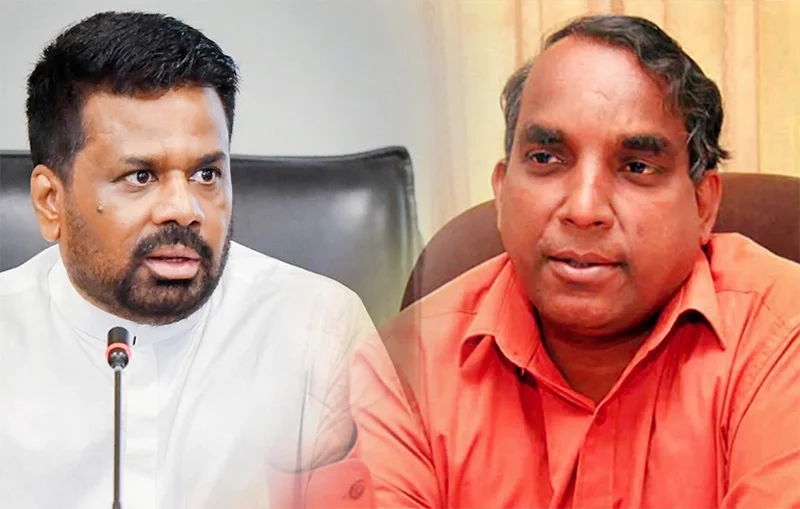
Executive Director of People’s Action for Free and Fair Elections (PAFFREL) Rohana Hettiarachchi yesterday (28) said that there were three major concerns regarding the Anti-Corruption (Amendment) Bill 2026. Acknowledging the recent Supreme Court determination, in respect of the above-mentioned Bill, that three of the provisions were not consistent with the Constitution, requiring a special majority in Parliament, with one clause requiring approval by the people at a Referendum, Hettiarachchi said nonetheless PAFFREL had decided to bring their concerns to the notice of President Anura Kumara Dissanayake.
Responding to The Island queries, Hettiarachchci said that PAFFREL sent a letter, dated 24 Sept., to President Dissanayake, regarding the issue at hand.
Petitions against the Bill was heard before a three-judge Bench of the Supreme Court, comprising Justices Shiran Gooneratne, Mahinda Samayawardena and Sampath Wijeratne.
PAFFREL and Transparency International Sri Lanka (TISL) were among the petitioners who challenged the proposed amendments to the Anti-Corruption Act No. 9 of 2023. “We did so in public interest,” Hettiarachchchi said, adding that three major concerns were (i) the breadth of the proposed redaction power and the proposed criminalisation of certain uses of publicly accessible redacted asset declarations, particularly in relation to freedom of expression, and the public’s right to meaningfully receive and impart information (ii) raising of the State or public-corporation shareholding threshold for certain asset declaration obligations from 25% to 50%, as this could exclude officers of State-linked entities in which the State holds less than 50%, in spite of such entities exercising public functions and managing public resources and (iii)role of the Director General Ranga Dissanayake.
Hettiarachchchi emphasised that though the PARREL appreciated the way CIABOC DG handled his responsibilities, centreing of power on one person was not acceptable.
Hettiarachchi urged President Dissanayake and the 159-member government parliamentary group to pay attention to concerns raised by those who moved court against the controversial Bill and address their concerns though the Parliament received the SC determination.
An International Monetary Fund mission that visited Colombo recently warned that the proposed amendments could weaken the country’s anti-corruption framework.
The mission, led by Evan Papageorgiou, was in the country from 10 to 23 September for discussions on the seventh review of the Extended Fund Facility and the 2026 Article IV consultation. (SF)
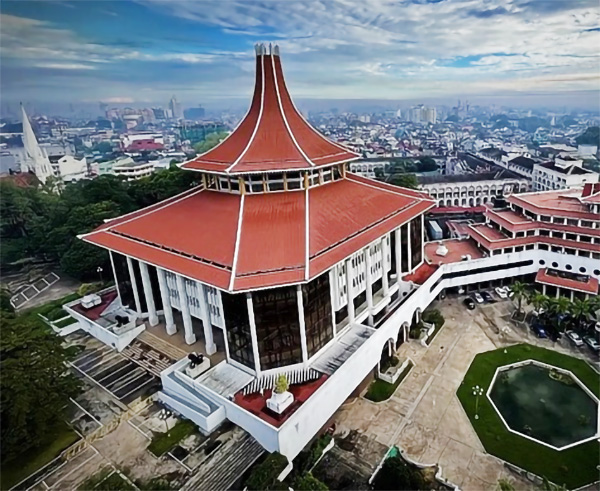
The Supreme Court yesterday (28) dismissed two petitions filed by retired Flight Lieutenant Shantha Jayathilake against Deputy Inspector General of Police of the Criminal Investigation Department (CID) Shani Abeysekara and Secretary to the Ministry of Public Security Ravi Seneviratne, and Rev. Father Cyril Gamini, alleging them of committing contempt of court.
They were the first cases dealt by the Supreme Court after the enactment of the 22nd Amendment to the Constitution.
The recipient of gallantry medal alleged that contempt of court had been committed through an affidavit previously submitted to the Supreme Court by Shani Abeysekara and Ravi Seneviratne.
The other petition alleged that contempt of court had been committed through the contents of a complaint submitted to the Criminal Investigation Department by Rev. Father Cyril Gamini.
The Supreme Court ordered that both petitions be dismissed without being taken up for hearing.
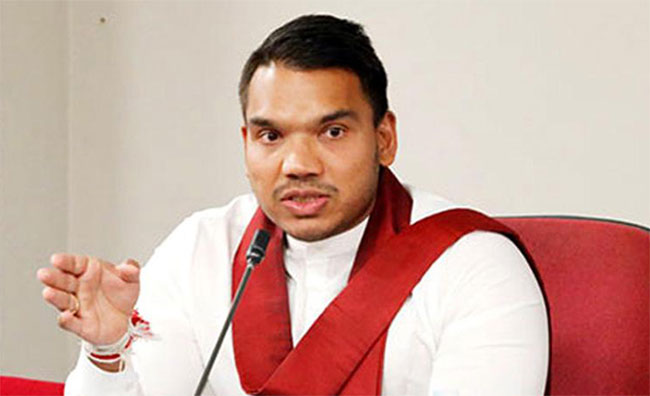
The Commission to Investigate Allegations of Bribery or Corruption (CIABOC) yesterday (28) named former Minister and leader of the SLPP parliamentary group Namal Rajapaksa as the fourth suspect in the Krrish case before the Colombo Chief Magistrate’s Court.
The MP was named as the fourth suspect in the wake of the arrest and remanding of former Executive Officer and Director of the Krrish Group, Janaki Siriwardena, regarding the payment of Rs. 70 mn to Namal Rajapaksa to facilitate the land transaction. Police arrested Ms. Siriwardena on 24 September and she was remanded till 6 Oct. pending investigations.
The investigation focuses on 4.3 acre land development in the Fort area that began in the 2013-2014 period. Investigations were launched in 2016 by the Yahapalana government, following a complaint lodged by Wasantha Samarasinghe, now a Minister in the current Cabinet.
The Indian company in this controversy is Krrish Transworks Colombo (Pvt.) Ltd .
The CIABOC named Namal Rajapaksa as a suspect in the Krrish case while he was remanded over two cases in respect of Airbus bribery probe. (SF)

Showers above 50 mm expected in Uva, Eastern and Central provinces and in Polonnaruwa and Mullaittivu districts after 2.00 p.m.

PAFFREL raises concerns over Anti-Corruption (Amendment) Bill

First cases taken up by SC after enactment of 22A dismissed

Now NR named 4th suspect in Krrish case

Sri Lanka Red Cross Society honoured with Friend of Singapore Red Cross Award

Eastern University and the making of a culture of peace

‘Dates have the highest sugar content to fight Coronavirus’

Sunday Island 27 December – Headlines

#SundayIsland 17th December – Headlines

Sunday Island – 28th March

Sunday Island Headlines – 21 March

Sunday Island – 21st February – Headlines
-

 News6 days ago
Mastermind Naufer Moulavi among 15 found guilty
-

 Midweek Review6 days ago
Thileepan’s fast unto death: An authentic narrative that many missed
-
 Latest News5 days ago
Showers above 100 mm are likely at some places in the Western, Sabaragamuwa, Central and North-western provinces and in Galle and Matara Districts
-

 Editorial6 days ago
Big Bad Bills
-
Editorial5 days ago
Crimes punished and unpunished
-

 Features4 days ago
Beyond traditional jobs: Why Sri Lanka needs to facilitate the gig economy
-

 News6 days ago
No referendum needed for passage of 22 A: SC
-

 News6 days ago
One clause in Anti-Corruption (Amendment) Bill requires referendu: SC