
Business
President AKD unveils reforms to anchor 7% growth target

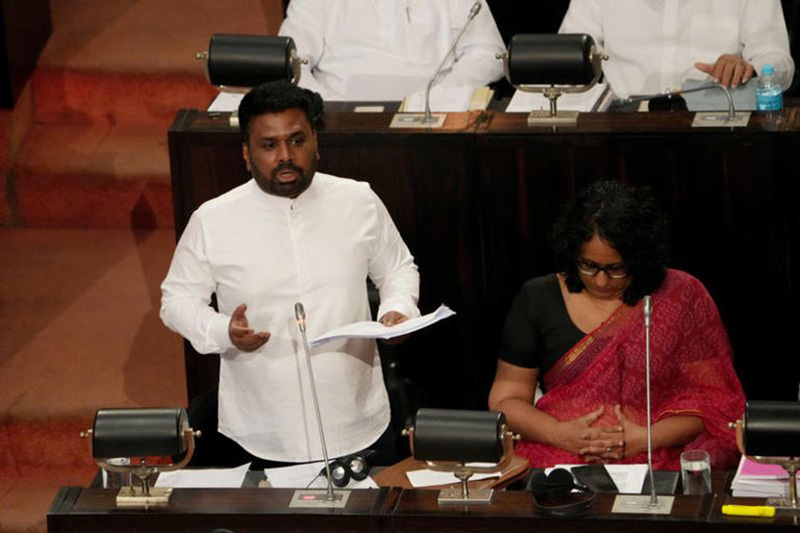
President Anura Kumara Dissanayake, in a pivotal address presenting the National Budget for 2026 in parliament yesterday, announced reforms to dismantle hurdles for Foreign Direct Investments (FDI), highlighted by a firm commitment to evaluate state land for investor use.
“Sri Lanka’s land parcel will be properly evaluated, and the government will determine which lands could be made available for investors bringing in foreign direct investments as making lands available for FDIs has been an obstacle in bringing foreign direct investments,” President Dissanayake stated, emphasising a renewed focus on the investment climate. He pointed out that foreign investor confidence is currently being strengthened as Sri Lanka progresses on its economic stability and growth trajectory.
In tandem with the land policy, the President confirmed that the process of monitoring, regulation, and management of state assets is underway, alongside the crucial amendment of the Strategic Development Projects Act and the Port City Act. He further announced that the State Asset Management Act will be amended in 2026, and the State Commercial Enterprises Act is being introduced to Parliament, signaling a profound structural overhaul of state sector governance. The foundational Investment Protection Act will also be passed in the first half of 2026.
The President underscored the government’s success in achieving state fiscal stability, noting that the country is currently moving towards anchoring an economic growth of 7% in the medium term. Key economic indicators have demonstrated resilience, with the government taking maximum measures to maintain inflation below the 5% level, and the exchange rate being kept at a stable level despite global shocks.
He projected the fiscal strength to hit a historical high, with the highest primary surplus in history set to be marked next year. State revenue, which increased by 900 billion rupees compared to last year, is expected to drive the revenue-to-GDP ratio to 16% in 2025, with a long-term goal of bringing state revenue to the 20% level of Gross Domestic Product (GDP). The government also plans to increase state investments by 4%, stressing the need for capital expenditure to be increased while systematically reducing recurrent expenditure.
On the debt front, the President stated that the country’s debt percentage is already approaching the 95% target, and the government expects to reduce the overall state debt to 87% by the year 2030. Foreign creditors have agreed to provide relief based on the progress of debt restructuring. Out of a total debt servicing requirement of USD 2,435 million, USD 1,941 million has been settled, though foreign debt servicing is up by $760 million this year compared to last year. The national carrier, SriLankan Airlines, is also slated for comprehensive restructuring, with its debt – now around USD 210 million) – to be restructured by the end of this year.
The budget allocates substantial funds and policy initiatives to spur investment and trade as follows:
The country received $823 million in Foreign Direct Investment (FDI) in 2025.
An additional 1,000 million rupees is allocated for services related to Investment Zones.
A residential visa scheme is being introduced for foreign investors.
Rs. 2,500 million is allocated for investment facilitation, including the National Single Trade Window.
To boost competitiveness, an extra 250 million rupees is allocated for the National Export Development Plan, which aims to connect with global value chains and keep export income exceeding $2 billion per month.
Investment incentives include a five-year tax holiday for investors installing communication towers, Rs. 750 million allocated to encourage startups and innovation, and Rs. 21 billion for Research and Development.
The government has noted that the stock market experienced historical growth in 2025, while unemployment reduced to 3.8% in the first quarter of 2025.
The budget detailed key infrastructure projects to support future growth and social welfare measures.
Rs 1 billion is allocated to redevelop domestic airports in Trincomalee, Jaffna, Sigiriya, and Hingurakgoda, and work on the stalled Katunayake International Airport expansion will commence next year.
The government will establish two new IT parks in Digana and Nuwara Eliya under a PPP scheme, while Rs 1.5 billion is allocated to two state banks to settle contractor dues for the idling IT parks in Galle and Kurunegala.
For tourism, Rs 3 billion is allocated to develop domestic tourism hotspots and fund an international destination campaign, targeting USD 8 billion in revenue and 4 million tourist arrivals by 2030.
On the social front, Public sector employee salaries are being increased in 3 phases already. Social safety net expenditure will be maintained at a minimum of 4%, supported by a programme underway to eliminate rural poverty and ensure the benefits of development reach everyone. The President also announced that the government would provide broadband vouchers to children of Aswesuma beneficiary families.
The President concluded by reaffirming an assurance that the public’s tax revenue is being managed with accountability, moving toward an economic system based on equity instead of privilege.
by Sanath Nanayakkare






By Ifham Nizam
Australian High Commissioner to Sri Lanka Matthew Duckworth described Omega Traders’ latest investment in a modern dhal-processing facility as a strong example of how cross-border supply chains can translate into productive investment, local value addition and new business opportunities in Sri Lanka.
The investment, which adds a 150-metric-tonne-per-eight-hour-day processing capacity to Omega Traders’ operations, marks a significant expansion of the company’s manufacturing footprint as it celebrates 45 years in Sri Lanka’s food commodity industry.
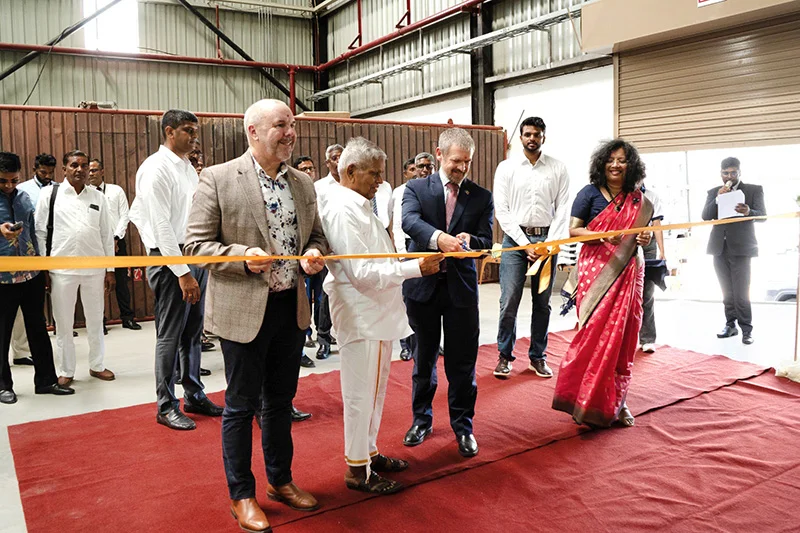
Speaking at the inauguration of the new Lentil and Orid Dhal Processing Factory in Wattala, last Friday, H.C. Duckworth said the facility represented more than an increase in production capacity, pointing to the wider economic value created when Australian agricultural production is connected with Sri Lankan processing and distribution.
‘This facility is not operating on its own. It is part of a long supply chain and a trade partnership between Sri Lanka and Australia, Duckworth said.
His comments placed the Omega Traders’ investment within a broader commercial context: Australia brings agricultural production and established export capabilities, while Sri Lanka provides processing capacity, labour, market access and opportunities for further value addition.
The investment comes as Sri Lanka continues to look towards greater domestic processing and value-added manufacturing rather than relying solely on the import and distribution of finished commodities.
Dr. (Mrs.) Siddhika G. Senaratne, Director General/CEO of the Sri Lanka Standards Institution (SLSI), who attended the inauguration as Guest of Honour, highlighted the importance of quality assurance in food processing and the role of standards in maintaining confidence across the supply chain.
The facility is equipped with new-generation cleaning, processing, sorting and quality-control machinery, including advanced colour-sorting technology, automated systems and an in-house quality-control laboratory.
The additional capacity will support Omega Traders’ three principal Mysoor Dhal brands — Rainbow Jumbo Dhal, Komas Dhal and Rozanna Dhal — which serve different segments of the Sri Lankan market.
But the investment also has a distinctly local agricultural dimension.
Through its Orid Dhal operation, Omega Traders plans to source locally grown black matpe from Sri Lankan farmers and process it at the new facility.
That creates a domestic value chain linking farmers to industrial processing and consumers, while potentially increasing demand for locally produced agricultural commodities.
Duckworth said this type of business partnership could generate benefits for both countries.
‘Australia produces some of the world’s best agricultural products and we are very efficient and very capable at trading them. But that alone is not going to bring success to Australia. Just as building a factory like this is not going to bring success to Sri Lanka, he said.
‘It’s when we bring these entities together that our products produced in Australia can be processed in excellence here in Sri Lanka that enables this to be a success, the H.C. explained.
The investment therefore combines two complementary supply streams: imported agricultural commodities, including Australian-origin products, and locally produced black matpe for the Orid Dhal operation.
For Sri Lanka, the business significance extends beyond Omega Traders itself. Increased processing capacity creates demand for logistics, packaging, distribution, services and agricultural inputs, while supporting employment within the food-processing ecosystem.
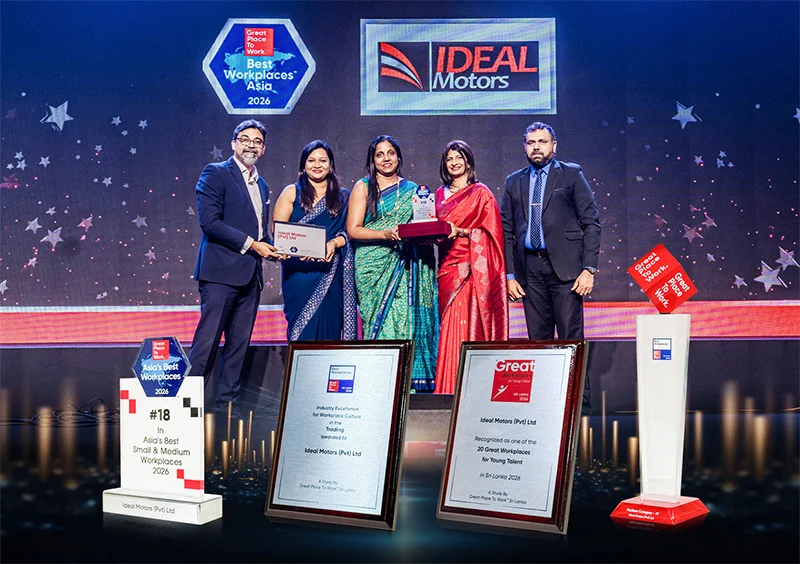
HR-led transformation places people, culture and business performance at the heart of the organisation
Ideal Motors (Pvt) Ltd,has achieved a significant milestone by securing multiple prestigious workplace and organisational culture accolades in 2026, reinforcing its position as an employer of choice in Sri Lanka’s automotive sector.
Among its latest achievements, Ideal Motors has been recognised as one of the 20 Great Workplaces for Young Talent in Sri Lanka 2026, ranked No. 1 and awarded the Gold Medal in the Small and Medium category of Best Workplaces™ in Sri Lanka 2026, and ranked No. 18 among Best Workplaces™ in Asia in the Medium Scale category—the highest-ranked Sri Lankan organisation in the category. The company also received Industry Excellence for Workplace Culture – Trading Industry.
The Young Talent recognition was presented at the Great Place To Work® CXO Forum 2026 held on 10 September 2026 at Cinnamon Life, Colombo. The recognition followed an evaluation of more than 100 certified organisations and highlights workplaces that create meaningful opportunities for employees under 35 to develop, contribute and grow.
At the Best Workplaces™ in Sri Lanka Awards Gala 2026, held on 11 September 2026 at Cinnamon Life, Colombo, Ideal Motors achieved another historic milestone by entering the Best Workplaces Sri Lanka list for the first time and securing the No. 1 Gold Medal in the Small and Medium category. The company also achieved No. 18 in Best Workplaces™ in Asia, reflecting the strength of its workplace culture beyond Sri Lanka.
These achievements represent more than a collection of awards. They reflect the transformation taking place within Ideal Motors, where people, culture and business performance are increasingly viewed as interconnected drivers of sustainable growth.
Over the past few years, the organisation’s HR function has evolved from a predominantly administrative role into a strategic business partner, with greater emphasis on employee experience, capability development, engagement, performance, communication, wellbeing, diversity and inclusion, and data-driven HR practices.
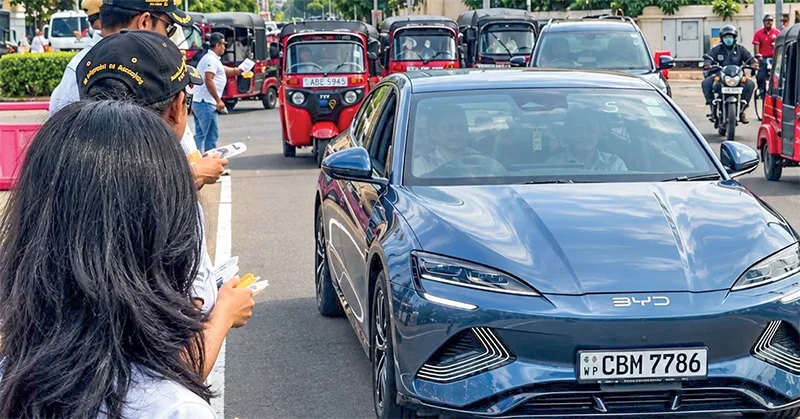
The Automobile Association of Ceylon (AAC) conducted a seat belt safety awareness programme in front of its headquarters and along Galle Face Centre Road, encouraging motorists and passengers to make seat belt use a habit on every journey.
AAC staff, working alongside officers of the Sri Lanka Police Traffic Division, distributed specially designed hanging tags and stickers to drivers. The material carries a clear reminder that seat belts protect drivers as well as passengers in both the front and rear seats.
The public awareness drive was held ahead of the requirement taking effect on 20 September 2026, under which seat belt use becomes mandatory for every occupant of a vehicle travelling on an expressway.
AAC emphasized that the regulation should be understood as a life-saving measure rather than only a legal obligation. Wearing a seat belt can help prevent occupants from being thrown inside or from a vehicle during a collision and can lessen the severity of injuries.
The Association said road safety legislation must be supported by sustained public education, visible enforcement and responsible behaviour by all road users. The participation of the Traffic Police helped the campaign reach motorists directly in a busy part of central Colombo.

High Court convicts 14 over deadly Easter bombings

Mandhana, Shafali and Ghosh lead dominant India to Asian Games gold

Fatima Sana and Umm-e-Hani secure bronze for Pakistan in Asian Games

India bat first in Asian games womens cricket final

Showers about 100mm will occur in the Western, Sabaragamuwa, Central and North-western provinces and in Galle and Matara Districts

Govt. confident of 2/3 majority despite NPP split speculation

‘Dates have the highest sugar content to fight Coronavirus’

Sunday Island 27 December – Headlines

#SundayIsland 17th December – Headlines

Sunday Island – 28th March

Sunday Island Headlines – 21 March

Sunday Island – 21st February – Headlines
-

 News6 days ago
US embassy won’t comment on IGP’s probe into joint drug raid
-

 News4 days ago
Shanakiyan urges urgent action over reported death sentence for Lankan in Saudi Arabia
-

 News5 days ago
Bid for Basil’s extradition nears final stage: Police
-

 Business6 days ago
All-new Bolero MaXX unveiled in Sri Lanka
-

 News3 days ago
Namal Rajapaksa Buddhist gambit fails, bail denied
-

 Opinion6 days ago
A journalist who wrote across the divide
-

 Editorial7 days ago
More fuel price shocks shrouded in secrecy
-
 Sports7 days ago
MAS Holdings, official clothing sponsor of Sri Lanka team at Aichi–Nagoya 2026 Asian Games