
Business
‘People’s Bank continues to demonstrate resilience despite extraordinarily limiting circumstances’

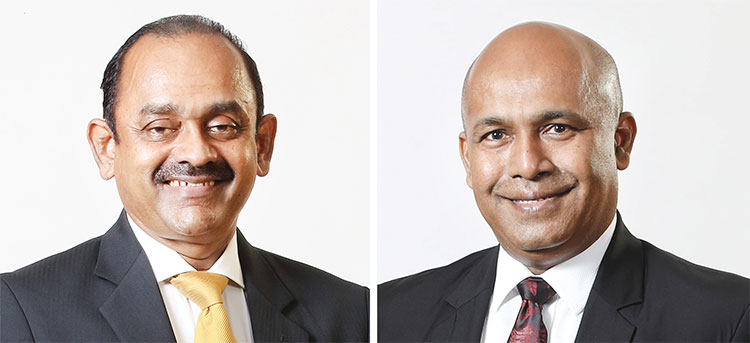
People’s Bank yesterday announced the results for its year ended December 31, 2022 with total consolidated gross revenues, total operating income, and pre-tax profit amounting to LKR 391.2 billion, LKR 130.0 billion, and LKR 26.7 billion, respectively (2021: LKR 236.8 billion, LKR 110.7 billion and LKR 37.2 billion).
Extracts of a People’s Bank press release: ‘Primarily reflecting an extraordinarily high interest rate environment that prevailed – consolidated interest income rose by 58.0% during the year under review to reach LKR 351.4 billion whilst interest expenses soared by 107.5% to LKR 260.4 billion, reflecting the faster pace repricing of term deposits relative to loans. As typically seen throughout the industry, most term deposits at People’s Bank are with maturities of 12 months or less. In addition, in view of preserving and protecting its most vulnerable customer segments – the Bank and Group shouldered much of the interest cost increases – either by delaying or deferring any re-pricing of their loans. These collectively saw Consolidated Net Interest Margins slip by 6.0% to LKR 91.0 billion (2021: LKR 96.9 billion).
‘The Group’s non-funded income accounted for 30.0% of its total operating income during 2022 (2021: 12.5%) aided by an 81.1% increase in consolidated net fees and the extraordinary impact arising from the rupee devaluation. Excluding any one-off increases in fees on a Bank standalone basis, growth was still strong at 26.1% ultimately showcasing the Bank’s ongoing effort to consistently and very systematically improve its non-funded income sources year-on-year, more so in a highly volatile interest rate environment.
‘Reflecting high inflationary pressures during the year under review which peaked at close to 70.0%, total consolidated operating expenses rose by a measured 16.8% to LKR 59.0 billion (2021: LKR 50.5 billion); reflecting prudent cost control and efficiency improvements as exercised at every instance so reasonably possible. This compares well with most peers. As a result, the Bank and Group were able to successfully maintain its cost-to-income ratios at close to 2021 levels despite many limiting circumstances.
‘Relating to customer delinquencies and credit costs, the Bank assessed all its customers’ stress levels, including more importantly its larger key segments, and staged them on a preemptive and prudent basis. To its benefit, the Bank’s exposure to foreign currency investments subject to external debt restructuring was amongst the lowest with an aggregate amortized cost of only US$ 51.4 million at December 31, 2022.
‘Total consolidated customers deposits grew by 13.0% to reach LKR 2,450.1 billion whilst consolidated net loans contracted by 3.8% to LKR 1,915.8 billion reflecting the Bank’s and Group’s diligent approach to credit growth more so in a contracting macro-economic context, amongst other factors. Total consolidated assets crossed LKR 3.0 trillion to reach LKR 3,133.1 billion expanding by 10.6% from the end 2021.
‘Commenting on the results, chairman, People’s Bank, Sujeewa Rajapakse, stated that: “From a macro-economic perspective, 2022 was the culmination of economic stresses and stress events over the last several years. It was a year that saw the country’s external reserve position falling to a level previously unseen, the rupee devalue by close to 80.0%, inflation soar to nearly 70.0%, policy rates increase in a manner unprecedented in view of curbing inflationary pressures and, all in all, resulting in the country’s credit rating fall to a historic low and the economy contract by close to 11.0% which is deepest seen since independence. 2022 was therefore not a year where the top-line or bottom line was the prime focus but safeguarding customer interests in their absolute time of need, strengthening liquidity and the overall risk management and the governance framework of the Institution for its long-term sustainability was and where improving efficiency and productivity at every instance possible was at the core of all conversations and decisions. All these considered, including the added burden shouldered as a responsible State Institution – we are pleased with our 2022 results both on a quantitative and, more importantly, a qualitative front.’








The Securities and Exchange Commission of Sri Lanka (SEC) successfully hosted a series of high-level meetings of the International Organization of Securities Commissions (IOSCO), bringing together leading securities regulators and enforcement officials from around the world to discuss emerging regulatory challenges, strengthen international cooperation, and enhance collective efforts to combat cross-border securities market misconduct.
The meetings, held at the Hilton Colombo from 13 to 16 October 2026, included sessions of the IOSCO Enforcement and Cooperation Committee and its Screening Group (Committee 4/SG), as well as meetings of the Monitoring Group and the Steering Committee. The event attracted approximately 50 senior representatives from securities regulators and exchanges across several jurisdictions, including Australia, Japan, the United States, the United Kingdom, France, Italy, Canada, New Zealand, India, Germany, Belgium, Singapore, China and Spain, reflecting the global significance of the discussions and the growing importance of international regulatory collaboration.
Welcoming delegates to Sri Lanka, Senior Professor D.B.P.H. Dissabandara, Chairman of the SEC, emphasized the critical role of international cooperation in safeguarding market integrity and investor confidence in an increasingly interconnected financial landscape.
“No regulator can effectively address cross-border misconduct in isolation. The speed with which information, transactions and illicit activities can move across borders requires an equally coordinated and timely regulatory response. Strong international cooperation, effective information sharing and mutual trust among regulators are essential to maintaining fair, transparent and resilient capital markets,” he stated.
The discussions focused on a range of enforcement and cooperation matters, including mechanisms for enhancing cross-border information exchange, strengthening investigative collaboration among regulators, addressing increasingly sophisticated forms of securities fraud and market abuse, and promoting the effective implementation of international standards and best practices. Participants also exchanged experiences and insights on emerging enforcement challenges arising from technological developments, digitalization of financial services, and increasingly interconnected global markets.
IOSCO is recognized as the leading international body that brings together the world’s securities regulators and serves as the global standard setter for securities regulation. Through its policy work and cooperative initiatives, IOSCO plays a central role in promoting investor protection, ensuring that markets are fair, efficient and transparent, reducing systemic risk, and strengthening confidence in capital markets worldwide.
Sri Lanka has maintained a strong and active relationship with IOSCO for more than three decades. The SEC became an Ordinary Member of IOSCO in 1993 and has been a signatory to the IOSCO Multilateral Memorandum of Understanding (MMoU) since 2004. The MMoU is the internationally recognised benchmark for cooperation and information sharing among securities regulators and serves as a critical tool in facilitating cross-border investigations and enforcement actions.

Pan Asia Bank recently entered into a one-year Memorandum of Understanding (MOU) with Ideal Motors (Pvt) Ltd, creating a new financing avenue for customers purchasing vehicles from the authorised Mahindra dealer. The strategic partnership will enable customers of Ideal Motors to access leasing facilities from Pan Asia Bank, making vehicle financing more convenient while supporting their mobility and business requirements. The agreement also provides an opportunity for the Bank to expand its leasing portfolio and strengthen its presence in Sri Lanka’s vehicle financing market.
Ideal Motors is the authorised dealer for the Mahindra vehicle range in Sri Lanka, including the Mahindra Bolero CPU Truck and Scorpio Jeep/Pickup. The vehicles cater to a range of requirements, from commercial and business applications to personal mobility, making accessible financing an important part of the purchasing decision.
The Bank’s vehicle leasing facilities are designed to simplify the financing process, with convenient repayment options and professional support to help customers select a solution suited to their requirements. For customers, the arrangement brings vehicle selection and financing closer together, reducing the need to navigate the two processes separately.
“Our partnership with Ideal Motors enables us to bring financing closer to customers at the point of vehicle purchase. We remain focused on providing convenient and flexible leasing solutions that support both personal mobility and the needs of businesses,” said Naleen Edirisinghe, Director/CEO of Pan Asia Bank.
Pan Asia Bank and Ideal Motors will work closely during the one-year partnership to maximise business opportunities and deliver a seamless financing experience to customers. The collaboration is expected to strengthen both organisations’ ability to respond to demand for commercial and personal vehicles while creating greater value for customers.
Yohan Ebell, Head of Retail Credit, Pan Asia Bank, said: “Through this partnership, we aim to make vehicle financing simpler and more accessible, with leasing solutions designed to meet the varied requirements of Ideal Motors’ customers.”
The collaboration also reflects Pan Asia Bank’s commitment to building partnerships that make financial services more accessible and responsive to the needs of individuals and businesses.
Pan Asia Bank has established a growing presence in vehicle financing, offering leasing solutions designed around customer convenience and flexibility. Its leasing proposition is supported by a nationwide branch network and a customer-focused approach, enabling customers to obtain guidance on financing options while completing their vehicle purchase.

Heritance Hotels and Resorts has secured four distinguished titles at the World Travel Awards 2026, with three national awards recognising its Sri Lankan properties and an international title for Heritance Aarah in the Maldives.
The three Sri Lankan titles recognise Heritance Tea Factory as Sri Lanka’s Leading Heritage Hotel 2026, Heritance Ahungalla as Sri Lanka’s Leading Luxury Hotel 2026, and Heritance Kandalama as Sri Lanka’s Leading Wedding Hotel 2026. Heritance Aarah was named the Indian Ocean’s Leading All-Inclusive Resort 2026.
Internationally recognised within the global travel and tourism industry, the World Travel Awards celebrate excellence across hotels, resorts, and destinations. Recognition at this level affirms the quality, distinctiveness, and consistency of the experiences delivered by Heritance Hotels and Resorts.

Environmental laws will be enforced equally against everyone

President pays last respects to Most Venerable Kappetiyagoda Siri Wimala Thera

Shafali receives demerit point for breaching Level 1 of ICC code of conduct

Heavy showers about 100 mm are likely at some places in the Northern, North-central, Central, Eastern, North-western and Uva provinces

Molineux, Dunkley enter WPL 2027 auction with top base price of INR 50 lakh

Ranawaka accuses govt. of using JVP cadres and police to suppress political opponents

‘Dates have the highest sugar content to fight Coronavirus’

Sunday Island 27 December – Headlines

#SundayIsland 17th December – Headlines

Sunday Island – 28th March

Sunday Island Headlines – 21 March

Sunday Island – 21st February – Headlines
-

 Features3 days ago
Kotahena:A Small Enclave, An Extraordinary Legacy
-

 News7 days ago
Sri Lanka, India caught in US-Iran ship crisis
-

 News4 days ago
Asgiri Mahanayake calls for immediate release of Gnanasara Thera
-

 Latest News7 days ago
Missiles intercepted near Riyadh after Saudi coalition hits Yemen fuel depot
-

 Latest News7 days ago
Kusal Mendis’ unbeaten 87 hands Sri Lanka consolation win
-

 News2 days ago
Record 1,600 students take Russian Classical Ballet examination in Sri Lanka
-

 News6 days ago
AC President recuses himself from hearing prison attire case pertaining to Gnanasara Thera
-

 Latest News7 days ago
Heavy showers above 100 mm are likely at some places in the Western, Sabaragamuwa, Southern, Central, and North-western provinces and in Anuradhapura district.