
Features
Parliament, its institutions, library,photo gallery, décor and much else

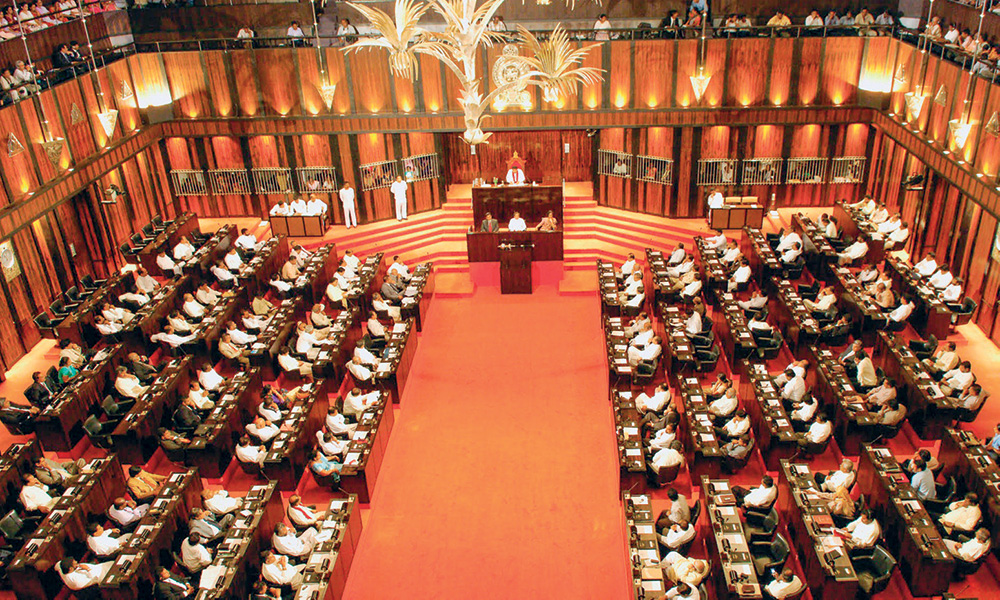
MPs used to call Speaker’s wig the “Walas Toppiya”, hard to make out the difference between peons nd backbenchers when sashes were removed
Parliament also has two “Oversight Committees” which play an important role in the management of public finances. The older one is COPA- the Committee on Public Accounts [previously known as the Public Accounts Committee]. Later another committee called the Committee on Public Enterprises [COPE] was set up to oversee state owned enterprises. In both cases the committee relies on the reports of the Auditor General regarding the activities, particularly financial management, of Government Ministries and Departments and in the latter case of state owned enterprises or Corporations.
In the early Parliaments the tradition was for a member of the Opposition to head the PAC. By common consent Bernard Soysa of the LSSP was appointed to this position. He was very fair and being a personal friend of JRJ, he could immediately bring any explosive situation to the leader’s attention. I had many good memories of my encounters with Bernard in the old Parliament when I was a Permanent Secretary.
The number of Ministries were small then and so were the number of MPs in the PAC. We were treated to cakes and tea in the anteroom and were called in after an internal discussion among the PAC members and the Auditor-General and his representatives. They were very courteous and our explanations were listened to and after some questioning, which included banter, we were excused with a warning not to come before the PAC in the future.
This was not an idle piece of advice because a Permanent Secretary as Chief Financial Officer of a Ministry has every opportunity to explain the circumstances which led to the administrative decision queried by the Auditor General. After the preliminary audit of departmental accounts, as mandated by Parliament, its findings are submitted to the relevant Ministry Secretary for his observations and, if necessary, remedial actions. If the Secretary’s response is satisfactory the AG is empowered to strike it off his report to Parliament.
If the matter at hand is serious the AG may directly contact the Secretary concerned to request him to investigate and report back to him. If his staff reports on a trivial matter the AG has the authority to keep it out of his report. But if none of these opportunities are used by the Secretary, or if there is suspicion of maladministration or fraud, it is reported as a paragraph in the AG’s report and the PAC has to adjudicate in that matter.
It can instruct the Secretary to take remedial legal action and include its recommendations in the PAC Chairmans report to Parliament which if necessary can be debated on. One major complaint about COPA and COPE is that being an instrument of the legislature, it has no executive power and has to depend on external authorities to exercise their powers to implement its recommendations. It can recommend but it has no effective executive power. Thus while there is a great hulabaloo about its findings in the media, the PAC is in reality helpless as a watchdog. This watchdog has no teeth.

Trotsky with Max Shachtman
When I was a member of the UNP caucus after Gamini Dissanayake’s death, I was helpless as my party did not even appoint me as a member of either COPA or COPE. My experience as a reporting officer both as a Permanent Secretary and international civil servant was not even considered when UNP members were recommended to man those organizations. Actually there was not much competition among MPs to join these committees. Even so by some “hidden hand” I and others who were in Gammi’s camp and the DUNF were excluded from such duties.
Though I was kept busy with my electorate work and contact with organizations like Rotary, Sarvodaya, ICES and “think tanks” an uncomfortable feeling, which periodically strikes politicians, began to nag me and I got to thinking about other options open to me if I was to continue in the political arena.
Let me now walk you through the Parliament that I entered in 1994 and the hopes we had with Gamini as our leader. As a veteran in the House by then having entered Parliament as a young man in 1970 – he was a master of tactics which he showed by first winning over those who had supported Ranil in the leadership contest. When he was asked to nominate a MP for a tour of Sweden he immediately chose Ranjit Madduma Bandara who had recently married.
“Let me give Ranjit a honeymoon gift” he told me after we discussed the possible choices for the tour. He was quick to extend the hand of friendship to Ranil particularly because he wanted a united UNP for his impending run for the Presidency. There was opposition from some friendly quarters to his candidature as CBK, who was the PM, would have an advantage in the election that year. It was going to be a difficult fight. But Gamini was determined to contest come hell or high water as he wanted to unify the party through his campaign. His view was that even if he lost he would become the undisputed leader of the UNP who would wrest power from CBK in the next Presidential contest in the year 2000.
Looking back
If the UNP had won the General election of 1994 and Gamini Dissanayake had become the Prime Minister he would have made me a senior cabinet minister. In fact on the last day of his life at a public rally in Kundasale for the Presidential contest he pointed me out to the audience and said that when he won the Presidency he had the power to appoint the Prime Minister and I would certainly be a candidate for the post.
This could have been the usual glad handing and “bucking up” of colleagues which is normal in political meetings. But it was an indication that he had faith in me especially after I had succeeded in getting him back to the UNP from the political wilderness by negotiating with President Wijetunga. At the end of the meeting while getting into the helicopter he told several people assembled there that I would head his campaign in Kandy district so that he could concentrate on other areas to gather votes.
Nevertheless beginning a Parliamentary career in the Opposition, as it happened to me, had many attractions. I can honestly make such a statement when looking back on my 26 years of Parliamentary life, of which 16 were spent as a Minister and 10 as a member of the Opposition. My first five years in Parliament were spent in the Opposition as a UNP MP. It was a memorable and invaluable introduction to Parliamentary practice. On reading biographies of famous British parliamentarians, I found that such years in the wilderness seemed to be an experience which was enjoyed by many eminent politicians.
Besides I was in the happy position of being somewhat familiar with Parliamentary practice due to my career as a senior public official. As a Director of Information and later a Permanent Secretary in charge of media, I would spend much time in the officials box following debates of the political giants of the time. I had been entertained in the Parliament restaurant by Ministers, as well as Prime Ministers, when we turned up to brief them on official matters which were taken up in Parliament. My friends from school and university Bertram Tittawella and Nihal Seneviratne were Clerks to the House and I enjoyed having meals at their table with them after official business was concluded.
More serious were the sessions with the Public Accounts Committee then presided over by the courteous but hawk eyed Bernard Soysa, who probed the financial affairs of Ministries as highlighted in the Auditor General’s report. Many years later when I was the Chairman of the PAC myself I remembered the courteous but firm approach of Bernard and tried to emulate him.
Parliament building
The new Parliament building designed by Geoffrey Bawa was an architectural wonder. I remembered the helicopter rides taken with him over the proposed Kotte site when I was deputed by my Minister Ananda Tissa de Alwis in the early days to represent him in the project committee that supervised the construction of the new Parliament. We flew over empty tracts of land which were like lush islands surrounded by water. Thanks to Geoffrey Bawa’s genius it was redesigned and a magnificent building influenced by traditional architecture was built under the JRJ administration.
As a rookie MP I would spend time walking along its corridors which led to rooms specially designed for the President, Prime Minister, Ministers, the Leader of the Opposition and party leaders. The Speaker rightly had a floor to himself and his administrative staff. There were rest rooms and billiard tables and a cordoned off area on the second floor with many armchairs positioned side by side where MPs could smoke, exchange gossip and conspire while looking across the man made lake which surrounds the building. Later when WJM Lokubandara became Speaker he added an ayurvedic spa where MPs could get a quick massage before entering the chamber.
Photo Gallery
Another interesting feature was the picture gallerywhere photos of previous representatives were assembled under plaques denoting their name and the particular State Council or Parliament they represented. From time to time visitors, particularly relatives of the “great men”, could be seen keenly identifying their relatives or representatives. New MPs were invited by the Speaker to visit a parliamentary photographer who would take a specially posed picture for the photo gallery.
After 1956 sartorial fashions of MPs changed dramatically to include a majority of “national” dressed representatives [probably of the SLFP] while the UNP and the LSSP members appeared in western dress. All MPs obeyed the Speaker’s order that they should appear in formal dress. But how to define “formal” dress was the question. It was Sarath Muttetuwegama – the popular MP from the Communist party, who solved this problem. He invented a shirt with a closed collar and long sleeves which looked dignified enough to pass muster. This dress was much less cumbersome than western dress and the “national” worn by SWRD Bandaranaike [with other colourful variations] It became so popular that it was identified as a “politician’s garb” and was known sarcastically as “kapati coat”.
Of late there has been another sartorial twist and even representatives from the boondocks wear western dress. They have earned enough money and can afford to go to the best tailors in town. Another source of amusement was the long wig worn by the Speaker on ceremonial occasions. Many Speakers who were provincial lawyers were happy to imitate their professional superiors like Supreme Court judges and “Silks”. The Speaker’s wig was known among rural MPs as the “Walas Toppiya”.
Another sartorial change in Parliament took place after the CBK victory and her appointment as Prime Minister. The more “socialistic” government MPs were lobbied by the Parliamentary peons to abolish the “Bapane”or red sash denoting minor office in colonial times, which they were expected to wear in the chamber. For some reason the peons thought that this was infra dig and a relic of the colonial past. Their request to JRJ for sartorial relief fell on deaf years but “young radicals” supporting CBK prevailed on the Speaker KB Ratnayake, a great Kachcheri man who loved the “Bapane”, to give in.
As a result now it is often difficult to distinguish backbenchers from peons. Both categories happily face TV cameras together for Parliamentary broadcasts. However there is an irony here. While the “Bapane” disappeared from Parliament it is still clearly in evidence among the officials of the Dalada Maligawa in Kandy. They still wait on the Diyawadana Nilame and march behind him in the procession. Minor officials at the sacred Bo tree in speaker KB Ratnayake’s beloved Anuradhapura, still wear the “Bapane” on ceremonial occasions.
Korale flags
Most MPs are not really interested in the architectural gems created by Bawa and his colleagues. For instance the walls of the debating chamber are decorated with the regional flags of ancient kings which were embossed on silver sheets by skilled artisans. These flags were made after meticulous research and tended to add to the beauty of the chamber though they are hardly noticed by the voluble representatives of those “Korales”. The mace which symbolizes the integrity of the legislature was designed with a traditional lotus motif on top. The “quorum bell” that calls MPs to the chamber takes the sound of the “Salalihiniya-” a bird associated in Sinhala poetry with ancient Jayawardenapura where the Parliament is now located.
From time to time a drama is enacted when an indignant MP [On many occasions it was Vasudeva Nanayakkara] attempts to wrench the mace from the grasp of a burly Sergeant-at-Arms in full view of TV cameras. Without the mace in place the regular proceedings of the House comes to a standstill. The Speaker warns the errant MP that he will be expelled from the chamber. When there is a fracas in Parliament the Sergeant at Arms immediately runs to the Speaker’s podium to protect the mace. The ensuing scuffle, now stylist thanks to Vasudeva Nanayakkara’s antics, is sure to hit the front pages of the following day’s newspapers.
Library
The Parliament library built up from the time of the State Council is undoubtedly one of the best in the country, particularly in respect of politics, economics and parliamentary practice. However most of the books are in English attesting to a time when the elite of days gone by dominated the legislature. Now books in the library are rarely read. Most MPs now come to the library to read local language newspapers or write letters in private. But, for me the Parliament library was a treasure trove. It probably has the best collection of left, particularly Trotskyite, literature in the country.
I could imagine MPs like Leslie Goonewardene or Bernard Soysa ordering these books and journals which influenced the decisions of the LSSP. Philip Gunawardene would have been another voracious reader. In the first few months as a MP I spent my spare time in the library going through Trotskyite writings which we had only heard of in Doric de Souza’s lectures. To me it was a fascinating discovery especially the numerous publications of the Fourth International and its different theoretical factions.
When NM Perera called for an alliance with the SLFP in 1968 the theoreticians of the Fourth International (FI) strongly opposed that move. The LSSP split on that issue and Edmund Samarakkody, Bala Tampoe and Merill Fernando formed the Revolutionary LSSP which had the blessings of the FI and its Paris headquarters. During my stay in Paris I had met one of those theoreticians – Michel Pablo. By that time Pablo had been rejected by the majority of the Trotskyites as he had backed Messali Hadj in Algeria. Hadj had been unmasked as a traitor by the Algerian revolutionaries like Ben Bella, Boumedienne and Ferhat Abbas who led the insurrection against the French imperialists.
After the French left Algeria Michel Pablo had been expelled and his office in Algiers was burnt down. In Paris when I met him I found that he was paranoid, constantly reminding me that he was being “tailed” by the French Police. Of the Sri Lankan Samasamajists he could only remember Leslie Goonewardene whose “nom de guerre” in the underground period was Tilak. The Pablo faction were proponents of a United Front strategy and had much influence on the LSSP of the sixties.
I made another important discovery in my researches in the library. Someone had ordered books and journals issued by the Trotskyite groups in America in the early forties. My guess is that the reader was Philip Gunawardene whose contacts as a student in the US included radicals like his teacher in Wisconsin, Professor Scott Nearing who influenced both Philip and Jaya Prakash Narayan, who played a role as a revolutionary within the Indian Congress and later in the Praja Socialist Party.
Philip would have been encouraged by his State Council colleague NM Perera, whose wife Selina Peeris had visited the east coast of the US, worked with the Trotskyite groups there and was on the way to Mexico to personally meet Trotsky when he was brutally murdered by a Stalinist agent. Trotsky had been driven out of Prinkipo island in the sea of Marmara by the NKVD and was forced to relocate in a remote Scandinavian village.
Again he was driven out by the Stalinists and thanks to the intervention of the communist artist Diego Rivera, Trotsky was given refuge in Mexico. At this stage of history American Trotskyites were quite influential among leftist groups. They helped in setting up the John Dewey Commission to inquire into Stalin’s allegations against Trotsky. After a prolonged inquiry Trotsky was exonerated by the Commission. As is to be expected the ‘T group’ split upinto factions on theoretical and personal issues.
The Parliament library had collected journals of several US factions including the Shachtman group which led to the famous cartoon, “Shachtman is a Shachtmanite”, encapsulating the bitter factional rivalry among the US leftists. This US connection of the LSSP has not been described in detail before in the writings on Sri Lankan left politics. A good introduction to the leftists of New York at that time can be found in Warren Beatty’s prize winning movie “Reds” made in Hollywood.
The library also held publications of later Trotskyites who were grouped around the New Left Review. The NLR edited by Robin Blackburn, whom I had met in Canada while he was on a lecture tour of campuses there, was sympathetic to the JVP and supported the 1971 insurrection. Two of the best essays on the JVP of the early seventies are by Fred Halliday and Tamara Deutscher, wife of Isaac Deutscher, a hero of the Trots for his brilliant biography of Trotsky. She wrote a “letter from Colombo” for the NLR supporting Wijeweera’s 1971 insurrection that was shaking up the Sirimavo government which included old comrades in the Fourth International like NM and Colvin.
I learnt later that she was staying in Leslie Goonewardene [Tilak’s] home when the insurrection broke out. Of all of Mrs Bandaranaikes Ministers it was Leslie, together with TB Subasinghe, who was most sympathetic to the JVP and spoke out for a soft response to the insurrectionists at Cabinet meetings, unlike NM who called the JVP a CIA front.
(Excerpted from vol. 3 of the Sarath Amunugama autbiography) ✍️

Features
Illegal solar push ravages Hambantota elephant habitat: Environmentalist warns of deepening crisis

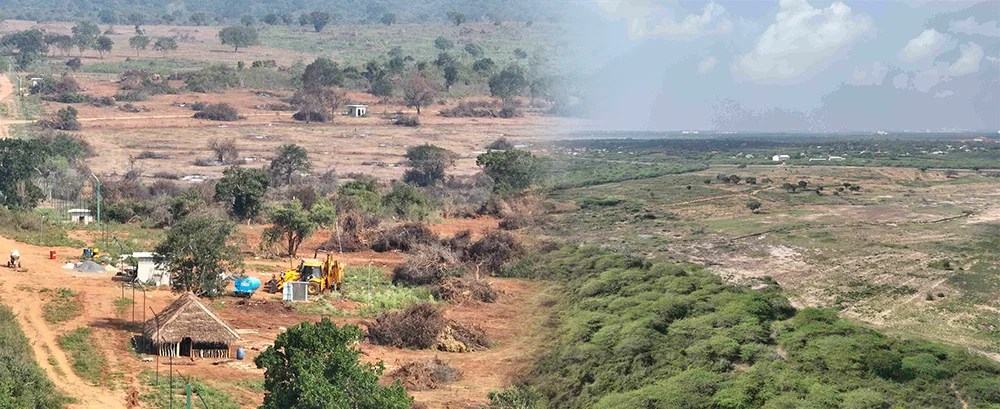
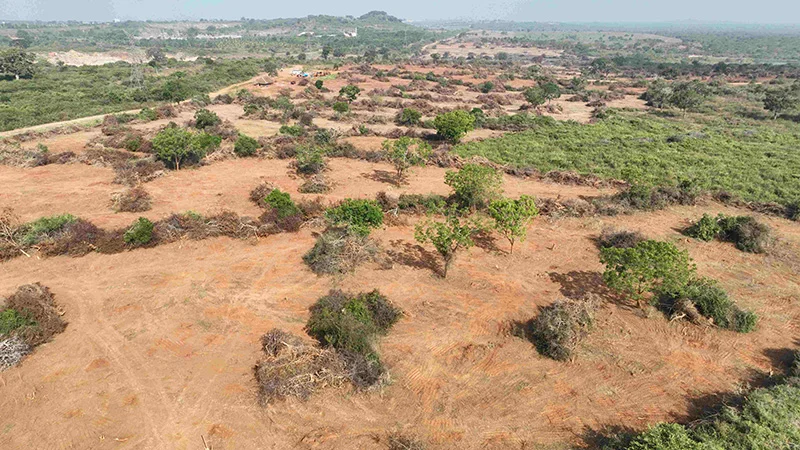
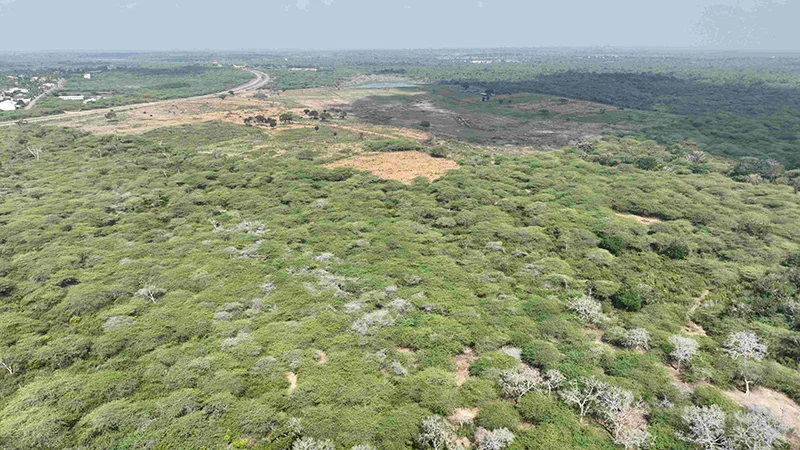
A large-scale move to establish solar power plants in Hambantota has triggered a major environmental and social crisis, with more than 1,000 acres of forest—identified as critical elephant habitat—cleared in violation of the law, environmental activist Sajeewa Chamikara said.
Chamikara, speaking on behalf of the Movement for Land and Agricultural Reform, said that 17 companies have already begun clearing forest land along the boundaries of the Hambantota Elephant Management Reserve. The affected areas include Sanakku Gala, Orukemgala and Kapapu Wewa, which are known to be key elephant habitats and long-used movement corridors.
He said that what is taking place cannot be described as development, but rather as a large-scale destruction of natural ecosystems carried out under the cover of renewable energy expansion.
According to Chamikara, the clearing of forests has been carried out using heavy machinery, while large sections have also been deliberately set on fire to prepare the land for solar installations. He said that electric fences have been erected across wide stretches of land, effectively blocking elephant movement and fragmenting their natural habitat.
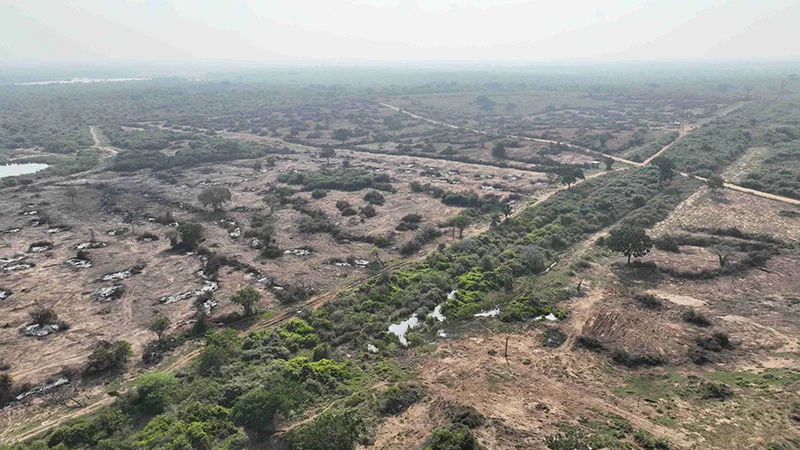
“These forests are not empty lands. They are part of a living system that supports wildlife and nearby communities. Once destroyed, they cannot be easily restored,” he said.
The projects in question include a 50 megawatt solar development undertaken by five companies and a larger 150 megawatt project implemented by 12 companies. The larger project is reported to be valued at around 150 million US dollars.
Chamikara stressed that these projects are being carried out in a coordinated manner and involve extensive land clearing on a scale that raises serious environmental concerns.
He further alleged that certain companies had paid about Rs. 14 million to secure support and move ahead with the projects. He said this points to a troubling failure of oversight by state institutions that are expected to protect forests and wildlife habitats.
“This is not only an environmental issue. It is also a serious governance issue. The institutions responsible for protecting these lands have failed in their duty,” he said.
Chamikara pointed out that under the National Environmental Act, any project of this scale must receive prior approval through a proper Environmental Impact Assessment process.
He said that clearing forest land before obtaining such approval is a direct violation of the law.
He added that legal requirements relating to archaeological assessments had also been ignored. Under existing regulations, large-scale land clearing requires prior evaluation to ensure that sites of historical or cultural value are not damaged.
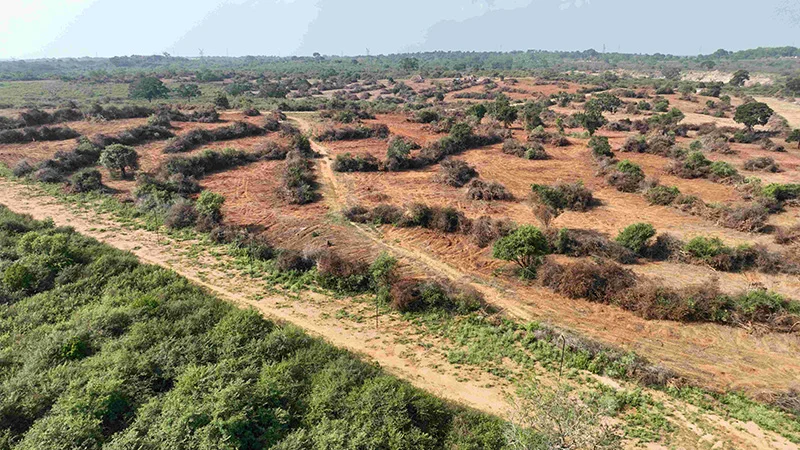
“The law is very clear. You cannot go ahead with projects of this nature without proper approval. What we are seeing is a complete disregard for legal procedure,” Chamikara said.
The environmental impact of these activities is already becoming visible. With their natural habitats destroyed, elephants are increasingly moving into nearby villages in search of food and shelter. This has led to a sharp rise in human-elephant conflict in several areas.
Areas such as Mayurapura, Gonnooruwa, Meegahajandura and Thanamalvila have reported increasing encounters between humans and elephants. According to Chamikara, more than 5,000 farming families in these areas are now facing growing threats to their safety and livelihoods.
He warned that farmers are being forced to abandon their lands due to repeated elephant intrusions, while incidents involving damage to crops and property are rising. There have also been increasing reports of injuries and deaths among both humans and elephants.
“This is turning into a serious social and economic problem. When farmers cannot cultivate their lands, it affects food production, income and rural stability,” he said.
Chamikara also raised concerns about the broader environmental consequences of clearing forests for solar power projects. While renewable energy is promoted as a solution to reduce carbon emissions, he said that destroying forests undermines that goal.
“Forests play a key role in absorbing carbon dioxide. When you clear and burn them, you are increasing emissions, not reducing them. That defeats the purpose of promoting solar energy,” he explained.
He added that large-scale deforestation in dry zone areas such as Hambantota could also affect local weather patterns and reduce rainfall, which would have further negative impacts on agriculture and water resources.
Chamikara called for a shift in policy, urging authorities to focus on more sustainable approaches to solar power development. He said that rooftop solar systems on homes, public buildings and commercial establishments should be given priority, as they do not require clearing large areas of land.
He also recommended that solar projects be located on degraded or abandoned lands, such as areas affected by past mining or other low-value lands, rather than forests or productive agricultural areas.
“Renewable energy development must be done in a way that does not destroy the environment. There are better options available if there is proper planning,” he said.
Chamikara urged the Central Environmental Authority and the Department of Wildlife Conservation to take immediate action to stop ongoing land clearing and investigate the projects. He stressed that all activities carried out without proper approval should be halted until legal requirements are met.
He warned that failure to act now would lead to long-term environmental damage that could not be reversed.
“If this continues, we will lose not only forests and wildlife, but also the balance between people and nature that supports rural life. The consequences will be felt for generations,” he said.
The situation in Hambantota is fast emerging as a critical test of whether development goals can be balanced with environmental protection. As pressure grows, the response of authorities in the coming weeks is likely to determine whether the damage can still be contained or whether it will continue to spread unchecked.
By Ifham Nizam
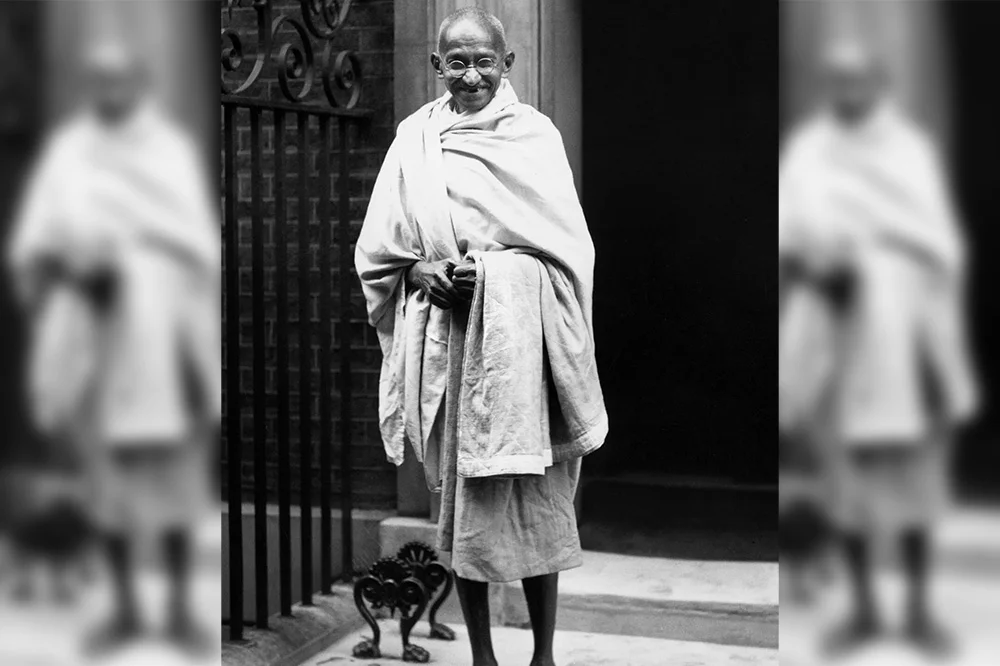
 All credit to the Tamil Nadu government for taking concrete measures to perpetuate the memory of the renowned Mahatma Gandhi of India, who on account of his moral teachings stands on par with the likes of Socrates, Plato, Aristotle, Confucius and Jalaluddin Rumi, to name a few such all-time greats. The time is indeed ripe to draw the world’s attention to the Mahatma’s humanistic legacy which has resonated in the hearts of peace-oriented sections the world over down the decades.
Under its mega developmental blueprint titled ‘ Tamil Nadu 2030’, the Tamil Nadu government, among other things, intends transforming villages into centres of economic growth in conformity with the Mahatma’s vision of making the village the fundamental unit of material and spiritual advancement. Thus will come into being the ‘Uttamar Gandhi Model Villages Project’, which will be initially covering 10 village Panchayats. (Please see page 3 of The Island of March 11, 2026).
The timeliness of remembering and appreciating anew the teachings of Mahatma Gandhi resides in the utter lawlessness that has been allowed to overtake the world over the last few decades by none other than those global powers which took it upon themselves to usher in a world political and economic order based on the UN Charter and the Universal Declaration of Human Rights. Mainly in ‘the dock’ in this regard are the permanent members of the UN Security Council.
As is plain to see, the international law and order situation has veered out of control. Principal priorities for the international community or what’s left of it is to prevent the current mainly regional war in the Middle East from degenerating dangerously into another world war, coupled with the task of eliminating the possibility of another nuclear holocaust.
The most scorching of ironies is that the world’s ‘number one power’, the US, has virtually lost its way in the ‘Global Disorder’ it has been party to letting lose. For instance, instead of making good its boast of militarily neutralizing Iran and paving the way for the constant flow of fuel and gas from the Strait of Hormus by itself and Israel, it is now appealing to the rest of the West to come to its assistance. Not surprisingly, US allies are indicating their unwillingness to help pull the US’ ‘chestnuts out of the fire’.
Oil and gas are the veritable life blood of countries and going ahead it should not come as a surprise if impatience gets the better of the major powers and the nuclear option is resorted to by some of them under the dangerous illusion that it would be a quick-fix to their growing economic ills and frustrations.
All the above and more are within the realms of the possible and the need is pressing for humanistic voices to take centre stage in the present runaway crisis. As pointed out in this column last week, Realpolitik has overtaken the world and unless the latter is convinced of the self-destructive nature of the major powers’ policy of ‘meeting fire with fire’ to resolve their disputes, annihilation could be the lot of a good part of the world.
For far too long the voice of humanity has been muted and silenced in the affairs of the world by the incendiary threats and counter-threats of the big powers and their allies. No quarter has been bold enough in these blood pressure-hiking slanging matches to speak of the need for brotherly love and compassion among nations and countries. But it’s the language of love and understanding that is the most pressing need currently and the Mahatma in his time did just that against mighty odds.
At present the US and Iran are trading threats and accusations over military-related developments in the Gulf and it’s anybody’s guess as to what turn these events will take. However, calming voices of humanity and moderation would help in deescalating tensions and such voices need to go to the assistance of the UN chief and his team.
The Mahatma used the technique of ‘Satyagraha’ or the policy of non-violent resistance to oppose and dis-empower to a degree the British empire in his time and the current major powers would do well to take a leaf from Gandhi. The latter also integrated into the strategy of non-violent resistance the policy of ‘Ahimsa’ or love and understanding which helped greatly in uniting rather than alienating adversaries. The language of love, it has been proved, speaks to the hearts and minds of people and has a profoundly healing impact.
Mahatma Gandhi defined the ideal of ‘Ahimsa’ thus: ‘In its positive form, “Ahimsa” means the largest love, the greatest charity. If I am a follower of “Ahimsa”, I must love my enemy or a stranger to me as I would my wrong-doing father or son. This active “Ahimsa” necessarily includes truth and fearlessness.’ (See; ‘Modern Indian Political Thought; Text and Context’ by Bidyut Chakrabarty and Rajendra Kumar Pandey, Sage Publications India, Pvt. Ltd., www.sagepub.in).
In the latter publication, the authors also defined the essence of ‘satyagraha’ as ‘protest without rancour’ and this is seen as ‘holding the key to his entire campaign’ of non-violent resistance. From these perspectives, the teaching, ‘hatred begets hatred’ acquires more salience and meaning.
Accordingly, the voice of reason and love needs to come centre stage and take charge of current international political discourse. The UN and allied organizations which advocate conflict resolution by peaceful means need to get together and ensure that their voices are clearly heard and understood. The global South could help in this process by seeing to the vibrant rejuvenation of organizations such as the Non-aligned Movement.
An immediate task for the peace-oriented and well meaning is to make the above projects happen fast. In the process they should underscore afresh the profound importance of the teachings of Mahatma Gandhi, who is acclaimed the world over as a uniting and healing political personality and prophet of peace.
If the Mahatma is universally acclaimed, the reason is plain to see. Put simply, he spoke to the hearts and minds of people everywhere, regardless of man-made barriers. The language of peace and brotherhood, that is, is understood by everyone. The world needs more prophets of peace and reconciliation of the likes of the Mahatma to drown out the voices of discord and war-mongering and ensure that the language of humanity prevails.

 The Future Model Hunt extravaganza, organised by Rukmal Senanayake, and advocacy trainer Tharaka Gurukanda, held in late January 2026, has brought into the limelight four outstanding contestants who will participate, at the international level, this year – Sandeepa Sewmini, Demitha Jayawardhana, Diwyanjana Senevirathna, and Nimesha Premachandra.
Nimesha took the honours as Mrs. Tourism Sri Lanka 2026 and was featured in The Island of 05th March,
Sandeepa Sewmini was crowned Miss Supranational 2026 and will represent Sri Lanka at the big event to be held in Poland later in the year.
A Business Management and Human Resources student, she will be competing under the guidance of Rukmal Senanayake from the Model With Ruki – Model Academy & Agency.
The Mister Supranational Sri Lanka crown went to Demitha Jayawardhana, a 20-year-old professional model and motocross rider.
Apart from modelling he is engaged in his family business.

Demitha Jayawardhana: Mister Supranational Sri Lanka 2026
Demitha is also a badminton player with a strong passion for sports, fitness and personal growth.
In fact, he is recognised for his strength, discipline, and passion for fitness.
A past student of Wycherley International School and St Peter’s College, Colombo, Demitha is currently in his second year of Economics Management at the Royal Institute of Colombo.
He will represent Sri Lanka at the 10th edition of the Mister Supranational pageant, in Poland, in August, 2026.
Mister and Miss Supranational are annual international beauty pageants, held in Poland, and are designed to discover new talent for the modelling and television industries and produce instant celebrities.
The competition focuses on elegance, intelligence, and social advocacy, with contestants, representing their countries.
The newly appointed Miss Teen International Sri Lanka 2026 is Diwyanjana Senevirathna.
She was crowned at the Future Model Hunt and will represent Sri Lanka at the Miss Teen International 2026 pageant in India.
Diwyanjana is noted for her grace and dedication to representing the country at this prestigious event that aims to celebrate talent, intelligence, charm, and individuality, and provide a platform for young girls to showcase their skills.

King Charles praises ‘living bridge’ with Nigeria at glitzy banquet

Our objective is to ensure that the Commission to Investigate Allegations of Bribery or Corruption operates as an independent institution, free from any external influence – PM

Showers above 50 mm can be expected at some places in the Central, Sabaragamuwa and Uva provinces and in Ampara district.

Oil nears $110 a barrel after gas field strike

Iran’s intelligence minister Esmail Khatib killed in air strike

Heat Index at ‘Caution Level’ in the Western, Sabaragamuwa, North-central, Southern and North-western provinces and in Monaragala, Mannar, Vavuniya and Mullaitivu districts

‘Dates have the highest sugar content to fight Coronavirus’

Sunday Island 27 December – Headlines

#SundayIsland 17th December – Headlines

Sunday Island – 28th March

Sunday Island Headlines – 21 March

Sunday Island – 21st February – Headlines
-

 Business4 days ago
Browns EV launches fast-charging BAW E7 Pro at Rs. 5.8 million
-

 Life style5 days ago
From culture to empowerment: Indonesia’s vision for Sri Lanka
-

 News2 days ago
CIABOC questions Ex-President GR on house for CJ’s maid
-
 Opinion7 days ago
M. D. Banda: Memories of Appachchi – II
-
 Business6 days ago
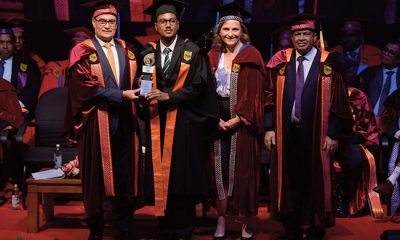
Sri Lanka Institute of Information Technology raises the bar for academic excellence
-

 Latest News5 days ago
QR code system will be implemented for fuel with effect from 06.00 a.m. today (15th)
-

 News3 days ago
Australian HC debunks misleading travel risk claims for Sri Lanka
-

 Life style5 days ago
Ranjith Fernando celebrates cricketing journey with Hob Nails to Spikes