
Features
One of the earliest and most outstanding woman-photographers

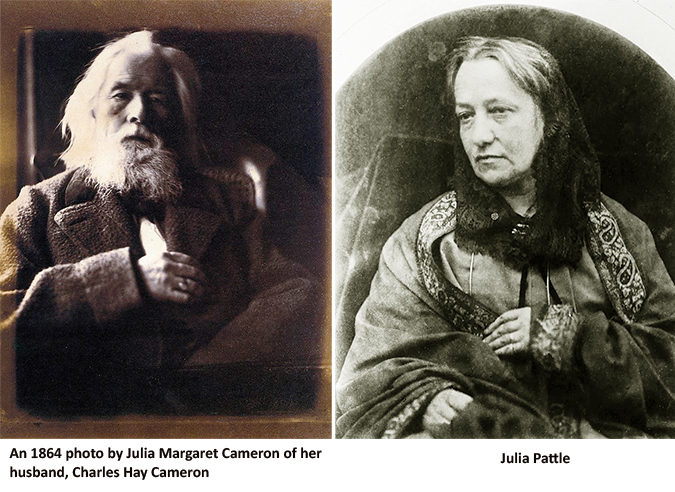
While visiting Rukmal and Leelananda De Silva recently, I walked into
 his library and picked up a photocopy of his article to The Sunday Island of February 13, 2005. Intrigued by its title – The story of Julia Margaret Cameron and Charles Cameron – I borrowed it and have inserted info gathered from it to this article adding what I had in mind and researched. This article too is prompted by my reawakened interest in British colonials who had loved Ceylon. An added bonus was that the more significant of the two to me was the memsahib. Leelananda said that his wife Rukmal and he ferried across from London to visit the old home of the Cameron’s – ‘Dimbola Lodge,’ in Freshwater, Isle of Wight, which is now a museum dedicated to her. He was pleasantly surprised to see his article on the Camerons, mounted on the museum display board.
I also recall spending much time on my way to Bogawantalawa, walking around the graveyard of the very small St Mary’s Anglican Church poised high above the wide blue expanse of the Castlereagh Reservoir, reading the legends on the headstones of some of the few British Colonials who had died in Ceylon. The church was very well maintained and still used for regular services, having been built by the Camerons in 1878. The caretaker who conducted us on our tour within and outside the church pointed out a stained glass window the couple, had brought down from England.
She
Julia Pattle was born in India in 1815, one of ten children, her father holding high office in the East India Company. She was brought up by her maternal grandmother in Versailles and Paris, moving in high society of both France and England; hence her early portraits of British Victorian aristocracy. Her sister’s daughter married Sir Leslie Stephen, Editor of the Dictionary of National Biography, and was the mother of Virginia Woolf.
What is written is that Julia Cameron led a bourgeois life as a housewife and mother until she began photography as a hobby at age 48-years, first in India and England. “With her portraits of the British upper class, she became one of the most important British photographers of the Victorian era.” She is now considered among the greatest of photographers of all time. “Cameron created photographs that are always characterized by a soft focus. There is always a kind of mystical veil over the faces of those portrayed. They show more than just the surface; they also let the viewer see the inside of the person.” Her interest in photography started around 1865 with photography being introduced to the world by Daguerre in 1839 or thereabouts.
Julia married Jurist Charles Hay Cameron in 1838, 20 years her senior. He had just been named the President of the Law Commission in India and in 1843 replaced McCaulay as member of the British Government Supreme Council in India. In retirement they returned to Britain and moved to live in the Isle of Wight with immediate neighbour Alfred Lord Tennyson. In the early 1840s they bought coffee plantations in Ceylon one of which was Dimbola Estate. They moved to live in Ceylon in the 1870s because three of their sons of eight children were settled down here: two planters and the third an Assistant Government Agent. They lived with him in Kalutara. They moved to Balmoral Cottage in Lindula and then to Glencairn Estate, Norwood. Familiar names 60 years ago; maybe retaining their names even after nationalization of British owned tea estates.
He
Husband Charles Hay Cameron cut himself a niche in British colonial history of South Asian colonies – India and Ceylon. He and Major William MacBean George Colebrooke (later knighted) constituted with others the Colebrooke-Cameron Commission appointed in 1833 as a Royal Commission of Eastern Enquiry by the Colonial Office. The others fell by the way so only Colebrooke and Cameron came to Ceylon to assess the administration of the island and make recommendations for better governance, plus financial, economic and judicial reform. The colony within the British Empire was united as one nation in 1815.
Expenses had risen and the government was meeting them, hence the Commission to enquire into matters so it did not have to spend its money. Thus the C-C Commission was certainly not for the benefit of Ceylon. However due to the sagacity or perception or even plain fairness of the two, Ceylon benefited much from their recommendations and drew closer to gaining independence. After all Cameron was an outstanding jurist who had revised the entire Indian judicial system including India’s penal code.
The legal and economic proposals made by the Commission in 1833 were innovative and radical. Many of their proposals were adopted. They signified for Ceylon the first manifestation of constitutional government by establishing an Executive and Legislative Council. They advised the amalgamation of Kandyan and Maritime Provinces as a single unit of governance; the abolition of ‘rajakariya’ (unpaid for service); and initiated modernized economic systems and the beginnings of a uniform state on justice, education and civil administration – setting up a commission to manage education and a public school on British lines.
Thus came into being Royal College, Colombo, in 1835, then named Colombo Academy. Ceylonese were permitted to compete and enter the Ceylon Civil Service, thus far completely limited to Britishers. According to Leelananda De Silva, Cameron particularly did very much good for Ceylon in most spheres, particularly in the judicial. He spelt out the penal code for Ceylon closely following his written first Penal Code of India.
The end
While staying with their son in Glencairn Estate, Julia fell ill with a chill and a recurring bronchial complaint. After six days she died on January 26, 1879. She was comparatively young at 64. Her coffin was conveyed in a cart drawn by two white bulls and then carried by workers to the St Mary’s Church, Bogawantalawa – a considerable distance away from Norwood. All obituaries mention her last word being ‘beautiful’ or ‘beauty’, murmured while gazing out of her room widow. “Julia Cameron was one of the most fascinating and strong willed women to live during the 19th century. She turned her daughter’s gift of a camera into not only a hobby turned career but she would leave a legacy that few of us would understand or foresee.”
Though two decades older, Charles Cameron outlived his wife, but by just one year. He died on May 8, 1880, and was buried next to where his wife lay in the yard of the church they got built. The story goes that their eccentricity (or was it wise practicality?) prompted them to ship two coffins among other household requisites to Ceylon when they left the Isle of Wight to live with their sons in this island.
I presume there is no lasting memorial here in SL to this outstanding couple who made Ceylon their final home moving so far away from Britain. It surely was love of this country and knowing they would be happy here and not merely the convenience of being able to live with three of their children that brought them over. Is the memorial to them in Sri Lanka only the adjacent headstones in a remote churchyard?
Reasons for this negligence is plain indifference and of course the bias against colonialism and all persons within branded imperialists. Remember how a statue to Ivor Jennings was not allowed to be set up in campus for long by students of the Peradeniya University. Pig headed and probably not knowing nor caring they were enjoying the campus that Jennings strove so hard to build on the site he thought best. He drove himself to Peradeniya every weekend for several years supervising the landscaping and construction.
Need I labour the point further?



When Patients Become Partners:
The Waiting Room That Never Empties
 Picture a government hospital outpatient department on any weekday morning. Rows of plastic chairs fill before five o’clock. A mother holds a feverish infant against her chest, a folder of lab reports on her lap. An elderly man has travelled two-six hours by bus from his village. When she finally reaches the doctor, perhaps after three hours of waiting, the consultation lasts 2-4 minutes. A prescription is written in a hand that only the pharmacist has any hope of deciphering.
This is not a story of negligent unempathetic doctors. Most of those doctors are exhausted, processing 60 or 70 patients before lunch, doing the rough arithmetic of a system stretched well beyond its seams. Some patients jokingly compare busy clinics to a skilled coconut plucker moving rapidly from one tree to the next—not because doctors lack compassion, but because the system often leaves them little time to pause. In the private sector, the metaphor shifts — but only in its economics, not its pace. There, the imperative is to climb as many coconut trees as possible. What changes is who bears the cost of the hurry.
A legacy worth defending
Sri Lanka’s public health record is, by any regional measure, something to be proud of. Free healthcare at the point of delivery, a maternal/infant mortality rate that rivals middle-income countries far wealthier than us, these are not accidents. They are the product of generations of political will, professional dedication, and the idea that good health is a right, not a privilege.
The economic crisis of recent years sent a wave of trained doctors and nurses toward the Gulf, Australia, Canada and the United Kingdom. Specialists, who took a decade to train, departed within months. Meanwhile, the cost of private consultations has climbed beyond the reach of ordinary families, pushing them back toward an overstretched public system, or toward no professional care at all.
Patients who did their homework
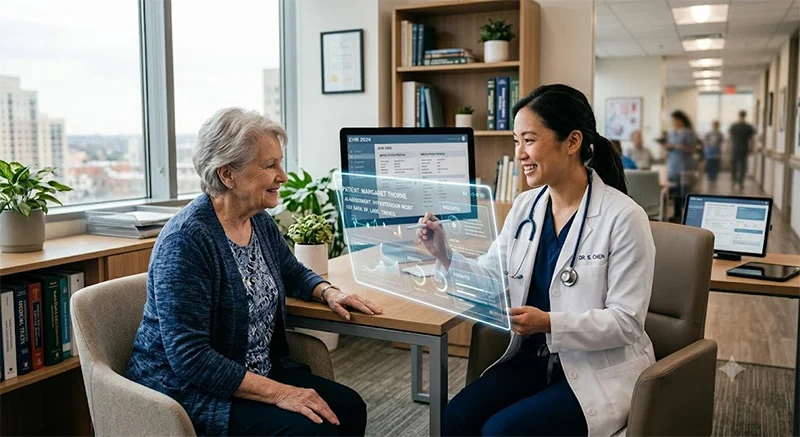
Something else has changed, and it has changed faster than the system expected. The patient sitting across from the doctor today is not the patient of 10 years ago. She may have spent the previous evening consulting reputable online health resources or AI assistants, such as ChatGPT, to better understand her symptoms. He may have photographed his blood test results and run them through an AI tool that flagged an anomaly before the doctor mentioned it. They arrive with questions, about what additional tests are necessary for further diagnosis, about whether a test is strictly necessary, about what a particular reading on their lipid panel actually means for their life, especially when their life-styles are different. This is what educated, anxious human beings do when something threatens their health. The information age did not ask permission. It simply arrived.
The response from some doctors has been impatience, the feeling that an informed patient is a difficult patient. But the more productive response, increasingly voiced by thoughtful practitioners, is to see this shift as an opportunity. An informed patient is an engaged patient. An engaged patient is more likely to follow a treatment plan, more likely to return for follow-up, more likely to catch an error.
Authority to partnership
The old model of medicine was hierarchical by design. The doctor knew; the patient obeyed. That model had its logic, in an era when the knowledge gap between professional and layperson was absolute. That gap has not closed, but it has narrowed leading to a partnership.
There are doctors in Sri Lanka who already practise this way: arriving on time, spent 15-30 minutes with patients, contactable over the phone specially after a difficult procedure, for communicating plainly and without condescension. They are proof that the ideal is not utopian. It is achievable, which means the question is how to make it the norm rather than the exception.
Smarter, Not Harder
 This is where technology enters, not as a replacement for clinical judgment but as a tool for reducing the friction that currently exhausts both doctor and patient.
Take the laboratory report cycle. A patient visits the doctor, is sent for tests, and a second appointment is required. A patient who arrives having already run those results through an AI-assisted tool is not trying to bypass clinical judgment or sidestep any genuine treatment decision. They are trying to eliminate a visit if they “know” that sole purpose is simply for an interpretation of the lab results. That second visit consumes time, money, efforts and transport. AI-assisted interpretation tools, not diagnostic systems, but educational ones, can give a patient a plain-language summary of their results (sometimes using Sherlock Holms’s theory of process of elimination to narrow down the possible causes) before they even walk into the consulting room. The doctor’s time is then spent on clinical decision-making, not on explaining what a haemoglobin or platelets count is.
Then there is the prescription. Illegible handwriting on a small slip of paper has long been a quiet patient safety hazard, and it is worth noting that AI tools have already begun helping patients and pharmacists decode what was written. But digital prescriptions go a step further: they eliminate the ambiguity entirely, and allow a patient to scan what they have been given, learn the name of each drug, understand what it does, and be alert to any side effects. This is not a challenge to the doctor’s authority. And when a patient discovers in the process that an approved generic equivalent costs a fraction of the branded price, they are empowered, not endangered.
Telemedicine, which got a reluctant push during the pandemic and has since retreated in public imagination, deserves a second look. Follow-up consultations for stable chronic conditions, blood pressure reviews, diabetes management, post-operative monitoring, need not always require a physical journey. The technology exists. The will to use it more widely is what remains to be mobilised.
Wisdom in herb garden
No conversation about healthcare in Sri Lanka is complete without acknowledging the parallel system that millions of people have never abandoned: traditional Hela medicine. Ayurveda, Siddha, Unani, and the vast informal knowledge embedded in village practice, these are not simply alternatives to modern medicine. For many Sri Lankans, they are the first resort.
The relationship between indigenous knowledge and scientific medicine has too often been one of mutual suspicion. Modern practitioners dismiss traditional remedies as unproven; traditional practitioners regard clinical trials as a foreign imposition. Neither position is adequate.
Consider Heen Bovitiya — known to botanists as Osbeckia octandra and to generations of Sri Lankan grandmothers as a trusted remedy for liver complaints and jaundice. Serious liver disease remains one of the conditions for which Western medicine offers no easy answer: its definitive treatment is a transplant — costly, risky, and followed by a lifetime of expensive immunosuppressant medication. Against that reality, a plant with pre-clinical evidence of hepatoprotective and anti-inflammatory properties is not a curiosity. It is a serious research priority. The studies so far are promising. They are also, as yet, large-scale clinical trials in humans have not been conducted, and questions of optimal dosage, mechanism of action, and drug interactions remain open.
The honest position is neither to dismiss the remedy nor to prescribe it uncritically. It is to say: this is a serious candidate for rigorous investigation, and Sri Lanka, which grows the plant, knows its traditional uses, and has the academic institutions to study it, is precisely the right place to conduct that research. AI tools that can process vast pharmacological datasets may accelerate that work considerably.
The future of healthcare should not be a competition between Western and indigenous medicine, but a commitment to evaluating all treatments by the same standards of safety, effectiveness, and quality.
Future Is Not a Machine. It Is a Better Conversation.
The fear that artificial intelligence will replace doctors is, at this stage, a distraction from the more important question. AI cannot examine a patient. It cannot feel the anxiety in a room. What it can do is handle the transactional, the look-up, the summary, the cross-reference, so that the human part of medicine can breathe.
The future worth working toward is not AI versus doctors. It is AI and doctors and informed patients, each contributing what they do best. The doctor could bring clinical expertise and the irreplaceable capacity for compassion. The patient brings self-knowledge, lived experience, and, increasingly, preparation. The technology brings tireless availability and pattern recognition at scale.
What we measure matters. A consulting room’s success should not be counted in patients seen per hour. It should be counted in patients who leave feeling informed about their condition, respected as partners in their own care, reassured that someone is genuinely attending to them, and confident about what to do next.
The Thing Patients Remember
There is a truth that experienced nurses know, that the best doctors quietly understand, and that patient experience research consistently confirms: patients may forget the prescriptions. They may forget the name of the drug, the dosage, even the diagnosis. But they rarely forget how they were treated, pleasant or rude.
They remember the doctor who looked up from the desk. The one who said, “That’s a good question.” The one who spent two extra minutes to listen, drawing a small diagram to explain where the problem was. They remember being seen, not just examined, but truly seen, as a person rather than a case number.
Sri Lanka has those doctors and nurses, in every district, in every ward, working against the odds. The task now is to build a system worthy of them, and of the patients who place their lives, without much choice in the matter, in their hands.
Technology may transform medicine. Artificial intelligence may transform diagnosis. Digital health may transform hospitals. But trust will always define healing.
(The writer, a senior Chartered Accountant and professional banker, is Professor at SLIIT, Malabe. Views expressed in this article are personal.)
By G. Usvatte-aratchi
(B.A. (Cey.); Ph.D. (Cantab.))
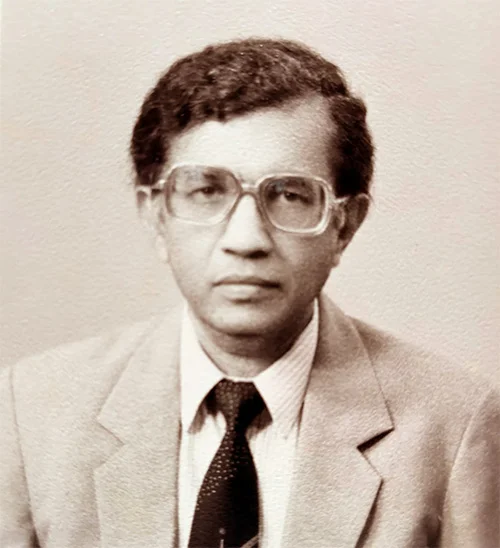
Eric came to Ramanathan Hall in June, 1954, from Mahinda College, Galle, with much celebrity. He was one of the youngest in the freshmen class. In Galle, in the 1950s, there were several schools where students studied to enter the University of Ceylon: Mahinda, Richmond and St. Aloysius’. Mahinda College, under Principal E .A. Wijesuriya, had become a powerhouse, sending brilliant students to the University of Ceylon. Siri Gunasinghe was on his way to stardom, shining brightly in Sinhala poetry, fiction and drama, besides his main academic interest in arts history. Eric, in time, shone with no less brilliance in a wider constellation, spreading enriching light onto the lives of millions of people in this land. I was privileged to be his friend.
We were two among the 20 students who studied for the Economics Special degree, 1958. His teachers included A. J. Wilson and I. D. S. Weerawardena, both outstanding academics who excelled as scholars as well as teachers. His fellow students were Mirani Perera (Secretary, Central Bank), Dharmasiri de Alwis (later Dharmasiri Senanayake), (Secretary of the SLFP, a Minister in Sirimavo Bandaranaike’s government, and a smart politician), Wijeratne (GATT, Geneva) and several others. I followed a different specialisation and chose a different career.
In 1959, Eric joined the public service as a member of the elite Ceylon Civil Service. It was usual for a few of the smartest students in the university, each year, to compete for a few places in the Ceylon Civil Service and Eric was one of them. A few who preferred an academic career stayed back in the university; in our year Hemapala Wijewardena, a truly brilliant man who rose to be Professor in the Department of Sinhala in Colombo, was one such.
In 1955 (or 1956?) N. K. Sarkar from Calcutta, who taught us statistics, and S. J. Tambiah, who later became Director of the Peabody Museum and a world-renowned anthropologist at Harvard, undertook a survey of five villages in Patadumbara, as they were interested in changes in our society and agrarian relations in that part of the country. The findings of that Survey, published by the University of Ceylon Press as ‘The Disintegrating Village,’ were seminal, in effect. The anthropological studies of Edmund Leach (of Cambridge), Pul Eliya and later, the prolific work of the anthropologist Gananath Obeysekera (of Princeton) were deeply influenced as to the methods of research and subject matter thereof. Eric and I were teamed together to visit families and fill questionnaires. One morning, we noticed that the families we visited lived in thatched houses, most of which had no lockable doors. Out of curiosity we gently inquired why they did not lock their doors. They in return asked us why would anyone want to burgle homes where there was nothing to steal.
Eric married Trixie soon after she graduated having wooed her after she came to Peradeniya. Trixie and her sister Dulcie lived with their aunt in a house immediately next to the Boys’ Hostel of the Hikkaduva Central School, where we juniors were housed. Their brother Derek was at school (Richmond?) in Galle and later joined the Army as an officer. Sarachchandra started rehearsing students to act in Maname in 1956 and Trixie was selected to the small choir. Eric immediately became a keen, avid aficionado of drama and missed hardly any rehearsal. He made sure that he stayed close to Peradeniya after graduation by securing a position as a teacher in Dharmaraja College, Kandy. Their four children brought distinction to themselves and their parents. Nishantha, a scientist, who taught at Jayewardenepura, and later at State College, Pennsylvania, was most remarkable in her devotion to the care of her son; Manjula won first class honours in economics at Colombo and obtained a higher degree in London; Varuna, who stayed back in Colombo with his father and Sanjaya with a Ph.D. from Yale and was a Professor of Economics at Bard College in upstate New York. Apart from their intellectual brilliance they honoured themselves and their parents by maintaining lives of the highest integrity.
Eric was the Government Agent in Trincomalee for several years and lived in a bungalow in a sprawling compound with the beach as one boundary. Deer freely roamed in his compound. One summer, which we spent in Colombo, my family were their guests. Trixie and Eric were perfect and graceful hosts and the children had a whale of a time which they recalled for many years. Varuna was the leader of the gang and we had one photograph (from those days of cumbersome photography) of them going in a procession on the beach. As the children grew up to go to school, Eric came to live in Wijerama Mawatha, Colombo.
Among the episodes in his work that Eric talked about, two stand out in my memory. Eric worked in an office of Prime Minster of Sirimavo Bandaranaike, with W. T. Jayasinghe as the Permanent Secretary. Martin Wickremasinghe’s novel Bava Taranaya was published in 1973 and, immediately, there was widespread agitation among some Buddhists because the account in the novel of the life of Siddhartha Gautama differed very much from the orthodox accounts that had grown over more than a millennium. Prominent learned bhikkhu led the charge, among them Yakkaduve Pragnarama of Vidyalankara and Henpitagedera Gnanaseeha. Bhikku were one of the highly influential parts of the constituency of SLFP and Gnanaseeha was one of the most prominent among them. Bandaranaike was a most astute politician and could not be rushed into any ill-advised action. Jayasinghe informed Eric that the Prime Minister wanted a report on the book to help her make up her mind on the question. During a weekend, Eric read the novel and his report was handed over by Jayasingha to the Prime Minister. Someone wrote an evaluation of Bava Taranaya, a few days ago in the Lankadeepa.
When Eric was in Trincomalee, Amaradasa Gunawardena (Ramanathan,1958, Sinhala Special) was in Polonnaruva. One year there was a severe drought which threatened to ruin the rice crop in Trincomalee while the reservoirs in Polonnaruva were brimful. There was much agitation and rice growers urged politicians and public servants to seek solutions. Eric spoke to Amaradasa and went to meet him at the border. Hope ran high in Trincomalee. In the evening, when he returned to his office, Eric was garlanded and there was much jubilation. He continued to be feted the whole week. Many prominent citizens and savvy politicians urged Eric to contest the Trincomalee seat in Parliament. There were precedents when successful Government Agents had successfully entered politics from their districts. Eric limited himself to become a distinguished public servant.
Eric’s work at the Ministry of Education made a lasting impression on his mind. Of the many problems he handled as a senior public servant, nothing interested him as school education did. I had learnt about medieval universities, for the first time, in a course of three lectures that Fr. S. I. Pinto delivered in my first year at Peradeniya. Eric was not in that course. I read Rashdall’s three-volume definitive study on that subject and has never stopped reading it. I came back to live in Colombo in 1996, with a commitment to contribute to educating the public on economics and social problems in the country and selectively elsewhere. About that time there were a few scholars actively studying school education: Swarna Jayaweera, S. Sanderasegaram, Ariyadasa de Silva (all in Colombo), Chandra Gunawardana (Open University) and G. B. Gunawardana (NIE). They were mostly students of the illustrious professor J .E. Jayasuriya (Peradeniya). They provided a small audience with whom we could share our interests. Both Eric and I delivered lectures in honour of J. E. Jayasuriya. Eric used to pick up Varuna’s daughter from the British School which was 10 minutes’ walk from my home and Eric, not infrequently, stepped in. We often chatted on subjects that interested us. After a while, Eric suggested that we might collect a few more people to join in the conversations. Effortlessly, we went back to Peradeniya days and invited Haris de Silva (historian and Government Archivist), W. M. K. Wijetunge (historian and Professor) K. S. E. Jayatilaka (Economic Statistician and Deputy Governor, Central Bank) and Mettananda (Ministry of Education).
We pompously called ourselves the Education Research and Study Group (ERSG) and met in my porch. Each of us contributed an equal sum of money, which did not amount to a lot but we managed it carefully. The only resources we received from outside were the services of a professor from a German university, which the Goethe-Institut, Colombo paid for. We mostly chatted about what we had read and mused about in the previous fortnight and our reactions to educational matters that had come up. We discussed both school and university education. Our discussions inspired Eric to write the short book, ‘Politics of Education Reform and other Essays’. When we had sufficient material, we called a public seminar and were pleasantly surprised that we had an audience. We congratulated ourselves when the ministry changed a policy or other course of action in reaction our presentations in the press. We disbanded ourselves when some of us pre-occupied themselves with other matters.
We celebrate Eric’s life and work. He carried with himself the education and training that he received from Mahinda College, Galle and the University of Ceylon. With quiet efficiency, that was characteristic of much of the Civil Service, Eric worked at the highest levels in management when institutions in the new state Ceylon were yet in a formative stage. As that state matured into Sri Lanka, the purposes and procedures in many of those institutions frayed and their energy sapped. The commitment and the enthusiasm that Eric exhibited are high value assets with which to start their reformation and revitalisation.
Sri Lanka is witnessing the dismantling of the culture of impunity that dominated public life for decades. This is happening through the courts, police investigations and legal process. It is not an easy task and requires strong leadership as it is generating strong resistance. The ongoing revelations about the nexus between politicians, including those at the highest levels, and criminal networks show that the government’s electoral mandate with regard to corruption and crime is now being translated into action through the legal system. The vote of the people at the last national elections was for a corruption free country and an end to the climate of impunity that had prevailed for decades. They voted for a system change that would replace impunity with accountability under the rule of law. They expected those who had looted the country and brought it to the point of bankruptcy to be held accountable through the due process of law.
The cases that are being investigated by the police, in tandem with the Attorney General’s Department, and adjudicated by the judiciary are based on hard evidence. Much of the evidence that is now receiving publicity had been available several years ago and had even entered the legal process. In the past those cases failed to reach fruition. Investigations lost momentum, prosecutions failed to marshal the available evidence and many cases were dismissed, some on technical grounds. Between 2019 and 2024, a total of 102 cases were withdrawn from the courts by the government authorities. The public knew, or strongly believed, that corruption and serious crimes had taken place. The inability to establish wrongdoing before a court of law and hold those responsible accountable created a climate in which political power appeared to provide protection from legal accountability.
A countrywide study titled Factors Guiding Voter Preference in Elections in Sri Lanka was commissioned by the National Peace Council prior to the 2024 elections under the European Union funded project Active Citizens for Elections and Democracy and conducted by researchers Dr Mahesh Senanayake and Ms Crishni Silva of the University of Colombo. It found overwhelming public support for accountability and good governance. While 93 percent of respondents identified resolving the economic crisis as their foremost electoral concern, an equally striking 83 percent said they prioritised candidates committed to fighting corruption. The mandate given to the government can, therefore, be interpreted to mean to restore integrity to public life and end the long standing culture of impunity.
Different Approach
Today, it can be seen that the police, the Commission to Investigate Allegations of Bribery or Corruption, the Attorney General’s Department and the judiciary are approaching matters of impunity in respect of corruption and crime in a manner that is markedly different from the past. Several persons who formerly occupied high office have now been subjected to due legal process and, in a number of cases, convicted after judicial scrutiny at different levels of the court system. This is an important difference from earlier years when cases involving politically prominent persons frequently failed to proceed or collapsed before reaching their conclusion. The strength of the present accountability process lies not only in the convictions that have been secured but also in the growing public confidence that no one is above the law. It is in this context that reports of a government proposal to extend by two years the retirement age of judges of the Supreme Court and the Court of Appeal have generated support from those who wish to see the present accountability process continue and opposition from those who see it as an attempt to influence the judiciary.
Many countries have increased judicial retirement ages in recognition of longer life expectancy and the value of retaining experienced judges. This has not only been limited to the judiciary but also the academia and the public service. However, the controversy in Sri Lanka is due to the context and as the proposal for an extension of the period of service of judges of the superior courts comes at a time when the courts are hearing politically significant corruption and criminal cases. The Bar Association of Sri Lanka has taken the lead in questioning the proposed constitutional amendment. The BASL has stated that it “notes with grave concern” reports that the government is considering increasing the retirement age of judges of the Supreme Court and the Court of Appeal. It has warned that extending the tenure of sitting judges at this point of time is likely to be viewed by the public as an attempt to interfere with the independence of the judiciary.
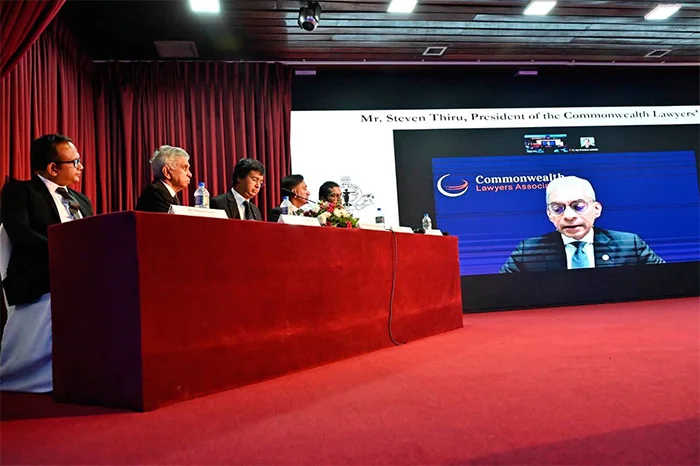
The main issue raised by the BASL is therefore one of preserving public confidence in the administration of justice. A discussion organised by the BASL also highlighted that this issue has implications beyond Sri Lanka. Representatives of the Commonwealth Lawyers Association and LAWASIA acknowledged that many countries have increased the retirement age of judges in recognition of greater life expectancy and the value of retaining experienced judges. Their concern was not with increasing the retirement age itself but with changing the tenure of sitting judges while politically significant corruption cases are before the courts. In such circumstances, even well intentioned reform could create a public perception that the judiciary is being influenced to take forward the government’s mandate in a partisan manner.
Maintain Confidence
The challenge before the government is to preserve two equally important objectives. The first is to continue implementing the people’s mandate to hold the corrupt and those responsible for grave crimes accountable before the law. The second is to ensure that nothing is done which could diminish public confidence in the independence and impartiality of the judiciary that is entrusted with carrying out that responsibility. The strength of the present accountability process lies in the confidence it has generated among the public that investigations, prosecutions and judicial decisions are being made according to law as in the convictions that have been secured. Sri Lanka has come a long way from the days when politically sensitive cases rarely reached a successful conclusion. It would be unfortunate if doubts regarding the independence of the judiciary were to overshadow what has otherwise been a significant institutional achievement.
In the face of the concerns expressed by the BASL, opposition political parties and international legal organisations, it would be prudent for the government to widen the discussion on the proposed amendment. If there is a compelling case to increase the retirement age of judges of the superior courts, that case should be placed before the public and parliament and debated openly. Such a constitutional amendment should not rest solely on the government’s parliamentary majority, even if it has the numbers to secure its passage. Simply utilising the numbers that the government on its own to make changes to the constitution will not increase its legitimacy or credibility. Those values will be strengthened if they were preceded by public consultation and supported across party lines in Parliament. Bipartisan political support can be expected from those in the opposition, of whom there are many, who have shown an inclination to practice responsible politics in the national interest.
The people voted not only to change a government but to change a system. They expected those who abused public trust to be held accountable through institutions that commanded public confidence. That expectation is beginning to be fulfilled. It should not be placed at risk by constitutional change that lacks broad public acceptance. If the government believes there is a compelling case to extend the retirement age of the judges of the superior courts, it should first make that case to the people and seek bipartisan support in Parliament with those in the opposition who are also sincere about anti-corruption and good governance. The challenge is to protect the independence of the judiciary while ensuring that no one is above the law. Overcoming this challenge is the surest way to make Sri Lanka’s transition from a culture of impunity to one of accountability a lasting one.
by Jehan Perera

Archer, Tongue hand India their biggest T20I defeat

“Badhu Shakthi 2026” National Tax Week begins

Renovated Narahenpita Railway Station reopens to the public under the ‘Dream Destination’ initiative

High-scoring draw gives West Indies rare series win

Bus Sector Clustering Pilot Program on route numbers 170, 177, and 190

Switzerland face Argentina in World Cup quarterfinal after beating Colombia

‘Dates have the highest sugar content to fight Coronavirus’

Sunday Island 27 December – Headlines

#SundayIsland 17th December – Headlines

Sunday Island – 28th March

Sunday Island Headlines – 21 March

Sunday Island – 21st February – Headlines
-
 News3 days ago
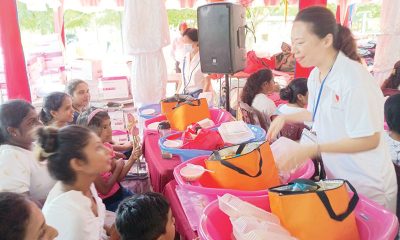
Singapore-based Buddhist monk marks nearly four decades of humanitarian service
-

 News4 days ago
Freedom 250: US Embassy celebrates America’s 250th Independence Day through magic of American cinema
-
 News5 days ago
CIABOC to question Harak Kata on Rs. 200 mn bribery allegation
-
 News5 days ago
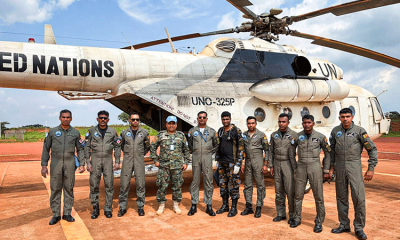
SLAF conducts successful rescue mission under UN command in Central African Republic
-

 News2 days ago
AI concerned over proposed SL military deployment in Haiti
-
 News5 days ago
UNEP support pledged to strengthen Sri Lanka’s Environmental Priorities
-

 Business5 days ago
‘Dialog Air Fibre powers a new era of Ultra Fast Home WiFi’
-

 Features3 days ago
The NPP’s New Challenge: Balancing Easter Lawfare and Economic Welfare