
Business
Non-nationals seeing greater value in listed equities; end July net foreign inflow to CSE Rs. 784 million

By Hiran H.Senewiratne
The CSE ended July with a net foreign inflow of Rs. 784 million, as non-nationals appear to see greater value in listed equities.
The inflow also helped to reduce the year to date net outflow to Rs. 384 million as opposed to Rs. 1.1 billion as at end June and Rs. 1.7 b as at end March and Rs. 2.7 billion at the end of January, stock market analysts said.
Amid those developments CSE trading activities were positive throughout yesterday due to some degree of political stability being established in the country. The country recorded a trade surplus in June with private credit smashed to resurrect a soft-peg and a fuel credit line from India running out, but forex shortages persist amid money printing, forced dollar sales and forex sales, analysts explained.
Imports fell 26 per cent to US$ 1,226 million in June, while exports rose 23.9 per cent to US $1,249 million, giving a trade surplus of US $ 21 million with hardly any inflows to the government.
Expat workers remitted US $ 274 million through official channels. In June there was a lockdown style scenario, as the country ran out of fuel due to forex shortages. Non-oil imports collapsed 35.6 per cent to US $1,026 million.
This scenario created some positive sentiments towards the stock market yesterday. Although mixed reactions were witnessed in the stock market there was considerable investor participation and satisfactory turnover yesterday. The All- Share Price Index went up by 37.4 points and S and P SL20 declined by 9.5 points. Turnover stood at Rs 1.8 billion with a single crossing. The crossing was reported in JKH, which crossed 470,000 shares to the tune of Rs 470,000 shares, a share fetching Rs 119.75.
In the retail market top seven companies that mainly contributed to the turnover were, Lanka IOC Rs 421 million (4.6 million shares traded), Expolanka Holdings Rs 288 million (1.7 million shares traded), Dipped Products Rs 128 million (3.4 million shares traded), Browns Investments Rs 99.5 million (14.2 million shares traded), Kelani Valley Plantations Rs. 58.4 million (572,000 shares traded), Hayleys Rs. 48.4 million (627,000 shares traded) and Hayleys Fabrics Rs 41.9 million (1.1 million shares traded). During the day 75.7 million share volumes changed hands in 220,000 share transactions.
Further, stock market investor sentiment will likely increase with the reducing fuel prices this week. Sri Lanka- imported refined fuel/petrol is being benchmarked on a Singapore petroleum formula, which was US $ 157 per barrel and has now gone down to US $ 112. This would create some additional relief for the Sri Lanka economy, market analysts said. Yesterday, the Central Bank- announced US dollar parity rate was Rs 358.71. The buying rate was Rs 357.27 and the selling rate Rs 368.50.

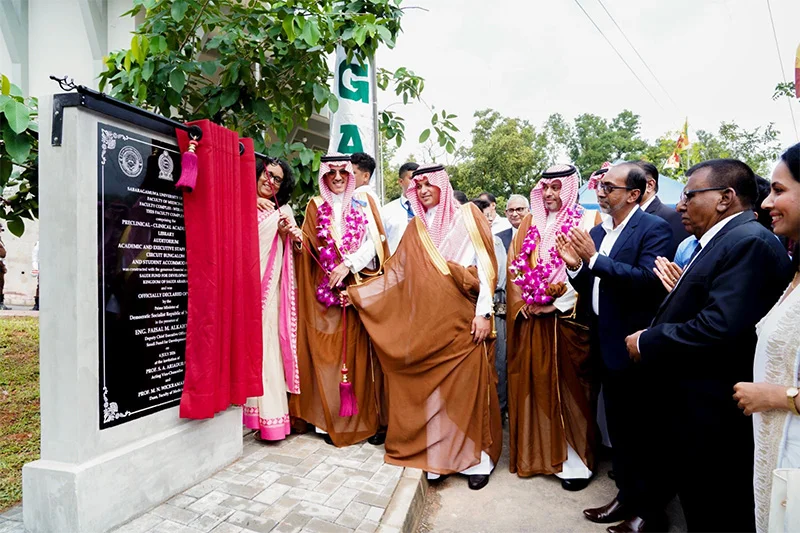
Saudi Arabia has reaffirmed its long-term commitment to Sri Lanka’s economic and social development with the inauguration of the USD 50 million Faculty of Medicine at Sabaragamuwa University, a flagship investment expected to strengthen higher education, healthcare capacity and human capital while reinforcing the growing bilateral partnership between the two countries.
The project, financed by the Saudi Fund for Development (SFD), was inaugurated on Saturday in the presence of Prime Minister and Minister of Higher Education Harini Amarasuriya, Saudi Ambassador to Sri Lanka Khalid Hamoud Al Kahtani, SFD Deputy Chief Executive Officer Eng. Faisal Al-Kahtani, senior government officials and representatives of both countries.
Addressing the ceremony, Prime Minister Dr. Harini Amarasuriya described the project as another milestone in the enduring partnership between Sri Lanka and Saudi Arabia, expressing appreciation for the Saudi Fund for Development’s continued support in expanding higher education and creating opportunities for future generations of Sri Lankan students.
The premier said the new Faculty of Medicine would help address the country’s growing demand for qualified medical professionals while strengthening the national healthcare system.
Ambassador Khalid Hamoud Al Kahtani said the inauguration reflected the “strong and enduring partnership” between the Kingdom of Saudi Arabia and Sri Lanka and underscored the two nations’ shared commitment to education, healthcare and sustainable development.
The Ambassador added:”This achievement stands as a testament to our shared commitment to advancing education, healthcare and sustainable development.”
The Ambassador paid tribute to the Custodian of the Two Holy Mosques, King Salman bin Abdulaziz Al Saud, and Mohammed bin Salman for their vision and continued support for international development initiatives that foster economic cooperation and sustainable growth across partner countries.
He also commended the Saudi Fund for Development for financing and implementing the project, describing the Faculty as an investment in human capital, knowledge and Sri Lanka’s future healthcare workforce.
“We are confident that this new Faculty will play a vital role in educating future generations of medical professionals, serving the people of Sri Lanka and further strengthening the close friendship and cooperation between our two countries,” the Ambassador said.
SFD Deputy CEO Eng. Faisal Al-Kahtani said the project represented far more than a new academic institution.
“It is an investment in people, knowledge and opportunity. For more than four decades, the Saudi Fund for Development has partnered Sri Lanka in projects that improve lives and support sustainable economic and social development,” he said.
The state-of-the-art Faculty of Medicine features modern laboratories, para-clinical teaching facilities and a comprehensive library, significantly expanding Sri Lanka’s medical education infrastructure.
Since 1981, the Saudi Fund for Development has provided approximately USD 422.7 million through 15 development loans supporting 12 major projects in education, healthcare, water supply, transport and energy, making Saudi Arabia one of Sri Lanka’s key development partners in long-term infrastructure and human resource development.
By Ifham Nizam
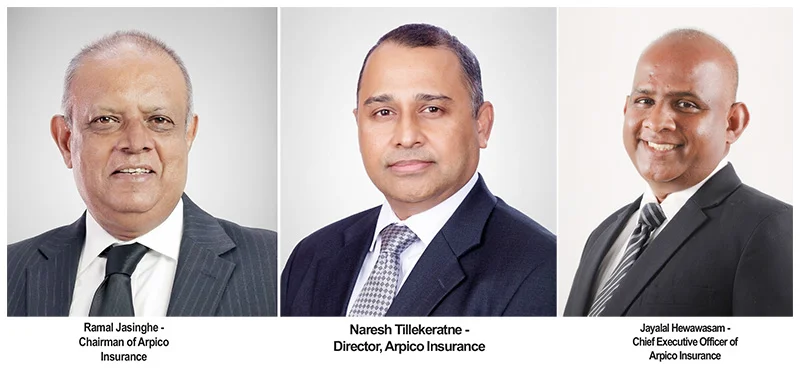
Arpico Insurance PLC, a renowned life insurance provider and a subsidiary of the blue-chip conglomerate Richard Pieris & Company PLC, has announced the appointment of Naresh Tillekeratne to its Board of Directors. This move further reinforces the Company’s commitment to operational excellence and stakeholder value as it embarks on its next phase of growth.
With a career spanning over 35 years in International Banking and Non-Bank Financial Institutions (NBFIs), Tillekeratne brings deep expertise in enterprise risk management, compliance, and corporate structuring. With over 15 years in C-level and senior management roles across Sri Lanka and the Middle East, he has forged a reputation for driving bottom-line efficiency and structural transformation.
Commenting on the appointment, Ramal Jasinghe, Chairman of Arpico Insurance PLC, stated “We are pleased to welcome Naresh Tillekeratne to our Board. He is a respected figure in the financial services landscape, recognised for his risk-management acumen and strategic foresight. As Arpico Insurance continues to scale and navigate complex and ever-evolving business and governance environments, his extensive cross-border experience will be invaluable in safeguarding stakeholder value and steering our sustainable growth trajectory.”
Prior to joining the board at Arpico Insurance PLC, Tillekeratne served as Chief Executive Officer of Assetline Finance PLC (previously Assetline Leasing Company Ltd), following a tenure as General Manager – Credit & Operations at AMW Capital Leasing and Finance PLC.
Jayalal Hewawasam, CEO of Arpico Insurance PLC, added “We are entering a dynamic phase of innovation and growth at Arpico Insurance, and strong corporate governance remains at the very heart of that journey. We are delighted to welcome Naresh Tillekeratne to our Board of Directors and the Company Management looks forward to working with him, and to harness his expertise in supporting our growth trajectory. We are confident that his proficiency in international banking, coupled with his acumen in enterprise risk management, will add tremendous depth to our leadership structure.”
Tillekeratne’s international exposure includes C-level responsibility at the Abu Dhabi Commercial Bank (UAE), where he engineered the restructuring of credit approval mechanisms and documentation controls to maximize portfolio returns. Prior to that, he completed a distinguished tenure spanning over two decades at Citibank NA Middle East, ascending to the level of Senior Vice President and Regional Head of Credit Risk Management for the Middle East, Egypt, and Pakistan. During his time with Citibank, he was also a key member of the specialized projects team tasked with advising and structuring financing for iconic state-backed development projects across Saudi Arabia, the UAE, Qatar, Egypt, and Bahrain.
Speaking on his new role, Tillekeratne noted “It is a privilege to join the Board of Arpico Insurance PLC, an institution anchored by the enduring 90-year legacy of the Richard Pieris Group. My primary focus will be to enhance our risk-governance architectures to ensure we meet our promises to policyholders while driving growth and innovation. I look forward to collaborating with the Board and the Senior Management to drive our strategic evolution with absolute integrity.”
Business
EFC new Chair reaffirms commitment to national employment policies and responsible business initiatives
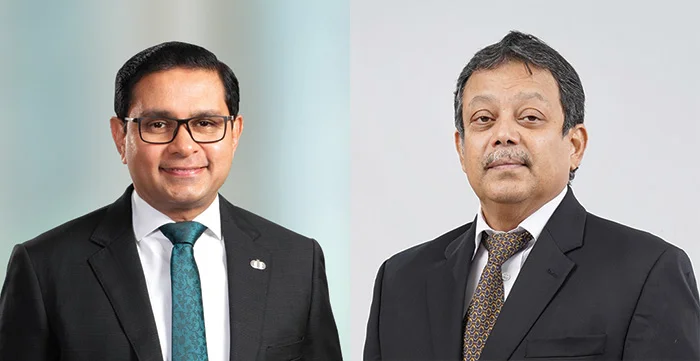
The Employers’ Federation of Ceylon (EFC) recently concluded its 97th Annual General Meeting at the BMICH. At this general meeting, the Board of Trustees and Council Members representing different employer groups were appointed for the financial year 2026/27.
The outgoing Chairman, Dinesh Weerakkody expressed his appreciation to the Council, Members and the EFC Secretariat for the invaluable support extended to him throughout his tenure. Sanath Manatunge, Managing Director/CEO of the Commercial Bank of Ceylon PLC was appointed as the new EFC Chairman while Dinal Peiris, Chairman and Managing Director of the Lanka Aluminium Industries PLC Group was appointed as the Vice Chairman.
In his inaugural address, the new Chairman, while underlining the significance of the Federation, stated that, as the National Employers’ Organisation, the EFC will continue to contribute to labour law reforms that support future-ready businesses while driving responsible business initiatives. Manatunge who counts 36 years of experience having held very senior positions in the financial sector, presently serves on the Boards of Commercial Development Company PLC, and Commercial Bank of Maldives (Pvt) Ltd. as the Deputy Chairman. He is also the Chairman of the Sri Lanka Banks’ Association. Following his appointment as the new EFC Chair, the senior professional further emphasised the importance of engaging with the tripartite stakeholders to collaboratively advance shared objectives and strengthen Sri Lanka’s employment landscape.
Manatunge also represents key industry interests as a Member of the UNICEF Business Council, the Ceylon Chamber of Commerce, and the World Bank Group’s Private Sector Advisory Council. His regulatory and advisory contributions include serving as an Ex-Officio Member of the Stakeholder Engagement Committee of the Central Bank of Sri Lanka, as well as a Member of the Project Steering Committee (PSC) for the Central Bank’s Fraud Risk Management (FRM) System.

Ms. U. L. Mathisha Jinanjalie Jayathilake, appointedto the post of Commissioner, Department of Probation and Child Protection Services

Argentina stage stunning late comeback to beat Egypt in World Cup last 16

Commander of the Navy pays courtesy call on Speaker of the Parliament

Woman suspected of Monaco bomb attack found dead in Ukraine

Balogun reprieve in vain as Belgium beat USA to set up Spain quarterfinal

Trump confirms he asked Fifa to review Balogun ban

‘Dates have the highest sugar content to fight Coronavirus’

Sunday Island 27 December – Headlines

#SundayIsland 17th December – Headlines

Sunday Island – 28th March

Sunday Island Headlines – 21 March

Sunday Island – 21st February – Headlines
-

 News3 days ago
Singapore-based Buddhist monk marks nearly four decades of humanitarian service
-

 News4 days ago
Freedom 250: US Embassy celebrates America’s 250th Independence Day through magic of American cinema
-

 News5 days ago
CIABOC to question Harak Kata on Rs. 200 mn bribery allegation
-
 News5 days ago
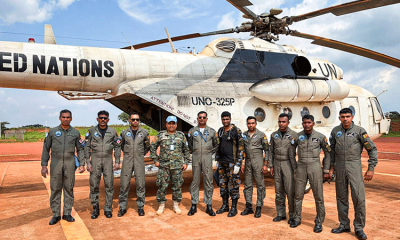
SLAF conducts successful rescue mission under UN command in Central African Republic
-

 Midweek Review7 days ago
H’tota port’s strategic status remains focal point of geopolitical scrutiny
-

 News2 days ago
AI concerned over proposed SL military deployment in Haiti
-
 News5 days ago
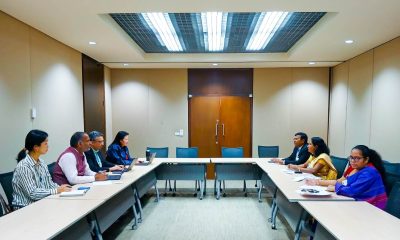
UNEP support pledged to strengthen Sri Lanka’s Environmental Priorities
-

 Business5 days ago
‘Dialog Air Fibre powers a new era of Ultra Fast Home WiFi’