
Features
New Diamond Fire – How it all unfolded

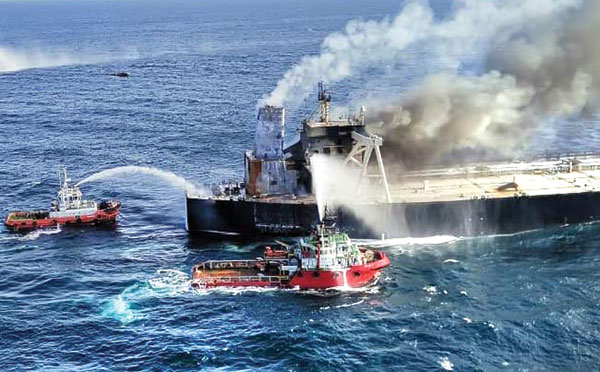
by Captain Chandra
Godakanda Arachchi
Member of Company of Master Mariners of Sri Lanka,
Gladstone LNG
The New Diamond––a 330-metre-long tanker ship built in Japan in 2000 with a cargo carrying capacity of nearly 300000 metric tonnes––loaded crude oil from Kuwait on 23rd September and was sailing to Paradip in India. It was due to reach the destination on 05th September. It was carrying 270,000 tonnes of crude oil (approximately 2.1 million barrels or 13.2 million litres).
The ship ran into trouble when the boiler exploded, according to media reports, around 7. 45 in the morning on 03 September. The ship was about 38 nautical miles off Sangama Kanda, when the incident occurred. The Hambantota Port Management was informed by the Navy around 8. 30 am that tugs were needed for the ship casualty emergency response. The Hambantota Port got into action immediately and arranged for the required crew, bunkers and provisions, etc. Two tugs, namely Ravana and Vasabha, left Hambantota at 2.50 pm and 4.45 pm respectively sailing towards the casualty ship. Ravana is a Fire fighting Class 1 tug, which was dispatched with minimal delay due to the urgency. Both tugs arrived at the casualty area around midnight and commenced operations (water jets) upon arrival on instructions of On Scene Commander.
Ravana and Vasabha were the first response tugs to arrive at the scene except the salvage tug nominated by the Salvors, which had arrived a little earlier and the Indian coastguard vessel. The Air Force MI-17 helicopters too began dumping water on to engine room area. There was one Indian coastguard ship which was the first on the scene, other than SL Navy vessels and three Indian Navy vessels joined in later. Two Russian Navy ships which coincidentally had departed Hambantota Port after a call also agreed to support in the initial mission but had left due to service exigencies. The Air Force helicopter as well as a surveillance aircraft were searching the area for any survivors in the water.
It appears that there was a second explosion in the afternoon on 03 Sept., when the service fuel oil tank in the engine room may have caught fire. Fire fighting operations continued until the following morning, when the fire was somewhat brought under control thanks to the combined effort of all those involved in fighting it. All crew members had been rescued except one unfortunate one who was in the engine room at the time of the initial explosion; he lost his life. Nineteen crew members were rescued by merchant ship Helen M, two by Sri Lanka Navy ship Sayura and one by Navy ship, Ranarisi.
It is believed that an Internationally reputed salvage tug company has signed necessary paperwork (Lloyd’s Open Form) with the tanker owners for the towage/salvage.
It was a well-coordinated successful effort by all parties involved from merchant ship Helen M, SL Navy, first response tugs from Hambantota International Port Group, SLPA, Air Force, Indian Coastguard, Indian Navy and Air Force and also the Russian Navy.
There will be a thorough investigation to ascertain what actually triggered the initial explosion, which consequently started the fire in the engine room. It appears that there was an interval between the two explosions.
Boilers usually use waste energy from engine exhaust gas to heat up the water at sea while in port fuel is used to run the boilers due to non-availability of much exhaust gas in port. Therefore, in case of a boiler explosion, a flash back explosion from boiler burners is unlikely, but there is the possibility of a boiler drum explosion. In this scenario, the boiler explosion could have released a huge quantity of steam after the explosion. As the water expands by 1,700 times to create steam, there could have been sufficient steam to displace air from the engine room thus temporary creating an inert atmosphere not supporting fire. However, as the time passes air tend to creep into the engine room again and when it was mixed with fuel vapour (from damaged fuel service tank) there may have been an explosive mixture. It is likely that the second explosion was due to aforesaid scenario.
There could be as much as 300 tonnes of marine diesel stored in the setting tank, the service tank and in the adjacent the diesel storage tanks on either side of engine room. It is quite possible that what was burning was aforesaid diesel. Upon burning all diesel in the engine room the fire was dying, but it was necessary to cool the adjacent steelwork and deck. etc., to prevent steel becoming brittle and failing until the fire was put off. It was interesting to note that as the ship is 20 years old, steel used back then could be different from what is used today. Therefore cooling had to go on continuously.
There were two options available––towing the ship to the destination port in India or lightering. It is almost certain cargo pumps were not being able to use as the engine room was burnt off (no steam or power). The inert gas plant––inert gas prevent forming an explosive mixture in cargo tanks––was out of action. It is learnt from the electronic media that MEPA was opposing lightering of crude oil to another tanker. There are ways to do lightering safely. As salvage and towage had been granted to an internationally reputed towing and salvage company (experts in this business), MEPA instead of opposing lightering should have together with the experts in towage and salvage company. If the ship had been towed too much seaward away from the island, effect of South West Monsoon swell might have caused more hull stresses and the steel work would have cracked and there would have been a disaster. As such working together with salvage and towage company is extremely important.
Sri Lanka has been very fortunate in this instance as the incident occurred off the East coast, where it is somewhat sheltered from South West Monsoon. Obviously, arriving from Kuwait and sailing to the East Coast of India, vessel surely would have passed West and South of Sri Lanka. It is hard to imagine the consequences in terms of pollution had the incident occurred while the ship was sailing in West of Sri Lanka. Prevailing South West Monsoon would have made the ship drift towards our coast at a faster rate and get grounded somewhere in our West coast polluting the entire coastline.
Marine Environment Protection Authority ( MEPA) should draw up an Oil Pollution National Response plan without delay, conduct drills regularly to keep all those who are to be engaged in pollution prevention fully trained at all times. The MEPA in consultation with International Maritime Organisation and Intertanko (Independent association of tanker owners) should set up stations around the country with gear to deal with marine pollution in Colombo, Galle, Hambantota and Trincomalee harbours; they should include marine spill equipment to contain such as booms as skimmers to collect, water craft needed, and shore clean up gear equipment. Such gear should be capable of quick deployment. These stations will generate employment as well for the locals. This is imperative as more than 300 ships pass South of Sri Lanka daily and many of them are tankers carrying various types of oils and chemicals.
(The Writer has nearly 25 years of operational experience in the Oil & Gas industry.)



 ‘Adapt, shrink or die’ – thus runs the warning issued by the Trump administration to UN humanitarian agencies with brute insensitivity in the wake of its recent decision to drastically reduce to $2bn its humanitarian aid to the UN system. This is a substantial climb down from the $17bn the US usually provided to the UN for its humanitarian operations.
Considering that the US has hitherto been the UN’s biggest aid provider, it need hardly be said that the US decision would pose a daunting challenge to the UN’s humanitarian operations around the world. This would indeed mean that, among other things, people living in poverty and stifling material hardships, in particularly the Southern hemisphere, could dramatically increase. Coming on top of the US decision to bring to an end USAID operations, the poor of the world could be said to have been left to their devices as a consequence of these morally insensitive policy rethinks of the Trump administration.
Earlier, the UN had warned that it would be compelled to reduce its aid programs in the face of ‘the deepest funding cuts ever.’ In fact the UN is on record as requesting the world for $23bn for its 2026 aid operations.
If this UN appeal happens to go unheeded, the possibilities are that the UN would not be in a position to uphold the status it has hitherto held as the world’s foremost humanitarian aid provider. It would not be incorrect to state that a substantial part of the rationale for the UN’s existence could come in for questioning if its humanitarian identity is thus eroded.
Inherent in these developments is a challenge for those sections of the international community that wish to stand up and be counted as humanists and the ‘Conscience of the World.’ A responsibility is cast on them to not only keep the UN system going but to also ensure its increased efficiency as a humanitarian aid provider to particularly the poorest of the poor.
It is unfortunate that the US is increasingly opting for a position of international isolation. Such a policy position was adopted by it in the decades leading to World War Two and the consequences for the world as a result for this policy posture were most disquieting. For instance, it opened the door to the flourishing of dictatorial regimes in the West, such as that led by Adolph Hitler in Germany, which nearly paved the way for the subjugation of a good part of Europe by the Nazis.
If the US had not intervened militarily in the war on the side of the Allies, the West would have faced the distressing prospect of coming under the sway of the Nazis and as a result earned indefinite political and military repression. By entering World War Two the US helped to ward off these bleak outcomes and indeed helped the major democracies of Western Europe to hold their own and thrive against fascism and dictatorial rule.
Republican administrations in the US in particular have not proved the greatest defenders of democratic rule the world over, but by helping to keep the international power balance in favour of democracy and fundamental human rights they could keep under a tight leash fascism and linked anti-democratic forces even in contemporary times. Russia’s invasion and continued occupation of parts of Ukraine reminds us starkly that the democracy versus fascism battle is far from over.
Right now, the US needs to remain on the side of the rest of the West very firmly, lest fascism enjoys another unfettered lease of life through the absence of countervailing and substantial military and political power.
However, by reducing its financial support for the UN and backing away from sustaining its humanitarian programs the world over the US could be laying the ground work for an aggravation of poverty in the South in particular and its accompaniments, such as, political repression, runaway social discontent and anarchy.
What should not go unnoticed by the US is the fact that peace and social stability in the South and the flourishing of the same conditions in the global North are symbiotically linked, although not so apparent at first blush. For instance, if illegal migration from the South to the US is a major problem for the US today, it is because poor countries are not receiving development assistance from the UN system to the required degree. Such deprivation on the part of the South leads to aggravating social discontent in the latter and consequences such as illegal migratory movements from South to North.
Accordingly, it will be in the North’s best interests to ensure that the South is not deprived of sustained development assistance since the latter is an essential condition for social contentment and stable governance, which factors in turn would guard against the emergence of phenomena such as illegal migration.
Meanwhile, democratic sections of the rest of the world in particular need to consider it a matter of conscience to ensure the sustenance and flourishing of the UN system. To be sure, the UN system is considerably flawed but at present it could be called the most equitable and fair among international development organizations and the most far-flung one. Without it world poverty would have proved unmanageable along with the ills that come along with it.
Dehumanizing poverty is an indictment on humanity. It stands to reason that the world community should rally round the UN and ensure its survival lest the abomination which is poverty flourishes. In this undertaking the world needs to stand united. Ambiguities on this score could be self-defeating for the world community.
For example, all groupings of countries that could demonstrate economic muscle need to figure prominently in this initiative. One such grouping is BRICS. Inasmuch as the US and the West should shrug aside Realpolitik considerations in this enterprise, the same goes for organizations such as BRICS.
The arrival at the above international consensus would be greatly facilitated by stepped up dialogue among states on the continued importance of the UN system. Fresh efforts to speed-up UN reform would prove major catalysts in bringing about these positive changes as well. Also requiring to be shunned is the blind pursuit of narrow national interests.

 Hi! Great to be back after my Christmas break.
Thought of starting this week with egg white.
Yes, eggs are brimming with nutrients beneficial for your overall health and wellness, but did you know that eggs, especially the whites, are excellent for your complexion?
OK, if you have no idea about how to use egg whites for your face, read on.
Egg White, Lemon, Honey:
Separate the yolk from the egg white and add about a teaspoon of freshly squeezed lemon juice and about one and a half teaspoons of organic honey. Whisk all the ingredients together until they are mixed well.
Apply this mixture to your face and allow it to rest for about 15 minutes before cleansing your face with a gentle face wash.
Don’t forget to apply your favourite moisturiser, after using this face mask, to help seal in all the goodness.
Egg White, Avocado:
In a clean mixing bowl, start by mashing the avocado, until it turns into a soft, lump-free paste, and then add the whites of one egg, a teaspoon of yoghurt and mix everything together until it looks like a creamy paste.
Apply this mixture all over your face and neck area, and leave it on for about 20 to 30 minutes before washing it off with cold water and a gentle face wash.
Egg White, Cucumber, Yoghurt:
In a bowl, add one egg white, one teaspoon each of yoghurt, fresh cucumber juice and organic honey. Mix all the ingredients together until it forms a thick paste.
Apply this paste all over your face and neck area and leave it on for at least 20 minutes and then gently rinse off this face mask with lukewarm water and immediately follow it up with a gentle and nourishing moisturiser.
Egg White, Aloe Vera, Castor Oil:
To the egg white, add about a teaspoon each of aloe vera gel and castor oil and then mix all the ingredients together and apply it all over your face and neck area in a thin, even layer.
Leave it on for about 20 minutes and wash it off with a gentle face wash and some cold water. Follow it up with your favourite moisturiser.

 Superlatives galore were used, especially on social media, to highlight R&B singer Ne-Yo’s trip to Sri Lanka: Global superstar Ne-Yo to perform live in Colombo this December; Ne-Yo concert puts Sri Lanka back on the global entertainment map; A global music sensation is coming to Sri Lanka … and there were lots more!
At an official press conference, held at a five-star venue, in Colombo, it was indicated that the gathering marked a defining moment for Sri Lanka’s entertainment industry as international R&B powerhouse and three-time Grammy Award winner Ne-Yo prepares to take the stage in Colombo this December.
What’s more, the occasion was graced by the presence of Sunil Kumara Gamage, Minister of Sports & Youth Affairs of Sri Lanka, and Professor Ruwan Ranasinghe, Deputy Minister of Tourism, alongside distinguished dignitaries, sponsors, and members of the media.
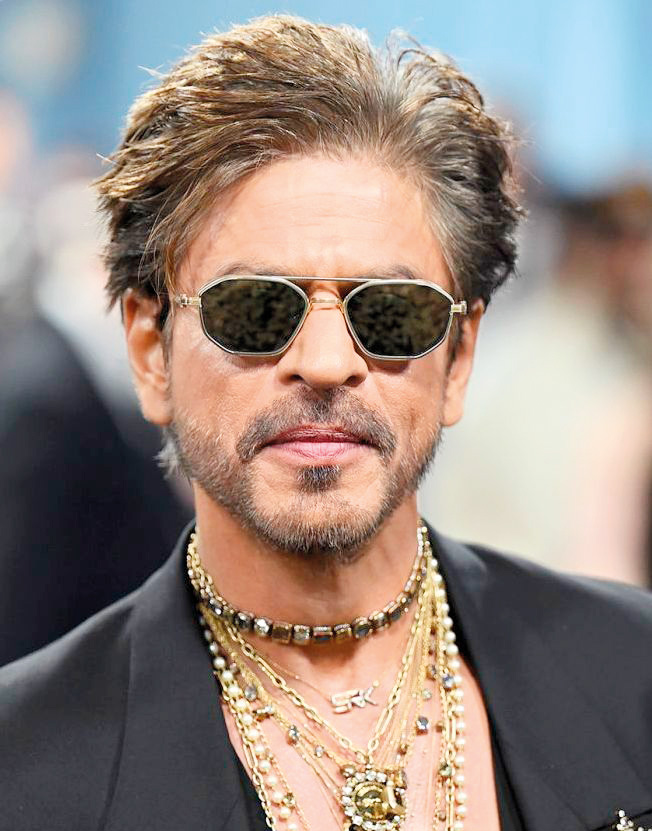
Shah Rukh Khan: Disappointed his fans in Sri Lanka
According to reports, the concert had received the official endorsement of the Sri Lanka Tourism Promotion Bureau, recognising it as a flagship initiative in developing the country’s concert economy by attracting fans, and media, from all over South Asia.

Nick Carter: His concert, too, was cancelled due to “Unforeseen circumstances
However, I had that strange feeling that this concert would not become a reality, keeping in mind what happened to Nick Carter’s Colombo concert – cancelled at the very last moment.
Carter issued a video message announcing he had to return to the USA due to “unforeseen circumstances” and a “family emergency”.
Though “unforeseen circumstances” was the official reason provided by Carter and the local organisers, there was speculation that low ticket sales may also have been a factor in the cancellation.
Well, “Unforeseen Circumstances” has cropped up again!
In a brief statement, via social media, the organisers of the Ne-Yo concert said the decision was taken due to “unforeseen circumstances and factors beyond their control.”
Ne-Yo, too, subsequently made an announcement, citing “Unforeseen circumstances.”
The public has a right to know what these “unforeseen circumstances” are, and who is to be blamed – the organisers or Ne-Yo!
Ne-Yo’s management certainly need to come out with the truth.
However, those who are aware of some of the happenings in the setup here put it down to poor ticket sales, mentioning that the tickets for the concert, and a meet-and-greet event, were exorbitantly high, considering that Ne-Yo is not a current mega star.
We also had a cancellation coming our way from Shah Rukh Khan, who was scheduled to visit Sri Lanka for the City of Dreams resort launch, and then this was received: “Unfortunately due to unforeseen personal reasons beyond his control, Mr. Khan is no longer able to attend.”
Referring to this kind of mess up, a leading showbiz personality said that it will only make people reluctant to buy their tickets, online.
“Tickets will go mostly at the gate and it will be very bad for the industry,” he added.

Machu Picchu train crash leaves one dead and dozens injured

I invite you to step into 2026 with renewed energy, hope, and determination – PM

Fairly heavy showers about 75 mm are likely at some places in the Central and Uva provinces and in Batticaloa and Ampara districts

National Audit Office reveals NHSL lapses

NPP’s CMC budget passed after four Opp. members switch allegiance

600MW hit to national grid as two Norochcholai units go offline

‘Dates have the highest sugar content to fight Coronavirus’

Sunday Island 27 December – Headlines

#SundayIsland 17th December – Headlines

Sunday Island – 28th March

Sunday Island Headlines – 21 March

Sunday Island – 21st February – Headlines
-
 News6 days ago
Street vendors banned from Kandy City
-

 Sports3 days ago
Gurusinha’s Boxing Day hundred celebrated in Melbourne
-

 News6 days ago
Lankan aircrew fly daring UN Medevac in hostile conditions in Africa
-
 News1 day ago
Leading the Nation’s Connectivity Recovery Amid Unprecedented Challenges
-

 Sports4 days ago
Time to close the Dickwella chapter
-

 Features6 days ago
Rethinking post-disaster urban planning: Lessons from Peradeniya
-

 Features2 days ago
It’s all over for Maxi Rozairo
-

 Opinion6 days ago
Are we reading the sky wrong?