
Business
MSI launches MSIology: MSI Gameverse virtual event to unveil 12th Gen Intel® H series laptops


MSI, a world-leading gaming and business computing brand, has launched a virtual event, MSIology: Gameverse, announcing their latest gaming and content creation laptops. Features include the latest 12 gen Intel® H series processors, up to NVIDIA® GeForce RTX™ 3080 Ti Laptop GPU, and MSI-exclusive thermal solutions, which boosts performance to the whole new level. MSI not only just released the highest performance laptop in the market but also delivered a series of Meta-Ready laptops to connect users to the Metaverse.
The event also announced the launch of several technologies including MSI the brand-new exclusive cooling technology, named the “Phase-Change Liquid Metal Pad.” When the computer’s heat reaches 58° Celsius (136° F), the Phase-Change Liquid Metal Pad melts and fills the space between the CPU and the thermal block. This phase transition makes the heat transfer more efficient than traditional thermal pastes and more reliable than liquid metal solutions. With this new innovative cooling technology, the overall performance increases up to 10%.
MSI also announced their new flagship gaming laptop, Stealth GS77 – winner of the latest 2022 CES Innovation Awards. The Stealth GS77 comes with a brand-new design that shifts the hinge towards the middle and uses more robust materials, resulting in two times the durability compared to previous models. Walking the line between work and gaming, the Stealth GS77 packs in additional features for business use. It has enlarged the trackpad by 50% and provides 8% larger keycaps for an even smoother experience. The Stealth GS77 also comes with a physical camera lock to add an additional layer of privacy.
Another announcement which was made was MSI’s collaboration with Ubisoft on the new Crosshair 15 Rainbow Six Extraction Edition. Referencing the palette from the game, it comes with a brand-new eye-catching design featuring yellow, green and blue colors as if users are entering the game itself. Designed for FPS gamers, the MSI Crosshair 15 is armed with up to QHD 240Hz display and up to Nvidia RTX 3070Ti GPU, which boosts up to 140 watts TGP, nearly a 50% increase in extra power than average laptops with the same specifications. Most importantly, the new Crosshair 15 is also a “Meta Ready” laptop.
Intel also showcased its new platform during the MSI launch event. Greg Cnossen, Intel Global Consumer Sales General Manager, pointed out that the new architecture of 12th Gen CPUs have offered a mix of performance and efficiency, with up to 14 cores available in the H series CPU. “Combine our brand-new 12th Gen CPU along with the thermal performance and experienced design capabilities from MSI, and you can see why we were so excited for MSI next-generation gaming and creator laptops.”
MSI also announced their new Content Creation Series laptop at the second-half show. MSI revealed their latest CES Innovation Award winner, Creator Z17. Crafted with a CNC-milled aluminum chassis and a golden ratio 16:10 display, the design of the Creator Z17 perfectly interprets the concept of technological aesthetics.
Not solely focused on hardware performance, MSI also worked on intelligent technologies for a smoother experience. The latest MSI Center now provides AI modes. The new “Smart Auto” feature will detect which situation you’re in, and automatically adjust the system into different modes, getting the best experience of your laptop. The “Ambient Silent AI” feature will dynamically balance fan speed based on the surrounding noise level and give the highest possible performance while still keeping the laptop quiet.


By Hiran H. Senewiratne
Sri Lanka’s financial literacy rate is approximately 58 percent. Such literacy is absolutely necessary for the inclusion of people in the country’s financial system which in turn is central to overall economic development, Central Bank Governor Dr. Nandalal Weerasinghe said.
‘One needs to have knowledge and skills of a financial nature to figure in financial inclusiveness. While 86 percent of Sri Lanka’s population has access to the country’s financial system, 82 percent of the public has at least a savings account in the country’s banking system, Dr Weerasinghe said.
The Governor made these comments recently at the inauguration of Financial Literacy Month 2026 at the Central Bank’s Centre for Banking Studies, Rajagiriya.
Dr. Weerasinghe added: ‘Suitable, affordable and quality financial instruments are needed to enhance financial literacy in the country.
‘Financial information has to be accurate, risk-free and accountable, thus creating confidentiality in the financial system, which would enable the sector to reach greater heights’.
Meanwhile CBSL sources said: ‘The Literacy Month opened with the two-day ‘FinLit Expo Colombo’. The expo gives the public the opportunity to engage with institutions, better understand financial services, gain practical insights into managing their finances and learn how to protect themselves from financial fraud and scams.
‘The CBSL is leading the program in collaboration with stakeholder institutions. It forms part of the Financial Literacy Roadmap for Sri Lanka, which is implemented under the National Financial Inclusion Strategy (NFIS), the national framework for widening access to and use of formal financial services.
‘The Colombo event will be followed by six regional ‘FinLit Expos’ aimed at direct engagement with local communities. Partner institutions will also run awareness activities. Together, the events are intended to provide financial education to communities and encourage people to apply financial knowledge in everyday life.
‘A public awareness campaign on television, radio, newspapers and social media will extend the program’s reach. The program also includes digital financial literacy activities and the promotion of QR codes and other online payment methods.
‘The public and stakeholder institutions are encouraged to take part in the month’s activities under the theme, “Towards a Financially Literate Sri Lanka”.
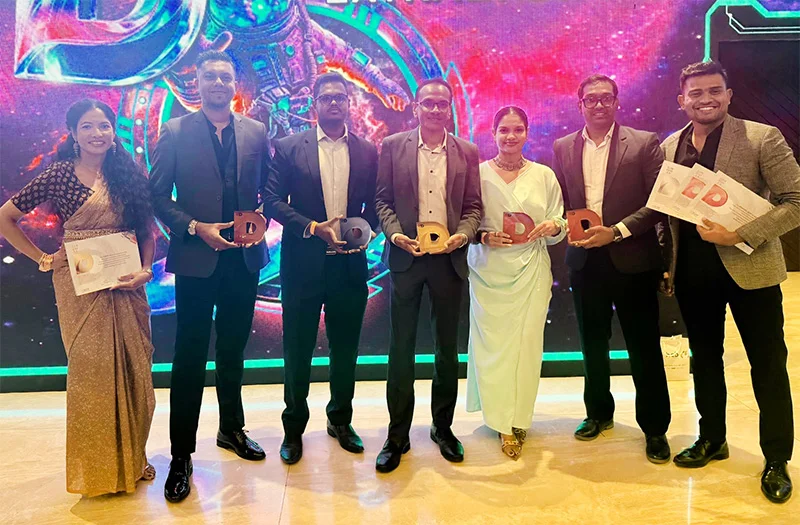
HUTCH Sri Lanka strengthened its position as a leader in digital engagement by securing five accolades at SLIM Digis 2.6, emerging as one of the most recognized brands at this year’s digital excellence awards. The achievement was further highlighted by HUTCH being the only telecom operator to be recognized at the event.
Organized by the Sri Lanka Institute of Marketing (SLIM), SLIM Digis is Sri Lanka’s premier platform celebrating excellence, innovation, and outstanding achievements in the digital marketing industry. The recognition highlights HUTCH’s growing strength in digital-first, agile, and creative marketing, and its ability to respond to everyday moments, engage audiences, and deliver impactful digital campaigns.
The Gold Award for Best Use of Agile and Moment Marketing, a Silver for Best Use of Digital in a Marketing Campaign, and a Bronze for Best Performance Marketing were all awarded for “Keeping Sri Lanka Connected Through Ditwah,” HUTCH’s response to the cyclone that struck Sri Lanka in November 2025, recognised for the speed and relevance with which HUTCH kept customers better connected and informed.
HUTCH Roaming also earned two further Bronze awards for Best Use of Digital in a Marketing Campaign and Best Use of Creative Content. Bringing together AI-led storytelling, the campaign was designed around distinct customer clusters, each characterized by unique travel behaviours, needs, and perceptions, delivering relevant content for different audiences within a single overarching campaign.
“These wins are a strong reflection of how HUTCH approaches marketing today, staying close to the moments that matter to our customers and responding with speed, relevance, and creativity. Being the only telco recognised at SLIM DIGIS 2.6, and across five categories, is proof that agility and thoughtful storytelling can go hand in hand. This recognition reflects the collective efforts with our strategic partners, whose collaboration, expertise, and shared commitment brought great campaigns to life,” said Hamdhy Hassen, Chief Marketing Officer, HUTCH Sri Lanka.
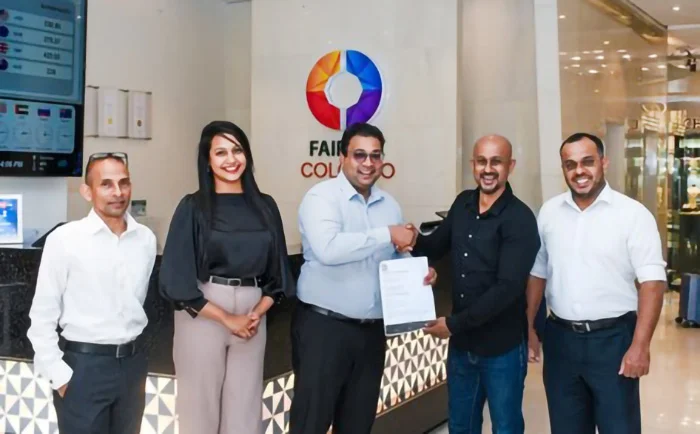
Sri Lanka’s Smart Luxury Business Hotel to Host Delegates and Contestants from Over 40 Countries as the Island Nation Hosts Its First-Ever Global Pageant of This Scale
Fairway Colombo, a subsidiary of Fairway Holdings (Pvt) Ltd, has been appointed as the Official Accommodation Partner for Manhunt International 2026, one of the world’s most prestigious male pageants, scheduled to take place in Sri Lanka.
The event marks a historic milestone for Sri Lanka, as the country prepares to host a global pageant of this scale for the very first time. More than 40 contestants representing countries from across the world will arrive in Colombo, bringing together diverse cultures, international media attention, and a global audience — further strengthening Sri Lanka’s position as a premier destination for tourism, culture, and hospitality.
As the official accommodation partner, Fairway Colombo will welcome and host international delegates and contestants throughout their stay in Colombo, delivering the exceptional hospitality experience and personalized service that the hotel is recognized for.
A Landmark Partnership for Sri Lankan Tourism
“We are truly honored to be selected as the Official Accommodation Partner for Manhunt International 2026. This partnership is a proud moment not only for Fairway Colombo but also for Sri Lanka as a whole. Hosting an event of this global stature provides us with an opportunity to showcase our commitment to smart luxury, innovation, and authentic Sri Lankan hospitality to an international audience. We look forward to creating a memorable and seamless experience for all delegates and guests,” said Avinga Wanigasekara, General Manager of Fairway Colombo.
Strategically located in the heart of Colombo’s historic Fort district, Fairway Colombo is recognized as a Smart Luxury Business Hotel, combining modern comfort, advanced technology, and exceptional service. As part of Fairway Holdings (Pvt) Ltd, the property represents the group’s vision of delivering innovative, world-class experiences across the hospitality and leisure sectors.

Delegation from Korean Volunteer Association meet Secretary to the President

Imran Khan’s PTI braces to fight federal takeover of Khyber Pakhtunkhwa

Nissanka’s return headlines Sri Lanka’s Test squad against Pakistan

HRCSL issues recommendation on seizure of four books by B. Piratheepan by Sri Lanka Customs

Former Zimbabwe player and umpire Sarah Dambanevana dies aged 36

Deflated Sri Lanka look to prevent whitewash against dominant Pakistan

‘Dates have the highest sugar content to fight Coronavirus’

Sunday Island 27 December – Headlines

#SundayIsland 17th December – Headlines

Sunday Island – 28th March

Sunday Island Headlines – 21 March

Sunday Island – 21st February – Headlines
-

 Features6 days ago
The Sri Lankan who made Scottish history
-

 Sports6 days ago
Nissanka absence opens door for Sri Lanka’s young guns
-

 News4 days ago
NDB fraud Rs 60mn more than reported
-

 News7 days ago
Gnansara Thera to be assigned to prison printing section: Officials
-

 News4 days ago
Removing monk’s robes matter for Sangha to decide: Mahanayake Theras
-

 News7 days ago
OIC of FCID summoned before Maligakanda Magistrate
-

 Features6 days ago
Future of Sri Lanka’s state university system: Should it be shut down and reopened?
-

 News6 days ago
Shiranthi R remanded until 13 Oct.