
News
Most plastic debris on beaches comes from far-off sources


Lankan plastic debris found on beaches in the Seychelles
Vast amounts of plastic debris accumulate on beaches across the Seychelles and other small island developing states including Sri Lanka, and an observational analysis (for instance, plastic bottle labels) suggest that much of this waste originates from distant sources and not from the islands themselves.
But until now, the likely sources of this debris have not been quantified, says a new study by the University of Oxford.
“Indonesia is the primary source of land-based plastic debris found on beaches in the Seychelles, with major contributions from India and Sri Lanka,” it said.
The study led by the University of Oxford investigated by developing a high-resolution model that simulated the movement of plastic debris across the world’s oceans. This used input data on ocean currents, waves, and winds, and plastic debris entering the ocean from coastal populations, rivers and fisheries, to predict plastic debris accumulation at 27 sites in the Seychelles and wider western Indian ocean. The results have been published in Marine Pollution Bulletin.
The researchers modelled the likely sources of both land-based and marine types of plastic pollution.
Key findings:
• Indonesia is the primary source of land-based plastic debris found on beaches in the Seychelles, with major contributions from India and Sri Lanka. This was particularly the case for medium-large debris that have a high buoyancy (such as bottle caps, sandals, bottles, and small domestic items).
• Plastic debris arriving from Indonesia would have been at sea for at least 6 months, with some exceeding 2 years.
• Smaller plastic debris, such as millimetre-sized plastic fragments and pellets, tended to originate from East Africa and from within the Seychelles itself. Smaller fragments are less buoyant than larger items, and do not travel as far before sinking.
• The Seychelles also accumulate significant amounts of plastic debris of marine origin from fisheries and shipping lanes, such as discarded or lost fishing gear. The large numbers of bottles beaching at these islands with labels suggesting they come from Malaysia, Thailand and, in particular, China, were probably discarded from ships rather than floating from those countries directly. For some islands, a significantly higher proportion of plastic waste comes from marine sources, rather than land.
• Rates of plastic debris accumulation showed a strong seasonal affect. Plastic debris from both land and marine sources was most likely to land on beaches in the Seychelles at the end of the northwest monsoon, with the highest rates in March and April.
• Plastic debris accumulation may also be amplified by El Niño-Southern Oscillation (ENSO) and Indian Ocean Dipole (IOD, also known as the Indian Niño) events.
This is the first study to produce a quantitative estimate of the sources of plastic debris for the Seychelles and other remote islands in the western Indian Ocean. Such plastic pollution is a significant environmental threat, both for marine ecosystems and the communities that depend on the ocean for food, tourism, and other economic activities. In addition, plastic debris that drifts from far-off sources increases the risk of spreading invasive species and diseases.
A previous study led by University of Oxford researchers estimated that over 500 tonnes of debris had accumulated at Aldabra Atoll in Seychelles, an ecologically valuable UNESCO World Heritage Site with zero permanent population.
Lead author of the current research, Noam Vogt-Vincent (Department of Earth Sciences, University of Oxford), said ‘We have combined observational data from across the Seychelles with cutting-edge computer simulations to generate the most comprehensive predictions currently available for marine litter dispersal in the region. This will provide vital information for local management on these islands — many of which are global biodiversity hotspots — and to inform national and international responses.’
According to the researchers, the results illustrate the sheer scale of the plastic pollution challenge facing small island developing states, and makes the need for a global plastic treaty more urgent than ever. This could include, for instance, greater enforcement of policies that forbid the disposal of fishing gear and other plastics at sea. The findings also build on the ever-growing evidence that investing in waste management systems and implementing policies for waste disposal at the main source nations is the number one action to prevent land-based litter arriving at remote island sites.
Knowing when plastic debris accumulation is likely to peak could help to plan mitigation efforts. For instance, the results suggest that beach clean-ups should take place after peak debris accumulation (i.e. May to June) to reduce the likelihood of plastic debris breaking down into smaller fragments and impacting ecosystems.
Co-author Dr April Burt (Seychelles Islands Foundation and University of Oxford) said: ‘These islands are faced with the deeply inequitable situation of bearing the costs of removing waste they were not responsible for generating, contrary to the “polluter pays” principle. Our study has demonstrated that most of the plastic debris accumulating at these remote islands comes from far-off sources, and this should be the first positive step towards accountability and prevention.’
The study also involved researchers from the University of Montpellier; the Institut de Recherche pour le D’eveloppement, MARBEC; and the Okinawa Institute of Science and Technology

Latest News
Advisory for Heavy Rain issued for the Central, Uva and Sabaragamuwa provinces and in the Ampara, Batticaloa and Polonnaruwa districts


Advisory for Heavy Rain Issued by the Natural Hazards Early Warning Centre at 12.00 noon on 21 February 2026 valid for the period until 08.30 a.m. 22 February 2026
Due to the low level atmospheric disturbance in the vicinity of Sri Lanka, Heavy showers above 100 mm are likely at some places in the Central, Uva and Sabaragamuwa provinces and in the Ampara, Batticaloa and Polonnaruwa districts and fairly heavy showers above 75 mm are likely at some places elsewhere.
Therefore, the general public is advised to take adequate precautions to minimize damages caused by heavy rain, strong winds and lightning during thundershowers.
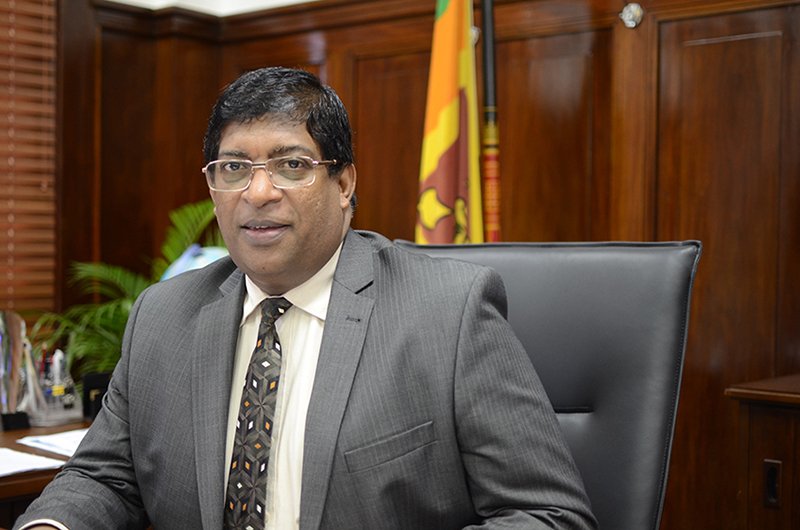
Opposition MP Ravi Karunanayake on Wednesday called for an urgent government statement to Parliament on the integrity and usability of Sri Lanka’s Gross Official Reserves (GOR), raising concerns over foreign exchange leakages and regulatory consistency under the Foreign Exchange Act No. 12 of 2017.
Raising the issue under Standing Order 27 (i), Karunanayake urged the Government to provide a comprehensive disclosure on the composition, encumbrances and deployability of the country’s reserves, as well as on the Central Bank’s oversight of foreign currency transactions.
“Reserve credibility depends not merely on headline numbers, but on transparency, enforceability and consistency in regulation,” the MP told the House.
He sought clarification on the latest reported GOR figure and the net usable reserves after excluding encumbered assets, swaps and pledged balances. He also requested details of annual revenue earned on reserves from 2023 to 2025.
Following are the questions raised by MP Karunanayake:
1. What is the latest reported GOR figure, and what is the net usable reserve after excluding encumbered assets, swaps, and pledged balances? What is the revenue earned on are GOR 23-25 per year?
2. Provide a separate and detailed breakdown of GOR, including: (a) Monetary gold (quantity and valuation basis) is it real gold or gold paper? (b) Foreign currency assets by major currency and instrument; (c) SDR holdings; (d) IMF reserve position; (e) Foreign currency swaps, specifying counterparty type, principal amount, tenure, maturity profile, and all-in cost; (f) Domestic swaps, specifying amount, tenure, rollover terms, collateralisation, and effective cost.
3. Of the total reserves reported, how much is encumbered, swap-backed, or otherwise not immediately deployable for debt servicing or currency stabilisation?
4. What SLR spread, fee, or margin does the Central bank apply when buying or selling USD to the Government for reserve accumulation and external debt servicing and what total profit or gain has the C.bank realised from such transactions during the past three financial years? Advice per year.
5. Is the Central Bank subject to continuous and statutory audit by the Auditor General? If so, will the Government table the most recent audit report, specifying audit scope, sample size, reserve confirmations, swap verification and gold custody validation?
6. What triggered the recent circular warning domestic institutions on foreign currency transactions?
7. Has the C.bank quantified foreign exchange and tax revenue losses resulting from Sri Lanka-based businesses routing credit card and commercial payments through overseas payment gateways?
8. If domestic entities are regulated strictly, why has a binding circular not been issued against noncompliant business entities using foreign payment gateway arrangements that divert foreign exchange outside Sri Lanka’s regulated banking system?
The government asked for two weeks’ time to respond to the queries.
by Saman Indrajith
News
Sajith exposes highly questionable coal imports from South Africa in 25 vessels; calls for independent probe

Opposition Leader Sajith Premadasa yesterday alleged in Parliament that eight recently imported coal shipments were substandard and called for an independent probe into the matter.Speaking in the House, Premadasa said Sri Lanka typically requires 36–38 coal shipments annually. While 11 Russian shipments received so far had raised no concerns, he claimed that 25 vessels ordered from South Africa under a new tender were facing quality issues.
He cited combustion reports from the Norochcholai Coal Power Plant showing that the eight shipments already received under the new tender failed to generate the expected 300 megawatts per unit. According to the MP, the outputs were: 285 MW, 290 MW, 260 MW, 295 MW, 285 MW, 270 MW, 275 MW, and 255 MW.
“These are scientific data generated automatically through boiler combustion reports that cannot be altered,” Premadasa said, asserting that the figures indicate the coal supplied was below required standards.
He warned that low-quality coal could increase fuel consumption, raise operational costs, and damage equipment. Any shortfall in power generation, he said, would necessitate additional coal imports or greater reliance on diesel power, ultimately driving up electricity tariffs for consumers.
“The loss will have to be borne by the electricity consumer,” Premadasa said, urging the government to clarify whether the shipments met required specifications.
He also criticized delays and changes in tender requirements, alleging that supplier eligibility criteria had been relaxed to allow non-standard providers.
by Saman Indrajith

Advisory for Heavy Rain issued for the Central, Uva and Sabaragamuwa provinces and in the Ampara, Batticaloa and Polonnaruwa districts

Ranaweera’s four-for leads Sri Lanka to tense win over West Indies

How photography helped the British empire classify India

Atmospheric conditions are favorable for thundershowers over most parts of the island

Trump brings in new 10% tariff as Supreme Court rejects his global import taxes

Ravi demands full disclosure on Lanka’s usable reserves, flags forex leakages

‘Dates have the highest sugar content to fight Coronavirus’

Sunday Island 27 December – Headlines

#SundayIsland 17th December – Headlines

Sunday Island – 28th March

Sunday Island Headlines – 21 March

Sunday Island – 21st February – Headlines
-

 Life style7 days ago
Marriot new GM Suranga
-

 Business6 days ago
Ministry of Brands to launch Sri Lanka’s first off-price retail destination
-

 Features7 days ago
Monks’ march, in America and Sri Lanka
-

 Features7 days ago
The Rise of Takaichi
-
 Features7 days ago
Wetlands of Sri Lanka:
-

 News7 days ago
Thailand to recruit 10,000 Lankans under new labour pact
-

 Latest News1 day ago
ECB push back at Pakistan ‘shadow-ban’ reports ahead of Hundred auction
-

 Latest News1 day ago
Tariffs ruling is major blow to Trump’s second-term agenda