
News
Sri Lanka: Crisis of rights, accountability

New administration fails to reverse damaging policies of its predecessor
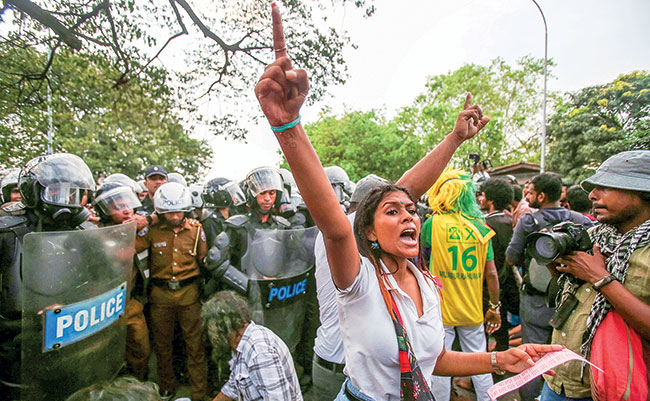
The change of presidents of Sri Lanka in 2022 did not lead to any improvement in the country’s human rights record, Human Rights Watch said in its World Report 2023 released on Thursday.During 2022, thousands of Sri Lankans took to the streets after years of misrule, impunity, and corruption undermined the rule of law and contributed to a severe economic crisis that threatened millions. President Gotabaya Rajapaksa, long implicated in grave rights violations, stepped down in July. However, the new president, Ranil Wickremesinghe, cracked down on largely peaceful protests, imprisoned activists, and disregarded calls for justice for past violations.
“President Ranil Wickremesinghe responded to calls for reform and accountability with repression,” said Meenakshi Ganguly, South Asia director at Human Rights Watch. “The foreign partners that Sri Lanka needs to help address its economic crisis should insist on fundamental human rights reforms and respect for the rule of law.”
In the 712-page World Report 2023, its 33rd edition, Human Rights Watch reviews human rights practices in close to 100 countries. In her introductory essay, acting Executive Director Tirana Hassan says that in a world in which power has shifted, it is no longer possible to rely on a small group of mostly Global North governments to defend human rights. The world’s mobilization around Russia’s war in Ukraine reminds us of the extraordinary potential when governments realize their human rights obligations on a global scale. The responsibility is on individual countries, big and small, to apply a human rights framework to their policies, and then work together to protect and promote human rights.
Sri Lanka’s economic crisis deepened when the country defaulted on foreign loans in April. On September 1, the International Monetary Fund (IMF) announced a staff-level agreement to provide a US$2.9 billion bailout, but the funds cannot be disbursed before Sri Lanka reaches a debt restructuring agreement with international creditors. Food price inflation reached 85 percent in October. The United Nations said that 6.3 million people faced food insecurity and that the poverty rate had doubled.
President Wickremesinghe’s government has cracked down on dissent, including by using the notorious Prevention of Terrorism Act (PTA) to arbitrarily detain student activists. Although superficial amendments were made to the law in March, following years of domestic and international pressure, the government continued to stall on repeated commitments to repeal the law.
The European Union played an important role urging the Sri Lankan government to comply with its human rights obligations under the EU’s Generalised Scheme of Preferences Plus (GSP+), but pressure needs to be intensified to secure concrete progress, Human Rights Watch said. Calls by the United States and others to respect the right to peaceful protest were largely ignored.
In October, the United Nations Human Rights Council adopted a resolution expressing concern for the human rights situation and mandating enhanced UN monitoring, as well as renewing a mandate for the UN to collect and analyze evidence of past human rights violations, including attacks on Tamil civilians during and since the civil war, which ended in 2009, for use in future prosecutions. The government has rejected calls for truth telling and accountability, including by the group Mothers of the Disappeared, which passed 2,000 days of continuous activism in August, demanding to know the fate of their missing loved ones.
No action was taken on then-Justice Minister Ali Sabry’s call for parliament to legalize abortion, which Sri Lanka has long banned, in rape cases. The government also failed to reform the Muslim Marriage and Divorce Act, which permits child marriage and includes numerous discriminatory provisions. The government uses colonial-era laws to persecute same-sex activity and transgender people.

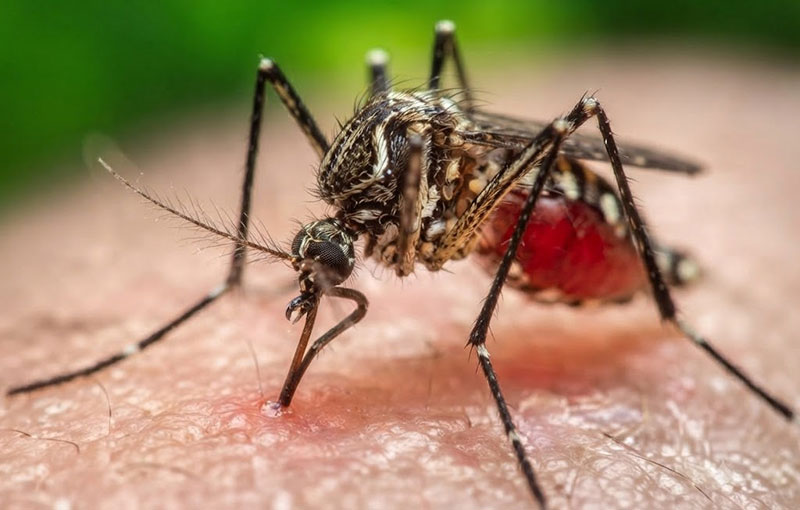
The countrywide dengue outbreak has intensified, with the death toll rising to 50, by July 16, as the number of reported infections surpassed 73,000, according to the National Dengue Control Unit (NDCU).
The country has recorded 73,455 dengue cases so far this year, with the case fatality rate standing at 0.07 percent, highlighting the severity of the ongoing outbreak.
The Western Province continues to remain the worst affected region, accounting for more than half of the total cases, with 38,700 infections. The Gampaha District has recorded the highest number of cases in the province with 15,341, followed closely by Colombo with 14,625.
The Southern Province has reported 11,382 cases, while the Sabaragamuwa and Central provinces have each recorded more than 6,000 infections.
Dengue cases have shown a sharp increase in recent months, with June recording the highest monthly total of 21,538 cases, while July has already reported 18,076 infections. In comparison, 8,590 cases were reported in May, and 5,651 in April.
Health authorities have identified 175 Medical Officer of Health (MOH) areas as high-risk locations during the 27th epidemiological week. An average of 2,677 new dengue cases are being reported daily, prompting authorities to intensify prevention and mosquito control measures.
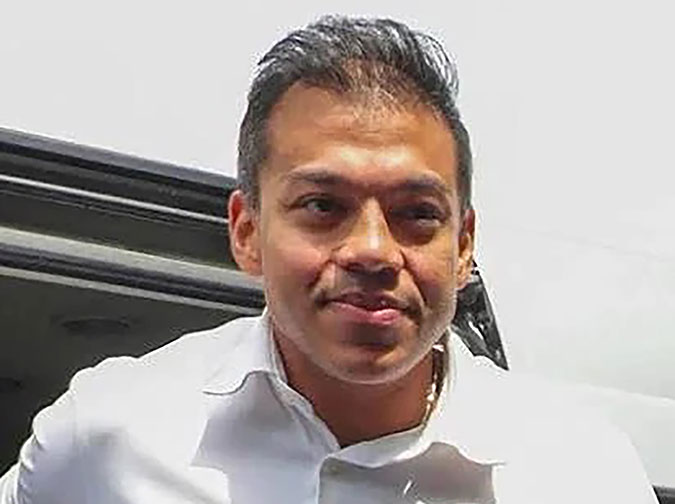
The Colombo High Court yesterday (17) resumed hearing the money laundering case filed against Yoshitha Rajapaksa, son of former President Mahinda Rajapaksa, under the Prevention of Money Laundering Act.
The proceedings were held before High Court Judge Udesh Ranatunga, where evidence was recorded from prosecution witnesses, under the direction of Deputy Solicitor General Janaka Bandara.
President’s Counsel Sampath Mendis, appearing for Yoshitha Rajapaksa, cross-examined the witnesses during the hearing.
After recording evidence, the court ordered that further examination of evidence be postponed until July 24.
The Attorney General has filed indictments, alleging that Yoshitha Rajapaksa committed an offence, under the Prevention of Money Laundering Act, by purchasing five plots of land in Dehiwala and Ratmalana, valued at more than Rs. 73 million.
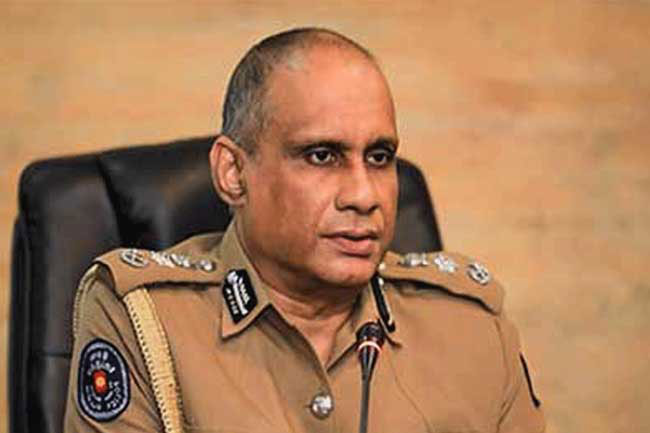
Former IGP Chandana Deepal Wickramaratne died after sustaining a gunshot injury at his residence, in Thalangama, yesterday (17), with police saying preliminary investigations indicate that the incident was a suspected suicide.
Kaduwela Magistrate Aruna Indrajith Buddhadasa, on Friday, ordered the Officer-in-Charge of the Malabe Police Station, Police Inspector Pradeep Ranasinghe, to conduct a formal investigation into the death and submit a report to court on its progress.
The order was issued after the Malabe Police Station presented facts before court regarding the incident.
According to police, the Malabe Police Station received information from the Police Unit of the Colombo East Base Hospital, in Mulleriyawa, that Wickramaratne, who resided in the Thalahena area, within the Malabe Police division, had died after being admitted to hospital, with gunshot injuries.
Police Spokesman ASP F.U. Wootler said Wickramaratne had allegedly used the firearm of his personal security officer and shot himself at his residence.
Police said the shooting had taken place at his residence on Parakum Road, Thalangama, on Thursday morning, before he was due to leave for his regular exercise routine. He was rushed to the Colombo East Base Hospital, in Mulleriyawa, with serious injuries but was pronounced dead upon admission, police said.
The deceased’s remains were placed at the Colombo East Base Hospital, where a post-mortem examination was scheduled to be conducted.
ASP Wootler said three police teams have been appointed to investigate the incident. Further investigations are being conducted by the Crime Division of the Western Province South Range and the Malabe Police Station.
Wickramaratne, 63, served as the 35th Inspector General of Police of Sri Lanka from November 27, 2020, to November 23, 2023.
He joined the Sri Lanka Police in 1986 as a Probationary Assistant Superintendent of Police and later served in several senior positions.
A graduate of the University of Colombo and the General Sir John Kotelawala Defence University, he also served as Acting IGP for more than a year, from April 28, 2019, before being appointed IGP, in November 2020.
He retired from the post of Inspector General of Police, in November 2023.
by Norman Palihawadane ✍️

Showers may occur in the Western, Sabaragamuwa and North-western provinces and in Kandy, Nuwara-Eliya, Galle and Matara districts

Dengue outbreak gallops ahead: Infections surpasses 73,455, leaving 50 dead

Evidence recorded in money laundering case against Yoshitha Rajapaksa

Former IGP C.D. Wickramaratne dies in suspected suicide

CAA sets aflatoxin limit for processed liquid milk from January 2027

Son of ex-Justice Minister further remanded till July 28

‘Dates have the highest sugar content to fight Coronavirus’

Sunday Island 27 December – Headlines

#SundayIsland 17th December – Headlines

Sunday Island – 28th March

Sunday Island Headlines – 21 March

Sunday Island – 21st February – Headlines
-
 Features6 days ago
Prison riots and politics: NPP’s biggest challenge and Sri Lanka’s biggest opportunity
-
 Features3 days ago
Dirty Money
-

 Editorial6 days ago
Much ado about crime: Fish or cut bait
-
 Features6 days ago
More on Saudi Arabia: ARAMCO and beyond
-

 News1 day ago
Money laundering case against Yoshitha, fixed for pre-trial conference
-
 Sports6 days ago
The banker who rescued Sri Lankan cricket
-
 Midweek Review3 days ago
The sordid tale of theft and tragedy at Finance Ministry
-
 Latest News4 days ago
Oil prices hit 1-month high as US-Iran attacks dim Strait of Hormuz outlook