
Editorial
Lucky Lankan ministers


Tuesday 18th July, 2023
Much is being talked about the need to eliminate bribery and corruption in Sri Lanka, where these twin evils have become institutionalised. The government and the Opposition are vowing to get tough with the corrupt as if their own members were paragons of virtue! They are making some anti-corruption laws on the anvil out to be a cure-all, but nothing will help usher in good governance unless the rule of law is restored and the existing culture of impunity done away with.
The success of any anti-corruption campaign hinges on the ability of a country to ensure that everyone is equal before the law. The news of the arrest of Singapore’s Transport Minister S. Iswaran in connection with a top-level corruption probe could not have come at a better time where Sri Lanka is concerned.
It has been reported that Singapore’s national anti-graft body, the Corrupt Practices Investigation Bureau (CPIB), obtained Prime Minister Lee Hsien Loong’s permission to arrest Minister Iswaran and question him. PM Loong has reportedly asked Iswaran, who has been released on bail, to take leave of absence. He has emulated his late father Lee Kuan Yew (LKY), who would not have been able to achieve his dream of developing Singapore to the present level but for his successful war on bribery and corruption.
One is reminded of what LKY said about ministers and officials in this part of the world. In his widely read book, From Third World to First, LKY has said: “The higher they are, the bigger their homes and more numerous their wives, concubines, or mistresses, all bedecked in jewelry appropriate to the power and position of their men. Singaporeans who do business in these countries have to take care not to bring home such practices.” When one sees Sri Lankan politicians and bureaucrats enriching themselves and living the life of Riley, one remembers LKY’s memorable words.
All Singaporean politicians who did not heed LKY’s aforesaid warning were severely dealt with. The fate that befell Teh Cheang Wan, the Minister for National Development, is a case in point. When the CPIB launched a probe into an allegation of bribery against him in the mid-1980s, he sought to meet LKY, who refused to see him until the investigation was over.
Wan took his life, and his suicide note said, inter alia, “As an honourable oriental gentleman I feel it is only right that I should pay the highest penalty for my mistake.” If the Sri Lankan ministers had received from their leaders the same treatment as Wan, most of them would have been pushing up the daisies by now, and the vital sectors such as health, education, finance, agriculture and trade and commerce would have been free from corruption, and most of all, substandard drugs and equipment would not have snuffed out so many lives in the state-run hospitals.
The ongoing anti-graft probe against the Transport Minister of Singapore and the exemplary manner in which PM Loong has handled the situation remind us of how Sri Lankan leaders act when allegations of corruption are made against their Ministers. They promptly appoint committees, which invariably clear the ruling party politicians of all charges.
As a result, many men and women of humble origins who did not own even bicycles when they entered politics are living in clover; obviously, they have amassed huge amounts of ill-gotten wealth at the expense of the public, and their corrupt deals are one of the main causes of the country’s bankruptcy. Sri Lankans elect such political dregs and keep wondering why their country is still poor and Singapore has achieved progress! Not for nothing is it said that the people get the government they deserve.
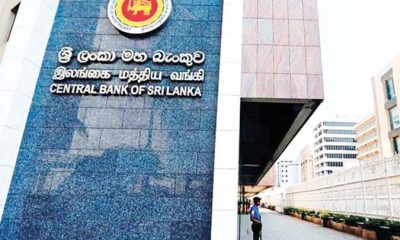
Now that Singapore has set an example to other countries by allowing its anti-graft body to probe one of its ministers and even cause him to be arrested, will it facilitate the extradition of Arjuna Mahendran, one of its citizens, to Sri Lanka, and thereby ensure that he stands trial for his involvement in a mega Treasury bond scam, in 2015, when he was the Governor of the Central Bank of Sri Lanka?








Arumahandi Janith Madushanka de Silva alias Podi Lassi, a dangerous underworld character, who was arrested in India, was brought back to Sri Lanka yesterday. On watching his arrival at the BIA, Citizen Perera must have uttered the same words as Mr. Bumble in Oliver Twist: “The law is an ass”. Criminals are caught, released and caught again. Arresting an underworld figure is no walk in the park. It takes months of meticulous planning to nab powerful criminals protected by private armies. The crime busters who risk life and limb to track down criminals are demoralised when the suspects they arrest get bail and flee the country.
Podi Lasi was arrested in 2020 and detained in the Boossa high-security prison, together with some other dangerous criminals. He secured bail in 2024. It was obvious that he would flee the country. He played the victim card, claiming that the STF was planning to kill him. His lawyers even demanded that he be given protection. He disappeared soon afterwards, and no one was surprised.
Many an eyebrow was raised when Podi Lassi was enlarged on bail, for he had even issued death threats to the then President and the Defence Secretary. In 2020, while in detention, Podi Lasi and two other underworld characters known as Kosgoda Tharaka and Pitigala Keuma threatened to harm the then President Gotabaya Rajapaksa, Defence Secretary General Kamal Gunaratne, and some senior prison officers. Podi Lassi bragged that his hit squads were capable of taking any target. Those who are charged with less serious offences than drug smuggling and underworld activities are denied bail in this country to prevent them from intimidating witnesses and fleeing overseas.
One may recall that a notorious drug dealer named Mohommad Najim Mohommad Imran alias Kanjipani Imran obtained bail in 2022. Everybody knew that he would flee the country, and he did so a couple of weeks later. The then Public Security Minister Tiran Alles claimed that some unscrupulous lawyers had facilitated Imran’s escape and that of another criminal called Ganemulle Sanjeewa. Imran had been arrested in Dubai together with Sri Lanka’s Napoleon of Crime, Samarasinghe Arachchige Madush Lakshitha alias Makandure Madush in 2019, and brought back to Colombo. Madush perished allegedly in a crossfire between the police and an underworld gang while in custody. Imran has been running his crime syndicate here from overseas. He is believed to have masterminded the murder of Wasantha Perera or Club Wasantha in 2024. Ganemulle Sanjeewa was gunned down inside a courtroom in Colombo in 2025.
Some underworld kingpins have turned this country into a narcotic hub, for all intents and purposes, if the sheer amounts of dangerous drugs frequently taken into custody are any indication. They are capable of killing anyone anywhere. A lawyer and his wife were gunned down near the defence headquarters complex, Akuregoda, recently.
It is public knowledge that whenever a drug czar is netted, a well-coordinated operation gets underway to secure his release, with lawyers, politicians, and some rogue elements in the police and other state institutions such as the Government Analyst’s Department springing into action. In September 2023, Nadun Chinthaka Wickremaratne alias Harak Kata almost escaped from the CID headquarters where he was detained and interrogated. If not for some vigilant STF personnel, his crime syndicate would have been able to launch a spectacular operation with the help of some commandos and spring him free. Salindu Malshitha alias Kudu Salindu, arrested with Harak Kata in Madagascar, and extradited to Sri Lanka in 2023 also fled the country after obtaining bail.
Sri Lanka’s anti-narcotic laws are characterised by glaring inadequacies that allow clever lawyers appearing for wealthy drug lords to drive a coach and horses through them. They have done so on numerous occasions much to the dismay of the police and the public. The need for laws with stronger teeth to deal with drug lords and other such criminals firmly and make this country safe for the ordinary citizens cannot be overemphasised.

Saturday 28th February, 2026
The JVP-NPP government is practising the very antithesis of what it promised workers during its election campaigns. Pledging to look after workers’ interests, the JVP/NPP leaders said there would be no need for labour struggles under an NPP government. But they are now emulating their predecessors who mismanaged labour issues and suppressed trade unions.
The government has locked horns with the GMOA (Government Medical Officers’ Association). They are engaged in a contest of attrition, which is not likely to end any time soon, given the intransigence of both sides. The government is determined to wear down the GMOA, and vice versa. The warring doctors have withdrawn from health camps and outreach programmes and threatened to intensify their trade union action. One wonders whether the medical professionals in the NPP parliamentary group have sought to settle old scores with the GMOA, which they are not well disposed towards; instead of making a serious attempt to resolve the ongoing trade union dispute amicably, they keep on provoking the protesting doctors.
The GMOA has put forth several demands, including the establishment of a special service category called the “Sri Lanka Medical Service,” for all doctors, updating the Disturbance, Availability and Transport (DAT) allowance, resolving transportation issues in line with Circular 22/99, converting the additional duty allowance into a fixed allowance, resolving issues related to research allowances, addressing concerns of doctors engaged in postgraduate studies, updating the approved cadre of doctors in the health sector and initiating time-bound discussions with the Ministry of Finance on the doctors’ demands.
What is up the government’s sleeve is not difficult to guess. The JVP/NPP is all out to tame the trade union sector, which is strong enough to act as a countervailing force against it. The GMOA is one of the most powerful trade unions, and the government’s battle plan seems to be suppressing it in a bid to intimidate all others into submission. The JVP/NPP leaders have apparently learnt from how the LSSP, as a constituent of the SLFP-led United Front government, broke the bank employees’ strike in 1972. The J. R. Jayewardene government crushed a general strike in a brutal manner in July 1980 by sacking tens of thousands of strikers, and thereby effectively neutralised the trade union sector. All governments with steamroller majorities succumb to the arrogance of power, which drives them to ride roughshod over trade unions and professional associations that refuse to obey their dictates.
Opinion may be divided on the GMOA’s demands, and in fact it may not be possible to meet some of them for pecuniary reasons, but it defies comprehension why the government refuses to listen to the protesting doctors, and adopt a compromise formula. Political muscle flexing will only make an already bad situation far worse in the health sector. The government should not dupe itself into believing that tactics such as astroturfing and social media attacks will help tame trade unions.
Labour disputes tend to snowball and cause hardships to the public. Hence the need for swift action to resolve them. It behoves the government, which came to power, promising to look after the interests of workers, to invite the GMOA to the negotiating table and try to prevent the escalation of the ongoing dispute.
Friday 27th February, 2026
Three teenage girls from a children’s home in Kalutara have been arrested for breaking into a canteen and making off with a stock of confectionery worth Rs. 40,000. Upon being informed of the theft, the police lost no time in recovering the sweets and making arrests. Those who conducted the ‘raid’ posed for photographs with the recovered items and released them to the media. Such is their selective efficiency.
One may recall that some years ago, the police arrested a small schoolgirl in Kalutara for stealing a few coconuts. In the same district, a little girl was taken into custody for stealing a five-rupee coin. If only the long arm of the law dealt with the politically backed perpetrators of serious crimes in a similar manner.
The three girls arrested for stealing sweets may have thought that in a country where people get away with grand thefts, their offence would go unnoticed. The incumbent government tells us that its political rivals stole colossal amounts of state funds while in power, but no legal action has been taken against most of them. Worse, the corrupt politicians in the Opposition have embarked on a crusade against corruption.
Worryingly, the incumbent government, which has undertaken to eliminate bribery and corruption and restore the rule of law, is led by a party with a history of terrorism, extortion, armed robberies and wanton destruction of state assets. A Cabinet minister has had the audacity to boast that he and his ‘comrades’ destroyed transformers, etc., in the late 1980s. He has sought to romanticise such acts of terrorism which are nonbailable transgressions under the Offences Against Public Property Act. Strangely, no action has been taken against him or his colleagues on the basis of his confession. If such crimes had been investigated properly during previous governments, some of the ruling party politicians who indulge in moral grandstanding would have been behind bars.
It has now been revealed that the procurement of eight shipments of substandard coal has caused a staggering loss of Rs. 8 billion to the state coffers. The coal supplier is said to be a company blacklisted for selling substandard rice to Sathosa. The corrupt coal tender has not been cancelled.
The present-day rulers, who came to power vowing to eliminate bribery and corruption, are now in overdrive, trying to justify losses caused by low-grade coal imports and shield the racketeers. Substandard medicines imported after the 2024 regime change have not only caused massive losses to the state but also snuffed out several lives in government hospitals. Much has been spoken in Parliament about corrupt procurement deals in Sathosa under the current dispensation. Curiously, no arrests have been made.
What was made out to be a new beginning in late 2024 has turned out to be another false dawn. The champions of good governance have been exposed for corruption and abuse of power.
The current rulers claim to be on a mission to restore the rule of law in keeping with one of their main campaign promises. That no doubt is a noble goal that must be achieved. However, mere rhetoric won’t do. They have to back up their words with deeds.
The least the government can do to convince the public that it is serious about fulfilling its pledge to restore the rule of law is to ensure that the police deal with the corrupt elements in both the Opposition and the government in the same way as they did in the case of the three girls who stole sweets in Kalutara.

Can West Indies make up for bowling gulf in virtual quarter-final against India?

Flights cancelled as travel warnings issued after strikes on Iran

Trump says Iran’s Supreme Leader Ayatollah Ali Khamenei is dead after US-Israeli strikes

South Africa put spotless record on the line in all-African clash

Fair weather will prevail over most parts of the island

Renewed Lanka’s Easter Bombing probe puts NTJ’s South India radicalisation network back under lens

‘Dates have the highest sugar content to fight Coronavirus’

Sunday Island 27 December – Headlines

#SundayIsland 17th December – Headlines

Sunday Island – 28th March

Sunday Island Headlines – 21 March

Sunday Island – 21st February – Headlines
-

 Features6 days ago
LOVEABLE BUT LETHAL: When four-legged stars remind us of a silent killer
-

 Business6 days ago
Bathiya & Santhush make a strategic bet on Colombo
-

 Business6 days ago
Seeing is believing – the silent scale behind SriLankan’s ground operation
-

 Latest News7 days ago
India, South Africa meet in the final before the final
-

 Features6 days ago
Protection of Occupants Bill: Good, Bad and Ugly
-
 News6 days ago
Prime Minister Attends the 40th Anniversary of the Sri Lanka Nippon Educational and Cultural Centre
-
 Business6 days ago
Huawei unveils Top 10 Smart PV & ESS Trends for 2026
-

 News6 days ago
Coal ash surge at N’cholai power plant raises fresh environmental concerns