
Sports
Let’s learn from Sanga

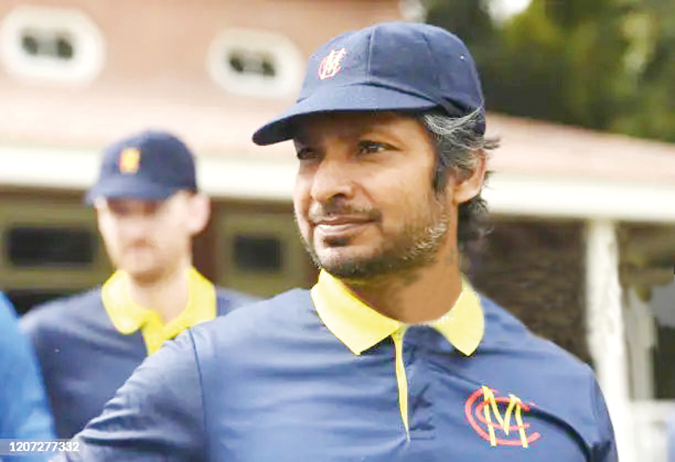
by Rex Clementine
We tend to place the blame on the doorstep of the administration, selectors and coaches for the setbacks our cricket has suffered in recent times. Our chances of making it to the semi-finals of the sport’s showpiece event are fading away fast. True, the administration needs to accept part of the blame. But, what about the players themselves? They too are responsible for our downfall.
A decade and half ago, when we literally reached the finals of every ICC event, the administration was probably worse than this. But thankfully we had players like Kumar Sangakkara, who always punched above their weight. Sanga’s extraordinary success as a batsman and captain was due to the fact that he worked extremely hard and left no stone unturned.
In mid 1990s, in school cricket the name of Kumar Sangakkara was unheard of. It was his contemporaries that everyone was talking of so highly such as Mahela Jayawardene from Nalanda, Avishka Gunawardene and Thilan Samaraweera from Ananda and Upekha Fernando from S. Thomas’.
Yet, Sanga not only outperformed all of them but ended up as Sri Lanka’s highest run getter in Test and ODI cricket. How was that possible?
We adore Roy Dias’ batting, but we do not give enough credit to what he has achieved as a coach. One day he was working with the Sri Lanka under-19 team at NCC and spotted a left-handed batsman playing some drives in the nets. Roy was quick to spot the class in those drives and realized it was Sanga who had turned up on his own for the nets.
There was no Paul Farbrace or Trevor Bayliss to do the throw downs. No other coach from SLC had been asked to come to NCC either. Sanga’s driver was doing the throw-downs and our man kept going until the point the driver’s arm started paining and he said enough. That was Sanga. Steve Waugh may have written the book titled ‘Out of my comfort zone’ but the guy who really went out of his comfort zone in search of excellence was Sanga.
Let’s not miss the point here. What amazed Roy Dias was not a Sri Lankan cricketer getting his driver to do the throw-downs. What impressed him was that Sanga had arrived in Colombo only that morning having finished a Test match in Bangladesh where he had scored a triple hundred in the first innings and a hundred in the second innings. Roy told the under-19 kids to make Sanga their role model. There was Charith Asalanka, Pathum Nissanka, Wanindu Hasaranga, Asitha Fernando and many others in that under-19 side and they were in awe of the great man.
Sanga’s insatiable appetite for excellence stood the national cricket team in good stead.
First innings failure for Sanga in a Test match invariably meant more work for the coaching staff as he would spend hours trying to figure out what error he had made to be dismissed and how he could avoid a repeat.
Former opening batsman Brendon Kuruppu doesn’t get the credit that he deserves for identifying rare talents. It was he who wanted Sanga to be fast tracked into the senior side. Sidath Wettmiuny, the Chairman of Selectors, agreed to give him a go and Sanga never looked back.
Sanga was indeed a sloppy keeper when he came into the side. Whether it is legend Ian Healey or contemporary Prasanna Jayawardene, Sanga was quick to chat to them on keeping and by the time he retired, his keeping was at a different level.
But it was as a batsman that he set the benchmark. He wasn’t merely pleased with the drives and pulls and cuts, but was always exploring and having spent many hours with Graham Ford, he executed the paddle sweep and ramp shot too in white ball cricket to everyone’s surprise towards the tail-end of his career.
Sanga’s success as a batsman was not due to raw talent, mental toughness, luck or anything else. It was pure hard work and hours of training. As captain, he would smartly leave out the ones who were seeking easy way outs, especially if they were younger ones. His captaincy for the press was a nightmare for he never turned up on time for media briefings. However, none of us were complaining as he was busy fine tuning his skills going beyond the training schedules. It was a maniac schedule indeed. Everyone is in awe of Virat Kohli’s training methods. Sanga’s were equally insane, but very effective and brought out the best of him.
We have been extremely fortunate to see two of the finest batsmen produced by our nation. Aravinda de Silva of course was pure talent. Kumar Sangakkara was the complete opposite. His mantra for success was work, work and more work.
Arjuna Ranatunga often says that we will not see another player like Aravinda for the next 50 years.
But you tend to think that you don’t have to wait for 50 years to see another Sanga because with a work ethic like his anybody can get there.
Sadeera Samarawickrama has got that work ethic of Sanga. But he’s a bit too late at the age of 28. Pity that we didn’t have selectors like Guy de Alwis, Michael Tissera and Ashantha de Mel, who are able to read what a player can offer by simply looking at the way he trains.The current selectors have had a three year stint. It’s been a disastrous one and they need to pack their bags as soon as the World Cup is over.









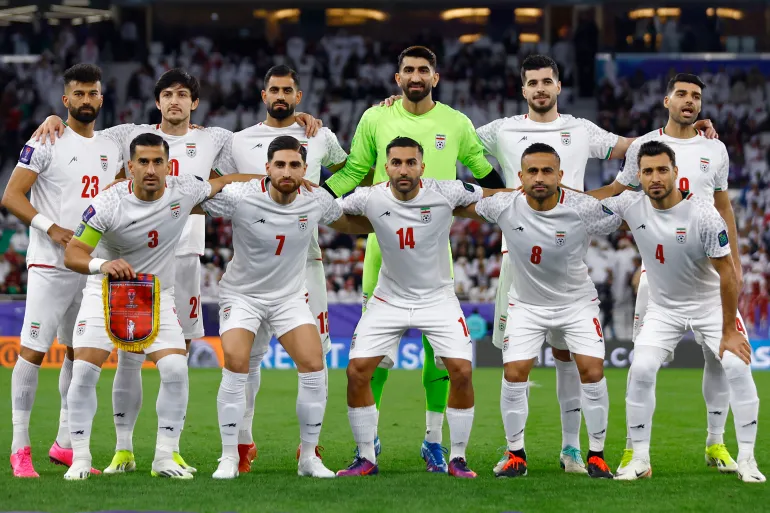
Iran says that the country’s institutions are fully prepared for its national football team’s participation in the 2026 FIFA World Cup in the United States, Canada and Mexico.
In a statement made to state broadcaster IRIB, government spokesperson Fatemeh Mohajerani said on Wednesday that the Ministry of Youth and Sports ensured all necessary arrangements for the team’s effective participation in the tournament.
She also said the preparations were made under the directive of the sport minister, with a focus on providing the required facilities for a successful performance.
FIFA President Gianni Infantino said on April 16 that Iran is expected to participate in the upcoming World Cup, taking place from June 11 to July 19, noting that the team has qualified and expressed its willingness to compete despite the ongoing US-Israeli war on Iran.
“But Iran has to come, they represent their people, they have qualified, the players want to play,” he said of the Iranian team’s upcoming matches scheduled in the United States in June.
“Sports should be outside of politics,” Infantino said.
[Aljazeera]
The Olympic cricket stadium for LA 2028 could host Indian Premier League teams in the future as part of its global expansion plans, says Kolkata Knight Riders chief executive Venky Mysore.
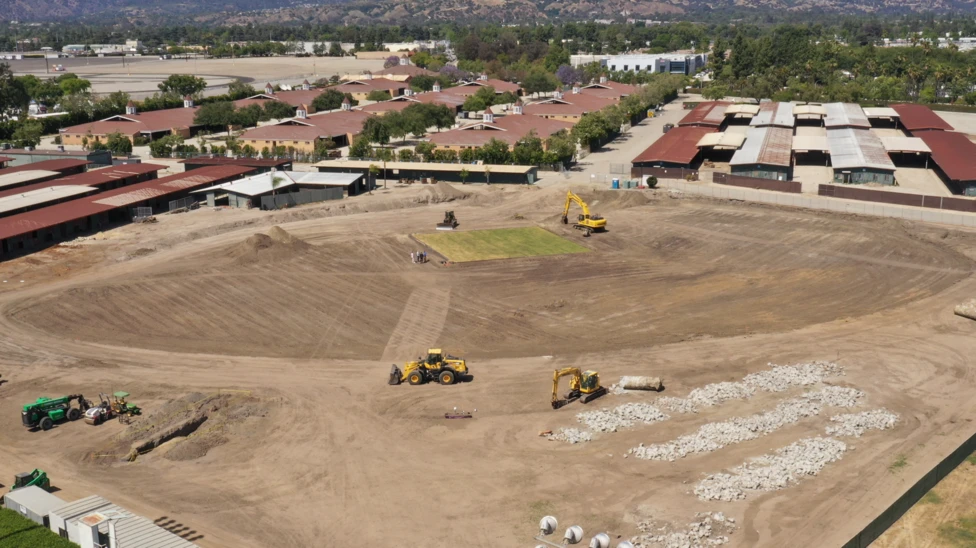
Construction has now started on the site at the Fairgrounds, officially known as Fairplex, in the southern Californian city of Pomona in readiness for cricket’s return to the Games.
The stadium will become the home to KKR’s US franchise, Los Angeles Knight Riders and will host Major League Cricket (MLC) matches this July.
It will be a modular venue built in three phases with capacity for 5,000 fans this year, rising to 8,500 in 2027 and then up to 15,000 for the six-team T20 tournament for LA 2028.
Mysore also hopes the ground could eventually stage IPL exhibition fixtures as the competition looks to expand into the United States.
“Wouldn’t that be wonderful?” he told BBC Sport.
“The challenge is always player availability. Once the IPL season is over, everyone’s calendars are packed and they’re running in different directions.
“But the BCCI has talked about a couple of teams going out and playing exhibition games to grow cricket… so that’s always on the agenda.”
The USA is widely regarded as the world’s largest sports market and seen as a key growth area for cricket.
Mysore said there had been “concrete proposals” from both the US and Canada to host IPL teams in the past, although neither have come to fruition.
“This is my 16th season with the IPL and we’ve tried every year, but somehow it hasn’t happened,” he explained.
“There’s a real opportunity to piggyback on what’s happening with MLC to grow the market further.
“When viewership goes up, it has a positive effect on things like media rights. It makes a lot of sense. But first things first – we have to deliver what we’ve started here.”
[BBC]

UAE captain Muhammad Waseem has been fined 15% of his match fee and handed one demerit point for saying the umpiring was biased during the second T20I against Nepal in Kirtipur.
Waseem himself was given out lbw first ball of the match and immediately expressed his displeasure with the decision, indicating the ball was swinging down the leg side. He made the said statement at the presentation ceremony after UAE lost by eight wickets.
It was his first offence in a 24-month period. He was found guilty of a Level 1 breach pertaining to Article 2.7 of the ICC Code of Conduct. Level 1 breaches carry a minimum penalty of an official reprimand, a maximum penalty of 50% of a player’s match fee, and one or two demerit points.
On-field umpires Buddhi Pradhan and Vinay Kumar, third umpire Durga Subedi, and fourth umpire Sanjay Sigdel levelled the charge against the UAE skipper.
Waseem admitted the offence and accepted the sanction proposed by match referee Wendell Labrooy, so there was no need for a formal hearing.
[Cricinfo]

Iran says ‘fully prepared’ for football team’s World Cup participation

LA 2028 Olympic cricket stadium in IPL proposal

Oil rises above $106 per barrel as US, Iran deadlocked in Strait of Hormuz

UAE captain Waseem fined and handed demerit point for criticising umpiring

Shanto century, Mustafizur five-for seals series win for Bangladesh

Showers above 75 mm are likely at some places in the Western, Sabaragamuwa, Central, North-western and Southern provinces

‘Dates have the highest sugar content to fight Coronavirus’

Sunday Island 27 December – Headlines

#SundayIsland 17th December – Headlines

Sunday Island – 28th March

Sunday Island Headlines – 21 March

Sunday Island – 21st February – Headlines
-

 News4 days ago
Rs 13 bn NDB fraud: Int’l forensic audit ordered
-

 Business7 days ago
Harnessing nature’s wisdom: Experts highlight “Resist–Align” path to resilience
-

 Opinion5 days ago
Shutting roof top solar panels – a crime
-

 News7 days ago
Gratiaen Trust announces longlist for the 33rd Annual Gratiaen Prize
-

 News6 days ago
From Nuwara Eliya to Dubai: Isha Holdings markets Agri products abroad
-

 News2 days ago
Lanka faces crisis of conscience over fate of animals: Call for compassion, law reform, and ethical responsibility
-

 News5 days ago
Church calls for Deputy Defence Minister’s removal, establishment of Independent Prosecutor’s Office
-
 News7 days ago
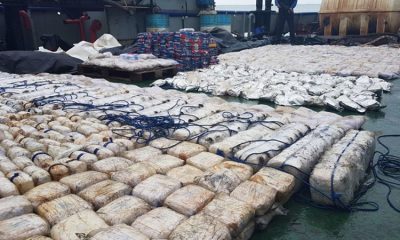
Heroin haul transported on 50-million-rupee contract