
Latest News
Shami’s five-fer after Mitchell ton keeps New Zealand to 273


Daryl Mitchell’s career-best 130 and a 159-run third wicket stand with Rachin Ravindra (75) saw New Zealand post 273 in their World Cup 2023 encounter against India in Dharamsala. Helping New Zealand rebuild from a precarious 19/2, Mitchell and Ravindra set a solid platform for the late surge but the hosts pulled things back remarkly at the backend with regular wickets, inspired by Mohammed Shami’s 5-54.
Early strikes from Mohammed Siraj and Shami in an excellent PowerPlay upfront had New Zealand in early trouble after being put in to bat. Devon Conway fell without opening his account, trying to flick a full ball on the pads that was intercepted by a diving Shreyas Iyer at square leg. Shami then struck off his very first ball in the tournament, getting Will Young to drag an inside edge onto his stumps. New Zealand had only 34/2 from the Powerplay – third lowest score in that phase this World Cup – helped only by a generous offering of wides in the 10th over from Siraj.
Mitchell then joined hands with Ravindra to together bail New Zealand out with their big partnership. Ravindra had a fair bit of brush with DRS and lifelines, and made India pay. He hadn’t even opened his account when, against Jasprit Bumrah’s advice, India burnt a review early on a LBW call that was turned down on-field. He was given out caught behind on six off Shami but got out of it using a review himself. He was later reprieved in the same over when his namesake dropped a knee-high regulation catch at backward point. Post a 56-ball half-century, he was adjudged LBW but had it overturned when the replays confirmed the ball was pitching outside leg.
The spinners barely got any turn – Jadeja bowled his 10 on the trot without any break while Mitchell laid into Kuldeep Yadav early, not allowing him to settle down as he deposited two in his succeeding overs straight down the ground. He was the face of New Zealand’s counterattack in the middle-overs, raising his second half-century of the World Cup in 60 balls and going on to convert it into a run-a-ball 100 by the 41st over. He also had his fair share of luck with KL Rahul spilling a tough chance behind on 59 and then Bumrah dropping another sitter when he was on 69.
Shami eventually came to India’s rescue as he broke the stubborn stand, triggering the collapse around a well-set Mitchell. After three spilled chances, India finally managed to cling on to one when Ravindra lofted Shami straight into the waiting hands of long-on, bringing curtains on the 159 partnership. Kuldeep returned with an improved show and earned his reward as he trapped Tom Latham LBW. The New Zealand captain was however coerced into burning a review by Mitchell.
This was followed by a 40-ball phase where the hosts didn’t concede a single boundary to the New Zealand power-hitters. Glenn Phillips duly broke the shackles with a six behind square to welcome Siraj back into the attack at death. His cameo was short-lived though, and ended on 23 with a top-edge off an attempted slog that Rohit Sharma pouched safely amidst three converging fielders.
Bumrah opened his account in his penultimate over of the day, courtesy a well-judged catch from Kohli as he charged in and took a low grab to send Mark Chapman packing on just 6. Shami added three more scalps to his tally at death, perfectly executing a couple of yorkers to knock down the off-stump of Mitchell Santner and the leg-stump of Matt Henry off successive balls in the 48th over. Mitchell dented his figures a tad by launching another one onto the sight-screen in the final over but holed out one ball later, giving Shami a five-wicket haul in his first game of this World Cup.
Brief scores:
New Zealand 273 all out in 50 overs (Daryl Mitchell 130, Rachin Ravindra 75; Mohammed Shami 5-54, Kuldeep Yadav 2-73) vs India
(Cricbuzz)










The Cabinet of Ministers granted approval to the proposal submitted by the President to make a donation of United States Dollars One million as humanitarian and economic relief to the government of Nepal
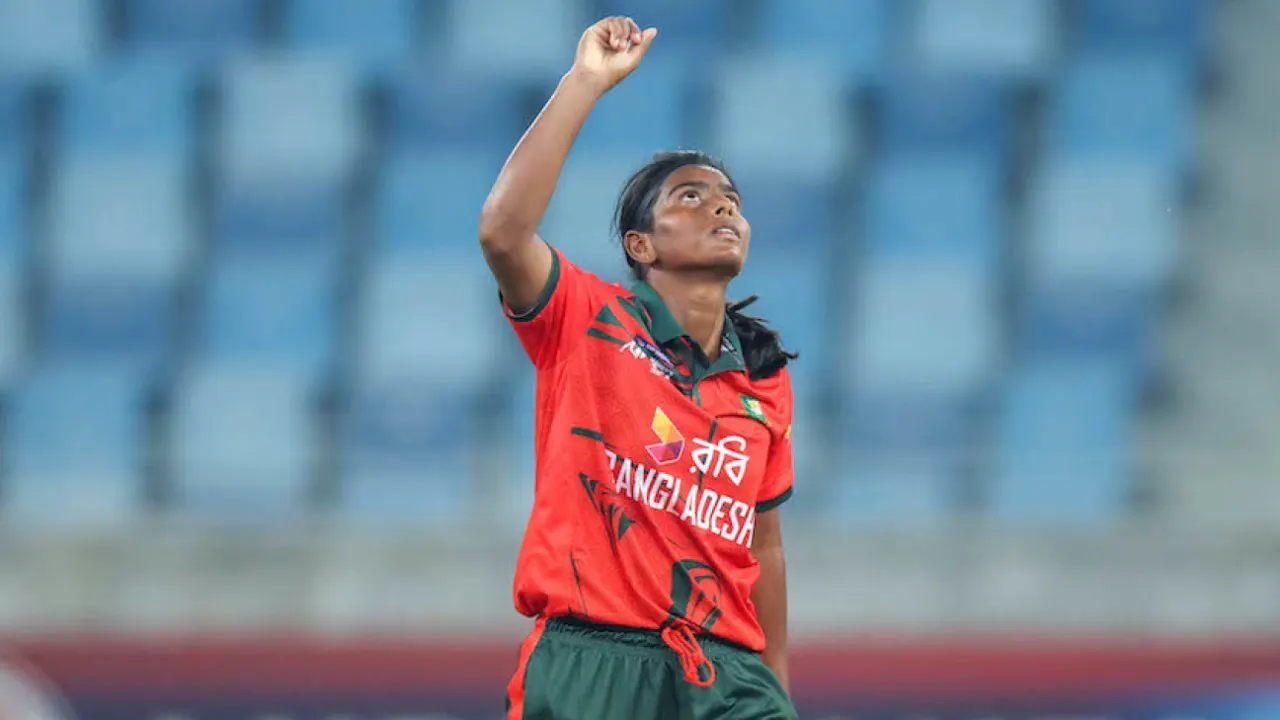
A superb bowling performance led by Marufa Akter and the spin attack helped Bangladesh overcome Indonesia in their Asia Cup opener in Dubai.
Indonesia, on their Asia Cup debut, put up a spirited performance especially with the ball to restrict Bangladesh to 129 for 8. Sobhana Mostary , playing her 100th international match, top-scored with 40, while Shorna Akter injected late momentum with 31 off 18 balls. Indonesia in return were bowled out for 58, with left-arm spinner Nahida Akter finishing with figures of 3 for 15.
Indonesia make early inroads
Indonesia’s Ni Made Putri Suwandewi found swing almost immediately but Bangladesh’s openers handled the movement well to make a positive start, scoring four boundaries in the first two overs. But that did not last long as Suwandewi struck in her second over, having Juairiya Ferdous mistime an inswinging delivery towards cover point, where Ni Ariani came forward and held a sharp low catch to give Indonesia their first wicket in Asia Cup.
Mostary and Dilara Akter then found run-scoring increasingly difficult. Bangladesh managed only one boundary between the third over and the end of the powerplay, reaching 30 for 1.
Indonesia’s spinners maintained the pressure thereafter, conceding only a few boundaries and repeatedly forcing Bangladesh’s batters to manufacture their shots. The partnership between Mostary andDilara struggled to gather momentum and was eventually broken when Ariani had Dilara caught for 27 off 31 balls. Bangladesh reached 58 for 2 at the halfway stage.
Shorna shines, Indonesia sparkle
Bangladesh’s first six came only in the 13th over thanks to Mostary. But her attempt to accelerate was checked soon after as 16-year old legspinner Sofia Velic, on her international debut, dismissed captain Nigar Sultana. Mostary was then left with the responsibility of guiding Bangladesh towards a competitive total, but Indonesia continued to restrict the scoring. Ni Luh Dewi struck twice in the 17th over to remove Mostary for 40 and Ritu Moni, leaving Bangladesh in further trouble.
Shorna briefly changed the momentum, hitting a six and a four, but Indonesia’s bowling ensured Bangladesh could not fully capitalise. Indonesia too dropped as many as three catches but the reprieves did not make much of an impact.
Ariani produced a dramatic finish to the innings, picking up two wickets as Bangladesh slipped from 105 for 3 to 129 for 8. They lost five wickets for 21 runs in just 17 balls, with Shorna, who had looked Bangladesh’s most fluent batter late in the innings, stranded at the non-striker’s end for much of the final over.
Bangladesh bowlers rule
Marufa began with a probing over, getting the ball to swing both ways and keeping Indonesia’s openers cautious. She broke through in her second over, having Rahmawati Pangestuti edge a full delivery to mid-on. she struck again in her next over, trapping Maria Corazon lbw with a full ball that swung sharply into her pads and beat her attempted flick. Indonesia had lost both openers early but they had made a slightly better start than Bangladesh managed during their own powerplay.
But the game shifted after the powerplay as Bangladesh’s spinners tightened the screws. Senior legspinner Fahima Khatun ended Ni Putu Ayu Nanda Sakarini’s difficult stay at the crease in the ninth over, trapping the Indonesia captain in front for just 2 off 15 balls. Sanjida Akter Meghla followed up with another wicket in the next over, trapping Dewi lbw after she missed a length ball that came into her pads.
Nahida struck in the 12th over but it was in the 14th over that Indonesia’s innings completely fell apart. Nahida first dismissed Suwandewi for 3 after a mistimed pull. Sofia Velic was then run out for 1 following a quick throw from deep fine leg, before Nahida finished the over by bowling Ariani for 2. Indonesia had slipped to eight down, and two more run-outs completed their innings as Bangladesh sealed a convincing 71-run victory.
Scores:
Bangladesh Women 129 for 8 in 20 overs (Dilara Akter 27, Sobhana Mostary 40, Nigar Sultana 10, Shorna Akter 31*; Ni Made Putri Suwandevi 1-13, Ni Ariani 3-28, Ni Luh Dewi 2-21) beat Indonesia Women 58 in 17.3 overs (Maria Corazon 12; Marufa Akter 2-06, Sanjida Akter Meghia 1-11, Nahida nahida 3-15, Fahima Khatun 1-09) by 71 runs
[Cricinfo]
Latest News
Sun directly overhead Kalpitiya, Talawa, Sinharagama, Galkadawala, Nachchaduwa, Padikaramaduwa, Gomarankalla and Verugal about 12.10 noon today (01)

The sun is going to be directly over the latitudes of Sri Lanka from 28th of August to 07th of September due to its apparent southward relative motion.
The nearest places of Sri Lanka over which the sun is overhead today (01) are Kalpitiya, Talawa, Sinharagama, Galkadawala,
Nachchaduwa, Padikaramaduwa, Gomarankalla and Verugal about 12.10 noon.

Amendment of the Quarantine and Prevention of Diseases Ordinance No. 3 of 1897
Cabinet approves donation of USD One Million to the Government of Nepal

Nahida, Marufa help Bangladesh brush aside Indonesia

Showers will occur in the Western, Sabaragamuwa, Southern and Uva provinces and in Kandy and Nuwara-Eliya districts

Sun directly overhead Kalpitiya, Talawa, Sinharagama, Galkadawala, Nachchaduwa, Padikaramaduwa, Gomarankalla and Verugal about 12.10 noon today (01)

SJB asks what Speaker intended to do about allegations against CJ

‘Dates have the highest sugar content to fight Coronavirus’

Sunday Island 27 December – Headlines

#SundayIsland 17th December – Headlines

Sunday Island – 28th March

Sunday Island Headlines – 21 March

Sunday Island – 21st February – Headlines
-

 News4 days ago
Eight politicians in drug kingpin probe
-

 Features2 days ago
“Wrap Me Up in My Blazer”— A Gentlemanly Bradby Reminiscence
-

 Business4 days ago
Sri Lanka opens up: A new season of direct connectivity
-

 Features4 days ago
Redefining ageing in Sri Lanka
-
 Features6 days ago
Insights from Chieftains of Uva: Genealogy of two Kandyan Families – Part II
-

 Latest News5 days ago
Nepal-Tibet floods: What happened, what caused them and who is missing?
-

 Editorial6 days ago
Warning of power cuts: El Niño and corruption
-

 Features6 days ago
Export diversification: Missing the wood for the trees – Part I