
Business
Learning for Sri Lanka on SOE Reforms – Malaysia’s Khazanah Nasional Berhad

Introduction
A super-holding company for managing State-Owned Enterprises (SOEs) has been identified as a globally successful model for SOE management. This model allows the government to adopt a more arms-length approach to SOEs’ operational decision-making, relieving it of the direct responsibility of overseeing all SOEs dispersed across various industries, and redirect its budget and energy elsewhere. The merits of this model have enabled countries such as Malaysia and Singapore, which employ similar holding company structures, to ensure impressive performances of their SOEs.
This article is the second of a three-part series where part one and two provide an in depth analysis of the case of Singapore’s and Malaysia’s SOE holding company models (Singapore’s Temasek Holdings and Malaysia’s Khazanah Nasional), and their role in enabling economic growth and development for the respective countries. Part three will provide learnings for Sri Lanka, which can be adopted for the country’s SOE reform process. This series of articles is a joint effort by the Ceylon Chamber of Commerce (CCC) and the Colombo Stock Exchange (CSE).
Part Two: Malaysia’s Khazanah Nasional Berhad
Overview
Khazanah is a Malay word that originated from an Arabic word, which means ‘treasure’ so, Khazanah Nasional translates to ‘national treasure’. Khazanah was incorporated under the Companies Act in Malaysia in 1993 as a public limited company, that manages state assets in selected sectors on behalf of the Malaysian government. It also takes investment decisions on behalf of the government, including listing, divestment, and acquisition of shares.To balance the dual objectives required by the Malaysian economy, two separate funds have been established, namely; Commercial Fund (CF) and the Strategic Fund (SF) with distinct objectives, policies and strategies.The SF undertakes investments to deliver impactful and measurable economic and societal returns for Malaysia and its people, while CF focuses on investing responsibly and commercially to preserve and grow the long-term value of assets.
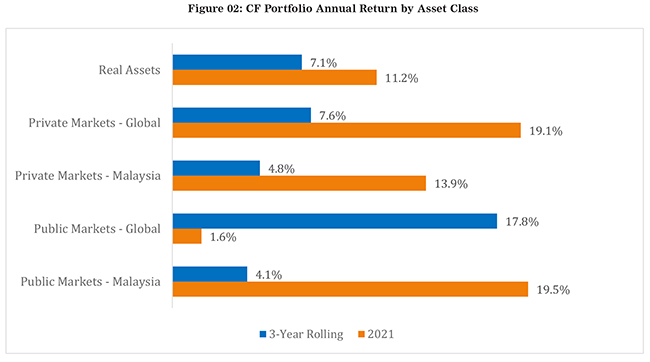
The CF generated a three-year rolling Time-Weighted Rate of Return (TWRR) of 7.0% against the targeted return of the Malaysian Consumer Price Index (CPI) at 3% on a five-year rolling basis. In 2021, the TWRR stood at a significant 19%. This was led by asset classes such as global private markets and public markets in Malaysia, which outperformed in 2021 when compared to the 3 year rolling of 7.6% and 4.1% respectively of the same asset classes (refer figure 02).
Source: Khazanah Nasional Berhad The two funds were valued RM 106 billion (around USD 25 billion) and RM 28 billion (around USD 7 billion) for CF and SF, respectively at the end of 2021. A majority of the investments (63.5%) were made within Malaysia, with the rest in China (14.8%), Asia – excluding China (12%), and around 10% in Europe, the Middle East, Africa (EMEA) and North America by the end of 2021.Consumer Goods, Energy, Financials, Healthcare, Industrials, Information Technology, Media, Real Estate, Telecommunications and Utilities are among the sectors Khazanah has invested in.
Why was Khazanah Successful?
Post the Asian Financial Crisis, most SOEs in Malaysia were not performing well. To address this Khazanah was revamped in 2004 to play an active role from the previous passive role to enable efficiency and to drive growth of the SOEs. This was coupled with major corporate restructuring and institutional reforms through the GLC Transformation Program (2005-2015) for which Khazanah functioned as the secretariat.
The revamp shifted Khazanah’s focus from a Sovereign Wealth Fund (SWF) to a Sovereign Development Fund (SDF). The salient feature of a SDF is that it not only delivers high financial performance but also fosters development. Today, Khazanah comprises two funds (CF and SF) which aim to achieve the dual objectives and its total Net Asset Value (NAV) has grown from RM79 billion to RM86 billion in 2021. The 10 key factors that were critical to its success are outlined below:
1. Clear Objectives
Khazanah focused on three clear objectives to drive its financial, economic and societal returns as given below. Performance – focusing on corporate restructuring to improve efficiency, productivity and value creation. This was achieved by issuing guidelines on KPIs and anchoring KPI’s to performance. Relevant KPIs were developed together with appropriate benchmarks and targets, and rewards were linked to performance coupled with time based contracts such as 3-year contracts. This was also enabled through reconstituting the senior management and implementing board composition reforms. National Development – focusing on national development goals such as creating jobs and economic multipliers. Supporting government policy formation and adopting a long-term view in catalysing social progress in Malaysia to deliver high social impact in communities.
Good Governance –took a holistic and multipronged approach to measure how public institutions conduct and manage public resources.
2. National Support
A degree of national consensus is vital with all relevant stakeholder groups involved and powered by political will. The reform process was carried out over 10 years from 2005 onwards where the reform of Khazanah started under the 4th Prime Minister of Malaysia, the GLC Transformation (GLCT) Programme under the 5th Prime Minister and continued under the 6th Prime Minister.
3. Communications, transparency, public accountability
Transparency and consistent periodic reporting are vital to the success of the programme. KPIs were announced publicly with regular public updates, with internal KPIs being identical to external KPIs. This was followed by consistent and relevant stakeholder engagement across multiple categories.
4. Active, competent, and empowered Holding Company
Khazanah was revamped as an active and strategic SDF (Sovereign Development Fund). Khazanah was also tasked to come up with an overarching programme for other funds from 2005 to 2015. This programme was known as the GLC Transformation Program (GLCT) with Khazanah acting as its Secretariat.
5. A robust Programme Management approach over 10 to 15 years
The GLCT Programme was carried out for 10 years with a careful designed implementation structure. It consisted of 22,981 man days of programme management and 29 meetings were chaired by the Prime Minister to review progress over the 10-year period. It is imperative to stay the course since the prize of seeing it through and the price of not doing so is large. However, it must be ensured that it’s done correctly.
6. Talent and Leadership
Right leadership is critical. Therefore, the Chief Executive Officer. the Board and the Senior Management should be selected under specified criteria to appoint individuals based on their capacity and knowledge to deliver in their role. This should also be followed by a robust selection process.
7. Transformation Acupuncture
Targeted 10 critical areas for improvement in corporate restructuring in key companies. The critical areas included Board governance, CSR, procurement, leadership development, performance based compensation, regulation, operational improvement and finance.
8. Accountability
This included headline KPIs, performance-based compensation, senior management limited to 3-year performance based contracts and a robust appointment process, emulating a carrot and stick approach.
9. Getting key sectors right in terms of the policy mix
It is important to identify the critical sectors such as electricity, telecom, banks, aviation, infrastructure, etc. that play a vital role in the economy. Planning the sector strategy, regulation, pricing, social policy, etc. for the selected sectors instead of reforming all the sectors will also divert resources to effective and efficient use.
10. Using the levers of ownership, financing and controls
Sorting between principally commercial and principally social enterprises is also pertinent. Understanding which particular category enterprises come under will provide clarity on how to run these enterprises such as whether to list or delist, to conduct partial or full asset sales and to understand the required capital structure controls, debt discipline, and external audits.
How has it contributed to Development Goals?
Khazanah’s principal funding is from shareholder equity. It utilises debt financing and proceeds from divestment activities to fund its investment activities. Khazanah’s ultimate holding body and hence the sole shareholder, is the Ministry of Finance (MoF).In terms of contribution, between 2004 and 2021, Khazanah paid RM15.6 billion in dividends to the government (or MoF) averaging RM 1.3 billion a year over the past five years. Dividends of RM2 billion each had been declared in 2020 and 2021.
Investment income contributed to 16.3% of total government revenue in 2021, of which Khazanah contributed to about 6% of investment income through its dividends. Though the contribution to government revenue through dividends remains marginal when compared to other tax revenue streams, Khazanah continued to deliver societal value and impact through various other initiatives.
During the pandemic, RM20 million was contributed by Khazanah as COVID-19 relief to the government. Therefore, Khazanah acts as a buffer against future pandemics and can assist the government in its relief measures.One of Khazanah’s foundations – Yayasan Hasanah – directly and indirectly assisted 1.5 million people through Covid-19 relief efforts and various other programmes, with an allocation of RM554 million in 2021.The Khazanah Research Institute was set up to undertake analyses and research on the pressing issues of the nation, and based on the research, provide policy recommendations to improve the well-being of Malaysians. A total of 30 publications were released in 2021.
Khazanah also works on development projects for the improvement of the Malaysian economy. This includes Dana Impak, which is a newly created project with an allocation of RM6 billion over 5 years. This is carried out to increase Malaysia’s economic competitiveness and build national resilience. This focuses on 6 areas namely; digital society and technology hub, quality health and education for all, decent work and social mobility, food and energy security, building climate resilience, and competing in global markets.The full brief can be accessed at: Holding Company for SOEs: Learnings for Sri Lanka
This article was developed as part of the Strategic Insight Series of the Economic Intelligence Unit (EIU) of the Ceylon Chamber of Commerce (CCC) in collaboration with the Colombo Stock Exchange (CSE). The Strategic Insight Series are a series of briefs that focuses on key contemporary topics that matter to the private sector.


The Asian Development Bank (ADB) has approved a $100 million results-based loan to help Sri Lanka transform its technical and vocational education and training (TVET) system, equip more young people with industry-relevant skills, and strengthen the country’s competitiveness and inclusive growth.
The Skills Development System Transformation Program will support the Government of Sri Lanka’s efforts in improving the quality and relevance of skills training, strengthening links between training providers and industries, and expanding employment opportunities for youth. The program will increase women’s employment opportunities in nontraditional jobs in fields including automotive technology, engineering, information and communications technology, construction, and renewable energy.
“A skilled workforce is essential to Sri Lanka’s long-term economic transformation and competitiveness,” said ADB Country Director for Sri Lanka Shannon Cowlin. “This program will help create stronger pathways from education to employment by making training more responsive to industry needs, expanding opportunities for young people and women, and ensuring that graduates have the skills required by a modern and evolving economy.”
Though Sri Lanka’s economy is recovering, it faces skills shortages in priority sectors, high youth unemployment, and low female labor force participation. Many employers report difficulty finding workers with the skills needed in a changing economy.
Aligned with the Government of Sri Lanka’s Technical and Vocational Education and Training Sector Strategic Framework 2026–2035, the nationwide program will be implemented from 2027 to 2031 and is expected to directly benefit more than 100,000 young people through improved access to quality, employment-oriented training.
By Ifham Nizam
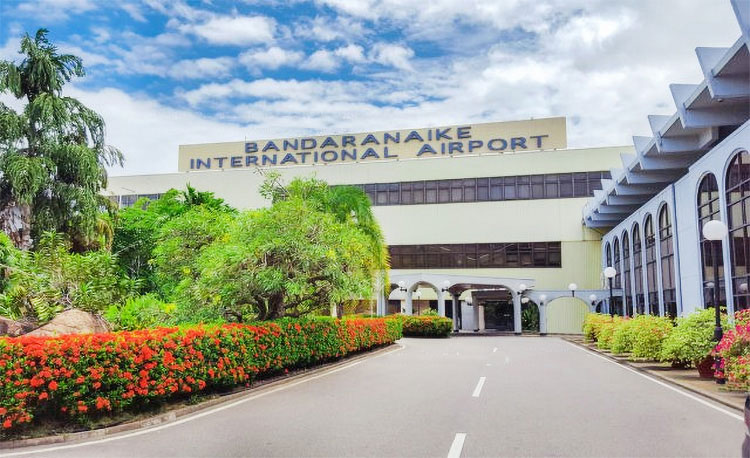
The government has cleared a USD 40.84 million and Rs. 8,548.75 million contract to build a dedicated aviation fuel pipeline from Muthurajawela to Bandaranaike International Airport (BIA), alongside a massive new fuel storage facility with a capacity of 92,000 cubic metres.
Energy Minister Anura Karunatilaka said the project represented a major investment in strengthening the infrastructure underpinning Sri Lanka’s aviation fuel supply and ensuring more reliable fuel availability at the country’s main international airport.
‘This project will provide the infrastructure required to strengthen the reliability and continuity of aviation fuel supplies to Bandaranaike International Airport, Karunatilaka said.
The contract has been awarded to China Petroleum Pipeline Engineering Company Limited, following an international competitive procurement process in which three bids were received.
The project will see a new aviation fuel storage tank complex constructed at Muthurajawela, together with the associated infrastructure required for handling and transferring aviation fuel.

By Hiran H Senewiratne
Trading activity on the Colombo Stock Exchange (CSE) gathered pace yesterday as global fuel prices began to show signs of easing, according to market analysts.In this context, both indices moved upwards. All Share Price Index up by 67.97 points while S and P SL20 up by 8.30 points.
Turnover stood at Rs 1.4 billion with seven crossings. Those crossings were reported in Sampath Bank 1.7 million shares crossed to the tune of Rs 238 million and its share price traded at Rs 140, Access Engineering two million shares crossed to the tune of Rs 159 million and its share price traded at Rs 79.50, LOLC one million shares crossed to the tune of Rs 129 million and its share price traded at Rs 129, HNB 100,000 shares crossed to the tune of Rs 38.4 million and its share price traded at Rs 384, JKH 1.9 million shares crossed to the tune of Rs 35 million and its share price traded at Rs 18.60, Hayleys 100,000 shares crossed to the tune of Rs 22.50 million and its share price traded at Rs 225 and Richard Pieris 847,000 shares crossed to the tune of Rs 22 million and its share price traded at Rs 25.50.
In the retail market top seven companies that have mainly contributed to the turnover were Sampath Bank Rs 114 million (813,000 shares traded), JKH Rs 100 million (5.3 million shares traded) LB Finance Rs 49 million (325,000 shares traded), HNB Finance Rs 30 million (27 million shares traded), HNB Rs 27 million (70000 shares traded), NTB Rs 25 million (82000 shares traded ) and Lanka IOC Rs 21 million (666,000 shares traded). During the day 65 million shares volumes changed hands in 10433 transactions.
The Banking and manufacturing sector counters performed well. In the banking sector Sampath Bank let the market while manufacturing sector especially JKH also significantly performed well. With the fuel revision Land IOC also a significant stock at the floor.
Meanwhile, First Capital Treasuries said that Ramesh Schaffter resigned as a Non-Independent Non-Executive Director with effect from October 1, to facilitate the restructuring of the company’s board.
Yesterday the Central Bank announced the US Dollar rate as against rupee. The rupee was quoted flat at Rs 330.65/80 to the US dollar in the spot market , while bond yields dropped, dealers said.

Bronze at stake as Bangladesh, Sri Lanka look to bring cheer to Asian Games contingents

Wanderers to host 2027 men’s ODI World Cup final as well as India vs Pakistan

Prime Minister joins Gandhi Jayanti Commemoration

Showers or thundershowers will occur in most parts of the island after 1.00 p.m.

Unions resist tripartite EPF management plan

Two arrest warrants issued for Gnanasara thera

‘Dates have the highest sugar content to fight Coronavirus’

Sunday Island 27 December – Headlines

#SundayIsland 17th December – Headlines

Sunday Island – 28th March

Sunday Island Headlines – 21 March

Sunday Island – 21st February – Headlines
-

 Editorial6 days ago
Birth of a bad law
-

 News4 days ago
Police remove Thileepan statue in Jaffna
-

 News6 days ago
TIN mandatory for key transactions from Nov. 1
-

 Features4 days ago
The 22nd Amendment, constitutional recovery and illiberal slippage
-

 Features4 days ago
Of foreigners as CEOs of Lankan ventures
-

 News4 days ago
Sajith rejects Jt. Opp. protest sabotage claim; SJB TU chief demands remedial action
-

 Latest News2 days ago
Gold winner Tharanga gets brand-new Honda Vezel from SLAAJ
-

 Features3 days ago
Thailand’s biggest new global star …