
Latest News
Laura Wolvaardt continues prolific form as South Africa ease to seven-wicket win

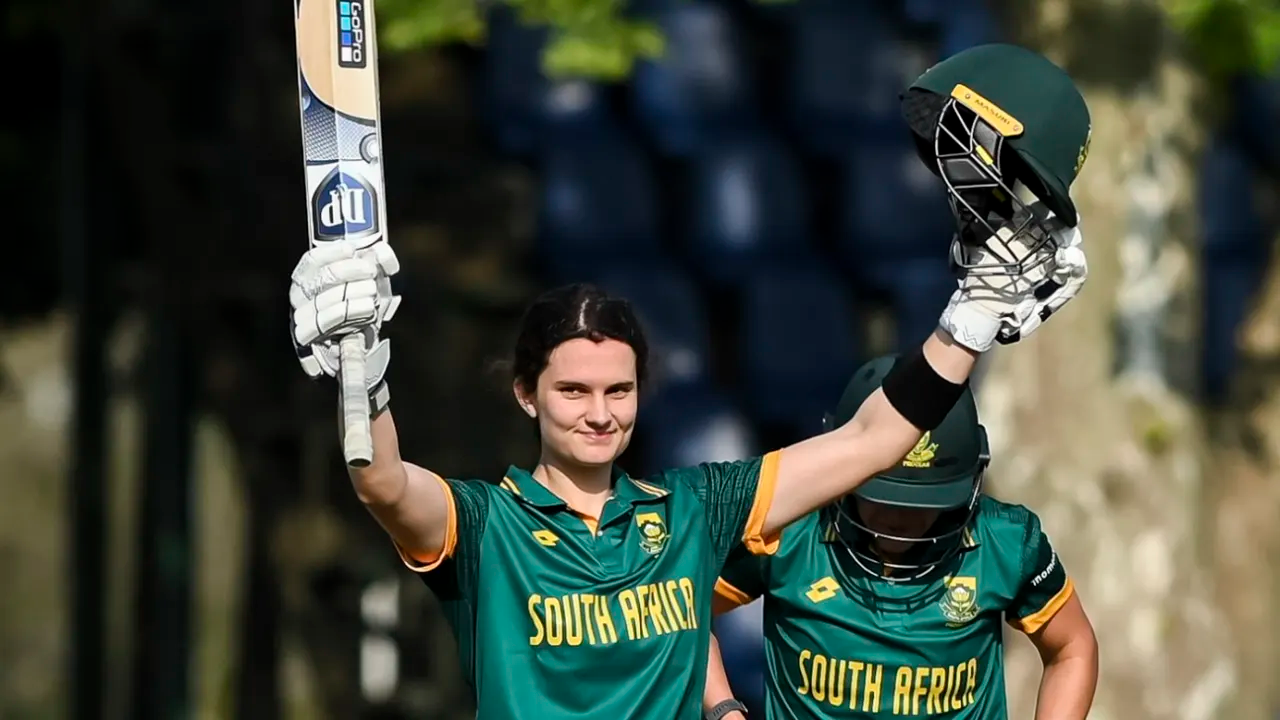
Laura Wolvaardt’s third century since taking over the captaincy, and sixth overall, led South Africa to the highest successful chase in a women’s ODI in Kimberley and an unassailable 1-0 lead in the three-match series against Sri Lanka. In the process, Wolvaardt became South Africa’s leading run-scorer in ODI cricket, in her 94th game.
Crucially, South Africa have secured two more points on the women’s championship to solidify their spot in second place. Sri Lanka remain outside the automatic qualification zone for the 2025 World Cup, in eighth spot.
Wolvaardt was supported by Marizanne Kapp, who brought up her third half-century in seven innings, and shared in a 143-run fourth-wicket partnership with her captain. On a pitch with low bounce at one end, both batters were strong down the ground and Sri Lanka’s attack lacked the threat to cause them any serious problems.
The tone was set in the afternoon, when South Africa’s opening bowlers gave away very little in the opening exchanges and Sri Lanka only scored 15 runs in the first overs before Ayabonga Khaka got an early reward. She removed Vishmi Gunaratne for 7 in the sixth over. Kapp kept the pressure on with an opening spell of 5-0-8-0, including 22 dot balls.
The change bowlers were unable to maintain the same stranglehold, especially against the experience of Chamari Athapaththu. She hit the first ball she faced from Eliz-Mari Marx for four and went on to score five more boundaries off her, including four successive fours in the 14th over. Athapaththu and Hasini Perera, who was dropped by Sune Luus at slip, put on 58 for the second wicket before Perera was caught by Delmi Tucker off Nadine de Klerk’s bowling.
Athapaththu went on to bring up her 16th ODI half-century off 66 balls but was also dismissed by de Klerk, with more than half the Sri Lankan innings remaining. Hansima Karunaratne and Kavisha Dilhari combined for 61 off 69 balls for the fourth wicket, and Karunaratne hit the only six of the innnings, and Sri Lanka were on track for 250-plus on 152 for 3 after 35 overs.
Wolvaardt brought Khaka back and Karunaratne was dismissed and Sri Lanka found the going tough again. Nonkululeko Mlaba took two wickets in her sixth over, and Sri Lanka lost 3 for 20 in less than four overs. A seventh-wicket partnership of 41 off 51 between Oshadi Ranasinghe and Nilakshika Silva pushed them over 200 and they were bowled out with a ball remaining for 229. That left South Africa with the task of completing the highest successful chase in Kimberley, after they claimed the previous best when they hunted down 223 against New Zealand in 2016.
Though scoring rates have increased since then, South Africa had to do it without two of the frontline batters. Opener Tazmin Brits was ruled out of the series with a meniscus tear and sprained ligament on her left knee. She will undergo surgery next week and will be in a race against time to regain fitness ahead of the T20 World Cup. And Anneke Bosch was also forced out of the encounter with a mild concussion after being hit on the head at Friday’s training.
Lara Goodall, who has not played an ODI since September was brought into the XI and looked tentative on her return. She was out lbw to a full Achini Kulasuriya ball in the seventh over. By then, Sri Lanka should have long been rid of Wolvaardt, who was dropped on 0 by Anushka Sanjeewani. The Sri Lankan wicket-keeper who went for the catch off Wolvaardt’s outside edge one-handed while driving to her right and could not hold on.
Sri Lanka’s fielding not only cost them Wolvaardt’s runs but they also allowed Luus – given a life on 11 off a top-edge and went on to score 21 – and Kapp – dropped by Athapaththu in her follow through on 25 – to get away.
Lightning strikes were visible throughout the evening and got closer to the match venue as South Africa’s innings went on. The players were taken off the field after 34.2 overs, with the score at 157 for, with South Africa 25 runs ahead of the DLS. They returned soon afterwards to complete the chase. Wolvaardt brought up her century off 133 balls in the 44th over, with South Africa needing 22 runs to win. They got there with 14 balls to spare.
Scores:
South Africa Women 233 for 3 in 47.4overs (Laura Wolvaardt 110*, Sunee Luus 21, Marizanne Kapp 80*; Achini Kulasuriya 1-35, Oshadie Ranasinghe 1-45, Inoka Ranaweera 1-41) beat Sri Lanka Women 229 in 49.5 overs (Chamari Athapaththu 51, Hansima Karunaratne 33, Kavisha Dilhari 42, Nilakshika Silva 36, Oshadie Ranasinghe 20; Nadine de Klerk 3-23, Ayabonga Khaka 3-28, Eliz-marie Marx 1-38, Masabata Klass 1-50, Nonkululeko Mlaba 2-40) by seven wickets
(Cricinfo)








United States President Donald Trump has agreed to suspend his planned bombing of Iran for two weeks, following his threat that “a whole civilization will die tonight” if Tehran did not comply with his demands.
On Tuesday evening, within hours of the planned attack, Trump took to his platform Truth Social to announce he had reversed course.
He credited Pakistan for mediating the settlement, but warned it came with conditions – namely that Iran reopen the Strait of Hormuz.
“Based on conversations with Prime Minister Shehbaz Sharif and Field Marshal Asim Munir, of Pakistan, and wherein they requested that I hold off the destructive force being sent tonight to Iran, and subject to the Islamic Republic of Iran agreeing to the COMPLETE, IMMEDIATE, and SAFE OPENING of the Strait of Hormuz, I agree to suspend the bombing and attack of Iran for a period of two weeks,” Trump wrote.
The message was posted online at 6:32pm US Eastern time (22:32 GMT), just under one and a half hours before Trump’s 8pm (00:00 GMT) deadline for the attack.
Shortly after Trump’s message, Iran’s Minister of Foreign Affairs Abbas Araghchi confirmed that a tentative agreement had been reached.
“If attacks against Iran are halted, our Powerful Armed Forces will cease their defensive operations,” Araghchi wrote.
“For a period of two weeks, safe passage through the Strait of Hormuz will be possible via coordination with Iran’s Armed Forces and with due consideration of technical limitations.”
Araghchi likewise thanked Pakistan for its last-minute appeal to suspend the US bombing campaign. Iran’s Supreme National Security Council also hinted in a separate statement that the ceasefire could be extended beyond its initial two weeks if negotiations proceed favourably.
Further talks are expected to take place in Islamabad over the coming weeks
In the lead-up to the Thursday evening announcement, there had been speculation that Trump might extend the deadline, as he has multiple times in recent weeks.
But tensions had mushroomed on Tuesday as the deadline inched closer – and after Trump himself posted a menacing message on social media that morning.
“A whole civilization will die tonight, never to be brought back again,” Trump had written. “I don’t want that to happen, but it probably will.”
He added that the evening deadline would mark “one of the most important moments in the long and complex history of the World”.
Trump had previously threatened to blow up power plants, bridges and other civilian infrastructure, actions that many legal experts said would amount to a war crime.
In his Tuesday evening message, the US president once again claimed victory over Iran and said that Tehran had delivered a feasible ceasefire proposal.
“This will be a double sided CEASEFIRE,” Trump wrote.
“The reason for doing so is that we have already met and exceeded all Military objectives, and are very far along with a definitive Agreement concerning Long term PEACE with Iran, and PEACE in the Middle East. We received a 10 point proposal from Iran, and believe it is a workable basis on which to negotiate.”
Trump explained that the next two weeks would be spent finalising the agreement with Iran. But he voiced optimism that any past disagreements had been resolved.
“Almost all of the various points of past contention have been agreed to between the United States and Iran,” Trump said.
“It is an Honor to have this Long term problem close to resolution,” he added.
Al Jazeera correspondent Osama Bin Javaid noted that Trump’s latest announcement was likely to be welcomed by US allies in the Middle East, who had been bracing for a heavy attack on Iran and the possibility of counterattacks.
“That is going to be a big sigh of relief, collectively from the region and beyond, because the alternative was so horrific,” Bin Javaid said.
“The level of anxiety around the region was extraordinary, and Donald Trump was the only person who could defuse it, because he’s the one who lit the fuse in the first place.”
Trump’s announcement was initially met with scepticism and confusion on the ground in Tehran, where some questioned how much of the conflict would be paused under the ceasefire.
“It’s not clear, at least not to me, whether he’s suspending what is already going on since the beginning of the war entirely, or he’s extending the deadline for that ultimate destruction of the power plants,” Al Jazeera correspondent Mohamed Vall said from Tehran.
The war has been raging for more than five weeks, since Israel and the US launched a joint military offensive against Iran on February 28.
Trump and Israeli Prime Minister Benjamin Netanyahu have argued that the offensive was necessary to eliminate Iran as a regional threat and prevent it from obtaining a nuclear weapon.
But legal experts have described the offensive as an unprovoked attack, in violation of international law.
Already, nearly 2,076 people have been killed in Iran since the start of the war. Another 28 people have been killed in nearby Gulf states.
The US, meanwhile, has lost 13 military members, while 26 people have been killed in Israel.
[Aljazeera]
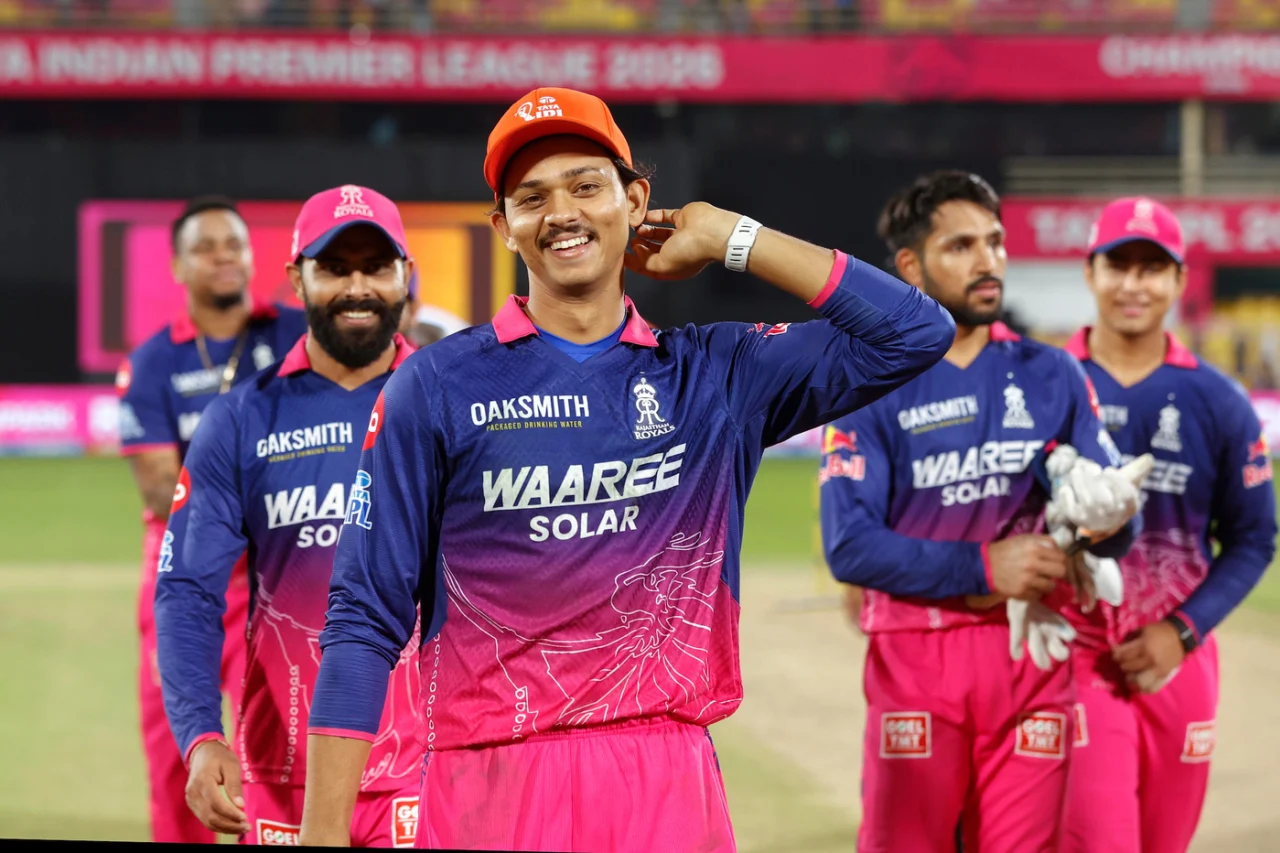
Heavy rain in Guwahati delayed the start of the match between Rajasthan Royals (RR) and Mumbai Indians (MI) by more than two and a half hours. And when play finally began at 10.10 pm, there was another storm awaiting MI.
RR’s openers Yashasvi Jaiswal and Vaibhav Sooriyavanshi ransacked 80 runs in five overs. Sooryavanshi was eventually dismissed for 39 off 14, but Jaiswal rampaged unbeaten through the 11-over innings, scoring 77 off 32 to power RR to 150 for 3.
In reply, MI lost three wickets inside the powerplay, which was reduced to 3.2 overs, and were eventually restricted to 123 for 9. Jofra Archer had provided the first breakthrough, and Sandeep Sharma, Nandre Burger and Ravi Bishnoi picked up two wickets apiece. RR moved to the top of the points table with three wins in three games, while MI suffered their second successive defeat.
Sooryavanshi and Jaiswal don’t need to be told to be aggressive, and that natural instinct was heightened in a rain-shortened contest. If there was any moisture in the pitch due to the weather, there was no evidence of it in the powerplay. MI chose to give the first over not to Trent Boult but to Deepak Chahar and Jaiswal tore into him: 4, 6, 4, 0, 4, 4.
Then came the highly-anticipated battle: 15-year old Vaibhav Sooryavanshi facing Jasprit Bumrah for the first time in his fledgling career. How would he approach one of the greatest bowlers in the game? Bumrah’s first ball was a slot ball. Sooryavanshi played the delivery and not the deliverer, and smashed it over the long-on boundary. The strike rotated back to him over the next two balls, and when Bumrah tested him with an off-pace delivery, Sooryavanshi swivelled and pulled him for another six over deep backward square leg. Round one – 13 off 5 balls – to Sooryavanshi.
Boult came on for the third over and Jaiswal cleared the deep square leg boundary twice and Sooryavanshi once, and by the time the 20-ball powerplay was finished, RR were 59 for 0.
Jaiswal is usually boom or bust against MI. Before this match, he had two centuries and five scores of less than 15 in eight innings against them. On Tuesday, he went boom again, smashing four fours and three sixes in his first nine deliveries. He got to fifty off 23 balls by cracking Hardik Pandya through point.
Sooryavanshi fell to the golden arm of Shardul Thakur, Dhruv Jurel and Riyan Parag fell to the mystery spin of AM Ghazanfar, but Jaiswal didn’t stop. He clobbered Bumrah for a straight six and picked three fours off Shardul in the final over to take RR to 150.
Like they had with the ball, MI suffered 20 balls of powerplay mayhem with the bat. Facing an asking rate of nearly 14, Ryan Rickelton swung Jofra Archer for six over deep midwicket but then top-edged another pull and was caught by Jurel running back. Suryakumar Yadav paddled Nandre Burger for the flattest of sixes over fine leg but was deceived by a hard-length offcutter and caught at deep backward square a ball later. Rohit was pinned lbw for the sixth time in 13 IPL innings by Sandeep. While RR’s powerplay score was 59 for 0; MI responded with 29 for 3.
The pitch had become a little tacky as the match progressed and the RR quicks adapted by using their cutters to good effect. Legspinner Ravi Bishnoi extended his lead at the top of the Purple Cap charts by dismissing Hardik and Tilak Varma in his first over, reducing MI to 46 for 5 after five overs. He should have had a third in his next over, when Sherfane Rutherford miscued to long-on but Jaiswal dropped the chance.
With the required rate soaring to past 17 an over, Naman Dhir and Rutherford tried to revive the chase with a partnership of 47 in 17 balls. But any slim hope MI may have had was extinguished when Sandeep dived forward at short third to take a low catch to end Rutherford’s innings. Burger, Sandeep and Archer closed out the innings to seal RR’s victory by 27 runs.
Brief scores: [11 overs per team]
Rajasthan Royals 150 for 3 in 11 overs (Yashasvi Jaiswal 77*, Vaibhav Sooryavanshi 39, Riyan Parag 20; Shardul Thakur 1-36, AM Ghazanfar 2-21) beat Mumbai Indians 123 for 9 in 11 overs (Tilak Varma 14, Sherfane Rutherford 25, Naman Dhir 25; Jofra Archer 1-17, Nandre Burger 2-21, Sandeep Sharma 2-26, Tushar Deshpande 1-29, Ravi Bishnoi 2-25) by 27 runs
[Cricinfo]
Latest News
The Sun is directly overhead Warakapola, Aranayaka, Gampola, Bibile, Inginiyagala, and Akkaraipattu at about 12:12 noon today (08)

On the apparent northward relative motion of the sun, it is going to be directly over the latitudes of Sri Lanka from the 05th to 15th of April this year.
The nearest areas of Sri Lanka over which the sun is overhead today (08th) are Warakapola, Aranayaka, Gampola, Bibile, Inginiyagala, and Akkaraipattu at about 12:12 noon.

Trump announces two-week ceasefire as Iran agrees to reopen Hormuz Strait

Yashasvi Jaiswal powers Royals past Mumbai Indians in 11-over thrash

Showers will occur at several places in the Western, Sabaragamuwa, Southern and North-western provinces and in Kandy, Nuwara-Eliya and Monaragala districts after 1.00 p.m.

The Sun is directly overhead Warakapola, Aranayaka, Gampola, Bibile, Inginiyagala, and Akkaraipattu at about 12:12 noon today (08)

AKD admits import of substandard coal, blames technicalities and supplier

‘Sri Lanka – China relations: Community with a Shared Future’ launched

‘Dates have the highest sugar content to fight Coronavirus’

Sunday Island 27 December – Headlines

#SundayIsland 17th December – Headlines

Sunday Island – 28th March

Sunday Island Headlines – 21 March

Sunday Island – 21st February – Headlines
-

 Features4 days ago
Ranjith Siyambalapitiya turns custodian of a rare living collection
-

 News7 days ago
2025 GCE AL: 62% qualify for Uni entrance; results of 111 suspended
-

 News4 days ago
Global ‘Walk for Peace’ to be held in Lanka
-

 Editorial7 days ago
Search for Easter Sunday terror mastermind
-

 News2 days ago
Lankan-origin actress Subashini found dead in India
-
 Opinion6 days ago
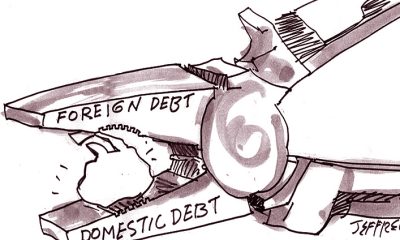
Hidden truth of Sri Lanka’s debt story: The untold narrative behind the report
-

 Opinion7 days ago
Is there hope for Palestine?
-

 Features4 days ago
Beyond the Blue Skies: A Tribute to Captain Elmo Jayawardena