
Features
Lanka is bankrupt because of the Rajapaksas, says Chandrika Kumaratunga

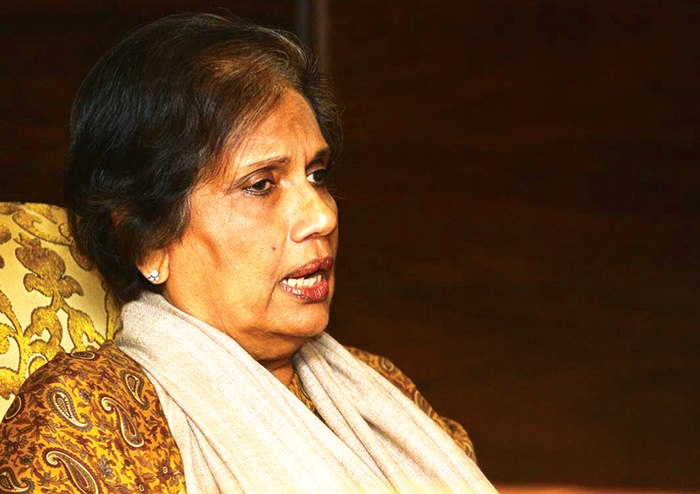
By Meera Srinivasan
Sri Lanka’s economic crisis is a consequence of the corruption over two Rajapaksa regimes, said former President Chandrika Bandaranaike Kumaratunga, admitting she is “thrilled” by the aragalaya or people’s movement that overthrew them recently.
“When our systems have crashed and been destroyed consciously, how do you change things…the only way to change is through a socio-political upheaval, a revolution,” she told The Hindu, in an interview on the dramatic changes that Sri Lanka witnessed in recent months, amid a crippling economic crisis.
In her view, the island nation had reached the stage where, with two Rajapaksa regimes, “everything that was bad and hateful was stabilised in power…today we are bankrupt only because of the corruption of the [Rajapaksa] family and their acolytes,” said the two-term President and survivor of an attempted assassination by the LTTE.
Observing that she would “wait and watch” how President Ranil Wickremesinghe, who relies on the Rajapaksas’ party in parliament, fares, Ms. Kumaratunga contended that his government must opt for an economic model that combines a social welfarist model with a liberal economic logic.
While Colombo might have challenging foreign policy choices ahead, especially while negotiating external assistance, the government must opt for a “dynamic non-alignment” policy, she noted, accusing the Rajapaksa administrations of “veering too much towards one country”.
“I am personally very thankful that India has come in, giving us all this aid when they could have stood back and waited because they were not very happy with the Rajapaksa government’s policies,” she said.
For over 15 years now, former two-term President of Sri Lanka Chandrika Bandaranaike Kumaratunga has stayed out of active politics. She re-emerged as a key player in the formation of the Yahapalanaya [good governance] coalition — of Maithripala Sirisena and Ranil Wickremesinghe — in 2015, only to witness the Sri Lanka Freedom Party of the Bandaranaike clan collapse after the Rajapaksas carved out their own party from it. Speaking to The Hindu at her Colombo residence recently, Ms. Kumaratunga reflects on the staggering developments in Sri Lanka over the last few months, and the way forward for the country’s political and economic progress.
Excerpts…
Q; As a senior political leader in Sri Lanka, what are your thoughts on the developments over the last few months – the Janatha Aragalaya (people’s struggle), the dramatic ousting of the Rajapaksas, the and the political changes since.
A; To start with, I can say I am thrilled by the Aragalaya. Not the violence that was perpetrated by the extremist minority there, but the whole concept of the Aragalaya, the way it started, and the vision of the good people leading it.
Because the country had reached the stage where, with two Rajapaksa regimes, everything that was bad and hateful was stabilised in power. Like corruption.
Today we are bankrupt only because of the corruption of the [Rajapaksa] family and their acolytes. There was no proper governance, no vision for the countryexcept to enrich themselves. They consciously turned everybody into crooks, be it the ministers, MPs, provincial council members, those in local government, as well as public servants, so that they could carry on robbing with no objections. Corruption had seeped from the top, right to the bottom, Vertically, horizontally, it had spread everywhere, whether it was in the public sector or private sector.
When our systems have crashed and been destroyed consciously, how do you change things? Even if you go for elections, the same lot of crooks get elected like they have for over 20 years. Then, the only way to change is through a socio-political upheaval, a revolution.For instance, the French Republic and the USA came into being by effecting radical change through revolutions, so with many other countries.
What about the aragalaya did you find striking?
What was really exciting and positive about the Aragalaya was that they had a vision. They were not just saying we want to chase out the Rajapaksas. They said this is not enough, we want an honest government, transparent governance, and that the robbers be brought to book. They issued a 10-point programme, which was quite good even if it needed further work, but the general direction of that programme was excellent.
I met a group of Aragalaya youth at a time they were chasing other political leaders out, as they sent me a message saying they wished to meet me.I jumped at their request. I presented my proposals to them.
I told them that I fully agree that all 225 MPs must go and a new government with new faces and the right kind of vision must come to power. I said that I have been saying the same thing for more than four years, having failed to change much under the Yahapalanaya government. However, I explained to them that the present Constitution does not permit anyone other than members of parliament to be appointed to the cabinet. I suggested an interim arrangement where the few good MPs from all political parties be selected to form a cabinet whilst a Council of State comprised of representatives from major civil society organisations, private sector professionals, academics, major NGOs as well as respected individuals,be created to review the work of the government.
40% of the total number should from among the youth, with a further 40% being women. All major policies and laws of the government would first be reviewed by this Council before implementation. The proposed constitutional amendments would include this concept.
They had taken on board my proposal in their 10-point programme and even gave it a much better name, calling it the ‘People’s Council’. They had a vision, they were brilliantly well organised, and they were honest about contributions coming in.
At least two surveys done at that time indicated that 90 % of our people supported them. I don’t know anybody who did not go to Galle Face [agitation site at Colombo’s sea front] except politicians like us who were scared to go.
The entire political stage has been swept clean by the Aragalaya. Now it remains for the people to collectively unite and formulate the contours of the new regime with new systems and procedures. I don’t believe for a moment that representatives of the old system, strongly entrenched in the destructive vision, attitudes, and practices of the regime that has been rejected by the vast majority of Sri Lankans, will ever wish or be able to effect any change in the system; the system that brought them to power and gave them unlimited possibilities of robbing the country dry, while employing state terror against anyone who challenged them.
I would say that the 225 MPs are hanging on by force. They do not have the people’s mandate anymore.Some people are idiotically arguing that they were elected for five years and that they should not be sent home early. They were elected by the people, and because those people were not given the opportunity to express their views at an election,they have expressed it in a democratic, peaceful manner. If there is no election, how are they supposed to voice their views if they don’t want to suffer the ignominy of a bad government? So, they expressed their views at Galle Face. I don’t agree with the violence, I am talking about the rest of it.
By that you mean the retaliatory violence by sections on May 9?
Yes, and later too. There is some idea of who burnt the MPs houses [on May 9], but there is much doubt about who burnt Ranil’s house [on July 9]. We don’t condone any of that in anyway. Honest politicians, if there are any left in the country, and there are a few, cannot ignore the entire essence of what happened in the Aragalaya. It swept through the whole country like a tsunami. We must take that into account, and factor that into our political vision and political programmes. I don’t know whether those in power right now are capable of doing it.
Sections within Sri Lanka see the election of President Wickremesinghe, a senior politician, through a parliamentary vote, heralding some stability for Sri Lanka. In your view, is Sri Lanka stable now?
It has definitely brought in a certain amount of stability. Fuel is being distributed in a logical and better fashion. The way the Rajapaksas did it was totally anarchic. Ranil seems to have understood, because he understands the economy and is an intelligent man, that the IMF programme is an absolute must. Even before that I have been saying we have to invite PPPs [Public Private Partnerships] into loss-making institutions.
My government initiated PPPs with Sri Lanka Telecom, Airlines, part of the port, part of power generation. We had a lot of objections, but I was able to handle it. Having worked with Ranil in two governments, I am waiting and watching. I wish him well, for the sake of the country.I really wish he can do it. But I don’t know whether he can translate his thoughts into action.
While the country is waiting to see how the government might set off economic recovery, there is also mounting concern from rights advocates who accuse this government of resorting to repression to stifle dissent, especially in the wake of the recent arrest of student leaders under the Prevention of Terrorism Act.
Totally unnecessary. Leaders have to possess communication skills to engage with those young people. They said they would leave Galle Face one morning and that morning before they left, they were attacked. What they should have done was conversed with them. Ranil himself. But I don’t know whether he has the communication skills. He has not proved such a thing for a long time.In crisis situations like this, leaders must have a very generous heart. When I congratulated him, I said that. They must be able to open their arms, hearts, and minds, and talk to the people, look at the problem from the people’s point of view.
They are starving today. They have been standing in queues for 48 hours, with some people dropping down dead. We have to feel with them, suffer with them, and then talk to them. I think they willnot refuse if leaders communicate properly with them. Now he has already muddied the waters.
Your own proposal recommended forming an interim government under the Prime Minister with just 12 Ministers. Now the cabinet is being expanded and efforts to form an all-party government are yet to succeed, with the opposition appearing sceptical. Do you think the opposition is justified?
He [Mr. Wickremesinghe] has convicted criminals and well-known thugs and robbers in his cabinet. Only a few are convicted, the others managed to persuade a subservient judiciary to let them off during the Rajapaksa regime. If the many cases against the Rajapaksas had been handled properly, there would have been numerable convictions.The Yahapalanaya government went to courts with cases, but they were thrown out for reasons unknown to us.
In such a situation, the younger politicians don’t want to sully their names. And what some of them say is that they would like the President to prove that he can keep his word and bring in the 21st Amendment or at least restore the 19th Amendment [aimed at clipping the President’s executive powers and in turn empowering parliament], and then bring in honest people into the cabinet and implement laws, systems and procedures to prevent corruption. Then they will join the government.
On the one hand, the ruling Sri Lanka Podujana Peramuna [SLPP or People’s Front which the Rajapaksas carved out of the SLFP] appears divided. On the other, the SLFPis grappling with divisions within. Now that the Rajapaksas are out of power, do you see the SLFP having a chance to regroup and revive itself?
Sri Lanka, like India, had two major parties. A left of centre party [SLFP], and a right of centre party [United National Party or UNP]. Both those forces have now been decimated. The SLFP is in pieces, a major part of it went to the SLPP. A considerable number has left the SLPP again and are calling themselves independent. Others who would lie on the ground for the Rajapaksas to walk over them are now with Ranil, as his greatest supporters. I suppose Ranil cannot help it, if they vote against him in an impeachment motion, he is finished. I have been asked if I would help the government. I will wait and watch. I have not been hooted at, stoned, nor spat upon [by protesters]. My good name is all I have earned in politics I don’t want to lose that.
Did the President himself invite you to help him?
I have had messages sent. I wish him well, but I will wait and watch because the situation is so horrendous and those in power must prove they can change it. I have had several disappointing experiences working with them.
The UNP may not be as decimated as the SLFP, but it is split.Ranil was the party’s only MP, but he is now building up [support] because he has power. And then there are different groups within the SJB as well [main parliamentary Opposition that broke away from UNP]. So, it’s a bit of a mess.
You were heading the Office for National Unity and Reconciliation. Post-war reconciliation and a political solution to the Tamils are still pending, and some are demanding a new constitution now. The draft constitution of 2000, when you were in power, is often cited as the draft that went farthest in terms of devolution. Do you think it’s a good time to revisit that?
Definitely. I worked on reconciliation for a long time, even before I came into positions in politics. Never before have I seen the people, of their own will, people of different ethnic, religious communities, working like brothers and sisters together, like they did in the Aragalaya. That is another reason I am thrilled by it.
While we did all kinds of programmes to encourage reconciliation, and they were successful, here it happened spontaneously. So, this is the moment to go forward. However, I don’t see any thinking about it.
The political tumult in the last few months was essentially triggered by an economic crisis. In your view what economic model must Sri Lanka choose now to set the country on a path of recovery?
I would say something like what I brought in between 1994 and 2005. Retain the sort of “socialist” aspects such as free education, free health while reducing the excessive subsidies, and slim down and rationalise government because we are dead broke.
A lot of people who are well to do receive subsidies through patronage networks of MPs. Introduce Voluntary Retirement Schemes in government institutions where the workforce is excessive and encourage them to start enterprises by making cheap credit available.
On the other hand, we need to adopt liberal economic policies, in some sectors.The state cannot insist on managing enterprises especially in countries like Sri Lanka, where the public service is incapable of managing state owned enterprises profitably. They are not trained for it. A different set of skills are required to profitably manage enterprises. In addition, corruption reigns supreme in the public enterprises. I see no alternative to bringing in private sector management to state owned enterprises.The ownership remains with the state, while the management is done by the private sector investor. We need a social welfarist approach with the liberal economic logic.
You earlier mentioned that IMF support will be crucial, but it looks like the process will take several months. There are foreign policy choices and geopolitical dynamics that come into play when it comes to debt restructuring and international assistance. How should Sri Lanka navigate this complex terrain?
Sri Lanka, I would say has no other choice than a policy of non-alignment. Dynamic non-alignment, as was followed by all the Bandaranaike governments. I am not saying it because it is my family, but it was very successful. And when once or twice, my mother’s government went against some of our major friends, they suffered.The Rajapaksa government veered too much towards one country, which tried to eliminate every other country from the Sri Lankan scene, and we are suffering the consequences.
I am personally very thankful that India has come in, giving us all this aid when they could have stood back and waited because they were not very happy with the Rajapaksa government’s policies. Whether we like it or not, we are a small country. Our major assets are our strategic location and human resources. We can be a major services hub in the whole region, not only South Asia, but all of Asia.
I think we should welcome all the major players in the region into this country for investment. We don’t have to sell our country to them as some say. It is more important than ever before because the country is insolvent. We need their financial participation, we need their skills. We are losing our skilled people. Some 140,000 young people have left the country this year. It is very tragic. A lot of people will then come back because the quality of life in Sri Lanka, until this crisis, is usually better than in many other places in the world. We have one of the mildest climates the whole year, most beautiful natural surroundings, water, soil.
One of the responses of the government to this crisis, both when President Gotabaya Rajapaksa was in power and more recently under President Wickremesinghe, has been to restrict imports. This move, for many, invokes memories of the 1970s under Prime Minister Sirimavo Bandaranaike, when shortages and long queues were common. How do view this comparison?
Of course, we must be self-sufficient in major products, major food products at least, and maybe small industrial products. But to say we must stop all imports and produce everything in Sri Lanka is not realistic. We are not big enough to do that.
You know, we Sinhala Buddhists, who comprise 70% of the population, are a majority with a terrific minority complex. Right through history, we have had this. One must analyse why. I suppose one reason is that we have a massive neighbour,and we have had a conflictual relationship with that country since ancient times, we were invaded 52 times by Indian kings. When a majority has a minority complex, you try to put down everybody around you to feel that you are important. That is a collective weakness of our nation.
The roots of the ethnic conflict also lie there, then?
It is certainly one of the major roots.And there is also another reason, which is not related, is that somehow, since the 1970s and 1980s, the type of persons who came into parliament were rascals, I wouldn’t let through my gate under normal circumstances.Those who got their houses burnt, except a few of them, were the known crooks. I don’t say that was the solution, that should have never been done. But they are so shameless. When people don’t have one square meal a day, they shamelessly demand they be given compensation immediately. Every one of them has made enough money illegally to build themselves two, three houses, and a large number of them already have many other houses, I can vouch for that.
Earlier, we had decent people in parliament, with principles and commitment irrespective of their background or education. But little by little that changed, especially with J.R. Jayawardene opening up the economy indiscriminately. Unlike in the West where capitalism took centuries to evolve, allowing systems and structures to adjust, the change in Sri Lanka came so abruptly, all our social structures burst asunder.
So all kinds of rascals came into Parliament, uneducated, not skilled. Everybody doesn’t have to be educated. There are lots of top business peoplein Sri Lanka and all over the world, who don’t have much education but possess the skills and commitment to engage in honest business. Our present politicians come into parliament thinking that parliament is going to be the best business to earn the largest amount of money with the least effort.
As you said, President Wickremesinghe is reliant on the SLPP in parliament. Do you see this dynamic changing with the attempted all-party or multiparty government?
He is very keen to have all the political parties in government, but even if he gets all of them, SLPP still has the majority. Some in opposition are fearful that even if they join, the SLPP will dominate. So they don’t want to dirty their hands and be the target of public hate. It is a dilemma.
The President must bring in the new Constitution, ask the well-known crooks to move out, bring in better politicians, and present a people-friendly development programme. Then the whole country will support him.
What about the Rajapaksas? Do you think the game is over for them, as some say, or can they make a comeback especially since the opposition is still weak?
All those possibilities are there. If a government, not a Ranil-SLPP government, but a government led by Ranil and all other parties, an honest government, solves the country’s problems, history will put the Rajapaksas in their due place.That is also why I say the Aragalaya movement was brilliant and extraordinary. The Rajapaksas have harassed me. They did that in cheap, horrible ways. Mahinda [Rajapaksa] and Basil [Rajapaksa]. Anyway, those are details that do not influence my political priorities. I dislike them for what they did to the country and our party.
So I am delighted that the Aragalaya was able to chase them out in a peaceful manner I think it is a great thing that happened, otherwise they would never have gone. I am also surprised by their shamelessness, by the fact that they are still clinging on. I would have taken a straight dive into the Indian Ocean if the people had reacted one-tenth as badly against me.
Do you see yourself returning to active politics?
No. Definitely not.
Why?
I have done enough. Unlike most Sri Lankan politicians, I have a lot of other interests in life.
What keeps you busy these days?
I am enjoying writing vision statements for political groups who want help. Quite a few young politicians who don’t want to be part of the Rajapaksa cabal come and ask me for advice. I still chair a few foundations.Then, I have started a leadership academy at the Bandaranaike Centre for International Studies to train young people to be good leaders, not only in politics, but also for society at large. I take care of my personal finances. I have a lot more time for my friends. I love reading, cinema, and theatre. I was utterly frustrated when I was President that I couldn’t read enough.
What are you reading currently?
I read quite a few books in the last three years after I pulled out of active politics. Chimamanda Adichie, I love her. I actually met her once at the Galle literature festival. I like Kazuo Ishiguro; I have a lot of his books. I read some of the Indian authors. In the last few years, I have been fascinated with the Tudor period in England.
There are several female writers, all English, who are history scholars who have studied that period. They have written historical novels. Two of them won Booker prizes. Being a political person, I enjoy reading about political machinations, Henry VIII’s thinking, how they broke up the Catholic Church and started the Anglican Church,really fascinating!
Then there was a very good book on Marie Antoinette, also by one of those English authors. I read two, three books at a time and keep switching. Now I am into some books by Ben Macintyre. He is a good writer, who has studied documents about the Soviet spy system. One was called Agent Sonya.Another writer I enjoy is Sebastian Faulks, he writes fiction based on the two World Wars. Once in a way I read a nice funny book. Just nice things. I also paint, I used to. When I was living in England for a few years after retirement, I started painting again. But 2015 [efforts to form national unity government] sabotaged all that.
You are also trained in Kandyan dance, aren’t you?
Oh, I danced a lot. On stage too. When I was in Paris [as a university student] I went for modern ballet classes, Greek dance, and all that. I used to write poetry, but not anymore. For that you must have your mind at ease. And then when I get dragged back into politics, even if I am not actively engaged in it, I become too stressed to engage in nice activities. (The Hindu)








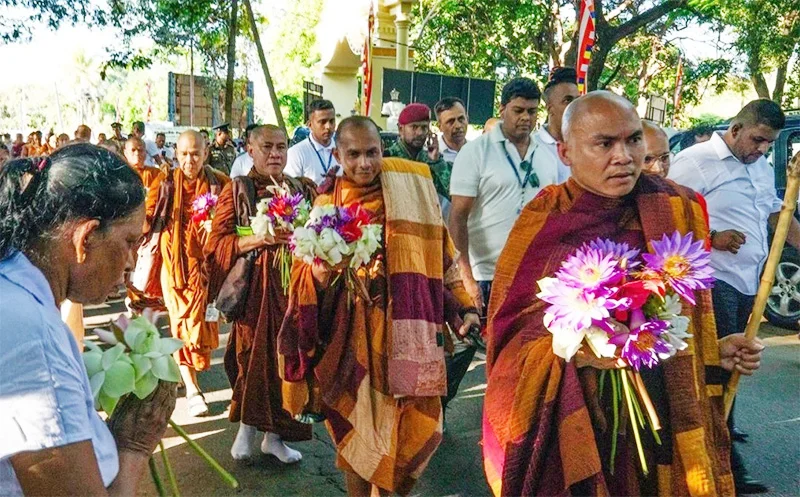
The ongoing peace march by a group of international Buddhist monks has captured the sentiment of Sri Lankans in a manner that few public events have done in recent times. It is led by the Vietnamese monk Venerable Thich Pannakara who is associated with a mindfulness movement that has roots in Vietnamese Buddhist practice and actively promoted among diaspora communities in the United States. The peace march by the monks, accompanied by their mascot, the dog Aloka, has generated affection and goodwill within the Buddhist and larger community. It follows earlier peace walks in the United States where monks carried a similar message of mindfulness and compassion across communities but without any government or even media patronage as in Sri Lanka.
This initiative has the potential to unfold into an effort to nurture a culture of peace in Sri Lanka. Such a culture is necessary if the country as the country prepares to move beyond its history of conflict towards a more longlasting reconciliation and a political solution to its ethnic and religious divisions. The government’s support for the peace march can be seen as part of a broader attempt to shape such a culture. The Clean Sri Lanka programme, promoted by the government as a civic responsibility campaign focused on environmental cleanliness, ethical conduct and social discipline, provides a useful framework within which such initiatives can be situated. Its emphasis on collective responsibility and shared public space makes it sit well with the values that peacebuilding requires.
government’s previous plan to promote a culture of peace was on the occasion of “Sri Lanka Day” celebrations which were scheduled to take place on December 12-14 last year but was disrupted by Cyclone Ditwah. The Sri Lanka Day celebrations were to include those talented individuals from each and every community at the district level who had excelled in some field or the other, such as science, business or arts and culture and selected by the District Secretariats in each of the 25 districts. They were to gather in Colombo to engage in cultural performances and community-focused exhibitions. The government’s intention was to build up a discourse around the ideas of unity in diversity as a precursor to addressing the more contentious topics of human rights violations during the war period, and issues of accountability and reparations for wrongs suffered during that dark period.
Positive Response
The invitation to the international monks appears to have emerged from within Buddhist religious networks in Sri Lanka that have long maintained links with the larger international Buddhist community. The strong support extended by leading temples and clergy within the country, including the Buddhists Mahanayakes indicates that this was not an isolated effort but one that resonated with the mainstream Buddhist establishment. Indeed, the involvement of senior Buddhist leaders has been particularly noteworthy. A Joint Declaration for Peace in the world, drawing on Sri Lanka’s own experience, and by the Mahanayakes of all Buddhist Chapters took place in the context of the ongoing peace march at the Gangaramaya Temple in Colombo, with participation from the diplomatic community. The declaration, calling for compassion, dialogue and sustainable peace, reflects an effort by religious leadership to assert a moral voice in favour of coexistence.
The popular response to the peace march has also been striking. Large numbers of people have been gathering along the route, offering flowers, water and support to the monks. Schoolchildren have been lining the roads, and communities from different religious backgrounds extend hospitality. On the way, the monks were hosted by both a Hindu temple and a mosque, where food and refreshments were provided. These acts, though simple, carry a message about the possibility of harmony among Sri Lanka’s diverse communities. It helps to counter the perception that the Buddhist community in Sri Lanka is inherently nationalist and resistant to minority concerns that was shaped during the decades of war and reinforced by political mobilisation that too often exploited ethnic identity.
By way of contrast, the peace march offers a different image. It shows a readiness among ordinary people to embrace values of compassion and coexistence that are deeply embedded in Buddhist teaching. The Metta Sutta, one of the most well-known discourses in Buddhism, calls for boundless goodwill towards all beings. It states that one should cultivate a mind that is “boundless towards all beings, free from hatred and ill will.” This emphasis on universal compassion provides a moral foundation for peace that extends beyond national or ethnic boundaries. The monks themselves emphasised this point repeatedly during the walk. Venerable Thich Pannakara reminded those who gathered that while acts of generosity are commendable, mindfulness in everyday life is even more important. He warned that as people become unmindful, they are more prone to react with anger and hatred, thereby contributing to conflict.
More Initiatives
The presence of political leaders at key moments of the march has emphasised the significance that the government attaches to the event. Prime Minister Harini Amarasuriya paid her respects to the peace march monks in Kandy, while President Anura Kumara Dissanayake is expected to do so at the conclusion of the march in Colombo. Such gestures signal an alignment between political authority and moral aspiration, even if the translation of that aspiration into policy remains a work in progress. At the same time, the peace march has not been without its shortcomings. The walk did not engage with the Northern and Eastern parts of the country, regions that were most affected by the war and where the need for reconciliation is most acute. A more inclusive geographic reach would have strengthened the symbolic impact of the initiative.
In addition, the positive impact of the peace march could have been increased if more effort had been taken to coordinate better with other civic and religious groups and include them in the event. Many civil society and religious harmony groups who would have liked to participate in the peace march found themselves unable to do so. There was no place in the programme for them to join. Even government institutions tasked with promoting social cohesion and reconciliation found themselves outside the loop. The Clean Sri Lanka Task Force that organised the peace march may have felt that involving other groups would have made it more complicated to organise the events which have proceeded without problems.
The hope is that the positive energy and goodwill generated by this peace march will not dissipate but will instead inspire further initiatives with the requisite coordination and leadership. The march has generated public discussion, drawn attention to the values of mindfulness and compassion, and created a space in which people can imagine a different future. It has been a special initiative among the many that are needed to build a culture of peace. A culture of peace cannot be imposed from above nor can it emerge overnight. It needs to be nurtured through multiple efforts across society, including education, religious engagement, civic initiatives and political reform. It is within such a culture that the more difficult questions of power sharing, justice and reconciliation can be addressed in a constructive manner.
by Jehan Perera
 The countryside and peripheral regions have been neglected in the national imagination for many decades. This has also been the case with regional universities which were seen as mere appendages to the university system, and sometimes created to appease political constituencies in the regions. The exclusion of the rural world and the institutions in those regions was not accidental nor inevitable, but the consequence of conscious policies promoted under an extractive and exploitative global order. Neoliberalism globalisation, initiated in the late 1970s with far-reaching policies of free trade and free flow of capital, or the “open economy,” as we call it in Sri Lanka, is now dying. The United States and the Western countries that promoted neoliberalism, as a class project of finance capital to address the falling profits during the long economic downturn in the 1970s, are themselves reversing their policies and are at loggerheads with each other. However, those economic processes will continue to have national consequences into the future.
At the heart of such policies is the neoliberal city, which has become the centre of the economy with expanding financial businesses and a real estate boom. Such financialised cities also had their impact on universities, in lower income countries, where commercialised education with high fees, rising student debt, research for businesses and transnational educational linkages with branch campuses of Western universities, have become a reality.
In the case of Sri Lanka, while neoliberal policies began with the IMF and World Bank Structural Adjustment Programmes, in the late 1970s, the long civil war forestalled the accelerated growth of the neoliberal city. I have argued, over the last decade and a half, that it is with the end of the civil war, in 2009, coinciding with the global financial crisis, that a second wave of neoliberalism in Sri Lanka led to global finance capital being absorbed in infrastructure and real estate in Colombo. The transformation of Colombo into a neoliberal city was overseen by Gotabaya Rajapaksa as Defence Secretary with even the Urban Development Authority brought under the security establishment. While Colombo was drastically changing with a skyline of new buildings and shiny luxury vehicles drawing on massive external debt, there were also moves to promote private higher education institutions. The Board of Investment (BOI) registered many hundred so-called higher education institutions; these were not regulated and many mushroomed like supermarkets and disappeared in no time when they incurred losses.
In contrast to these so-called private higher education institutions that proliferated in and around Colombo, Sri Lanka, drawing on its free education system, has, over the last many decades, also created a number of state universities in peripheral regions. However, these regional universities lack adequate funding and a clear vision and purpose. The current conjuncture with the neoliberal global order unravelling, and the immediate global crisis in energy and transport are grim reminders of the importance of local economies and self-sufficiency. In this column I consider the role of our regional universities and their relationship to the communities within which they are embedded.
Regional context
The necessity and the advantage of robust public services is their reach into peripheral regions and marginalised communities. This is true of public transport, as it is with public hospitals. Private buses will always avoid isolated rural routes as their margins only increase on the busy routes between cities and towns. And private hospitals and clinics flock to the cities to extract from desperate patients, including by unscrupulous doctors who divert patients in public hospitals to be served in the private health facilities they moonlight. Similarly, it is affluent cities and towns that are the attraction for private educational institutions.
Public institutions, including universities, can only ensure their public role if they are adequately funded. Over the last decade and a half, with falling allocations for education, our state universities have been pushed into initiating fee levying courses, both at the post-graduate level and also for undergraduate international students. These programmes are seen as avenues to decrease the dependence of universities on budgetary support. However, the reality is that it is only universities in Colombo that can draw in students capable of paying such high fees. Furthermore, such fee levying courses end up pushing academics into overwork including by offering additional income.
Therefore, allocations for underfunded regional universities need to be steadily increased. Housing facilities and other services for academics working in rural districts would ensure their continued presence and greater engagement with the local communities. Increased time away from teaching and research funding earmarked for community engagement will provide clear direction for academics. Indeed, such funding with a clear vision and role for regional universities can provide considerable social returns. In a time when repeated crises are affecting our society, agricultural production to bolster our food system as well as rural income streams and employment are major issues. Here, regional universities have an important role today in developing social and economic alternatives.
Reimagining development
In recent months, there have been interesting initiatives in the Northern Province, where the Universities of Jaffna and Vavuniya have been engaging state institutions on issues of development. In an initiative to bring different actors together, high level meetings have been convened between the staff of the Agriculture Faculty and officials of the Provincial Agriculture Ministry to figure out solutions for long pending agricultural problems. Similar meetings have also been organised between provincial authorities and the Faculties of Technology and Engineering in Kilinochchi. These initiatives have led to academics engaging communities and co-operatives on their development needs, particularly in formulating new development initiatives and activating idle projects and assets in the region. Such engagement provides opportunities for academics to share their knowledge and skills while learn from communities about challenges that lead to new problems for research.
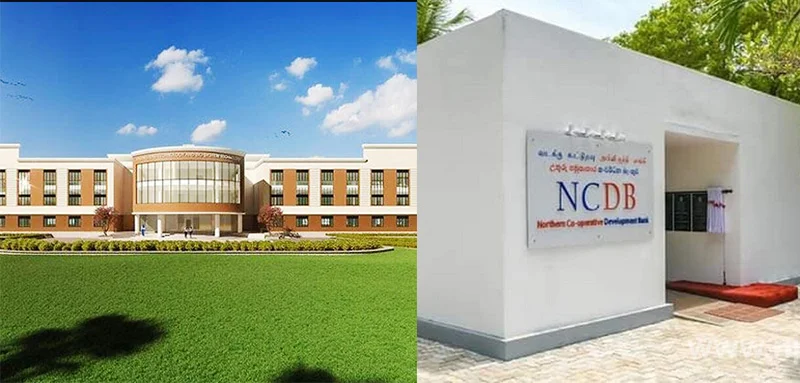
One of the most rewarding engagements I have been part of is an internship programme for the Technology Faculty of the University of Jaffna, where four batches of final year students, from food technology, green farming and automobile specialities, have been placed for six months within the co-operative movement through the Northern Co-operative Development Bank. This initiative has created a strong relationship between the Technology Faculty and the co-operative movement, with a number of former students now working fulltime in co-operative ventures. They are at the centre of developing solutions for rural co-operatives, including activating idle factories and ensuring quality and standards for their products.
I refer to these concrete initiatives because universities’ role in research and development in Sri Lanka, as in most other countries, are often narrowly conceived to be engagement with private businesses. However, for rural regions, the challenge, even with technological development, is the generation of appropriate technologies that can serve communities.
In Sri Lanka, we have for long emulated the major Western universities and in the process lost sight of the needs of our own youth and communities. Rethinking the development of our universities may have to begin with an understanding of the real challenges and context of our people. Our universities and their academics, if provided with a progressive vision and adequate resources and time to engage their communities, have the potential to address the many economic and social challenges that the next decade of global turmoil is bound to create.
Ahilan Kadirgamar is a political economist and Senior Lecturer, University of Jaffna.
(Kuppi is a politics and pedagogy happening on the margins of the lecture hall that parodies, subverts, and simultaneously reaffirms social hierarchies)
by Ahilan Kadirgamar
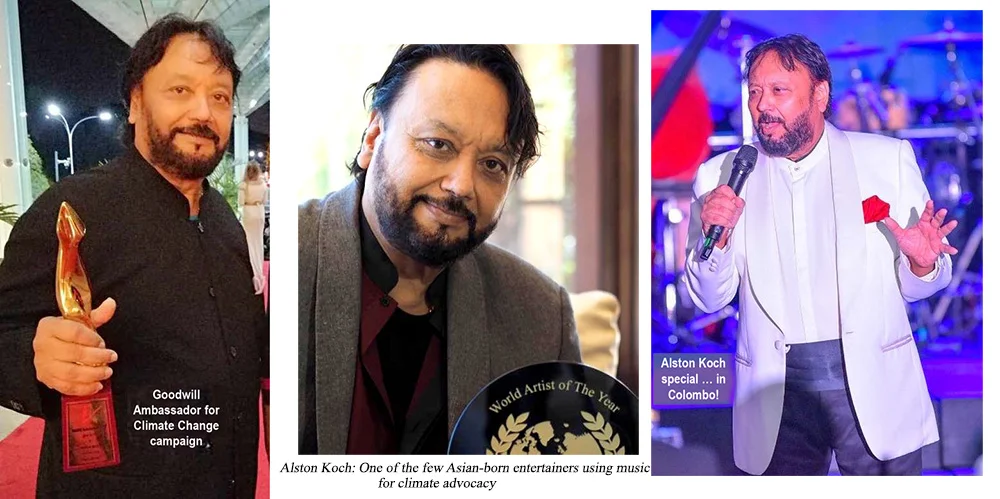
 The name Alston Koch is generally associated with the hit song ‘Disco Lady.’ Yes, he has had several other top-notch songs to his credit but how many music lovers are aware that Alston is one of the few Asian-born entertainers using music for climate advocacy, since 2008.
He is back in the ‘climate change’ scene, with SUNx Malta, to celebrate Earth Day 2026, with the release of ‘A Symphony for Change’ – a vibrant Dodo4Kids video by Alston.
The inspiring musical video highlights ocean conservation and empowers children as future climate champions, honouring Maurice Strong’s legacy through education, creativity, and global collaboration for a sustainable planet.
The four-minute animated musical, composed and performed by platinum award-winning artiste Alston Koch, brings to life a resurrected Dodo, guiding children on a mission to clean up marine environments.
With a catchy melody and an uplifting message, the video blends entertainment with education—making climate awareness accessible and engaging for the next generation.
SUNx Malta is a Climate Friendly Travel system, focused on transforming the global tourism sector that is low-carbon, SDG-linked, and nature-positive.
Professor Geoffrey Lipman, President of SUNx Malta, described the project as a joyful collaboration with purpose:
“It’s always a pleasure to produce music with Alston for the good of our planet. And this time, to incorporate our Dodo4Kids in the video urging the next generation of young climate champions to help save our seas.”
For Alston, now based in Australia, the collaboration continues a long-standing journey of climate-focused creativity:
Says Alston: “I have been working on climate songs since the first release, in 2009, of the video ‘Act Now.’ Since then, I’ve performed at major global events—from Bali to Glasgow. I wrote this song because the climate horizon is darkening, and our kids and grandkids are our best hope for a brighter future.”
Alston’s very first climate song is ‘Can We Take This Climate Change,’ released in 2008.
It was written by Alston for the World Trade Organisation presentation, in London, and presented at ‘Live the Deal Climate Change’ conference in Copenhagen.
The Sri Lankan-born singer was goodwill ambassador for the campaign, and the then UK Minister Barbara Follett called it a “gift in song to the world suffering due to climate change.”
Alston said he wrote it after noticing butterflies, birds, and fruit trees disappearing from his childhood days.
In 2017, his creation ‘Make a Change’ was released in connection with World Tourism Day 2017.
Alston Koch’s work on climate advocacy is pretty inspiring, especially as climate change is now creating horrifying problems worldwide, and in Sri Lanka, too.
Alston also indicated to us that he has plans to visit Sri Lanka, sometime this year, and, maybe, even plan out a date for an Alston Koch special … a concert, no doubt.
Can’t wait for it!

Plane crashes near South Sudan’s Juba, killing all 14 on board

Gunmen kidnap 23 children from Nigerian orphanage

US press gala shooting suspect charged with attempting to kill Trump

Showers above 75 mm are likely at some places in the Western, Sabaragamuwa, Central, North-western, North-central and Southern provinces and in Mannar district

Hazlewood and Bhuvneshwar lead rout of Delhi Capitals

Govt. assures UN of readiness to introduce ‘vetting process’ for troops on overseas missions

‘Dates have the highest sugar content to fight Coronavirus’

Sunday Island 27 December – Headlines

#SundayIsland 17th December – Headlines

Sunday Island – 28th March

Sunday Island Headlines – 21 March

Sunday Island – 21st February – Headlines
-
 News6 days ago
Lanka faces crisis of conscience over fate of animals: Call for compassion, law reform, and ethical responsibility
-
 News5 days ago
Whistleblowers ask Treasury Chief to resign over theft of USD 2.5 mn
-

 News5 days ago
No cyber hack: Fintech expert exposes shocking legacy flaws that led to $2.5 million theft
-

 News2 days ago
BIA drug bust: 25 monks including three masterminds arrested
-

 Business3 days ago
Nestlé Lanka Announces Change in Leadership
-

 News2 days ago
Banks alert customers to phishing attacks
-
 News3 days ago
Hackers steal $3.2 Mn from Finance Ministry
-
 News6 days ago
USD 2 mn bribe: CID ordered to arrest Shasheendra R, warrant issued against ex-SriLankan CEO’s wife