
Business
Lakpahana offers “handcrafted gifts from the finest artisans on earth”

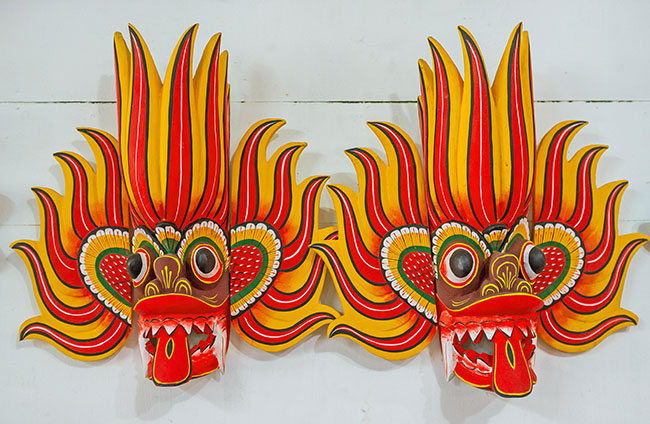
Lakpahana is a traditional Sri Lankan gifts and souvenir shop located in Colombo 07, across from the Colombo Race Course in the heart of Colombo. It was started in 1973 by Deshamanya Mrs. Siva Obeyesekere founder of Laksala.
“Lakpahana for more than 48 years has offered shelter, patronage and market sustenance for handicrafts. Sri Lanka well known for its fine craftsmanship which originated back in the day when the majestic kings and queens required ostentatiously sculptured workmanship in their great palaces and gardens. This form of luxury was appreciated not only by royalty, even the commoners found the intricately designed artifacts beautiful,” a Lakpahana news release said.
“Today Lakpahana holds many of these beautifully handcrafted handicrafts supplied by fourth generation craftsmen from all over the island. Lakpahana is one of the largest and most exclusive stores of its kind in Sri Lanka. It brings together the best quality of all Sri Lanka’s arts and crafts under one roof.”
“Here you will find beautiful handicraft with over 2500 years of tradition, and modern Sri Lankan crafts and designs. It represents a special bond of commercialism combined with traditionalism offering service to the producer (craftsman) and consumer,” it added.
Lakpahana is a store filled to the brim with unique handmade products such as:
Jewellery
This highly traditional art is characterized by its elegance and simplicity. There are two types of jewellery, namely the Kandyan and Low Country jewellery. Both are available at Lakpahana.
Masks
These represent an extraordinary cultural phenomenon of vivid expression and virtual meaning that can be traced back to centuries. There are over 150 different virtual and folk theatre of human, divine, mythological, demonic and animal characters portrayed in these masks. Lakpahana has the largest collection of masks in one location.
Rush and Reed ware
Basket and mat weaving made of popular indigenous leaves make this craft decorative as well as functional one.
Lacquer ware
This craft involves a careful process of fusing in colours with pigment obtained from resins. In the process of lacquering brushes are not used, neither are the articles coated over with lacquer.
Wood carvings
Wood is a popular medium for handcrafting and the process displays a unique style where the entire handicraft is made wood. There are ancient as well as modern designs available at Lakpahana.
In addition there is also a wide range of handicrafts in metal ware including brass, copper, pewter and silver. Some are set with semi precious gems, such as trinket boxes and trays.
Other crafts include clay based handicrafts, coconut – shell ware, coconut husk items, coir and fibre based products, educational toys, cloth dolls, puppets, paper pulp ware, traditional dumbara rata (design), sea shell ware, wooden panel paintings, table linen hand woven with delicate beeralu lace and crocheted lace products made of eco-friendly materials, handloom textiles, batik wall hangings and stylish dresses, leather and reproduction of antiques are available. All articles displayed in quality perfect and sell at fairly reasonable prices.
Searching for the most delicious and freshly made traditional treats? Head over to Lakpahana and indulge. Choosing from a variety of items such as stuffed veralu, jaggery toffee, kalu dodol and unduwel. The items are made fresh on a daily basis. Everyday favourites such as murukku, marshmallows, aasmi, kokis, kavum and mung kavum are available in addition to neatly wrapped packages of love cake, bibikkan and jaggery cake.
“These are just perfect for the festive season or even as a gift. Cake orders can be placed too. Tala bola, coconut and milk toffees stock the shelves in addition to the other yummy treats. Other items available at Lakpahana include jars of bees’ honey (50ml/100ml), lime pickle, seeni sambol, pickle & chutneys,” the release said.
Lakpahana is open from 9.30 a.m. – 6.30 p.m. Monday to Saturday and 10 a.m. – 6 p.m. on Sundays.

Business
India–Sri Lanka Business Forum highlights new momentum in trade, investment and connectivity

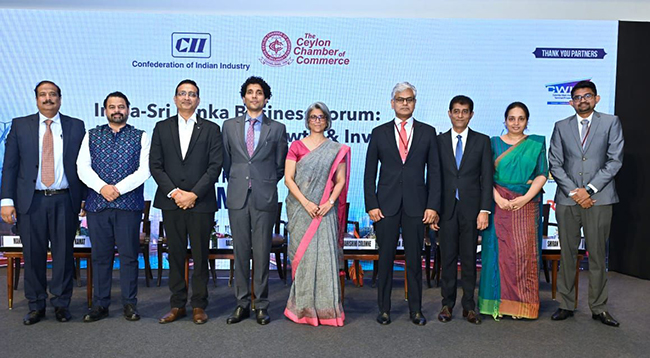
The Ceylon Chamber of Commerce, in partnership with the Confederation of Indian Industry (CII), organised the India–Sri Lanka Business Forum: Partnering in Sri Lanka’s Growth and Investment and the CII – Ceylon Chamber CEOs Interaction in Mumbai on 13 May 2026. The events brought together senior government representatives, industry leaders, policymakers, and business delegates from India and Sri Lanka to deepen economic engagement and explore new avenues for cooperation across priority sectors.
The discussions reflected growing optimism about India-Sri Lanka economic relations and focused on expanding collaboration in trade, investments, connectivity, tourism, renewable energy, logistics, digital transformation, infrastructure, healthcare, education, manufacturing, and technology.
Participants included Mahishini Colonne, High Commissioner of Sri Lanka to India; Duminda Hulangamuwa, Senior Economic Advisor to the President of Sri Lanka; Dr Rajesh Ravindra Gawande, Secretary (Protocol, FDI, Diaspora & Outreach) and Chief of Protocol, Government of Maharashtra; Ms Priyanga Wickramasinghe, Consul General of Sri Lanka in Mumbai; Krishan Balendra, Chairperson, The Ceylon Chamber of Commerce and Chairperson, John Keells Holdings PLC; Anurag Agarwal, Co-chairman, CII Western Region Sub-committee on International Trade & Investment and Chief Executive Officer, Polycab India Ltd; Vishal Kamat, Chairman, CII Western Region Sub-Committee on Tourism and Hospitality and Executive Director, Kamat Hotels India Ltd; Bingumal Thewarathanthti, Vice Chairperson of the Ceylon Chamber and CEO Standard Chartered Bank Sri Lanka, Vinod Hirdaramani – Deputy Vice Chairperson of the Ceylon Chamber and Chairman Hirdaramani Group, and Shiran Fernando, Secretary General & CEO of the Ceylon Chamber.
Welcoming the delegates, Anurag Agarwal, highlighted the growing momentum in India–Sri Lanka economic relations and the emergence of future-oriented sectors driving bilateral cooperation.
He noted that India and Sri Lanka are at an important phase of economic collaboration, where connectivity, investments, innovation, and sustainable partnerships are creating new opportunities for shared growth. He further emphasised the significant potential for deeper engagement in sectors such as renewable energy, tourism, ICT, logistics, digital services, healthcare, manufacturing, education, and infrastructure.
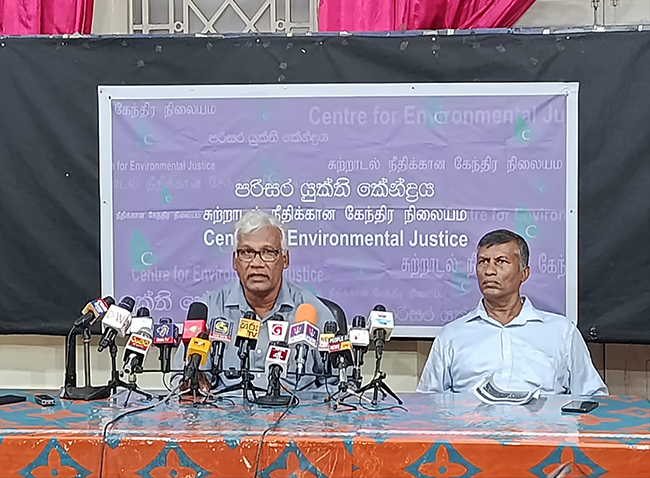
Move to reconsider the ban on oil palm cultivation has triggered a heated debate among environmentalists, economists and plantation sector stakeholders, with critics warning that replacing rubber plantations with oil palm could weaken one of the country’s most valuable export industries while exposing the nation to long-term environmental and trade risks.
Environmental groups argue that the issue is no longer purely ecological, but a major economic policy question with implications for exports, foreign exchange earnings, rural livelihoods and Sri Lanka’s standing in international markets.
Sri Lanka banned oil palm cultivation in April 2021 through Extraordinary Gazette No. 2222/13 issued by former President Gotabaya Rajapaksa, citing environmental degradation, biodiversity loss, soil erosion and threats to water resources.
However, plantation companies are now reportedly lobbying for the reversal of the ban, arguing that oil palm offers higher short-term commercial returns compared to traditional plantation crops.
Environmentalists and policy analysts, however, caution that the long-term economic costs could outweigh the immediate profits.
Hemantha Withanage of the Environmental Justice Centre said Sri Lanka risks undermining a globally competitive rubber industry in pursuit of a commodity that generates comparatively limited national value.
“Rubber remains one of Sri Lanka’s strongest industrial export sectors. Replacing rubber with oil palm would be economically shortsighted because the downstream rubber manufacturing industry generates far greater export earnings, employment and industrial value addition, he said.
Industry statistics reveal a worrying decline in the rubber sector over the past four decades. Rubber cultivation has fallen from 171,126 hectares in 1982 to around 84,000 hectares in 2024, while production has dropped from 133,200 metric tons in 1980 to approximately 69,185 metric tons last year.
Despite shrinking cultivation, the rubber sector continues to deliver significant export revenue. Sri Lanka earned nearly USD 994 million from rubber exports in 2024, while rubber-based manufactured products generated more than USD 2.5 billion in export income.
The country also imports over USD million worth of raw and processed rubber annually to sustain domestic manufacturing demand, highlighting the strategic importance of maintaining local rubber production.
Analysts warn that further reductions in rubber cultivation could increase import dependency, weaken industrial supply chains and place additional pressure on foreign exchange reserves.
By contrast, Sri Lanka’s palm oil sector contributes relatively little to export earnings. In 2025, Sri Lanka imported 38,210 metric tons of palm oil and 33,696 metric tons of coconut oil, while the value of palm oil imports in 2023 stood at approximately USD 23 million.
Critics argue that oil palm cultivation mainly benefits plantation-level profitability rather than the broader national economy.
Thilak Kariyawasam of FIAN Sri Lanka said the environmental externalities associated with oil palm could eventually translate into significant economic costs.
“The industry’s impact on water resources, soil quality and ecosystems creates hidden financial burdens for the country. Pollution control, water management and biodiversity losses all carry long-term economic consequences that are often ignored in short-term investment calculations, he said.
Environmental groups also raised concerns that Sri Lanka could face reputational risks in export markets if environmentally controversial plantation policies are pursued.
The European Union, one of Sri Lanka’s most important export destinations and the provider of GSP+ trade concessions, has tightened regulations linked to deforestation and environmental sustainability.
By Ifham Nizam
Business
Talawakelle Tea Estates achieves International Organic Certification for Great Western and Logie Teas
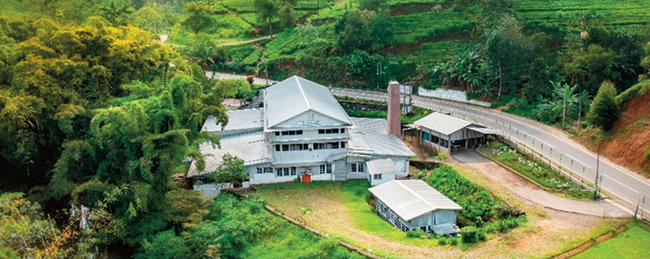
Talawakelle Tea Estates PLC has secured internationally recognised organic certification. A member of the Hayleys Plantations Sector and one of Sri Lanka’s premier Regional Plantation Companies, this milestone enables the Company to market certified organic teas under its renowned Great Western and Logie garden marks.
The certification spans three major global standards: the EU Organic Regulation of the European Union, the National Organic Program (NOP-US) of the United States Department of Agriculture, and the Japanese Agricultural Standards (JAS) for organic products. With this achievement, Talawakelle Tea Estates is now positioned to supply premium organic teas to international markets that demand the highest standards of certification, traceability, and product integrity.
“We are proud to reach this significant milestone after more than four years of dedicated effort to build a fully compliant organic cultivation and processing system that meets stringent international standards. This achievement shows the strength of our partnerships with the Tea Research Institute (TRI) and internationally qualified consultants and, most importantly, the commitment and collaboration of our estate and corporate teams. Together, we have established a robust and sustainable organic management framework that will support our long-term vision.” Talawakelle Tea Estates, Director / CEO, Nishantha Abeysinghe added.
To ensure consistent compliance with international standards, Talawakelle Tea Estates appointed dedicated full-time personnel from its estate teams and corporate sustainability division to oversee and manage every stage of the organic value chain – from cultivation to final manufacture.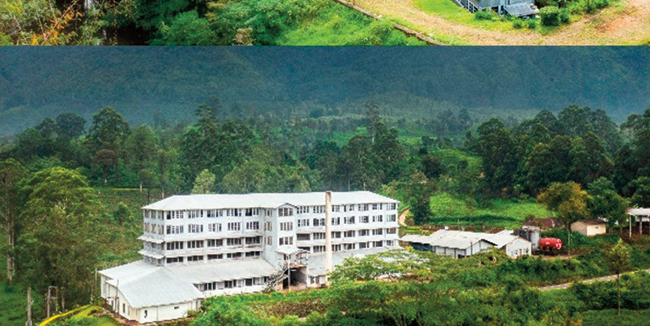
The Company has also developed an end-to-end organic cultivation and processing management system covering the full value chain – from field-level practices to final manufacture – ensuring a structured and carefully monitored approach to organic tea production.
To safeguard product integrity and eliminate the risk of cross-contamination with conventional teas, the Company has designated low-risk fields exclusively for organic cultivation and dedicated the Logie factory entirely to organic tea production, minimising the risk of cross-contamination.
Following a series of rigorous audits, Talawakelle Tea Estates has secured full certification and is now set to launch its certified organic tea range globally under the prestigious Great Western and Logie garden marks names bringing together heritage and sustainability.
This achievement marks an important step in the Company’s broader journey to build a more sustainable, nature-based product portfolio in response to growing global demand. By combining strong garden identities with internationally recognised organic standards, Talawakelle Tea Estates continues to strengthen its position in the premium tea segment.

Everest record holder warns of Nepal danger as two Indian mountaineers die

Angkrish Raghuvanshi ruled out of IPL 2026 with concussion, finger fracture

Sunrisers Hyderabad win big but Royal Challengers Bengaaluru, Gujarat Titans seal top two spots

Flood warning issued to the Aththanagalu Oya basin extended until 0600AM on Monday [25]

About 100 mm rainfall likely at some places in the Western and Sabaragamuwa provinces and in Galle and Matara districts

Torrential rains cause havoc countrywide

‘Dates have the highest sugar content to fight Coronavirus’

Sunday Island 27 December – Headlines

#SundayIsland 17th December – Headlines

Sunday Island – 28th March

Sunday Island Headlines – 21 March

Sunday Island – 21st February – Headlines
-

 Features6 days ago
Sri Lankan Airlines Airbus Scandal and the Death of Kapila Chandrasena and my Brother Rajeewa
-

 News6 days ago
Kapila Chandrasena case: GN phone records under court scrutiny
-

 News6 days ago
Rupee slide rekindles 2022 crisis fears as inflation risks mount
-
 Features3 days ago
Octopus, Leech, and Snake: How Sri Lanka’s banks feast while the nation starves
-
 Business6 days ago
Expansion of PayPal services in Sri Lanka officially announced
-
 News2 days ago
Steps underway to safeguard Sri Lanka’s maritime heritage
-

 News6 days ago
Court orders further arrests in alleged USD 42 Mn NDB fraud case
-
 Opinion2 days ago
Murder of Ehelepola family, Bogambara Wewa and Sightings of Wangediya