
Latest News
‘Karunaratne is a strong-minded player. He can do something major on this tour’- Sanath Jayasuriya


Sanath Jayasuriya is Sri Lanka’s coach only in an interim capacity, as they prepare for their biggest Test series of the year. He was appointed after former coach Chris Silverwood declined to renew his contract at the end of June. Jayasuriya has tasted some success in the job so far, with Sri Lanka beating India 2-0 in the ODI series earlier this month. He spoke to ESPNcricinfo about the challenges that England, and Bazball, will present over the next few weeks.
You get various styles depending on the time. Matthew Hayden and Adam Gilchrist did it too during our time. This is something similar to what we have had in the past. There has just been some media publicity that this is something new. They try to play attacking cricket from the outset, but the end goal is to get to those totals of 300 or 400.
As someone who used to often put the opposition under pressure with your aggression, what can Sri Lanka do when England attack them?
It’s in the first ten overs that there will be the most pressure I think. If you look historically, they have been attacking in that first ten overs and getting runs on the board quickly. We have got some plans to counter that. And we know this is how they will play.
We have to bowl in the right places, and if they hit the good balls, that’s okay. We need to identify the right lengths given the conditions. There will be times when we need to cover the areas of the field where they are attacking, to cut down the boundaries.
This is the first time since 1998 that Sri Lanka are playing in England late in the summer. To what extent will that help?
The fact that we have got a late-summer tour is great, because a lot of wickets have been used a lot, and there’s more sunshine at this time of year. It’s more similar to our conditions than the early summer tours. I have made sure the players know it’s a great opportunity.
You have been a consultant at the High Performance Centre since December, before being the interim coach. Could you explain more about what that role entails?
When Chris Silverwood was still the coach, my job with the national team was to consult with Chris and decide the team, to address any communication gaps with the players, and to share my experience with Chris. After his contract ended I got the India tour and England tours as interim coach.
We had a bit of responsibility during the India series, because they sent a full side. We backed our strengths and figured out our advantages, then played to those. I managed players and the coaches. On the coaching side, there was some fine-tuning to do, and the players also had to be motivated. I tried to create an environment of freedom, with the encouragement to play their natural games.
We played really well in that ODI series and beat India for the first time in 27 years. It’s not something I can do myself. I had support from the other staff and SLC. Kumar Sangakkara also brought Zubin Bharucha [Rajasthan Royals team director] to run a programme for the batters, and Lasith Malinga was also involved in advising the bowlers. I’m very grateful to Sangakkara and Malinga. We need that help and we need all of them to keep contributing.
What are Sri Lanka’s strengths going into this series?
We have an experienced batting order. Dimuth Karunaratne, Kusal Mendis, Angelo Mathews, Dhananjaya de Silva, Dinesh Chandimal – they have all played a lot of cricket. We have the personnel there, but we need to fight hard. If you play six or seven batters, only two or three will perform for sure. If they get a start they need to play big innings. They know they have that responsibility on challenging wickets.
Everyone should play their natural game, but once you get that start, there are places where you need to break things down a little, and either bat quickly, or slow down for a bit. When the ball gets older, it can still seam here, which is the uniqueness of the Duke ball.
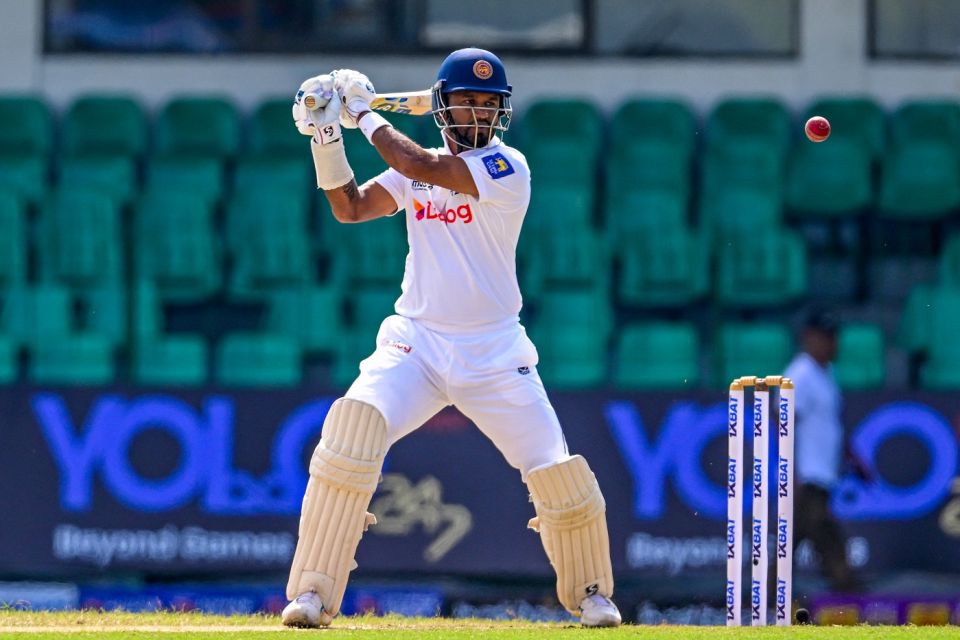
Opening is often pretty tough in England, but you have got Sri Lanka’s most prolific Test opener in your team. How important is Karunaratne going to be?
He is a very strong-minded player. He knows what his strengths and weaknesses are, and has worked on them. He can do something major on this tour.
Several players here are single-format Test cricketers. Is there a hunger you are sensing that comes out of that?
I want to make sure there is that hunger. Playing three Tests like this, this is not an opportunity you will get easily again. So we have to take it while we can. Scoring runs here is challenging, because even if the pitches are flat, the ball can still start swinging, or seaming. We have to know how to adjust to that.
There’s not quite as much experience on the seam-bowling front, though Vishwa Fernando did play three games for Yorkshire this season. How are the bowlers looking?
They have prepared well. Vishwa has played a lot of cricket, and the cricket he played in the last couple of months here in England would have been fantastic for him. He would have learned a lot and he will help the others with that. Asitha Fernando has played here a bit too. Lahiru Kumara is coming here after an injury and has a little bit of rustiness about him, but if we get his rhythm right, we will be in great shape. Others like Kasun Rajitha and Nisala Tharaka are there too.
One area in which Sri Lanka have struggled for several years on overseas tours is with injuries to fast bowlers. How have you tried to counter that?
That’s something that’s out of our control. The players and the physios and trainers are all doing their part in terms of strength and conditioning. We know that it will be colder here and what we need to do in those conditions. They are doing everything possible. But we have got all the bowlers that we wanted here.
What are your own plans after this tour? Sri Lanka Cricket is currently looking for a head coach…
Sri Lanka Cricket must be looking for a new coach. I think they have advertised and must be interviewing candidates now. I’m not involved in that process. I’m at the High Performance Centre. One thing I want to do is to give our batters long batting sessions, which is something that Zubin talked about. It’s important for batters to get batting for two-three hours. I want to take that process forward with the other coaches and improve our batting.
[Cricinfo]

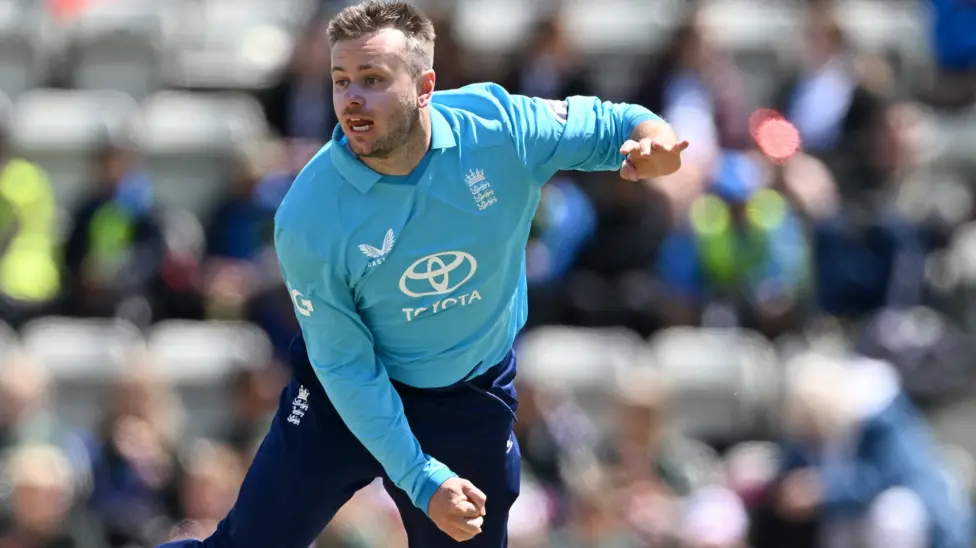
Leg-spinner Mason Crane could play for England for the first time in eight years after being recalled for the one-day international tri-series in Pakistan.
The 29-year-old won his only Test cap against Australia in Sydney in 2018 and is now given an opportunity in the series which also involves Sri Lanka next month.
Crane, who also played two T20 internationals in 2017, could also push his case in the fight to be England’s number one spinner in Test cricket.
Sam Curran and Adil Rashid both return after injuries, and uncapped pair James Coles and Henry Crocombe are included.
Jos Buttler is out with the hamstring injury he sustained last week, while Jacob Bethell is continuing his recovery from knee surgery.
Brydon Carse, who is under an investigation from the Cricket Regulator following an incident outside a nightclub in Derby in August, remains absent.
England are on a diet of white-ball cricket until three Tests in South Africa in December as they build up to the 50-over World Cup in southern Africa next year.
The tri-series in Pakistan involves the three teams taking part playing each other twice, with the top two advancing to the final. Following the trip to Pakistan, England play three one-day internationals and five T20s in Australia in November.
As England continue to shape their backroom staff following the arrival of Stephen Fleming as Test coach, Jeetan Patel, Mike Yardy, David Saker and Carl Hopkinson will assist white-ball head coach Brendon McCullum in Pakistan.
That means Marcus Trescothick, who took temporary charge of the Test team for the series against Pakistan in the home summer, misses the trip.
It is understood the make-up of the coaching staff is part of a plan to rotate the coaches – fielding coach Sarah Taylor and fast-bowling coach Tim Southee are also not going to Pakistan.
All of Trescothick, Taylor and Southee are likely to be part of England’s coaching team for other tours this winter.
England squad for tri-series in Pakistan:
Harry Brook (Yorkshire – captain), Gus Atkinson (Surrey), Sonny Baker (Hampshire), Tom Banton (Somerset), James Coles (Sussex), Jordan Cox (Essex), Mason Crane (Glamorgan), Henry Crocombe (Sussex), Sam Curran (Surrey), Liam Dawson (Hampshire), Ben Duckett (Nottinghamshire), Will Jacks (Surrey), Jamie Overton (Surrey), Adil Rashid (Yorkshire), Joe Root (Yorkshire), Josh Tongue (Nottinghamshire).
(BBC)

Latest News
I extend my heartfelt wishes to all the sons and daughters of our country for a Happy World Children’s Day – President

Children’s Day Message from President Anura Kumara Dissanayake:
“Children are the most valuable asset of a nation. Ensuring their physical and mental well-being and creating an environment conducive to their proper development is a primary responsibility of any government. Children’s imagination, aspirations and creativity will determine the shape and colour of the country tomorrow. The country we build for children must not merely be a country prepared to be handed over to them in the future; it must be a country that gives space to their dreams today, listens to their voices and provides opportunities for them to realise their potential.
For the best interests of children, we are taking the necessary steps to ensure equal access to education, guidance, social protection, opportunities for sport, leisure and recreation, proper nutrition and access to healthcare, while protecting children from all forms of violence and discrimination and safeguarding their rights.
Race, religion, economic status, geographical background or any other circumstance should not be a barrier to any child’s education or proper development. Every child should have equal and fair opportunities to realise their potential, pursue their dreams and create the future they wish for themselves. To this end, we have already begun the process of reforming the education system in Sri Lanka, transforming it towards a skills-based system suited to the new world, one that does not place a burden on parents or cause distress to children.
Our aim is to ensure that no child is left behind in the new Sri Lanka we are building, and to provide every child with opportunities for development in a safe environment. It should be emphasised that the fundamental objective of all the programmes being implemented, from expanding educational scholarships to securing the future of children growing up in child development centres and those in need of care, is to create a dignified and secure tomorrow for every child in the country.
It is the aspiration of every parent to give their children a better life than the one they themselves experienced. We are currently steering the country’s economy towards a correct and stable direction in order to provide children with a safe and happy childhood, free from the shadows of an unstable economy. At the same time, we have launched the national operation “A Nation United” (Ratama Ekata), bringing everyone together to free the younger generation from the menace of illicit drugs.
At a time when we are working towards the goal of building a safe and better country for children, I greatly appreciate the initiative of the Ministry of Women and Child Affairs in organising this year’s World Children’s Day celebrations under the theme “Strong Minds – Enriched Children”, declaring a National Children’s Day Week and conducting a range of meaningful programmes aimed at strengthening children’s rights, well-being, protection, education and freedom.
I extend my heartfelt wishes to all the sons and daughters of our country for a Happy World Children’s Day”.

England call up Crane and rest Archer for Pakistan series

ICC introduces pink-ball daytime Test trial, new time-wasting penalties

Discussion on Anuradhapura Sacred City Development Plan

India enter Asian Games final after Kishan and Bumrah ride roughshod over Sri Lanka

I extend my heartfelt wishes to all the sons and daughters of our country for a Happy World Children’s Day – President

Sri Lanka bowl first in semi final clash against India

‘Dates have the highest sugar content to fight Coronavirus’

Sunday Island 27 December – Headlines

#SundayIsland 17th December – Headlines

Sunday Island – 28th March

Sunday Island Headlines – 21 March

Sunday Island – 21st February – Headlines
-

 Editorial6 days ago
Birth of a bad law
-

 News4 days ago
Police remove Thileepan statue in Jaffna
-

 Features7 days ago
Beyond traditional jobs: Why Sri Lanka needs to facilitate the gig economy
-

 News6 days ago
TIN mandatory for key transactions from Nov. 1
-
 Latest News7 days ago
Kusal, Wellalage star as Sri Lanka defend 322 in Headingley thriller
-

 Features4 days ago
The 22nd Amendment, constitutional recovery and illiberal slippage
-

 Features4 days ago
Of foreigners as CEOs of Lankan ventures
-

 News4 days ago
Sajith rejects Jt. Opp. protest sabotage claim; SJB TU chief demands remedial action