
Latest News
IPL 2025: Gujarat Titans stun Mumbai Indians to win a classic

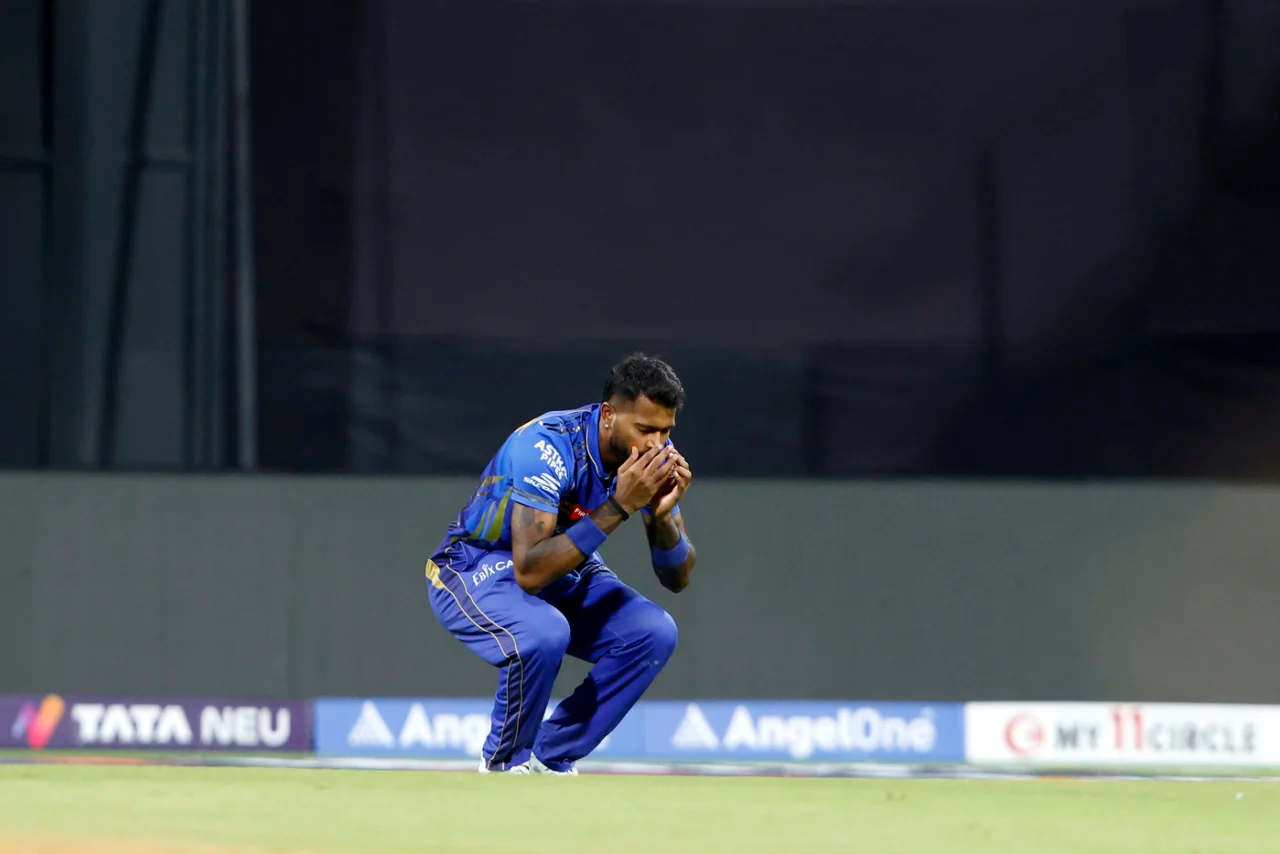
In a chaotic match laced with rain breaks during the second half, Gujarat Titans got home by the barest of margins to reach the top of the IPL 2025 points table and end Mumbai Indians’ six-match winning streak. When it started to rain just before midnight, MI would have thought they had fashioned an improbable comeback. Between two rain breaks, they had taken 4 for 25 to turn GT’s lead of eight on the DLS par score to a deficit of four with two overs to go.
Thanks to some excellent work from the groundstaff, the game resumed at the last possible moment, leaving GT 15 to get in the 19th over. Deepak Chahar was hit for a four and a six in the first three balls, then bowled a no-ball, but came back to take a wicket. With one needed off the last ball, MI could still have forced a tie had someone come around to collect the throw from mid-off. Hardik Pandya, who had bowled two no-balls earlier and had decided against bowling the last over, missed with the direct-hit, sparking wild celebrations in the GT camp.
There was appreciable seam movement for GT to exploit after winning the toss and choosing to field. Mohammed Siraj had Ryan Rickleton caught at short cover second ball, and Arshad Khan troubled Rohit Sharma before getting him out for 7 off 8.
GT could have shut MI out of the game then and there but they dropped Will Jacks on 0 and 29, and Suryakumar Yadav on 10. Jacks went on to score his first fifty for MI, in just 29 balls, and Suryakumar registered a 12th straight score of 25 or more. Despite some help for the spinners, MI seemed well-placed at 97 for 2 in 10.3 overs.
It is the strength and depth in the GT bowling that allows their batters to play more conventional cricket than some other teams, and it was on full display in the second half of MI’s innings. R Sai Kishore, who doesn’t always get to bowl, troubled the right-hand-heavy MI middle order before going over the wicket and cramping Suryakumar on an inside-out shot for a catch at long-off. He then responded unerringly to the attacking fields for Hardik, who slogged and top-edged. Between these two wickets, Rashid Khan marked his comeback from 3-0-50-0 in the last match with the wicket of Jacks, having drawn five false shots in nine balls bowled to him
Prasidh Krishna strengthened his grip on the purple catch as he and Gerald Coetzee drove home the advantage with a wicket each. Rashid came back to bowl the 18th over for just four. Corbin Bosch hit two sixes in the final over before getting hit on the back of the head, an event that would go on to have implications later in the night.
The new ball seamed for MI as well, and they have the bowling to exploit it. Trent Boult beat B Sai Sudarshan first ball and then took his edge second ball, one short of Suryakumar’s tally of 510 this year. The orange cap remained on Suryakumar’s head, but two other GT batters reached 500 runs during a testing, chaotic time.
Amid heavy wind, Shubman Gill and Jos Buttler were forced to quite literally weather the storm. Jasprit Bumrah and Boult were exceptional, and at 21 for 1 in five overs, the shortest period for this to constitute a match, GT were well behind the par score.
By now, though, it had stopped raining, vindicating the umpires’ decision to not take the players off. Even as Gill struggled to get going, Buttler got GT moving. An 11-ball over from Hardik – two no-balls, three wides – sent GT on their way, but a new twist in the tale was Bosch’s concussion substitute, the left-arm quick Ashwani Kumar.
Ashwani conceded just five in his first over, and had Butter caught off the bottom edge in his second.
Sherfane Rutherford made a comeback to the GT side as the Impact Player, which led to the introduction of Jacks’ part-time spin. GT were five behind the par score, and Rutherford just 1 off 2 when Jacks started the said over. Three dots later, GT looked in trouble. Rutherford, though, turned it around with an inside-edged four and two lovely inside-out shots for 10 runs. In the next over, he took down Ashwani. GT were now eight ahead of the par score as for the first time rain forced players off the field.
Bumrah had two overs left, and Boult one, when play resumed without any deduction in the overs. Quite incredibly, Bumrah drew seam movement from the old ball to go past Gill, who scored 43 off 46 despite two free hits and a dropped catch, and Shahrukh Khan two balls after he had hit Bumrah for a four. Between these two wickets, Boult skidded one through to get Rutherford out for 28 off 15.
It is a miracle they got the teams back on for that one over. It was double trouble for MI as their three best bowlers had bowled out, and they now had to bowl with one boundary rider fewer because of their slow over-rate. Chahar struggled to control a ball that got wet with Rahul Tewatia’s hit to the fence first ball. Coetzee smoked a slot ball over long-off to leave them four needed off three. A no-ball made it easier, but a sharp bouncer brought in Arshad to face the last ball.
Two mistakes were made by MI. They didn’t position a fielder next to the pitch to jump on to collect a throw, and Suryakumar and the bowler weren’t swift to get to the stumps from short extra cover. Hardik looked up to see if he could throw the ball to someone, he saw no one, and had to shy at the stumps. He missed.
Brief scores:
Gujarat Titans 147 for 7 in 19 overs (Shubman Gill 43, Joss Buttler 30, Sherfane Rutherfird 28, Rahul Tewatia 11*, Gerald Coetzee 12; Deepak Chahar 1-32, Trent Boult 2-22, Jasprit Bumrah 2-19, Ashwani Kumar 2-28) beat Mumbai Indians 155 for 8 in 20 overs (Will Jacks 53, Suryakumar Yadav 35, Corbin Bosch 27; Mohammed Siraj 1-29, Arshad Khan 1-18, Prasidh Krishna 1-37, Sai Kishore 2-34, Rahid Khan 1-21, Gerald Coetzee 1-10) by three wickets (DLS method)
[Cricinfo]

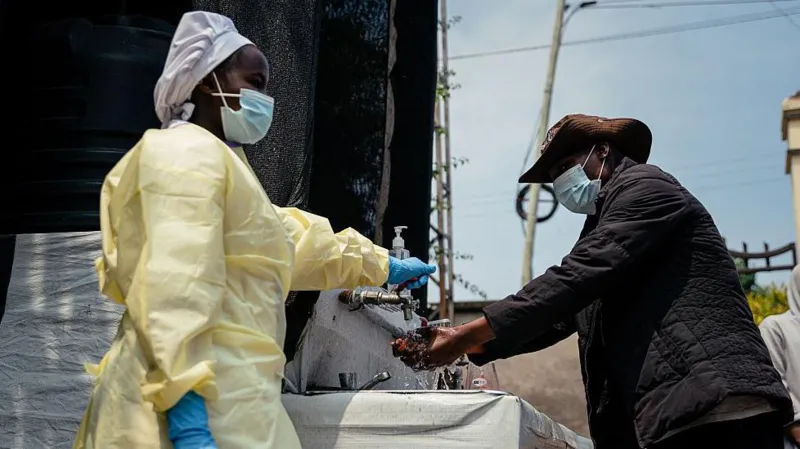
At least 100 deaths have been reported in an Ebola outbreak in the Democratic Republic of Congo, with more than 390 cases suspected, the head of the Africa Centres for Disease Control and Prevention has told the BBC.
Jean Kaseya warned that with no approved drugs or vaccines people should follow public health measures, including at funerals of Ebola victims.
There are also two confirmed cases and one death in Uganda, says the US Centers for Disease Control and Prevention (CDC).
The World Health Organization (WHO) has declared the outbreak of the current strain of Ebola, which is caused by the Bundibugyo virus, an international emergency.
An American doctor in the DR Congo is among those with a confirmed case, the medical missionary group they were working with and the CDC has said. The individual, who has not been named, will now be taken to Germany for treatment, they told CBS News, the BBC’s US partner.
CBS News also quoted sources as saying that at least six Americans have been exposed to the Ebola virus during the outbreak in the DR Congo.
The CDC said it was supporting the “safe withdrawal of a small number of Americans who are directly affected”, but did not confirm how many.
The US government is reportedly looking to arrange transport for the small group of Americans in DR Congo to a safe quarantine location, a source told health news site STAT.
Quoting a source, the site adds that the group could be taken to a US military base in Germany, though this has not been confirmed.
The CDC declined to answer direct questions about the US citizens reportedly affected during a press conference on Sunday.
In an update on Monday, the public health agency said the risk to the US was relatively low, but said it would introduce a range of measures to prevent the disease from entering the country.
This includes monitoring travellers arriving from affected areas and placing entry restrictions on non-US passport holders if they have been in Uganda, DR Congo or South Sudan in the last 21 days.
The CDC said it would work with airlines and other partners to carry out contact tracing of passengers, increase testing capacity and hospital readiness to respond to the outbreak.
The US has also issued a Level Four travel advisory – its most severe level – warning against travel to the DR Congo.
The WHO has said the outbreak in DR Congo’s eastern Ituri province is a public health emergency of international concern, but did not meet the criteria of a pandemic.
The agency has also warned it could potentially be “a much larger outbreak” than what is currently being detected and reported, with significant risk of local and regional spread.
More than 28,600 people were infected by Ebola during the 2014-2016 outbreak in West Africa, the largest outbreak of the virus since its discovery in 1976.
The disease spread to a number of countries within and outside of West Africa, including Guinea, Sierra Leone, the United States, the United Kingdom and Italy, killing 11,325 people.
Kaseya, head of the Africa CDC, told the BBC that in the absence of vaccines and effective medicines people should follow public health measures, including the guidance about handling the funerals of those who have died from the disease.
“We don’t want people infected because of funerals,” he told the BBC World Service’s Newsday programme.
Community funerals, where people helped wash the bodies of their loved ones, contributed to many people becoming infected in the earlier stages of the big outbreak more than a decade ago.
The WHO has advised DR Congo and Uganda, two countries with confirmed cases, to undertake cross-border screenings to avoid the virus spreading.
It has also urged nearby countries to “enhance their preparedness and readiness”, including surveillance at health facilities and communities.
Neighbouring Rwanda said it would be tightening screening along its border with DR Congo as a “precautionary measure”, while Nigeria said it was “closely monitoring the situation”.
[BBC]
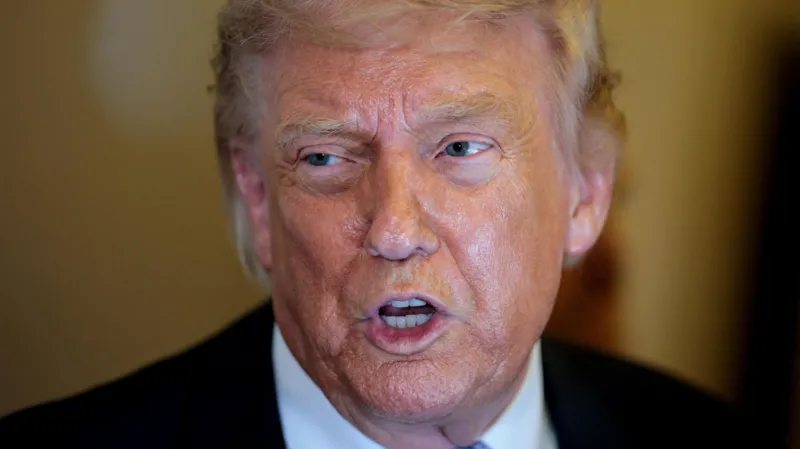
US President Donald Trump has said he is holding off a military attack on Iran planned for Tuesday at the request of Gulf states as “serious negotiations are now taking place”.
In a post on Truth Social, he said he had been asked to do so by the leaders of Qatar, Saudi Arabia and the United Arab Emirates.
He said he had been informed a deal would be made that is “very acceptable” to the US, adding there would be “NO NUCLEAR WEAPONS FOR IRAN!”
But he warned the US would be ready to “go forward with a full, large scale assault of Iran, on a moment’s notice” if there was no acceptable deal.
A senior Iranian military commander told the US not to make “strategic mistakes and miscalculations again”.
Trump’s latest announcement on Iran comes amid a drop in his approval rating and as polls show the war is increasingly unpopular at home.
Some 64% of voters believe it was the wrong decision to go to war with Iran, according to a New York Times/Siena poll published on Monday.
The survey also found that just 37% of voters approve of Trump’s job performance as president. The polling underscores the challenge Republicans face in the midterm elections, in a moment of growing public frustration with the war and Trump’s handling of the economy and immigration, among other issues.
Israeli and US forces began massive air strikes on Iran on 28 February, while Tehran retaliated by firing drones and missiles at Israel and US targets in countries across the Gulf.
A major factor at play here is the fear Gulf Arab states have over how Iran is likely to retaliate after any further attacks by the US.
Iran is known to retain a significant number of drones and missiles with which it could resume its full-scale attacks on neighbouring states, their airports, petrochemical facilities and even the crucial desalination plants that provide drinking water as summer temperatures in the Gulf build up.
Talking to reporters later, Trump called it “a very positive development, but we’ll see whether or not it amounts to anything”.
He said: “We’ve had periods of time where we had, we thought, pretty much getting close to making a deal, and it didn’t work out. But this is a little bit different.”
Trump said there seemed to be “a very good chance” of an agreement with Iran, adding: “If we can do that without bombing the hell out of them, I would be very happy.”
A ceasefire agreed in April meant to facilitate talks has largely been observed despite occasional exchanges of fire.
Iran has also continued to control the Strait of Hormuz, effectively closing the vital waterway through which around 20% of the world’s oil and liquefied natural gas travels.
The move, which Iran has said is in retaliation for US and Israeli attacks, has sent oil prices soaring globally.
The US, for its part, has been enforcing a blockade of Iranian ports to exert pressure on Tehran to agree to its terms.
Late on Monday, Iran’s Tasnim news agency published what it said were comments by Supreme Leader Mojtaba Khamenei, warning that new fronts would be opened where the enemy had little experience and would be highly vulnerable.
Tasnim appeared to have reposted Khamenei’s quotes from 12 March. Some Iranian news outlets have taken to republishing his previous written messages.
Earlier on Monday, Iran said it had responded to the latest US proposal and that exchanges with Washington were continuing through Pakistani mediators.
Iranian media earlier reported the US had failed to make any concrete concessions to Tehran.
On Sunday, Trump had warned that “for Iran, Clock is Ticking, and they better get moving, FAST, or there won’t be anything left of them”.
Several days ago, the US president had said the truce was on “massive life support” after rejecting Tehran’s demands, labelling them “totally unacceptable”.
Esmail Baghaei, an Iranian foreign ministry spokesperson, insisted they were “responsible” and “generous”.
According to Iran’s semi-official Tasnim news agency, Iran’s demands included an immediate end to the war on all fronts – a reference to the continued Israeli attacks against Iran-supported Hezbollah in Lebanon – a halt to the US naval blockade of Iranian ports, and guarantees of no further attacks on Iran.
They also reportedly included a demand for compensation for war damage and an emphasis on Iranian sovereignty over the Strait of Hormuz.
Iran’s semi-official Fars news agency said on Sunday that Washington had set five conditions in response to Tehran’s proposal.
They reportedly included a demand that Iran keep only one nuclear site in operation and transfer its stockpile of highly enriched uranium to the US.
Trump suggested on Friday he would accept a 20-year suspension by Iran of its nuclear programme – a major sticking point between the two countries – in what appeared to be confirmation of a shift in position away from a demand for a total end to it.
The US and its European allies claim Iran is seeking to develop nuclear weapons by enriching uranium. Tehran has repeatedly said its nuclear programme is solely for peaceful purposes.
[BBC]

The Lanka Premier League (LPL) 2026 will officially commence on July 17 with a rematch of the 2024 final, which was the last time the LPL was held, featuring reigning champions Jaffna and 2024 runners-up Galle.
The tournament opener is set to take place under the SSC lights in Colombo – a venue that hosted its inaugural T20I during this year’s T20 World Cup. The game is scheduled to begin at 7.30pm, though the venue will also host an official opening ceremony to launch the 2026 season ahead of the fixture.
The finalised tournament timeline will see the competition run from July 17 through August 8. Previously, SLC had announced the tournament will start on July 10, its matches played across four international venues.
The SSC will host five matches in total from July 17-19, before the action moves to Dambulla, then Kandy, and finally back to Colombo – this time at the R. Premadasa Stadium – for the knockout stages and final. There will also be a reserve day for the final, on August 9.
The 2026 edition will feature five teams representing Jaffna, Colombo, Kandy, Galle, and Dambulla. While the official franchise names and corporate ownership structures remain unannounced, SLC is expected to release the finalised team identities and brand details in the lead-up to the tournament.
The player registration portal, meanwhile, has been open since May 8 and will close on May 20. While direct signings can take place until May 22, the deadline for registration for all categories remains May 20.
While the previous two seasons hosted an auction, this year will see the return of a draft, set for June 1.
This change means that no player retention will be allowed from previous seasons, setting the stage for a significant shake up in squad composition. Each team will need to have a minimum of 18 members in their squad, with a further provision to add two local players, taking the squad limit to a maximum of 20.
In order to boost homegrown participation, SLC has announced that two local Emerging U-23 players must be present in each squad, with at least one named in a team’s starting XI. There must also be four overseas players in the playing XI at any given time.
The player registration guidelines had briefly sparked controversy on social media after an initial draft of the guidelines had listed a minimal count of 250,000 social media followers as a mandatory requirement for a registering Icon and Star category players – the two highest player categories. However, SLC has since removed that requirement.
LPL also kept a strong focus on ensuring player media engagement, with match fee penalties ranging from 5% to 50% for failure to meet the media and fan engagement requirements.
[Cricinfo]

At least 100 dead in Ebola outbreak in DR Congo, official says

Trump says he called off new Iran attack at request of Gulf states

Lanka Premier League returns after two years, opener set for July 17

Cummins, Kishan, Klaasen power Sunrisers Hyderabad into playoffs; Chennai Super Kings not out yet

Mushfiqur ton, Litton and Joy fifties set Pakistan 437

Showers will occur at times in the Western, Sabaragamuwa, Central, North-western, Northern and Southern provinces and in Anuradhapura district

‘Dates have the highest sugar content to fight Coronavirus’

Sunday Island 27 December – Headlines

#SundayIsland 17th December – Headlines

Sunday Island – 28th March

Sunday Island Headlines – 21 March

Sunday Island – 21st February – Headlines
-
 News6 days ago
Ex-SriLankan CEO’s death: Controversy surrounds execution of bail bond
-

 Features2 days ago
Sri Lankan Airlines Airbus Scandal and the Death of Kapila Chandrasena and my Brother Rajeewa
-
 News3 days ago
Lanka’s eligibility to draw next IMF tranche of USD 700 mn hinges on ‘restoration of cost-recovery pricing for electricity and fuel’
-
 Midweek Review6 days ago
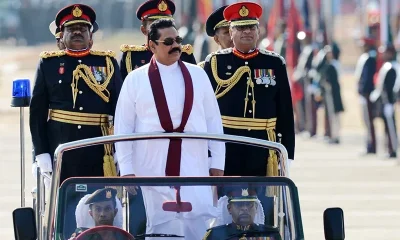
A victory that can never be forgotten
-
 News2 days ago
Kapila Chandrasena case: GN phone records under court scrutiny
-
 Opinion5 days ago
Electricity tariffs have skyrocketed: Can further increases be prevented?
-
 Features4 days ago
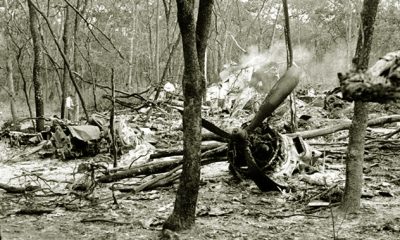
Mysterious Death of United Nations Secretary General Hammarskjöld
-

 News2 days ago
Rupee slide rekindles 2022 crisis fears as inflation risks mount