
News
Invasive black mussel threatens Lanka’s fragile wetlands


The discovery of the invasive black mussel (Mytella strigata) in shrimp farms along Sri Lanka’s northwestern coast has alarmed scientists, who warn that the species could spread rapidly and disrupt the country’s aquatic ecosystems, said a report published yesterday by the Mongabay.
Clusters of the mussel were first detected in September 2023 during surveys for a mangrove restoration project near the Anawilundawa Sanctuary, a Ramsar-listed wetland. Researcher Thilina Kumarasiri initially found empty shells in supply canals, which were later confirmed by conservationist Malik Fernando of the Wildlife & Nature Protection Society as belonging to M. strigata.
Originally from the Americas, the species has become a notorious invader in Asia, including India’s Kerala backwaters, and is known to foul aquaculture systems, clog fishing nets and reduce oyster settlement. Its rapid growth was evident in Anawilundawa, where drained ponds revealed thick mats of mussels attached to pond bottoms and hard surfaces within months.
“The speed at which this species spread in the pond was alarming,” Fernando said. “It suggests the mussel could establish itself quickly in similar habitats.”
According to Wayamba University’s aquaculture expert Prof. Sevvandi Jayakody, the mussel’s resilience lies in its biology: early maturity, long spawning seasons and tolerance to wide salinity and temperature ranges. She warned that its spread through Anawilundawa’s waterways could threaten sensitive wetland ecosystems if unchecked.
Scientists suspect the mussel may have arrived via contaminated live shrimp feed, ballast water from ships or biofouling on hulls. Sri Lanka, though part of the IMO’s biofouling management initiative, has yet to ratify the Ballast Water Management Convention.
Experts are calling for urgent monitoring, containment and stronger invasive species laws. “Rapid eradication is essential,” Jayakody said. “Without swift action and public awareness, this invader could become another costly ecological burden.”
Samantha Gunasekara, Chairperson of the Marine Environment Protection Authority in Sri Lanka, explained that ballast water — seawater taken on by ships for stability — is often loaded in one port and discharged in another, unintentionally transporting marine life across oceans.
Biofouling, the buildup of organisms such as barnacles, mussels and algae on submerged surfaces like hulls and propellers, is another vector. “Unlike ballast water, which can be treated, biofouling organisms can be physically stubborn and harder to remove,” Gunasekara noted.
Sri Lanka is one of 12 countries in the International Maritime Organisation (IMO)-led GloFouling Partnerships project, which promotes good biofouling management practices. “Even though the project ended in May 2025, we continue to support partner countries with pilot projects and sustainable technologies,” IMO technical analyst Will Griffiths said.
Many biofouling species can survive extended journeys, even across different water temperatures and salinities, so the project spurred the development of good practices and standards for improved biofouling management, Griffiths said.


An opposition grouping alleged yesterday (18) that the Commission to Investigate Allegations of Bribery or Corruption (CIABOC) had become a political tool in the hands of the JVP/NPP to suppress the Opposition both in and outside Parliament.
Former Minister Prof. G. L. Peiris accused the CIABOC of fabricating cases against political opponents by manipulating those summoned. He tore into the institution, alleging that it drove people to suicide.
Addressing the media at the former President Ranil Wickremesinghe’s Flower Road office, Prof. Peiris alleged that former SriLankan Airlines CEO, Kapila Chandrasena, had been a victim of that despicable strategy. Director General of CIABOC, ex-High Court Judge Ranga Dissanayake, had warned Chandrasena of dire consequences unless the latter fully cooperated with the Commission, Prof. Peiris said.
Prof. Peiris emphasised the responsibility on the part of all concerned to examine Chandrasena’s affidavit regarding the intervention made by the Director General.
Chandrasena committed suicide while being on bail in connection with an investigation into the alleged USD 2 mn bribe to facilitate an Airbus deal during the second term of President Mahinda Rajapaksa.
Prof. Peiris alleged that the CIABOC Director General had taken control of the Commission and was pursuing an agenda inimical to the law. (SF)
News
Over 5,000 military personnel promoted to coincide with 17th anniversary of victory over terrorism
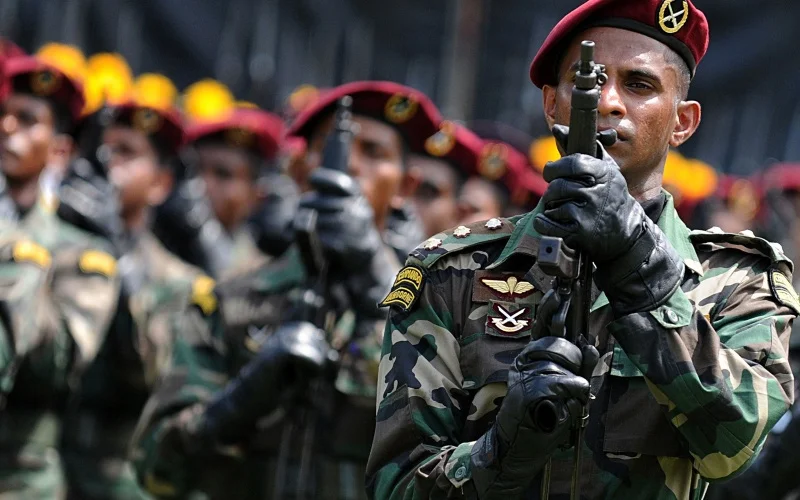
In line with the 17th National War Heroes’ Commemoration Day, which falls on 19 May, a total of 5,289 Tri Service personnel have been granted promotions to their next respective ranks in recognition of their dedicated service rendered to the nation, the Defence Ministry announced.
The National War Heroes’ Commemoration Day is commemorated annually on 19 May to honour and appreciate the invaluable sacrifices and exemplary service of members of the Tri Forces who contributed immensely towards restoring peace and safeguarding the sovereignty of the motherland.
Accordingly, these promotions have been awarded, based on the recommendations of the respective Service Commanders, and in accordance with the established administrative procedures of the Tri Forces.
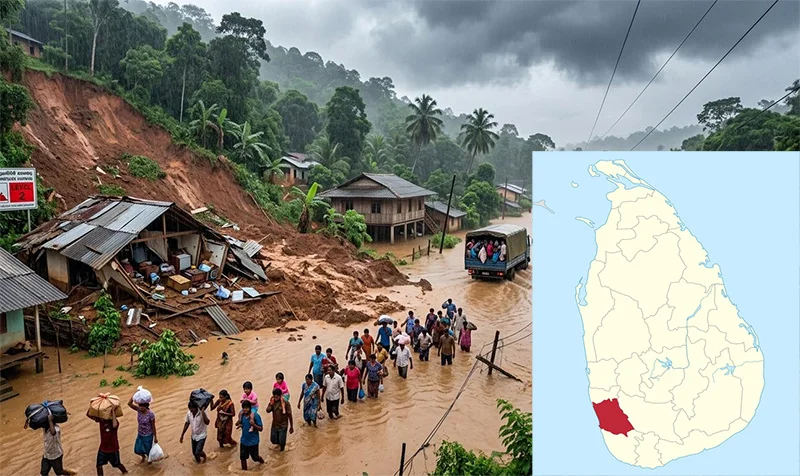
Kalutara is the worst affected district due to the prevailing adverse weather conditions. According to the Disaster Management Centre (DMC) of approximately 200 houses partially damaged so far, about 90% are in the Kalutara district.
DMC said that 22 houses had been damaged in the Ratnapura District, 14 in the Galle District, 4 in the Moneragala District, 25 in the Batticaloa District, 5 in the Colombo District, 4 in the Jaffna District, 25 in the Gampaha District, 2 in the Hambantota District, 2 in the Anuradhapura District, 5 in the Mannar District, and 2 in the Trincomalee District..
One house was destroyed in the Ratnapura District.
The DMC further stated that 1,582 families had been affected by the inclement weather.
The affected families are in 66 Divisional Secretariat divisions across the country.
Accordingly, a total of 5,267 individuals from 1,582 families have been impacted by adverse weather, according to the statement issued by the Centre.

ICC deputy chair has ‘cordial and constructive’ meetings with new SLC committee

BBL on track to host season opener in Chennai in December

At least 100 dead in Ebola outbreak in DR Congo, official says

Trump says he called off new Iran attack at request of Gulf states

Lanka Premier League returns after two years, opener set for July 17

Cummins, Kishan, Klaasen power Sunrisers Hyderabad into playoffs; Chennai Super Kings not out yet

‘Dates have the highest sugar content to fight Coronavirus’

Sunday Island 27 December – Headlines

#SundayIsland 17th December – Headlines

Sunday Island – 28th March

Sunday Island Headlines – 21 March

Sunday Island – 21st February – Headlines
-

 News6 days ago
Ex-SriLankan CEO’s death: Controversy surrounds execution of bail bond
-

 Features2 days ago
Sri Lankan Airlines Airbus Scandal and the Death of Kapila Chandrasena and my Brother Rajeewa
-
 News3 days ago
Lanka’s eligibility to draw next IMF tranche of USD 700 mn hinges on ‘restoration of cost-recovery pricing for electricity and fuel’
-

 Midweek Review6 days ago
A victory that can never be forgotten
-

 News2 days ago
Kapila Chandrasena case: GN phone records under court scrutiny
-

 Opinion5 days ago
Electricity tariffs have skyrocketed: Can further increases be prevented?
-
 Features5 days ago
Mysterious Death of United Nations Secretary General Hammarskjöld
-

 News2 days ago
Rupee slide rekindles 2022 crisis fears as inflation risks mount