
Opinion
Insurance and its relevance to global economy


“The trade of insurance gives great security to the fortunes of private people, and by dividing among a great many that loss which would ruin an individual, makes it fall light and easy upon the whole society. In order to give this security, however, it is necessary that the insurers should have a very large capital.” (Wealth of Nations by Adam Smith, Scottish Economist – 1776).
The history of insurance traces the development of the modern business of insurance. Insurance is the oldest method of transferring risk, and is deemed to be one of the oldest in the field of economics. The first activities like insurance appeared nearly 4000 years ago and is as old as the historical society.
The so-called “bottomry” contracts were known to merchants of Babylon as early as 4000–3000BC. Bottomry was also practiced by the Hindus in 600 BC and was well understood in ancient Greece as early as the 4th century BCE.
[Bottomry, referring to the ship’s bottom or keel, is a maritime transaction, where the owner of a vessel borrows money and uses the ship itself as collateral. If the money with interest is not paid at the time appointed at the ship’s safe return or if the ship sinks, the owner forfeits the ship itself to the creditor.
While insurance can be traced back thousands of years, it is only in the last half century that we have come to a comprehensive and deep understanding of this most vital, yet complex, economic institution. To really understand insurance, it takes a deep knowledge of the subtleties of risk and probability, of how rational (and not so rational) people behave when faced with risk; of how insurance companies can be structured to cope with risk; of how governments can effectively intercede when insurance markets fail to deliver
Whether in the past periods or in the modern period the main goal of insurance is protecting health and assets of the people. Insurance is the main element in the operation of sophisticated national economies throughout the world today. Insurance stimulates business activities to operate in a cost-effective manner, by managing risks which associated with business activities are assumed by third parties. As we know, risks and bad accidents can happen always in life. These risks affect people badly and negatively every time. But insurance protects people from these risks. We can say that insurance is a measure, which people take in advance to risks which can happen every time and at any time.
The importance of insurance, like other financial institutions such as banking and the stock market, is vital for the sustainable economic growth of any country. The risk is inherent in every human activity ranging from social life to economic activities. The huge contribution of insurance to the economy as a whole, promotes a greater sense of security, peace of mind, reduction in anxiety and fear among individuals, businesses and governments.
The insurance industry is part of the services sector and is deemed to be a secondary branch of economic activity. Its effect is essentially indirect and intangible, because it deals with consequences of economic activity that would occur if insurance did not exist. Insurance serves production and consumption, international and interpersonal trade, payment and credit transactions, as well as the conservation of existing and creation of new wealth. However, the insurance industry has developed differently across industrialized countries due to differences in regulatory legislations by various regimes.
To individuals, insurance purchase enables an individual to sustain continuous consumption of his property in the case of theft or damage or due to other endangerments and perils.
With regard to corporate institutions, insurance enables businesses to operate in a cost-effective manner by providing risk transfer mechanisms.
To the Government, on the other hand, expenditure on damages caused by natural disasters such as fire, flood and other natural disasters is reduced, if not eliminated, with the help of insurance.
In developed countries, insurance has become a vital part of the economy and they make it a point to insure all assets with reputed insurance companies. Insurance lets people as well as businesses protect themselves against certain potential losses and financial hardship at a reasonable acceptable rate. In modern times there are certain specialized insurances which play great roles in the economy of countries.
The importance of the insurance-growth nexus is growing due to the increasing share of the insurance sector in the aggregate financial sector in almost every emerging and mature market economy.
The main intention of this article is to add to the understanding of the role of the insurance sector in the finance-growth nexus – whether and how insurance influences economic growth. The rationale behind this notion is twofold: on the one hand, the importance of the insurance sector within total financial intermediation has risen over time, including the magnitude and intensity of links between insurance, banking and capital markets. Thus the likely impact of insurance on the economy, consequently, increases.
The literature on finance and growth does not, however, pay sufficient attention to the important and rising role played by non-banking financial intermediaries such as insurance companies. While the actuarial processes for insurance have been in continuous development, it really took till the second half of the twentieth century for a modern theory of insurance economics to emerge. This laid out a model of an optimal insurance contract between risk-averse consumers and an insurance company capable of diversification.
In this ever growing field of enquiry, in which rational consumers and rational insurers come together in a mutually beneficial trade of risk, it deepened the understanding of how people come to share risk in an insurance market, and the natural frictions that occur (particularly the conflicting incentives of the policyholders and insurers); there was growing dissatisfaction with a theory that ignored the quirkiness of actual behavior; in real life people might not be quite so rational and raised questions like: “How would insurance market work in a world of limited rationality”?
Modern financial theory has another set of fascinating implications for those interested in insurance. Uncertainty is at the heart of insurance. This is already manifested in our limited knowledge about observable past events. All our activities depend on uncertain and unknown circumstances beyond the control of a single individual. Unambiguous, deterministic cause-effect relationships are replaced by ambiguity in the perception of the economic environment. With respect to the future, uncertainty looms still larger. Insurance is, however, of particular importance for risks with negative consequences.
What does “risk” mean in insurance parlance?
Usually risk is understood to mean as the danger of incurring a loss. This danger can materialize in different ways in a disaster-stricken community, ranging from complete loss, impairment or reduction of value of an asset, to the disruption of business, to the loss of a limb or even loss of life.
What is meant by the colloquial use of the word – “insurance”?
The pertinent literature gives various definitions of insurance. Problems arise because the term originates from business practices.
Individuals seek to protect themselves against irregular but probabilistic shocks impinging on their assets “health”, “wealth”, and “wisdom” by employing one or several tools of risk management, mainly by purchasing insurance. Therefore, the importance of insurance presumably increases with growth in the value of these assets. In step with the growth in general wealth, the concentration of assets has also increased, leading to so-called catastrophic risks.
It will expose us to modern financial theories such as asset pricing theory and option theory and, in doing so, will expose us to such exotic financial instruments as catastrophe bonds. It will take us deep into public policy and the welfare state and into the challenges of operating universal health insurance programs; and it will face us with the challenges of a world where new and unpredicted risks are appearing and for which normal insurance mechanisms may not function; where such catastrophes are either triggered by human failure as a result of man-made disasters; or by nature (natural disasters).
Disasters with the largest financial consequences fall into the category of natural disasters. We have also witnessed that the more recent disasters are also the more severe ones. This gives rise to the conjecture that increasingly, natural disasters are in fact man-made, caused notably by environmental pollution through Carbon-dioxide – GreenHouse Gases, causing global warming, and the latest Coronavirus – Covid -19 pandemic, pushing mankind into a state of extreme, irremediable, ruin and misfortune.
These challenges will lead to the expectation that the demand for insurance will tend to increase in the future. To achieve this, the industry has to be prepared for the unexpected and to be able to timely respond to the challenges laid before them; insurers and reinsurers must know and follow the trends and dynamics that characterises the global insurance and reinsurance industry.
ZULKIFLI NAZIM
[The writer counts over 50 years in the insurance industry and is an Associate of the Chartered Insurance Institute [London] and also holds the title of Chartered Insurance Practitioner; as well as an Associate of the Insurance Institute of India.]



 (The author is on X as @sasmester)
On 6 May 2026, I wrote an essay in this column titled, ‘Monks, the Law and the Future of the Buddhist Monastic Order.’ While my point of departure was the arrest of 22 Buddhist monks on narcotics charges, my focus was the need to treat everyone in this country equally before the law – including Buddhist monks. The fact that the Mahanayaka Theros had requested in a statement that the errant monks be thoroughly investigated and legally dealt with was encouraging given their usual silence in such cases. Now, another – and an even more visible case – has come to the fore. This time, the Chief Prelate of the Atamasthana, Venerable Pallegama Hemarathana Thero, has been accused of sexually abusing an underage girl from Anuradhapura. The National Child Protection Authority reported the facts of the incident that had been discovered to the Anuradhapura Magistrate’s Court on 8 May 2026, and the court subsequently ordered the arrest of the suspect monk and the girl’s mother. Anuradhapura Chief Magistrate has also imposed a foreign travel ban on the suspect monk.
But unlike with the 22 monks in the earlier case, the usual silence on the part of the Reverend Mahanayakas and other senior monks have descended upon Venerable Hemarathana’s case and the seeming non-equality before the law seems to prevail again – at least to some extent. This time, there are no public statements or meetings with the President to urge action to the ‘fullest extent of the law’ as was the case earlier. One must assume this is because the accused this time is a senior and influential prelate as opposed to a group of unknown young monks in the earlier case.
While his case was gathering momentum both in the courts and in public discourse, Ven Hemaratana promptly admitted himself to a comfortable private hospital in Colombo following the established path already followed by many affluent suspects. However, he was officially arrested on 8 May 2026. It is unfortunate that he resorted to this course of action rather than presenting himself to the prison authorities through the courts. This is because this action of anticipated privilege places him on par with all the powerful suspects in this country in recent times who have taken the same path. This is a matter of his own choice. My understanding is Venerable Hemarathana, after being arrested at the private hospital has been officially placed under remand and held in a government hospital under prison custody. While the law has worked here in terms of the arrest and the preceding action unlike numerous other occasions in recent decades when it comes to powerful individuals, many commentators claim it has still been somewhat slow. This perception also comes from the long history of negative experiences society has witnessed and the expectation of better delivery of justice under the watch of the present government. Overall, however, I think the procedure so far indicates a somewhat positive development given the unenviable history involving such high-profile cases in the past. But the public vigilance over the case should not diminish.
However, despite the typical silence within the formal Buddhist ecclesiastical establishment, there is considerable debate and often unmitigated noise mostly emanating from social media clamouring for the need for justice for the allegedly abused girl. If not for this noise, my sense is, the present case too might have been swept under the carpet as has been done many times before in similar circumstances.
But the social media clamour, despite its positive impact on pressuring government agencies towards action, has its own major failings. Many of these articulations have already decided upon Venerable Hemarathana’s guilt as if they had access to all the evidence in the case and have unparalleled legal expertise that would allow them to act as judge, jury and executioner in a court of public popularity. This approach itself is very dangerous. Irrespective of how we may feel about the case and the plight of the young girl who has been victimised in more ways than one, Venerable Hemarathana is still merely an accused or suspect. Nothing has been proven beyond any doubt in a court of law. Social media acting as an all-inclusive judicial mechanism is simply dangerous and unintelligent. The next victim can easily be any one of us for no good reason and the present social media trend-setters have already set the precedent.
The only sensible thing the social media and intelligent citizens, particularly Buddhists can do is not to make judgements in a situation where they simply cannot, but contribute to sensible and thoughtful debate and pressure the Buddhist establishment as well as the government to initiate urgent ecclesiastical reforms and ensure monks are treated exactly the same as all other citizens when they violate the law of the land. Hiding or protecting wrongdoers is not the solution as it will only make matters worse in the long run.
A somewhat comparative but limited global example is the Catholic Church which has faced extensive and recurring controversies regarding child sexual abuse across almost all continents, mostly as a vocal public discourse from the 1980s onward. It would be good to see how these controversies emerged and what happened.
The controversies in the United States emerged in 1985, 2002, 2018 even though it is the 2002 Boston Globe exposé that is considered the most damaging and became a global turning point indicating systemic institutional silence within the church. The controversies in Ireland emerged between the 1990s and 2009 mostly emanating from several government-commissioned reports that include the Ryan Report (2009) and Murphy Report (2009), which documented widespread physical and sexual abuse in Church-controlled institutions from 1936 to 1999, which concluded both the Church and state failed to protect children. Similar conservatories concerning the Catholic Church have emerged in Canada between the 1990s and 2015; in Australia between 2012 and 2018 as well as in other countries like Germany, Belgium, the Netherlands, France, Spain, Mexico and Chile.
What is important is these controversies created considerable public concern, characterised by a profound loss of institutional trust and demands for transparency. Crucially, these scandals fundamentally transformed the public perception of the Church and prompted significant legal and institutional reforms globally. This sense of public outrage, concern, demand for institutional reform and follow-up action is what is woefully lacking in Sri Lanka when it comes to the Buddhist monastic order.
But the Buddhist order certainly needs reform. And it needs such reform urgently and we must see these reforms in action without delay. Monastic orders should not be allowed to deal with or protect wrongdoers when they violate the law. Dealing with such situations should only be up to the legal and judicial system of the country.
Venerable Galkande Dammananda, in a YouTube interview with Saroj Pathirana on 18 May 2026 clearly noted that any member of the clergy who has violated the law should be dealt with by the law and it would simply be wrong not to do so. He was very clear in his explanation that no exemptions should be provided to monks. This basic legal and commonsense position which we seem to have forgotten in this country when it comes to powerful people in general and Buddhist monks in particular, should be the point of departure for reforming the Buddhist monastic order.
It would be instructive to understand the dilemmas faced by the Catholic Church globally if we are serious about getting Buddhist institutional network reformed. The crisis in the Catholic Church and its long-term neglect of justice and silence over wrongdoing ensured many people, particularly in countries like the United States distanced themselves from the church. Any inaction on the part of the Buddhist order and the government might lead the future of the Buddhist establishment in this direction too. One should not disregard the present unhappiness that is clearly visible and felt in society, mostly articulated in social media. These are mostly Buddhist voices.
We need to decide whether we want to reform our institutions and go forward or allow them to collapse and descend into chaos. The people should not forget that like any elected government, the Buddhist as well as other religious establishments survive on our collective kindness. And that kindness should not be based on blind and unintelligent faith. If they do not reform themselves and reinvent themselves, they certainly do not deserve our support.
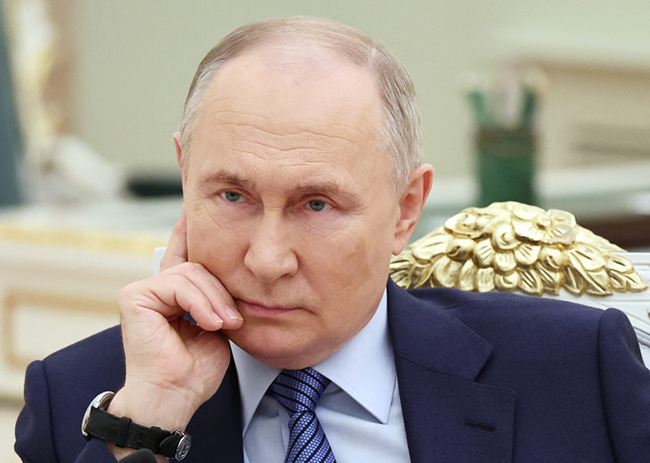
On 6 May, the British establishment organ, The Economist published an essay, “Vladimir Putin is losing his grip on Russia” by “a former senior official in the Russian government.” The anonymous author stated that Vladimir Putin has driven Russia into a dead-end and that a structural shift has occurred, whereby “senior officials, regional governors and businessmen” have mentally detached themselves from the state’s actions, viewing the current trajectory as “his” war rather than “ours”.
According to this narrative, Vladimir Putin’s grip on power is weakening due to the collapse of a social contract based on economic stability, replaced by purposeless and heavy-handed repression as the war backfires, with the regime’s efforts to maintain control only accelerating its internal decay.
Nine days later, on 15 May, The Guardian published a similar article by Rajan Menon, professor emeritus of international relations at Powell School, City University of New York. Sri Lankan cognoscenti might know him as a Western establishment intellectual, repeating Eelamist claims about civilian casualties at Mullivaikkal.
Menon argues that Russia’s war in Ukraine has become a grinding, attritional conflict that Vladimir Putin cannot end easily, even though the costs to Russia are enormous (the author quotes a figure of an estimated 1.3 million Russian troops dead or wounded). He says Russia’s GDP numbers look superficially strong, but this is misleading as there is no real prosperity: growth is driven by weapons production, with longterm development sacrificed for shortterm war needs, resulting in worsening labour shortages and rising inflation and budget deficits.
Putin cannot admit failure or seek compromise, Menon posits, because he has framed the war as existential, any retreat undermining his authority and the system he built. The author portrays a Russia of crushed dissent, pervasive propaganda, and general resignation to the war continuing indefinitely. He concludes that the Kremlin, locked into a costly, prolonged conflict, prefers escalation and endurance over negotiation, even if the war is unsustainable in the long run.
Both stories received wide coverage in the media, from Fortune to the right-wing Irish Times. Meanwhile, several other British media outlets ran similar stories. On 9 May, the BBC’s “From our own correspondent” reported that Putin faced rising unpopularity. “Putin faces Hitler-style downfall & could wind up dead in a bunker…” screamed the headline in the down-market Murdoch mouthpiece, The Sun the next day. The only slightly more respectable Daily Telegraph ran with “Paranoid Putin’s war is unravelling” on 13 May. Throughout this period the unhinged Daily Mail ran regular rant-pieces against Putin.
On 17 May, The Economist followed up with an article headlined, “Russia is starting to lose ground in Ukraine,” which claimed “… the tide of the conflict looks to be turning. Russia’s death toll remains extraordinarily high, and its spring offensive has stalled.”
Critical examination of the content of these articles can be quite revealing. For example, those “extraordinarily high” Russian casualty figures – supposedly ten times higher than Ukraine’s. Canadian analyst Alexandre Robert revealed the only comprehensive (name-by-name) tabulation of the relative casualties in the conflict on his History Legends YouTube channel. He calculated that by the end of February 2026, 170,537 Ukrainian military personnel had been killed, compared to 155,725 Russians. While these totals are high (the Ukrainian figures are considerably higher than Western estimates), the Russian casualties are much lower than estimated by Western or Ukrainian sources.
The result has been a manpower shortage on both sides. Russia mobilises men aged 18-30, targeting 261,000 annually, but only achieving about half this. For Ukraine, draft evasion in huge numbers, and nearly 300,000 soldiers deserting or going AWOL intensifies the problem, driven by exhausted frontline units, reduced voluntary enlistment, overstretched training pipelines, and public unease with mobilisation. The Ukrainian authorities have resorted to coercive, heavy-handed mobilisation practices, often seizing civilians on the street. The drafting age is 25-60, but Ukrainian men between 18-60 may not leave the country. Men aged 18-24 may be drafted if they have received training.
While Western analysts argue that Ukraine faces an acute shortage of trained, deployable infantry, they think that Russia maintains numerical mass but at sharply lower quality, relying on poorly trained mobilised reservists, prison recruits, and highattrition assault tactics. In this framing, Ukraine’s problem is a structural deficit of ready soldiers, whereas Russia’s is a quality and cohesion deficit, producing a “mass versus skill” dynamic that shapes the war’s tempo and casualty patterns.
Of course, they base this on a presumption of enormous Russian casualties due to “massed assaults.” In fact, in the face of massive enemy drone presence, the Russians developed tactics of infiltration by small teams of up to eight men, who go deep into enemy-held territory, from which they direct artillery fire and drone attacks on enemy positions. Using these tactics, they began capturing more territory, and an element of movement was added. This meant greater exposure to drones, raising casualty rates.
The Russian advances tend to be in short bursts, to minimise casualties. In contrast, the Ukrainians tend to make long rushes forward, taking more losses. Recently, they have adopted Russian infiltration tactics, making considerable progress in counterattacks. However, the Russians’ superiority in weapons and equipment means they recapture the territory lost fairly quickly.
The Russians fire about 10,000-20,000 artillery shells per day, compared to just 2,000 for the Ukrainians (spiking at 5,000 during offensives). Most of the Russian shells are manufactured domestically, the rest coming from North Korea and Iran. Ukraine is dependent upon its NATO allies, whose production is boosted by purchases from South Korea, South Africa, Turkey, and possibly indirectly from Pakistan and India.
Even more importantly, Russia uses 3,000-5,000 drones per day, while Ukraine launches 2,000-3,000 (spiking at 5,000 during offensives). Drones now cause an estimated 70% of battlefield losses, and the conflict has moved from “artillery-centric” to “drone-centric.” Both Ukraine and Russia build their own drones. But Russia is winning the war of attrition.
While The Economist has suggested otherwise, Russia’s spring offensive has not “stalled” amid “extraordinarily high” losses. The Russians paused operations waiting for the end of Easter and Victory Day ceasefires. Their spring offensive started getting into gear after Victory Day.
Economically, the war has been biting into Russian GDP growth, which declined from about 3.6% in 2023 to about 1.4% in 2025. However, manufacturing, driven by war production, has been growing at about 4% annually – although non-war-related production remains flat. Exports grew to US$ 30 billion in February and may be far higher due to the price escalation of petroleum following Trump’s war on Iran. Unemployment is at a historic low of 2%. Russia is tackling the resultant labour shortage through immigration of skilled workers from India, Bangladesh and China, with Sri Lanka also mentioned in the mix. Inflation is down to 5% from over 8% in 2023. So, economic stagnation is not a concern.
What about the issue of Putin’s popularity? The opinion polls have been consistent, with Putin having an approval rating of 65-85%. While most people expect the war to end in 2026, they favour escalation in the event of it extending. So, whence arises the Western perception of Putin’s fragility? A 23 February article by Peter Rutland and Elizaveta Gaufman in The Conversation says that signs of erosion and underlying fragility are increasingly visible beneath the surface. Of course, both of these academics – like Rajan Menon – have Cold War biases.
Why this sudden outburst of anti-Putin negativity? One much-commented-on aspect of the mainstream media of the West is the extent to which it sticks uniformly to the same narrative. For example, the media campaign which accused the then Labour Party leader, Jeremy Corbyn falsely of anti-Semitism included almost the entire mainstream media, including The Economist and The Guardian. So, this seems to be the beginning of a new propaganda campaign against Putin.
Of course, “Putin is losing his grip” nor “Putin’s undoing” are not rare phrases in the Western media. For example, “A war in Ukraine … could even prove Vladimir Putin’s undoing,” read a Facebook post by The Economist on 30 January 2022. Now, it says, “Putin is Hitler.” None other than former US Secretary of State Hillary Clinton equated Putin to Hitler in 2014.
The Western media may have launched this propaganda offensive because of the globally popular perception that Putin emerged a victor in the US-Israeli war on Iran. The West as a whole, its alliances fractured by popular opinion, faces humiliation. Revealing the truth about the Ukraine War – that Russia has captured nearly the entire Donbass region, its main strategic aim – might cause people to question the entire modus operandi of the Western powers.
While the political space exists in NATO countries to continue backing Ukraine, Ukrainian expectations are higher than what the publics of these countries would support. Deepening involvement (which Ukraine requires to stave off defeat) would likely face more resistance. The old consensus is breaking down.
By Vinod Moonesinghe
Preamble and the Accused
Ehelepola tragedy has twists and turns; I start with the African proverb, “Until lions have their own historians, the history of the hunt will always glorify the hunter.” In this story, hunters are the Kandy king, his first Adigar Ehelepola, and the British colonial government.
Within a few years of becoming king of Kandy in 1798, Sri Wickrama Rajasingha began to feel his unpopularity spread across the country and right under his nose among the Kandyan elites. He murdered captured British soldiers receiving hospital treatment in Kandy and let Major Davie die in captivity. He executed his Prime Minister, Pilima Talawa Sr., in 1812 for suspicion of colluding with the British, and, as John D’oyly revealed, was envious of the former’s alleged schemes to get his son married to the granddaughter of the late King Kirthi Sri Rajasingha (1747-1782) to establish a blood relationship to royalty.
The king then appointed Ehelepola, nephew of Pilima Talawe as the First Adigar. Continuing his wanton execution regime, he touched a nerve in Kandyans with the sacrilegious act of killing Buddhist monk Moratota Paranatala Unnanse, accused of spying for John Doyly, whom Gananath Obeyesekere called “Master Spy.” The King’s reign was an oppressive, oligarchical system consisting of himself, his family, the Chiefs, and some in the Buddhist sacerdotal fraternity in the Kandyan country.
Sri Wickrama Rajasingha was an illegitimate king, with a dubious claim to a direct royal bloodline, which weakened him as a ruler. As we know now, he was ruling the kingdom with borrowed time. Six months after the Ehelepola killings, he was deposed by the British, the empire-builder with its full power, passion, and double dealings.
The King had an irritable and short-tempered demeanour. In 1816, even as a prisoner of the British being conducted on board HMS Cornwallis, in the morning of the 26th day at sea, William Granville, the British Civil Servant heard him screaming with dreadful passion, hacking and hewing into pieces with a hatchet an extra bedstead in front of his cabin kept for him to sit occasionally. The reason for his fury was that one of his attendants had slept on it the previous night, disgracing his honour!
The Murders
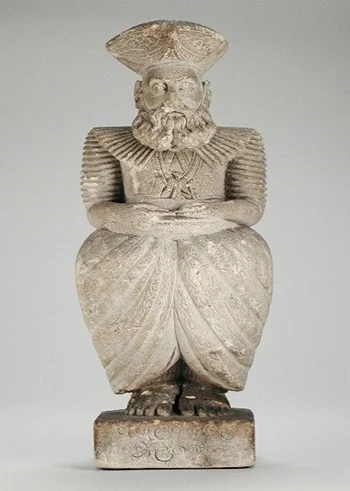
Ehelepola Nilame. Los Angeles
County Museum of Art.
The king was accused of Ehelepola murders, and Ehelepola Adigar stands as an accessory by failing to prevent the crime and willfully refusing to help the victims by abandoning the scene.
Headwinds of the crime started when Ehelepola Adigar, Dissave of Sabaragamuwa, was accused of the stabbing deaths of two koralas, under him. When the king ordered him back to Kandy for questioning, he refused. In May of 1814, the Adigar, fully aware of what the king, with his sinister bearing, would do to his family, sealed their fate by throwing away any chance of saving them, and escaped to Colombo seeking British protection.
The enraged king took hostage Adigar’s wife, Kumarihamy, and her four children, along with a few relatives, until the patriarch’s return. After hearing a rumour that the Adigar was planning to spirit away the family from the prison, the king, breaking principles of elemental justice, decided to put his family to death at a public event.
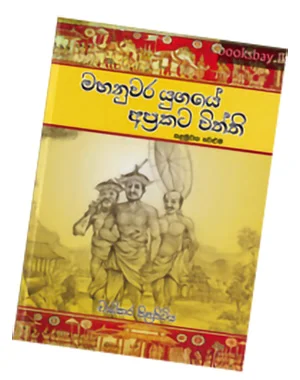
Ehelepola’s misogynist disposition is evident in an old Ola book, recently found in Padiyapelella. In his Mahanuwara Yugaye Aprakata Withthi by historian Chamikara Pilapitiya includes a statement Ehelepola made right before he returned to Kandy with the British army. He bemoaned the loss of his two children, probably the two sons. He added that they were like his two eyes, and, without them, he asked what the use of titles and a good life, referring to rumors that he was planning to get the kingship with British support. He said no word of sorrow for his wife and two daughters, who perished together with the two sons!
In Interior of Ceylon (1821), John Davy, the British Army Doctor (1816–1820), provided the most accurate description with firsthand information of the beheading of the children and the drowning of their mother. The vengeful king summoned Kumarihamy, her four children – two sons, 11 and 9 years old, a daughter, and a nursing baby, and the son of Adigar’s brother and three women to the execution stage near the Natha and Maha Vishnu devale by the palace.
After analyzing contemporary writings, including D’oyly’s Diary, Gananath Obeyesekere has determined the execution date as May 21, 1814. On this day, executioners brought implements of the crime – a wangediya (rice mortar) and a pestle. King then ordered them to decapitate the children first and place the severed heads in the wangediya. When the elder son Lokubanda dithered, his nine-year-old brother Maddumabanda stepped forward and uttered the now legendary words: “Brother, fear not. Let me show you how to die.”
The wadakayo decapitated the children and put their heads into the wangediya and handed the pestle to the agonizing mother. The king ordered her to pound the heads. If she did not, he threatened with an ultimatum – banishment in marriage to Rodiyas, the untouchables in the country, an unfathomable humiliation to her clan. Trusting it would benefit her husband, Kumarihamy declared she would do the unthinkable. With surprising courage, she began to pound the lifeless heads of her children. Some watching this catastrophe wailed, in silence, like driftwood on a deserted shore. A Chief fainted.
Henry Marshall, Surgeon of the British Forces (1808–1821), tells of the perfidious role of one Kandyan Chief who was present that day. When the king ordered the mother to pound the heads in the mortar, Kumarihamy first wavered. The Chief, who was a relative of her husband and supervised the execution, asked her to accept the king’s terms and save the family from the disgrace of living with a Rodiya clan. She did not require such encouragement. With her children slaughtered, soon to face the same fate herself, the only thing left to save was her self-serving husband and his malicious treachery for abandoning them, which she was probably not aware of at the time.
After listening to an eyewitness account, Major Forbes (1840) described the “fortitude and propriety of her conduct” by going through the “most awful scene to which any mother was ever subjected.”
Afterward, the wadakayo and slave women in the palace, carrying the remains of the children, led Kumarihamy and three women to the Bogambara Wewa, which the king could see from the palace.
Six months later, Governor Robert Brownrigg would write what happened next. The “woman herself and three more females, whose limbs being bound, and a heavy stone tied round the neck of each, they were thrown into a lake and drowned.”
King’s retributive justice regime crossed the boundaries of the 32-punishment realm under the murky and ancient Laws of Manu and Kandyan Code of Honor. Pounding heads of decapitated children in wangediya was not in those codes. For the king, it was a theater of death to warn anyone who dared to cross his path. In Discipline and Punishment: Birth of Prisons (1977, 1995), Michel Foucault wrote that such exhibitionist punishments as “the theatrical representation of pain.” But the deposed king, while aboard HMS Cornwallis, placed the blame on Kandyan laws in general, asking William Granville, “Did I make those Laws?”
Interestingly, in The Doomed King: A Requiem for Sri Wickrama Rajasingha (2017), Gananath Obeyesekere, with flimsy evidence, rules out Bogambara Wewa as the site of the drowning. He calls it a myth developed in popular stories like Purana Ehelepola Hatana, invented in the low country. He calls some informants of early writers of the Ehelepola story as “inventive mills, overloaded with falsities,” and no British account exists of Bogambara as the lake where the tragedy took place! But two decades before Purana Ehelepola Hatana, L. De Bussche wrote in Letters on Ceylon (1817) that the dead family was cast into the lower lake of Kandy. Davy was more specific. He wrote in 1821 that the women were “led to the little tank in the immediate neighborhood of Kandy called Bogambarawave [sic] and drowned.”
The alternative location Obeyesekere provides is another smaller tank north end of the city, Borawewa, near the present-day Katugastota railway tunnel. It was also closer to the Asgiriya Temple and the Royal Burial grounds, making it unlikely the king would execute prisoners and dump the bodies close to such sacred places. Obeyesekere seems to disregard Adigar himself, and Dissave of Wellassa, other Chiefs and eyewitnesses still living in Kandy who provided firsthand information to Davy and Henry Marshall.
Bogambara Wewa – The Place
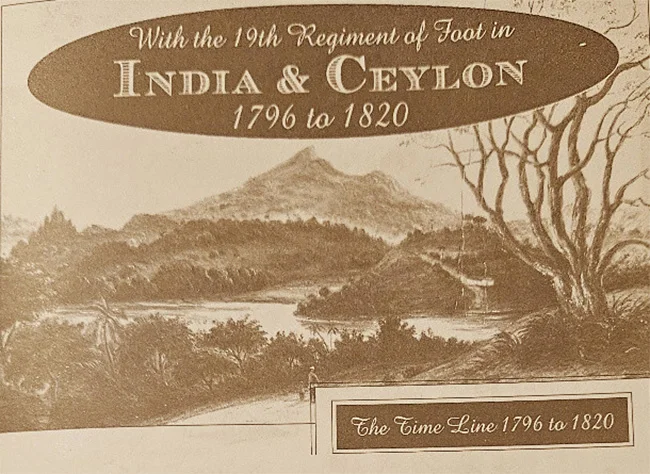
Bogambara Wewa (1796–1820). Green Howards Regimental Museum, London, reproduced in Mahanuwara Yugaye Aprakata Vitti (II) by Chamikara Pilapitiya (2018).
This Wewa, also known as Palledeniya Wewa, is believed to have been built by Rajasingha II (1635–1687). Robert Knox wrote in 1681 that the king made a bank of earth across a valley, far above a cable’s length (200m) and four fathoms high. To prevent erosion, builders made a ralapanawa (revetement) along the inner slope of the bund. He had a “banquetting house about a musket-shot from his palace” [sic] on a little hill by this pond.
In the stylish praise poem Parangi Hatana (c.1642), Bogambara Wewa is likened to the Buddhist cosmic lake Anotatta. Although Kandy Lake looks dandy, the former, with a storied past and the memory of its sepulchral encounter with the Ehelepola heartbreak, was entrenched in the public pantheon of city’s aesthetics.
When measured against the Kandy maps of Lt. Col. Henry Evatt (1768–1851) of Royal Engineers in 1816 reproduced in Nihal Karunaratna’s From Governor’s Pavilion to President’s Pavilion, and in Davy’s in 1821, this bund appears to cross the narrow valley separating Bahirawakanda range between the Police Station and a projection of the Hantana range behind the Education Office near the Railway station. Furthermore, the painting Bogambara Wewa (c. 1796–1820) shown in the image clearly shows a man and a boy walking on the bund of the wewa running in the direction where, in the distance, the distinctive summit of Hantana range is visible. The artist drew it looking towards the hospital, standing on the Pushpadana College slope of Bahirawakanda, behind the police station.
In 1817, De Bussche wrote that this Wewa covered about 6 or 8 acres. Contemporary maps show it occupied the general area bordered by sections of present-day streets named Colombo, Dalada, Yatinuwara, and the Police Station, and the elevated land where the now-decommissioned Prison Complex stands, and the Bund of the Kandy Lake. Except for a few ephemeral ponds scattered along the foot of the hills in the west of the valley, this Wewa remained the main source of water for the city until the Kandy Lake came on board in 1812.
Both lakes were fed by streams originating from Dunumadalawa forest on hills bordering the south side of the city and from Udawattakele in the North. It was unlikely the palace used water from the Bogambara Wewa since it was located uphill from the Wewa. However, as Knox wrote 135 years earlier, the king had water brought to the palace in ditches cut on mountain sides in the North and East and stored in “little ponds made with lime and stone and full of fish,” probably a well and a pond near the palace. One such pond is seen east of the Kundasale road, current Malabar Street, east of Maligawa, on the Dutch Map of 1766, reproduced in Aprakata Vitti. The 1816 map signed by Henry Evatt of the Royal Engineers shows a ditch originating from Kandy Lake to the moat in front of the palace. It then curves West, and goes North parallel to Trincomalee Street. On this map, Bogambara Wewa turns to the south and tapers off as a thin strip parallel to Old Colombo Road, the present-day Peradeniya Road.
Kandy was topographically too compact, surrounded by hills and two lakes in the middle. The area occupied by the Bogambara Wewa and fields below was the only direction the city could expand. Thus, after the British occupied it in 1815, one of their first tasks was to drain it to create more land.
The ensuing building boom in the city began soon. When Davy came to Kandy in 1817, Bogambara Wewa had already been drained. So, he wrote the city “standing on the border of an artificial lake made by the last king,” unquestionably referring to Kandy Lake (Kiri Muhuda). A few years later, Governor Edward Barnes (1824–1831) rode with Rev. Reginald Heber in 1825, proudly showing off another construction project a kilometer from the Kandy Lake – the 500-foot-long tunnel through the Aniwatta hills, a shortcut to the ferry at Halloluwa on the Mahaweli River. Building of the Pavilion (Governor’s Mansion) started around 1826 during Governor Barnes’ tenure.
Last Tango of the King and Adigar
 On January 10, 1815, Brownrigg declared war on the Kandyan kingdom. On February 11, eight months after the Ehelepola executions, the king fled Kandy. On the 12th, Major Willerman entered the city, followed by Governor Brownrigg on the 14th. Unlike later in 1819, when the Governor, as the new Lord of the land, returned to Kandy with Davy, on this inaugural day of entry, there was no pomp and pageantry with arches of white olas (gokkola) to receive him along the road from Gannoruwa. Immediately after, Ehelepola entered Kandy with Major Hook and joined Lieutenant Mylius and Ekneligoda pursuing the killer of his family. On February 18, they arrested the king and his family in a house near Medamahanuwara. The British escorted the king to Colombo, and 11 months later, banished him and his entourage to Vellore. He died there in 1832, aged 52.
To mollify the feared tempest of emotions in Kandyan people after deposing the king and ending Sinhala sovereignty, Governor Robert Brownrigg wrote in the official declaration to the Chiefs, reminding them of the king’s “bold contempt of every principle of justice, setting at nought all known grounds of punishment, dispensing with the necessity of accusation, and choosing for its victims helpless females uncharged with any offence, and infants incapable of crime.”
Two weeks after signing the Kandyan Convention, even before formal religious services for his family, Ehelepola informed the Governor that he planned to marry Pilima Talawe Jr.’s sister (widow of Migastenna Adigar) and asked for financial assistance for the wedding. Then, in April 1815, with wounded pride after being sidelined by the British, Adigar gave a mataka dana to 20 monks in memory of his family. His fantasy of becoming the “Deveni Rajjuruwo” did not materialize. Instead, the British gave him the feel-good title of “Friend of the British Government.” In 1818, the “friends” took him into custody. He was never charged but kept in confinement in Colombo. In 1825, he was banished to Mauritius and died in 1829.
Gananath Obeyesekere wrote that when Ehelepola was banished to Mauritius, Sinhala power was lost. Six decades after Adigar’s death, Lawrie wrote that the Ehelepola family line was extinct.
But the Adigar left it to history to judge what a cowardly and callous patriarch he was, having intentionally allowed his wife and children to perish at the hands of a roguish king’s executioners.
Sightings of Wangediya
After the bodies and implements used in the executions disappeared in the watery grave, the mood of the thickly knitted social, cultural, and superstition pathologies of Kandyans undoubtedly prevented any chance of naturalizing the wangediya, by saving it as a household item, or relic of the Ehelepola saga. It was a heartbreak and a cultural shock, painful, grisly, to give this object of murder a place within a residential confine.
But nine decades later, the first written account of the rice mortar used in the killings appears in A.C. Lawrie’s 1896 Gazetteer of the Central Province (Vol. I). He refers to the Kandy DC case number 30962, where a Malay named Sadim Kumba had stated to the Temple Land Commissioner that, in 1843, on land close to the new police station, he saw the stone trough used in the Ehelepola killings, and, in 1858, it was in the Kandy Pavilion.
This episode seems to have continued later with the alleged involvement in it of a T.B. Paranathala. In 1895, he was a Clerk in the Kandy District Court and was appointed as an English-speaking Special Juror (Gov. Gazette of 1895, Part II, p. 43). He probably had come across Kumba’s evidence, and, knowing its historical value, could have related it to Lawrie, who was a judge in Kandy at the time and working on the Gazetteer, which came out a year later.
When the construction of the police station began around 1843, workers moved a lot of earth in and out of the adjoining empty lake bed and its shoreline, and that it is possible to expect the chance of stumbling upon items buried in the former lake floor reappearing.
Sadim Kumba may have been privy to this information for two reasons. He was probably either part of the construction crew on the police station project or, as a boy growing up in the city, may have joined the crowd that followed the Ehelepola ladies on their last journey and saw the spot where wangediya was rolled down the bund.
If what Kumba saw is true, after the way the city cried seeing the executions, and as Brownrigg wrote then that Sinhalese are a “Superstitious Race,” it is incomprehensible that any sane person would take home a bloodied wangediya.
Thus, all physical evidence of the bloody Ehelepola episode, too, remained buried in the watery grave. Therefore, it was not until three decades after the wewa was drained that the British had any contact with what was buried in the lake floor, when wangediya surfaced perforce during grading work on the new police station site.
The British also feared that if remains of his family were to resurface, Ehelepola Adigar, remarried and living comfortably in retirement, but still a formidable character in Kandyan affairs with the title of Maha Nilame, though under a cloud of suspicion, would be upset, and create political instability by regrouping friends to take retribution against the chiefs who sided with the king.
With the scars of the 1818 revolt still in mind, following the 1843 discovery, the British would strategically remove the wangediya to the Pavilion, away from the public eye to prevent rekindling of sentiments among the Kandyans until after 1858, when it disappeared from the pavilion.
However, Chamika Pilapitiya, who inspected ola manuscripts and listened to oral histories in Kandyan country, had shared new insights into the wangediya saga with me. According to him it was found in an Ala Kola Landa (shrub land). A Muhandiram in a Malay soldier phalanx then took possession of it, washed, and used it at his home. His son Cader, who inherited it, sold it to a T. B. Paranathala Nilame. In 1929, it changed hands again, this time to Dr. J. W. Artigala, as stated by M. Malius de Silva.
If this story holds true, in three instances starting from 1843, three generations of Malay families – Kumba, Malay Muhandiram, and his son Cader in Kandy – were in contact with the wangediya in some form or another until early 20th Century, when it changed hands with Paranathala.
In conclusion, I implore scholars at the National Museum, Kandy Museum, and Ehelepola Museum to follow up on this lost trail. Because this wangediya is the only object now existing out here to have had contact with, and heard cries of, the eponymous family 211 years ago at Deva Sanhide, a stone’s throw from Ehelepola residence. If the museum can secure it, it is a solemn and endearing gesture to this family, now only admired as wax figures, standing in silence, unable to tell their story.
Only then can we write the last coda for the Ehelepola Requiem.
Lokubanda Tillakaratne writes about the Ethnography of Nuwarakalaviya.
by Lokubanda
Tillakaratne

Everest record holder warns of Nepal danger as two Indian mountaineers die

Angkrish Raghuvanshi ruled out of IPL 2026 with concussion, finger fracture

Sunrisers Hyderabad win big but Royal Challengers Bengaaluru, Gujarat Titans seal top two spots

Flood warning issued to the Aththanagalu Oya basin extended until 0600AM on Monday [25]

About 100 mm rainfall likely at some places in the Western and Sabaragamuwa provinces and in Galle and Matara districts

Torrential rains cause havoc countrywide

‘Dates have the highest sugar content to fight Coronavirus’

Sunday Island 27 December – Headlines

#SundayIsland 17th December – Headlines

Sunday Island – 28th March

Sunday Island Headlines – 21 March

Sunday Island – 21st February – Headlines
-

 Features6 days ago
Sri Lankan Airlines Airbus Scandal and the Death of Kapila Chandrasena and my Brother Rajeewa
-
 News6 days ago
Kapila Chandrasena case: GN phone records under court scrutiny
-

 News6 days ago
Rupee slide rekindles 2022 crisis fears as inflation risks mount
-
 Features3 days ago
Octopus, Leech, and Snake: How Sri Lanka’s banks feast while the nation starves
-
 Business6 days ago
Expansion of PayPal services in Sri Lanka officially announced
-
 News2 days ago
Steps underway to safeguard Sri Lanka’s maritime heritage
-

 News6 days ago
Court orders further arrests in alleged USD 42 Mn NDB fraud case
-
 Opinion2 days ago
Murder of Ehelepola family, Bogambara Wewa and Sightings of Wangediya