
Features
Influence of St. Aloysius’ and Its Teachers

So my life from rags to riches, from elementary education to self-acquired knowledge, from shattering adversity to rewarding accomplishment, is an epitome of the determination, the tenacity, the purposefulness, and, above all, the cultural values, inculcated in me, as a Buddhist, by the teaching and the example of the Christian Fathers and Teachers who moulded my up-bringing in the impressionable age of my youth. I then learnt never to take no for an answer!
(N.U. Jayawardena, The Aloysian 1915-1990 Diamond Souvenir, p.256)
(Chapter IV continued)
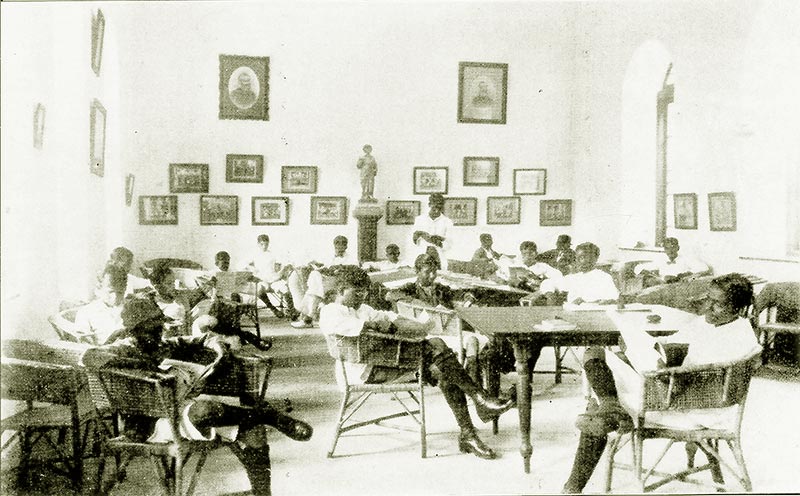
Compared to the other schools NU had attended, St. Aloysius’ with its numerous facilities was a lively and stimulating place for a young boy. It opened up a new world, where studies, sports, cadeting, field trips, debates, theatrical performances (including Shakespeare and Molière), as well as an excellent school magazine, were features of school life. Other advantages were the science laboratory, library and reading room, and a dedicated teaching staff, which included scholars such as Father S.G. Perera, the historian, and several Belgian, British and Irish priests who were specialists in various fields. There were also excellent local teachers, Sinhala, Tamil and Burgher.
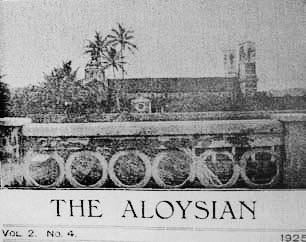
Cover of The Aloysian
The staff of St. Aloysius’, composed as it was of teachers from diverse communities, including foreigners, broadened the vision of the boys, who generally came from monolingual, mono-ethnic backgrounds. The school magazine The Aloysian, published annually, kept up a high standard, and included articles, poems and sketches by studentsand articles by staff members. The school motto was “Certa Viriliter” (Fight Manfully), and the school crest included the letters “I.H.S.,” the first three letters of the Greek word for Jesus, which was an old Jesuit emblem. The original crest (designed by Father Soden) had two elephants and two lions. When the crest was modified in 1933 and fashioned as a shield, these were replaced by four symbols: an elephant for Sri Lanka; three lilies for purity of conscience, associated with St. Aloysius; the flaming torch (of learning); and the rooster, the Dutch emblem of Galle (The Aloysian 1915-1990, pp.57-58).
NU’s Teachers
Dedicated teachers often leave an indelible impression on their students, by igniting their imagination, and stimulating their intellect by opening doors to knowledge and self-potential. Such teachers are never forgotten. NU was fortunate to have teachers who opened out new vistas for him. He was at St. Aloysius’ between the ages of 12 and 16, which are formative and impressionable years of a young person’s life. In later life, NU always made special mention of these teachers and referred frequently to Father S.G. Perera (1882-1950), who encouraged him, took a keen interest in his studies and gave him special tuition in Latin, enabling NU to get a distinction in that subject in his Cambridge Senior Examination.
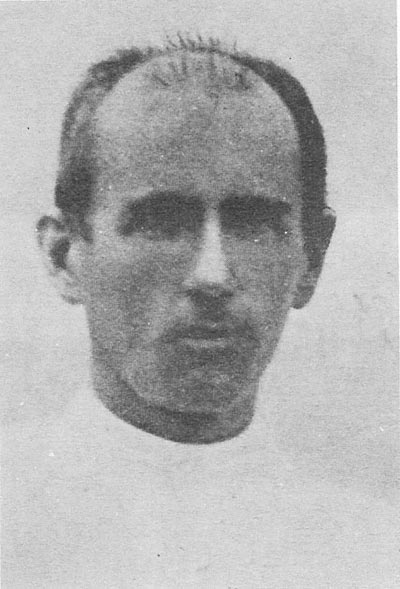
Father Michael Soden
Born in Kalutara, Simon Gregory (S.G.) Perera was in government service before joining (in 1905) the Belgian Province of Jesuits, who were in charge of Catholics of the Southern Province diocese. He was trained in philosophy and humanities at the Sacred Heart College in Shambaganur, southern India, and subsequently taught at St. Aloysius’ College, Galle. He completed his ecclesiastical studies in India between 1911 and 1915, and was ordained in 1919, becoming the first Sri Lankan Jesuit. Father Perera spent his life at St. Aloysius’ – somewhat reclusively – and while teaching senior classes he also engaged in serious
historical studies, visiting Portugal from 1932 to 1933 for research.
According to A.C. Alles, Father Perera “devoted himself without interruption to his research work,” in an austere room with “a desk heaped with manuscripts, documents, books and letters” and overlooking “the Indian Ocean in the distance over the palm trees.” He had “a small coterie of students and teachers who helped him in work connected with the editing of his writings.” Alles adds that, it was from Father Perera that he (and no doubt NU) learnt “the art of writing, the elements of sound reasoning and logical sequence and above all precision in detail” (The Aloysian 1915-1990, pp.118-19).
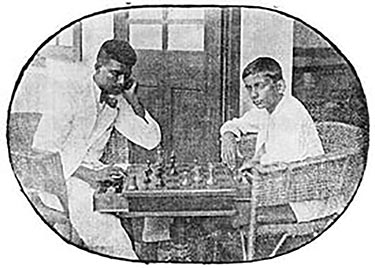
Playing chess in the Reading Room
Father Perera’s best-known works were his History of Ceylon, which was a popular textbook in schools, and his translation from Portuguese of Queyroz’s The Spiritual and Temporal Conquest of Ceylon. He also contributed articles regularly on historical themes to learned journals, and wrote often for the St. Aloysius’ school magazine. Another Jesuit priest, Father Michael Soden (1883-1933), helped NU with Chemistry. Father Soden, who was from Britain, had joined the Jesuit Order in 1901, and after further studies in Europe was sent to St. Aloysius’ College. NU made reference to Fathers Perera and Soden coaching him in Latin and Chemistry, respectively, “out of an abundance of kindness” (The Aloysian 1915-1990, p.254).
NU also referred to one of his first teachers, affectionately called ‘Bundy’ Silva, a stern disciplinarian, and praised other teachers who prepared him for the Cambridge Senior Examination. Several of them, including Keegal, J.E. Ludowyk and Michael Croos, were from the Burgher community, known for its modernizing influence and academic achievements, often setting the pace for other communities. NU vividly recalled Keegal, “who taught History fascinatingly,” enabling NU to gain a distinction in History at the Cambridge Senior. He also remembered Michael Croos, who taught him in Form III, as “that remarkable teacher” (The Aloysian 1915-1990, pp.254-55).
Julien Edema Ludowyk of Galle was “the respected and exacting teacher” of Mathematics, taking great pains with the students. He had started his teaching career in 1890 at All Saints’ School, Galle, and then alternated between Mahinda College and St. Aloysius’ up to his retirement in 1927. “The verandah of his home in Kaluwella (Galle) became in the evenings a veritable workshop where poor boys were punctiliously coached for public and professional examinations by a teacher much poorer than the pupils themselves” (ibid, p.173). NU received extra help from Ludowyk, since he needed to pass in Mathematics at the Cambridge Senior to gain exemption from the London Matriculation. In 1926 he sat the latter examination as a private student and passed in the First Division, becoming one of only two ‘overseas’ students to achieve this distinction. Among Julien Ludowyk’s many pupils was his cousin’s son E.F.C. (Lyn) Ludowyk, later an eminent Professor of English at Peradeniya
University, who studied at Richmond College, Galle, in the early 1920s. EFC’s father, who was a teacher at Richmond, was ambitious for his children to move beyond their middle-class lifestyle in the Galle Fort and “attain the mortal blessedness of a cadetship in the Ceylon Civil Service” (Ludowyk, 1989, p.60). As EFC, who was weak in Mathematics, recalled: “I did learn sufficient in the way of Arithmetic, Geometry and Algebra from Uncle Julie to take me later through the Cambridge Junior and Senior local examinations.” Ludowyk added:
All teachers… insisted on the discipline of completing the task set; with them there were no easy options; you had to know, and to know thoroughly, whatever was set as the appointed lesson. It was unthinkable that it should, or could be otherwise.
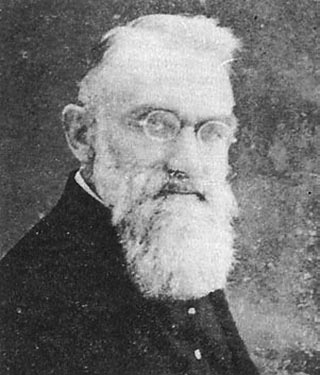
Father Olivier Feron
Such methods of teaching at the time would have influenced NU. According to E.F.C. Ludowyk, the teachers were strict and there was only “momentary resentment at the punishments they so conscientiously awarded.” He also claimed that, “there were strong bonds of respect most certainly and, in many cases, genuine affection between them and their pupils” (Ludowyk, 1989, p.61). Dr. Michael Roberts, a student at St. Aloysius’ in later years (1946-57), had this to say about the teaching staff:
Few schools today could boast of such a cohort of skilled teachers – persons dedicated, skilled, knowledgeable and in varying degrees, patient. We boys were never angels of course. There was always a limit to patience and some teachers matched their learning with verbal ferocity which few of us dared to test… But threading their teaching too was a commitment to humanity as much as to learning. (One Hundred Years of Love and Service, 1895-1995, p.69)
NU was fortunate to have committed and interesting teachers, some whom had many outside interests. Julien Ludowyk, for example, was famous for his agitation on behalf of teachers – a group who were proverbially poor. He founded the Southern Province Teachers’ Association, and “fought on till he brought the whole subject of teachers’ salaries to the forefront of public affairs” and made the government acknowledge “the scandalous inadequacy of teachers’ salaries” (Ludowyk, 1989). The result of such agitation was a revision of the salary scales and the Teachers’ Pension Ordinance of 1928. Ludowyk was unusual for the time; he was a pioneer of the Galle Labour Movement and a member of the Galle Maha Jana Sabha.
He was said to have taken “a leading part in politics in the South, and… (had) seriously contemplated contesting the Hambantota seat in the Legislative Council” (The Aloysian 1915-1990, p.173). Others who influenced NU were the Rector of St. Aloysius’, Father Feron, whom NU called “a master of French and Latin,” and Father Denis Murphy, “a master of English.” They were both, according to NU, “erudite, kind but stern” (ibid, p.254). Father Olivier Feron (1862-1939) was a French-speaking Belgian who had joined the Jesuits. He went to Britain for further studies in philosophy, along with other Belgian Jesuits, Fathers Cooreman and d’Herde, who both also later worked in Sri Lanka.
Father Feron was sent to teach at St. Aloysius’ in 1908, becoming its Rector in 1913 (ibid, p.112). During his period, the school made great progress: by 1915 a science room and laboratory were added; followed by a commercial department in 1917, and a manual training workshop in 1919. What was known as the “Cambridge Block” was completed in 1922, with a reading room/library, a “Masters room,” a science lecture room and laboratory (The Aloysian 1915-1990, p.111). NU was no doubt influenced by the energy, style and discipline of Father Feron, a dominant figure in the school, who placed great “confidence and trust in his inferiors,” and was to them “a father much more than a superior.” As stated in the school magazine:
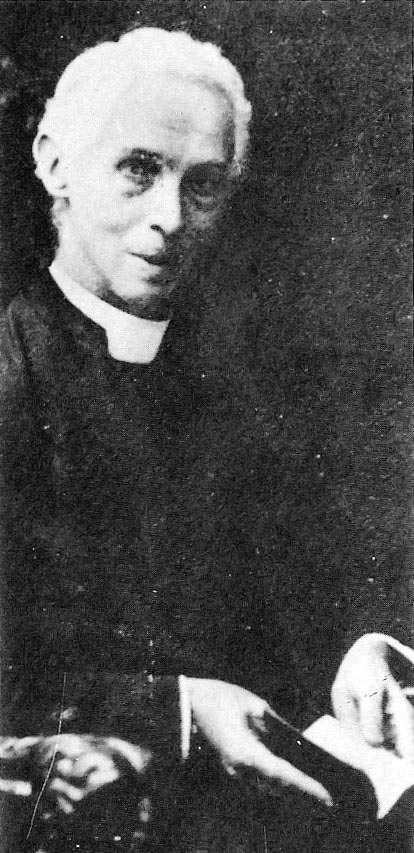
Father Denis Murphy
He expected his subordinates to work hard. He was exacting and demanded much of them; but his gentle ways obtained even more. No wonder his inferiors were ready to toil and sweat and spend themselves for their dear Rector. (The Aloysian 1915-1990, p.114)
The Library and Reading Room
The Aloysian magazine commented that the library and reading room attracted the studious boys, and were a place where they could spend time reading, playing chess and spelling games; there was also access to newspapers, the choice being wide, including not only the local papers – Observer, Times, Daily News, Herald, Leader and Catholic Messenger – but also foreign magazines, including Punch and Asiatic Review. The Reading Room, with clusters of chairs and tables, was described in the school magazine as “palatial… reserved for members
of the upper school,” who paid one rupee a term. NU would have benefited immensely from the Reading Room, since already as a young student he was ‘addicted’ to reading. Professor E.F.C. Ludowyk recalled that, to boys like himself with limited money, the libraries of Galle were treasure troves. In the schools there were libraries, which “opened up new vistas,” and in town were public libraries, including the Galle Library in the Fort, which Ludowyk, a self-professed “avid reader,” used. He also dipped into the library of St. Aloysius’, from which his cousin Randolph Ludowyk (NU’s batch-mate) borrowed books, thereby providing EFC with “another supply.” He claims that, the “chief difference between the libraries was that St. Aloysius’ had the books from Catholic missions [and] the novels of Father O’Flynn on the boys of Chicago” – a popular series among Catholic youth (Ludowyk, 1989, pp.81-82).
Cricket
Father Denis Murphy (1862-1943), mentioned above, was born in Ireland and joined the Jesuits in 1882; he arrived in Sri Lanka in 1901. Father Murphy built up St. Aloysius’ in its early years, and took a keen interest in promoting a better knowledge of English, as well as organizing sports activities (The Aloysian 1915-1990, pp.115-16). Cricket provided much excitement for the boys of St. Aloysius’, whose main rivals in Galle were Richmond College and Mahinda College. E.F.C. Ludowyk remarked that, “the fanatical competition” in cricket generated by school matches “took a strong hold” on him. Recalling that “the partisanship went to extremes,” Ludowyk says it was “seriously rumoured” that:
Father Murphy, the Prefect of Games at St. Aloysius’, secretly blessed the cricket ball with which his team played. He was a likely candidate for a sorcerer – he was bearded and constantly muttered over the book he wascarrying. (Ludowyk, 1989, p.80)
One of EFC’s classmates, however, countered “such machinations,” with “charmed water sprinkled on the pitch the first thing in the morning,” to give “our slow left-arm bowler the edge over our opponents” (ibid, p.80). NU watched the school cricket matches and enjoyed the excitement of the competitive matches, for as he said in later life, “when I was young I was very fond of cricket but after that I had no opportunity to do sports” (interview by Kalpana Isaac, 1991).
NU’s Success
NU has described his rapid progress in school:
In Galle I soon got on with my studies and as a result got a promotion to the second form and thereafter I got double promotions. I then sat for the Cambridge Junior and passed the examinations. However, I was underage to sit for the sixth form examinations, so I studied for two years in the same class waiting till I was old enough to sit for the exam. (interview by Manel Abhayaratne) He also recorded some problems he faced: During this time my father was not so well off financially and I was keen to leave school and help him. My brother too had entered school, and due to these financial liabilities I thought that it would be better to find a job rather than spend my time studying. However, when the results came I had passed with honours, and that made me feel that I should continue studying; in fact, my parents were keen that I studied rather than leave school and work. (ibid)
The Aloysian records in more detail that N.U. Jayawardena passed the Cambridge Junior in 1922, and the Cambridge Senior in 1924 with honours, and with distinctions in History, Latin and Physiology. This was the largest number of distinctions by any pupil of the school that year, but in spite of this, NU had already left school to seek employment. Instead of going on to the University College, Colombo, as did two of his batch-mates at St. Aloysius’ – namely, Randolph Ludowyk and Somasunderam Chetty –NU joined the staff of St. Servatius’, Matara, in 1925 (The Aloysian, 1925, pp.233 & 237). The fact, that students who had done less well than himself went on to the University College, would have disappointed NU, but this would have also made him even more determined to eventuallyfurther his studies, which he did a few years later.
It was his rigorous training and wide experience in St. Aloysius’, together with the dedication of his teachers, that gave NU the ability and determination to face the future. Writing in 1989, he paid tribute to St. Aloysius’, where he had studied from 1920 to 1925:
I still retain vivid memories of my years at College, of the lay teachers and the ‘priest-teachers’ who took an abiding interest in me personally as a student, of the value of discipline, attention to studies and respect for elders which the teachers and Reverend Fathers inculcated in me and above all, of the character formation and the cultural values they bestowed on me which contributed in no small measure, despite the many vicissitudes which befell me, to my development and progress in life from humble beginnings to what little I have been able to achieve over the years. (The Aloysian 1915-1990, p.254)
(Excerpted from N.U. JAYAWARDENA The first five decades)
By Kumari Jayawardena and Jennifer Moragoda ✍️

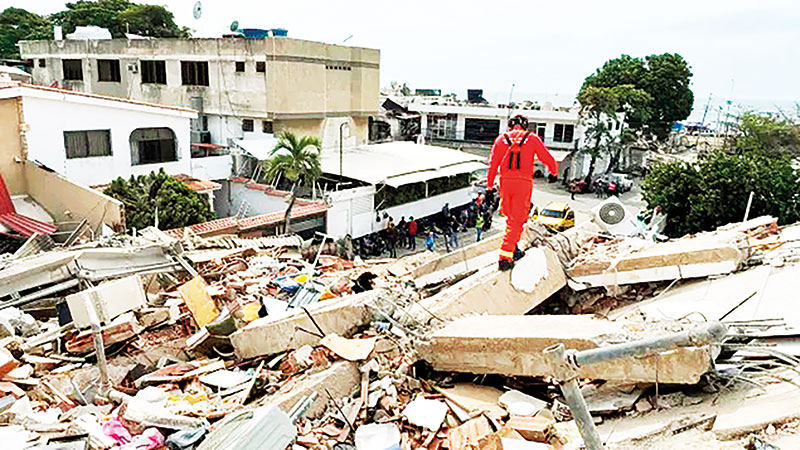
 It shouldn’t come as a surprise that there is a growing number of ‘UN Sceptics’ in our midst. One of the prime causes for this trend seems to be the UN’s apparent helplessness in the face of escalating bloodshed and war.
In this connection today’s Gaza, Lebanon and invasion-shattered Ukraine come easily to mind. With regard to the phenomenal amount of civilian blood being spilled in these war zones in particular, the UN has been largely helpless and has proved incapable of being an effective promoter of peace and conflict resolution. The perception of the UN’s impotence should, therefore, only be expected.
But such scepticism has its origins in a superficial reading of current developments in international politics. It fails to take account of all the dimensions of thinking that matter in an assessment of the UN’s apparent failings.
The UN chief and his team have no choice but to act within the confines of the organizational structures they have inherited. They cannot do much to change existing mandates, rules and regulations, for example, provided the envisaged changes receive the sanction of the powers that matter in the prevailing political order. In other words, UN reform must await the consent and facilitation of the foremost powers or the Permanent Members of the UN Security Council.
Modern world history continually demonstrates the almost impossibility of the major powers thinking and acting consensually on law and order matters of the first importance. Just two cases in point are the Gaza and Ukraine. Whereas in both these instances ending human suffering ought, under normal circumstances, be the priority of the foremost powers, they have been motivated more by Realpolitik or power politics calculations rather than by humanity.
One set of ground realities that proves the above premise is the reluctance by the Trump administration to rein-in Israel completely to allow a measure of respite to be relished by the traumatized Gaza civilians who have been subjected to untold suffering over the months. The administration is also proving tolerant of the Netanyahu regime in its current no-holds-barred military onslaughts on Southern Lebanon. In the latter situation too Lebanese civilians are being subjected to hardships of a nightmarish kind.
In the latter instances, the Trump administration’s need to back the Netanyahu regime steadfastly takes precedence over humanitarian considerations. That is, the US’ policy of maintaining the West Asian power balance in its favour emerges as a preeminent requirement.
The latter observation raises the fundamental question of whether the ruling strata of the world’s foremost powers are heirs to civilizational values of any kind. If humanity is not an overriding consideration for these power elites, the continuous bloodletting in contemporary theatres of war should not come as a surprise.
Moreover, one should not be surprised if UN reform happens to be more or less stillborn. After all, the big powers would not want a restructured UN system in which their power would be diluted or badly compromised since having a stranglehold over the present world political order is among their foremost priorities.
Even in the case of the ongoing US-Iran hostilities, Realpolitik is most evident. For both sides to the conflict, it is not humanity that most counts but the consideration that the power they possess should not be compromised. Hence the on-and-off hostilities that have rendered peace negotiations most difficult to sustain.
However, it would be most misleading to contend, based on the above developments, that the UN system is suffering prolonged impotence. The present suffering of Venezuela substantiates this most graphically. In the latter instance, the UN is playing an inestimably vital role in providing succour to the earthquake devastated country.
In fact the UN is proving the live wire in the co-ordination of all rescue and rehabilitation efforts. Minus the guidance and encouraging assistance of the UN, Venezuela would be in far worse shape than it is in at present.
Reports indicate that the UN Office for the Coordination of Humanitarian Affairs, for instance, is overseeing the operations of over 70 international urban search and rescue teams, including more than 2,300 personnel, who are working alongside the local authorities to trace and provide relief to the quake-affected. Besides, the rescuers come from multiple countries, including Brazil, Canada, Chile, Ecuador, Germany, Spain, the US, France, Syria and Turkiye.
The above is convincing proof of what the UN and its agencies could achieve effectively in humanitarian crises of the most devastating kind. Here is also proof of what could be achieved if the often feuding big powers of the UN Security Council think it wise to sit together in accord and consider as to how their weighty presence in the UN system could be placed at the service of humanity.
The present Permanent Members of the UNSC are mainly representative of the international political and economic order which came into being in the immediate aftermath of World War Two. They by no means represent fully the contemporary world politico-economic order and, therefore, cannot be expected to work equitably towards fulfilling the legitimate needs of present day publics.
Accordingly, while there is no denying that the UN system, as it stands, leaves much to be desired, the world community would do much better to address very earnestly as to how the UN could be reformed and energized to serve humanity better. It is a ‘systemic issue’ and unrelated to any personalities helming the UN at present.
Democratization of the UN needs to be part of the reform process. Countries, such as, India, Indonesia and Brazil, for example, could be considered as knowing much more than the present Permanent Members of the UNSC, the ‘pulse’ of the contemporary world, particularly that of its Southern half. If these major Southern countries are inducted into the UNSC there is bound to be a more balanced representation of the world’s legitimate interests.
Consequently, there could be less international friction and war. Meanwhile, the UN agencies need to be consistently strengthened and sustained to implement their humanitarian programmes without interruption. These projects are the only hope as it were of the less fortunate peoples of the world.
The needs of the world’s hungry and destitute ought to be managed systematically and the UN is best at this at present but the latter is also efficient at bringing all progressive, pro-people organizations along with it in such efforts and this is being proved in Venezuela. Critics of the UN need to take notice of these exemplary collective projects.

 Yes, coconut oil is in every Sri Lankan kitchen for cooking, frying, etc., and our grandmas have been using it for beauty, long before it became “trendy”.
OK, from me, it’s a simple, no-fuss coconut oil week for you:
For Hair:
Warm 02 tablespoon virgin coconut oil until it’s just lukewarm. Massage into scalp with fingertips, for 05 minutes, then through the lengths. Wrap with a warm towel, or shower cap, for 30 minutes, or overnight if you can. Wash with your usual shampoo.
How often: 01-02 times a week is plenty. Grandma wasn’t wrong.
For Skin:
After a shower, while skin is still slightly damp, rub a tiny bit of oil on rough spots. A little goes a long way — it’s thick!
Tip:
Don’t use it on acne-prone face skin. For some people it can clog pores. Use it more on body, hands, feet.
For Lips:
Dab the tiniest bit of coconut oil on lips before bed. Wakes up softer.
For Under-Eyes or Cuticles:
Use your ring finger to pat a rice-grain amount around dry cuticles or under eyes. Be super gentle. If it stings, or you get bumps, stop.
Pre-Wash Scalp Soother:
If your scalp feels tight/itchy from weather changes, massage a little warm oil, for 15 minutes, before shampooing. Rinse well.
A few important notes for my readers:
Patch test first: Dab a bit of coconut oil on your inner arm and wait 24 hours. Even natural things can irritate.
Quality matters: Go for virgin/cold-pressed coconut oil from the kitchen shelf. No fragrance, no additives.
The smell alone will take you back to grandma’s kitchens, won’t it? Warm, nutty, familiar.
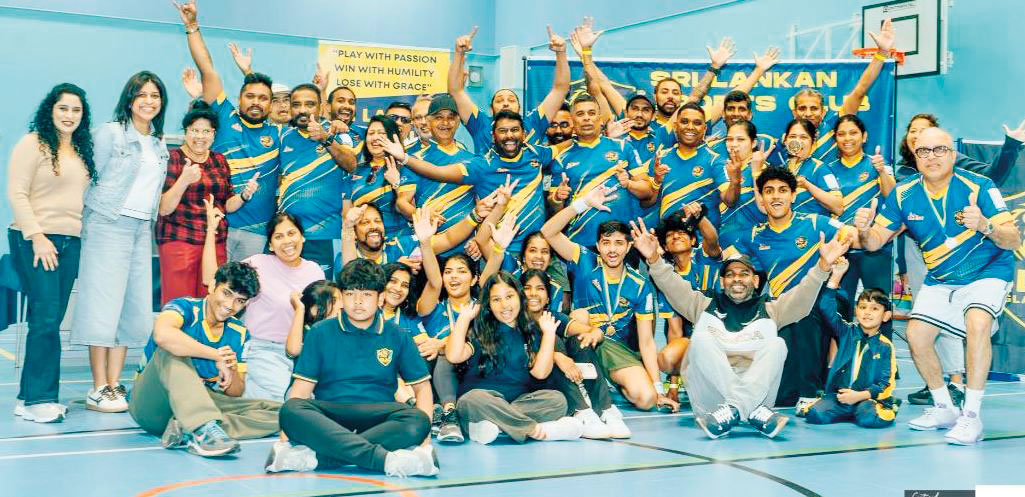
 It’s not only our entertainers who are in the spotlight, overseas, but Sri Lankans, in general, as well.
The Sri Lankan Sports Club Scotland (SLSC) is a very good example. The club, with Hashan Hettiarachchi, as the President, continues to make a significant impact across Glasgow, and beyond, serving as a vibrant hub for sports, culture, and community engagement, within the Sri Lankan diaspora.
As a registered Scottish charity, SLSC was established with a clear purpose: to provide a formal foundation that supports and unites the Sri Lankan community, while fostering integration, wellbeing, and cultural pride.
Through its growing programmee of activities, the organisation creates opportunities for people of all ages, and backgrounds, to connect, participate, and thrive.
The club’s efforts have been recognised through funding support from the UK’s National Lottery, enabling SLSC to deliver a range of initiatives, focused on sports development, cultural enrichment, and community engagement.
-
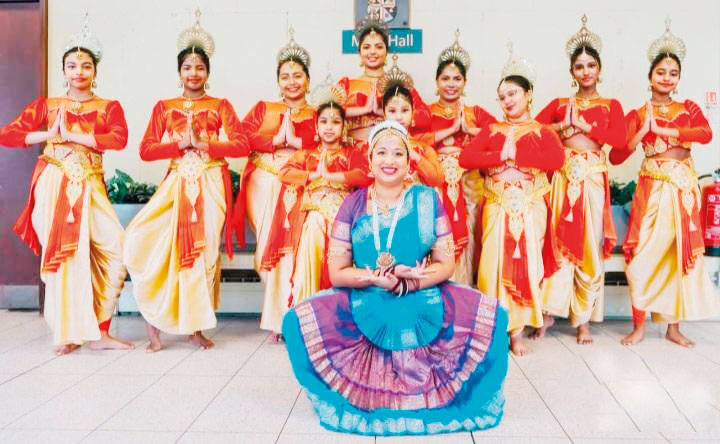
- Sinhala and Tamil New Year
-
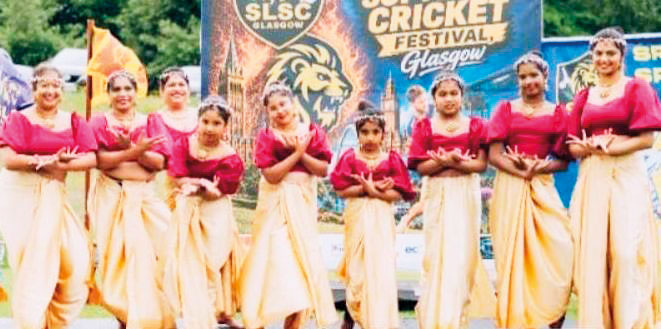
- Traditional wear at Cricket Festival
This support has helped transform ambitious ideas into successful community-driven events that have attracted widespread participation and support.
Over the past year, SLSC has proudly delivered a highly successful Sri Lankan Independence Day celebration, bringing together families and community members to commemorate the nation’s heritage and achievements.
The club also organised a memorable community concert, featuring renowned Sri Lankan artiste Krishantha Erandake, providing an opportunity for people to celebrate their cultural roots, through music and entertainment.
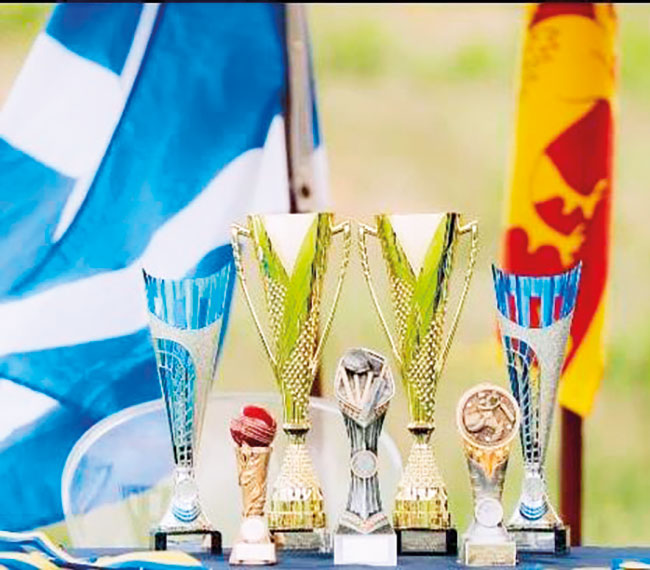
Trophies given at the cricket festival
Sport remains at the heart of the organisation’s mission. SLSC has successfully hosted large-scale badminton and cricket tournaments, welcoming participants from across Scotland and beyond.
These events not only promote healthy lifestyles and sporting excellence but also strengthen friendships and community bonds through shared experiences.
Alongside its sporting and cultural programmes, SLSC is committed to preserving Sri Lankan heritage for future generations.
Through traditional dance classes and cultural education programmes, young people are given the opportunity to learn, appreciate, and celebrate the rich traditions of their ancestral homeland.
These initiatives ensure that cultural knowledge and practices continue to flourish within Scotland’s diverse multicultural landscape.
As the organisation continues to grow, SLSC remains dedicated to creating inclusive opportunities that bring communities together, celebrate diversity, and inspire the next generation. With strong community support, dedicated volunteers, and ongoing partnerships, the future looks bright for one of Scotland’s most active and impactful Sri Lankan community organisations.
For SLSC, success is measured not only by the events it delivers, but by the lasting connections it creates and the positive difference it makes within the community every day.

Hope fit but Roach doubtful as West Indies eye series win

National Institute of Health Sciences celebrates a century of revolutionizing Public Healthcare Training in Sri Lanka – PM

IT, Electrical and Electronics sectors key to achieving 7–8% economic growth in coming years -President

Sri Lanka Cricket confirm dates for India Tests; tour to begin on August 15

Google must pay €4.1bn fine for using Android to ‘block’ rivals

England’s top three and South Africas quicks, both best in class, prepare for semi-final fight

‘Dates have the highest sugar content to fight Coronavirus’

Sunday Island 27 December – Headlines

#SundayIsland 17th December – Headlines

Sunday Island – 28th March

Sunday Island Headlines – 21 March

Sunday Island – 21st February – Headlines
-
 News4 days ago
LAWASIA warns against ad hoc initiative to increase judges’ retirement ages
-
 News5 days ago
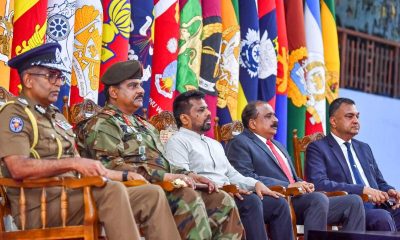
Another 1,132 Sri Lankan Personnel to be deployed for United Nations Peacekeeping Missions
-

 News7 days ago
Kelaniya emerges as highest ranked Lankan uni in Times Higher Education Sustainability Impact Ratings
-
 News3 days ago
Chamuditha to seek removal of injunction on Youtube programme
-

 Business6 days ago
Month-end profit-takings drive stock trading; indices up
-
 Features5 days ago
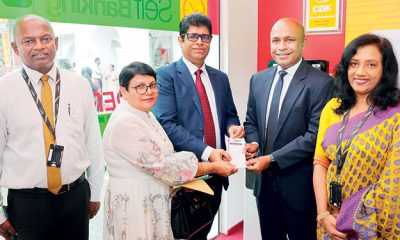
People’s Bank expands digital banking network with 125th cheque deposit kiosk
-
 Features3 days ago
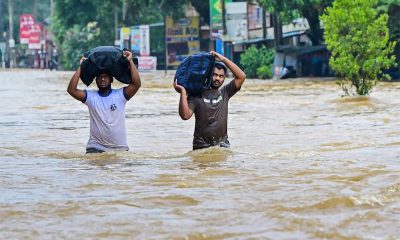
Climate action to bring South Asia together
-

 News6 days ago
FSP complains of irregularities in a Guinness World Record event held in Sri Lanka