
News
India’support sought in UNHRC

by P. K. Balachandran
Sri Lanka is in discussion with India and other countries for support in the March session of the UN Human Rights Council (UNHRC) in Geneva when Western nations bring an intrusive and punitive resolution against it for alleged war crimes.
A top source in the Lankan government said on Sunday (31) that the support of about 15 members of the 47-member UNHRC is being sought to counter the Core Group’s move to bring a resolution that is expected to call for targeted sanctions, asset freezes and travel bans among other intrusive measures. The High Commissioner for Human Rights Michelle Bachelet has even recommended that the Lankan case be taken to the International Criminal Court.
The Core Group comprises Canada, Germany, North Macedonia, Montenegro and the UK. The US, which is the prime factor in the anti-Sri Lankan move but is not a UNHRC member, is using the Core Group to push its anti-Lankan agenda. The Core Group is now working a “consensual resolution”. But given the radical difference between the stands of the Core Group and Sri Lanka, chances of a consensus emerging appear to be slim.
According to the government source, Sri Lanka approached India first and India had said that it would consider the Lankan request. China and Russia have already publicly stated that they would support Sri Lanka in international forums. Sri Lanka is also counting on African countries to support it, as in their case especially, the Black Lives Matter movement in America is of special significance.
Sri Lanka is bringing to the fore the fact that the US has much to account for in terms of human rights violations before it points an accusing finger at Sri Lanka. Recent incidents of gross violations of the basic rights of the Blacks and other minorities in the US, and the unbridled assaults and vandalism against established democratic institutions, will be highlighted.
The government also pointed out that the one-sided indictment of the High Commissioner of Human Rights will only exacerbate Sinhala-Buddhist majoritarianism.
It will also push Sri Lanka further into the arms of China, which the West has been trying hard to prevent.
Colombo is pointing out that the US and the Core Group are ignoring the political reality in Sri Lanka which is that the majority detests Resolution 30/1 of 2015 which had called for unconstitutional accountability mechanisms.
The source said that the Western nations must take into account that the co-author of the co-sponsored 2015 resolution, viz.,the previous government of Sri Lanka, lost face among the people and was voted out in the 2019 and 2020 elections.
The resolution’s prime movers lost their seats in parliament. Therefore, Colombo sees no logic in the US and Core Group’s current bid to bring in an even stronger resolution.
The Pathfinder Foundation (PF), a Lankan think tank close to the government, issued a statement on Saturday warning: “Sri Lankan and like-minded member States will be obliged to press such resolutions to a highly divisive vote in the Council. Even if the resolution is adopted by a slim majority, Sri Lanka is most likely to ignore it and pitch her bilateral ‘economic tents’ with countries that vote in its favor.”
The PF asked as to whether the Core-Group on Sri Lanka expects to get its job done by resorting to confrontation and browbeating a member state, instead of cooperating and engaging in consultation?
“If the answer is yes, then those countries representing the South in the HRC will think deeply before they cast their vote in support of another meaningless and intrusive resolution,” the PF said.
PF said that Resolution 30/1 of 2015 is probably “the first instance in the history of the HRC, a supposedly sovereign and independent country co-authored a UN Resolution containing an array of highly intrusive, unconstitutional and un-implementable demands directed at itself. It probably scores another first in that the self-authored Resolution touches upon a range of governance matters, which are generally considered the exclusive preserve of the domestic jurisdiction of the authoring member state itself viz, Sri Lanka.”
“The resolution of 2015 may be unique as well, for the reason that in no other democratic country a HRC resolution had been so instrumental in delivering so massive an electoral defeat to the incumbent government that cosponsored the resolution,” PF said.
“The HRC and the fellow internationals that generally get busy exploring how to ‘helpfully intervene’ in Sri Lanka about this time every year, must understand the reality that it is a function of the free franchise in one of the two oldest democracies in South Asia. There was a groundswell of opinion in this country against the resolution, which was initiated by a group of countries, who had only a limited understanding of Sri Lanka. It was seen as a blatant interference in a small sovereign nation, by virtually forcing it to ‘out-source’ the oversight of and judgment on many governance matters to a secretariat in distant Geneva,” the statement added.
It pointed out that the provisions of Resolution 30/1 were a ‘bad template’ for HRC to promote international cooperation on human right because that template had failed elsewhere (example the so-called Hybrid Courts in Cambodia).
Some of the recommendations were unconstitutional/un-implementable (example appointment of foreign judges). A watching brief on governance matters was to be conferred on a Secretariat based in Geneva and a dedicated UN office in Colombo was proposed for the oversight of these activities.
“That all these were at variance with the UN Charter, was of no concern to the ill-advised Core- Group on Sri Lanka,” PF pointed out. “Instead, the Council would have been well-advised to develop and propose robust and independent domestic accountability processes, supported where necessary, by international cooperation in technical assistance, advisory services, best practices etc.,” it added.
The Pathfinder Foundation said that it believes such an approach, which is “advisory”, rather than “retributive” in nature will: (1) work within normal national and international legal norms (2) serve as a model for other countries needing such services, to cooperate with the UN and (3) not function as a dis-incentive for countries that are willing to voluntarily cooperate.
The PF said that some of the HRC’s recommendations sound “bizarre” as they refer to now familiar Western parlance of ‘targeted measures, assets freeze’ and so on.
“These are counterproductive as far as addressing the real issues of cooperation were concerned, for no country will accept such invasive measures, pathfinder states. Such actions will face hugely divided votes in the UN General Assembly and definite vetoes in the Security Council,” it argued.
The think tank recalled that President Gotabaya Rajapaksa said that Sri Lanka will not rule out the possibility of walking out of any entity that does not respect the accepted principles of sovereignty and independence of countries. But he did affirm that his government is fully committed to international cooperation including with the UN on SDGs, which of course include human rights, peace and justice related matters. The PF pointed out that Sri Lanka has continued to work effectively with various Special Procedure Mandates or Rapporteurs of the UNHRC.



The newly appointed Cabinet Committee tasked with ensuring the uninterrupted functioning of Sri Lanka’s public service held its inaugural meeting on Thursday (19) at the Presidential Secretariat under the patronage of Prime Minister Dr Harini Amarasuriya.
The Committee convened to discuss strategies to maintain seamless government operations in the face of potential disruptions caused by the ongoing conflict situation in the Middle East, with particular focus on energy resource management.
According to officials, the discussions emphasised sustaining essential government services, ensuring continued service delivery to the public, and addressing the operational challenges faced by public sector employees during the current circumstances. The Committee also examined measures to mitigate any disruptions that could affect day-to-day administrative and service functions across ministries and departments.
Key attendees at the meeting included the Minister of Public Administration, Provincial Councils and Local Government A. H. M. M. H. Abayaratne; Secretary to the President Dr Nandika Sanath Kumanayake; Secretary to the
Prime Minister Pradeep Saputhanthri; Chief of Staff to the President Prabath Chandrakeerthi; and senior secretaries from key ministries including Health and Mass Media, Transport, Highways and Urban Development, Energy, and Digital Economy.
Representatives from state institutions such as the Ceylon Petroleum Corporation were also present, highlighting the government’s focus on energy security as a central priority. The Committee’s deliberations underscored a coordinated approach to balancing uninterrupted public service delivery with effective management of limited energy resources amid the ongoing geopolitical uncertainties.
Observers note that the formation of this Cabinet Committee reflects the government’s proactive stance in safeguarding national administrative functions and ensuring that critical public services remain resilient during times of external pressures.The Committee is expected to meet regularly to monitor developments, evaluate emerging risks, and implement practical measures to maintain operational continuity across the public sector.
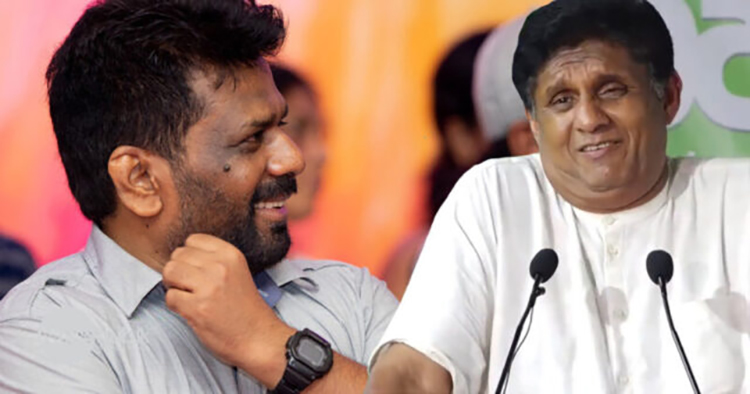
Opposition Leader Sajith Premadasa on Friday lashed out at President Anura Kumara Dissanayake in Parliament, accusing him of failing to uphold international law during wartime.
Premadasa said the President’s claim of neutrality ignored breaches of the UN Charter—including Articles 2.4 and 2.7—and other global conventions. “A neutral stance requires openly acknowledging violations,” he argued, criticizing the absence of ethical mechanisms to safeguard international law.
He also questioned the President’s handling of maritime issues, particularly whether Sri Lanka had been informed of the alleged attack on the Iranian vessel IRIS Dena, stressing that the Exclusive Economic Zone (EEZ) permits only peaceful activity.
On the economic front, Premadasa condemned the government for missing a chance to buy Russian oil during a 30-day U.S. sanctions suspension.
He said attempts to advise the Foreign Ministry, including a meeting with the Russian Ambassador, yielded no progress.
Premadasa further ridiculed the government’s earlier dismissal of the QR code fuel system, noting that officials are now adapting to it.
Turning to broader economic concerns, he called for immediate negotiations with the IMF to secure a new agreement, warning that the current primary balance of 2.3 is unsustainable. He stressed the urgent need for a poverty-reduction program, highlighting that one-third of Sri Lankans live in poverty.
He also demanded that surplus Treasury funds be used to support relief packages, arguing billions in reserves could aid households struggling with income shortfalls.Concluding his address, Premadasa criticized the government for failing to prepare for foreseeable crises, leaving the country vulnerable.

Former Minister Johnston Fernando, his two sons, and three others were remanded by the Wattala Magistrate’s Court yesterday (20) until April 2, the court confirmed.
The suspects, including Fernando’s elder son Johan, younger son Jerome, and a former transport manager of Lanka Sathosa, are under investigation by the Police Financial Crimes Investigation Division (FCID).
Authorities allege the Lanka Sathosa lorry was misused for operations linked to an ethanol company reportedly owned by Fernando, causing an estimated Rs. 2.5 million loss to the state.

PM Harini leads panel to protect public services

Sajith slams President over war conduct and economic missteps

Johnston Fernando, sons held in Lanka Sathosa lorry misuse case

Gura: The unsung hero

The Iran War, Global Oil Crisis, and Local Options

President in Parliament

‘Dates have the highest sugar content to fight Coronavirus’

Sunday Island 27 December – Headlines

#SundayIsland 17th December – Headlines

Sunday Island – 28th March

Sunday Island Headlines – 21 March

Sunday Island – 21st February – Headlines
-

 Business6 days ago
Browns EV launches fast-charging BAW E7 Pro at Rs. 5.8 million
-

 News4 days ago
CIABOC questions Ex-President GR on house for CJ’s maid
-

 News5 days ago
Sri Lankan marine scientist Asha de Vos honoured at UNGA opening
-

 Features6 days ago
Achievements of the Hunduwa!
-

 Latest News7 days ago
QR code system will be implemented for fuel with effect from 06.00 a.m. today (15th)
-

 News5 days ago
Australian HC debunks misleading travel risk claims for Sri Lanka
-

 Latest News5 days ago
Wednesdays declared a government holiday with effect from 18th March
-

 News3 days ago
Pay hike demand: CEB workers climb down from 40 % to 15–20%