
Foreign News
India recalls top Canada envoy as row over Nijjar killing deepens

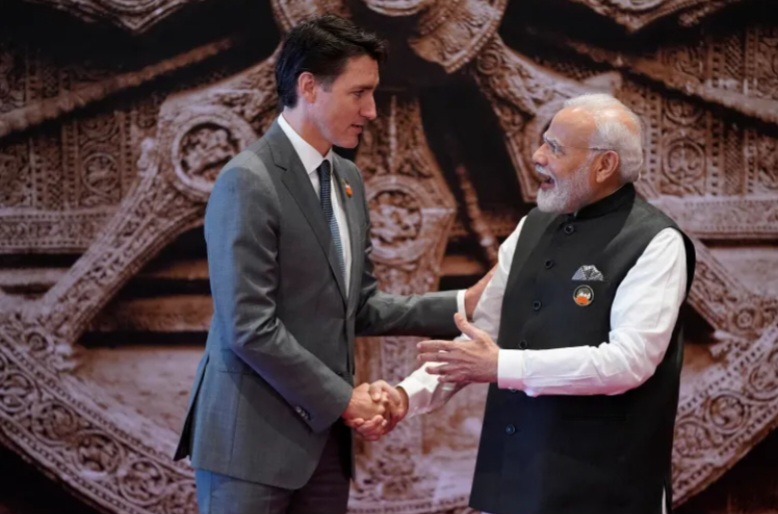
India says it is withdrawing its top envoy to Ottawa and other diplomats because the Canadian government is investigating them as “persons of interest” in an investigation, reigniting a diplomatic row over the killing of a Sikh separatist leader last year.
India – Canada relations have been tense since September 2023 when Prime Minister Justin Trudeau said Canada had credible evidence to link Indian agents to the assassination of Hardeep Singh Nijjar on Canadian soil earlier that year.
Nijjar supported a Sikh homeland in the form of an independent Khalistani State and was designated by India as a “terrorist” in July 2020.
India has repeatedly denied the allegation that its agents killed him, challenging Canada to share evidence to back its claim.
On Monday, the Indian Ministry of External Affairs said it had summoned the Canadian charge d’affaires to denounce the “completely unacceptable” and “baseless targeting” of the Indian high commissioner and other diplomats and officials.
“We have no faith in the current Canadian Government’s commitment to ensure their security. Therefore, the Government of India has decided to withdraw the High Commissioner and other targeted diplomats and officials,” it said in a statement.
In its earlier statement, the ministry said India “strongly rejects these preposterous imputations and ascribes them to the political agenda of the Trudeau Government” and reiterated Canada has not provided any proof “despite many requests from our side”.
“This latest step follows interactions that have again witnessed assertions without any facts. This leaves little doubt that on the pretext of an investigation, there is a deliberate strategy of smearing India for political gains,” the statement added.
India now reserves the right to take further steps in response to these latest efforts of the Canadian Government to concoct allegations against Indian diplomats,” said the statement.
The Indian government also alleged the Trudeau government “has consciously provided space to violent extremists and terrorists to harass, threaten and intimidate Indian diplomats and community leaders in Canada”.
Canada pulled out more than 40 diplomats from India in October 2023 after New Delhi asked Ottawa to reduce its diplomatic presence.
In June this year a committee of Canadian parlimentrians named Indial and China as the main foreign threats to its democratic institutions, based on input from intelligence agencies.
India’s envoy in Ottawa, Sanjay Kumar Verma, called the report politically motivated and influenced by Sikh separatist campaigners.
The assassination plots against Sikh separatist leaders in Canada and the US have tested their relationship with India, as the Western nations hope to forge deeper ties with New Delhi to counter China’s rising global influence.
(Aljazeera)


A court in Malta has acquitted businessman Yorgen Fenech of masterminding the murder of prominent anti-corruption journalist Daphne Caruana Galizia.
Fenech, 44, was acquitted on Wednesday at the end of a jury trial. He had been tried on charges of complicity to murder and for the lesser charge of criminal association to commit murder.
If found guilty, Fenech could have faced life in prison.
Caruana Galizia’s family were seen weeping in the packed courtroom in Valletta after the businessman was cleared of both counts by an 8-1 margin following eight hours of deliberation by the jury.
“Nine years after Daphne’s brutal assassination, the institutional failures that enabled her murder remain unaddressed and unreformed,” the slain reporter’s family said in a statement.
“Lasting justice means no person should ever face the same risks again. Our country failed to protect Daphne’s life. It owes it to her to prevent other lives being lost.”
Fenech’s family members were seen celebrating the jury’s decision.
The killing of Caruana Galizia in October 2017 shocked Europe’s journalist community and set off a political firestorm in Malta, focusing international attention on its police and judiciary.
Dubbed a “one-woman WikiLeaks”, Caruana Galizia had exposed corruption at the highest level in the Mediterranean island country, shining a spotlight on links between Malta’s business and political elites. She was 53 when she was killed.
Prosecutors argued that Fenech had wanted Caruana Galizia killed because she was about to reveal information about him.
Fenech has denied the accusations. His defence instead pointed fingers at his one-time friend Keith Schembri, the former chief of staff of then-Prime Minister Joseph Muscat and a target of Caruana Galizia’s blogs.
Muscat, who was never linked to the murder, stepped down in January 2020 due to the political fallout from the assassination.
Police told the court that Schembri had never been a suspect. He has denied any role in the murder.
An independent inquiry in 2021 found that officials in Malta had failed to protect Caruana Galizia from threats to her life before her death.
[Aljazeera]
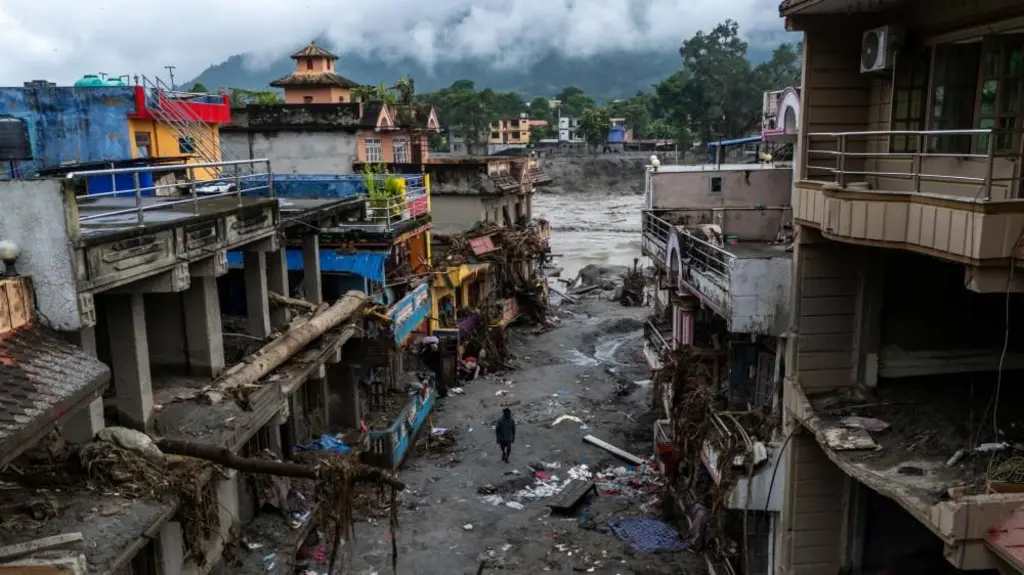
A head teacher’s quick decision to evacuate his school saved 900 pupils from deadly flash floods along the Nepal-Tibet border
Rajendra Dawadi tells the BBC he was tipped off about incoming flood waters and moved students to higher ground with just minutes to spare. One pupil says she and her friends survived by just 10 seconds and watched as a nearby bazaar was swept away
Wednesday’s disaster has killed at least 794 people and more than 2,500 people are missing in Nepal, local officials say
In Tibet, the official death toll is 16, with 546 reported to be missing, according to Chinese state media –
[BBC]

A ferry carrying around 260 people has capsized off the coast of northern Cyprus with a search underway for survivors, according to local media.
The catamaran-style boat was travelling from the port of Kyrenia, also known as Girne, and started sinking a few kilometres off the coast of the island state on Sunday.
There were no immediate reports of casualties.
[Aljazeera]

Devapathiraja clinch U15 Division I title with 33-run win over Royal

Mandhana’s record ton powers India into semi-finals

Sun directly overhead Nittambuwa, Algama, Malwana, Aranayake, Meegahakiula and Panamkadu about 12.09 noon today (04)

Showers expected in the Uva, Central and Eastern provinces and in Polonnaruwa and Mullaittivu districts after 2.00 p.m

Norochcholai digs into dwindling coal stocks, two units slash generation

22A: BASL decides against making written submissions after SC refuses to grant it right of reply

‘Dates have the highest sugar content to fight Coronavirus’

Sunday Island 27 December – Headlines

#SundayIsland 17th December – Headlines

Sunday Island – 28th March

Sunday Island Headlines – 21 March

Sunday Island – 21st February – Headlines
-

 Features5 days ago
“Wrap Me Up in My Blazer”— A Gentlemanly Bradby Reminiscence
-

 Features4 days ago
When Sri Lankan stories find their own voice
-
 Features5 days ago
JVP/NPP government as seen from outside by Lionel Bopage now domiciled in Australia
-
 News4 days ago
BASL takes exception to Justice Ganepola being denied a place in SC
-

 Editorial6 days ago
Govt. trying to dupe UN Rapporteur?
-
 Features5 days ago
Prof. Savitri Goonesekere: What has she done?
-

 Features5 days ago
World Trade Politics: Canada rebuffs Trump’s tariff blackmail
-
 News5 days ago
Legal avenues explored to bring back Mahendran, aka Harjan Alexander