
News
Inaugural session of next Parliament on 21 Nov.

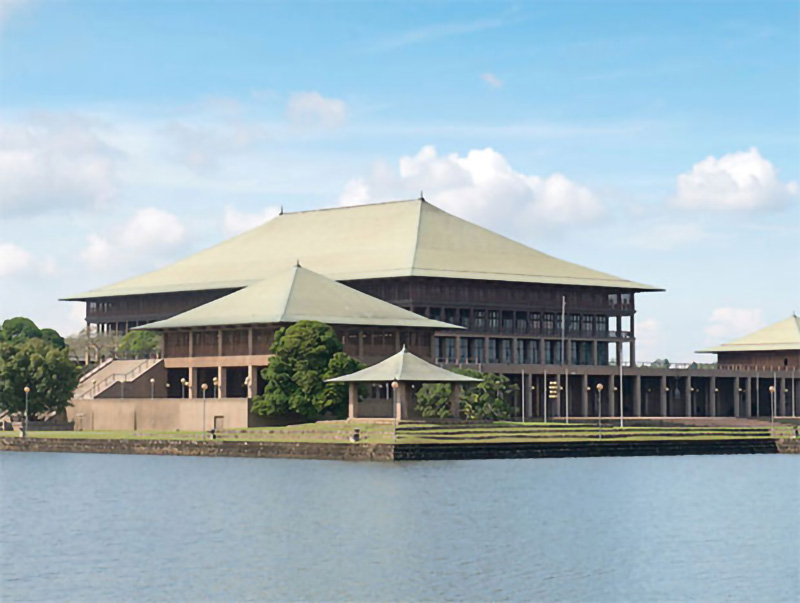
The inaugural session of the 10th Parliament would commence Nov. 21, Parliament announced yesterday.
The parliamentary Communications Department has in a media statement said that the upcoming general election to elect Members of Parliament for the Tenth Parliament is scheduled for Nov. 14. Through this election, a total of 225 Members of Parliament will be elected, comprising 196 members elected by public vote and 29 members entering through the National List, the statement added.
The inaugural session of the Tenth Parliament is scheduled to commence on November 21, as per the Extraordinary Gazette Notification No. 2403/13 dated 2024.09.24 issued by the President, according to the Parliamentary Communications Department.
On the first day, the primary responsibilities within the Chamber are entrusted to the Secretary-General of Parliament. There will be no seats assigned to the new MPs on the first day. Following the placement of the mace in the Chamber, the Secretary-General will present to Parliament, as the first business of the day, the Extraordinary Gazette Notification issued by the President, which specifies the date and time for the convening of Parliament.
Subsequently, in accordance with Article 64 (1) of the Constitution and Standing Orders 4, 5, and 6 of Parliament, the Speaker is elected by vote, followed by the administration of the official affirmation or oath of office by the Speaker. Thereafter, Members of Parliament take their official affirmation or oath, and the Deputy Speaker and Deputy Chairperson of Committees are elected by vote.
A Member of Parliament may be appointed as the Speaker. However, prior to nominating a member for the position, it is essential to confirm that the Member is willing to accept the appointment. The election of the Speaker must proceed based solely on the nominations made by Members, without allowing any debate on the matter.
At this stage, the Secretary-General informs the House that the Speaker must be appointed first. When a member rises to propose a name, the Secretary-General directs the House’s attention to that Member’s nomination. After one name has been proposed, the Secretary-General must ask if there are any other nominations. If no other nominations are presented, that Member is duly elected as Speaker.
It is a long-standing tradition for the two Members who formally proposed and seconded the name of the Speaker to escort the elected Member to the Speaker’s chair, holding them by the arms. The Speaker then takes their official affirmation or oath of office before the Secretary-General. Before taking their seat, it is customary for the newly appointed Speaker to briefly thank the House for the appointment.
Congratulatory remarks are then offered by both the government and Opposition representatives, after which the Speaker delivers a statement of thanks. Following this, the remaining Members proceed to take their official affirmation or oath before the Speaker.
When the names of two Members are proposed for the position of Speaker, a secret ballot is conducted. There are two instances in parliamentary procedure when a secret ballot is held: during the election of the Speaker, Deputy Speaker, Deputy Chairperson of Committees, and also when Parliament elects a President.
During the ballot, a continuous five-minute Quorum Bell shall signal Members to prepare. The Secretary-General then distributes ballot papers to each Member, who must write the name of their chosen candidate and sign the paper. Members then fold the ballot paper discreetly and place it in the ballot box. The authority to determine the voting method and to conduct the count rests solely with the Secretary-General, who tallies the votes at the Table of Parliament. After counting, the Secretary-General announces the result to the House. If a ballot paper lacks the Member’s signature, it is deemed invalid.
If three Members are proposed for the position of Speaker and no candidate secures an absolute majority in the vote, the candidate with the least number of votes shall be eliminated, and a new round of voting is conducted. The candidate who then receives the majority of votes is elected as Speaker. Similarly, in instances where multiple Members are proposed, successive rounds of voting are held, eliminating the candidate with the least votes each time, until one candidate secures an absolute majority. At any point, if a candidate achieves an absolute majority, they are immediately elected as Speaker.
In cases where three Members stand for election and two of them receive an equal number of votes, the Secretary-General has the authority to eliminate one of the tied candidates by drawing lots. Following this, a vote is held between the remaining candidate and the candidate with the highest votes, and the Speaker is selected based on the results.
If there is a vote between two candidates and both receive an equal number of votes, a re-vote is conducted. Should there still be a tie after this second vote, the Secretary-General has the authority to select the Speaker by drawing lots. The Secretary-General has full discretion to determine the procedure for drawing lots.
Following the conclusion of a vote, the corresponding ballot papers must be kept under the custody of the Secretary-General for a period of one month. After this period, they should be destroyed in accordance with the directive from Parliament, and a report of this destruction must be submitted to Parliament.
All Members of Parliament elected must sign the Member roll after taking their oath or affirmation on the first day. The Speaker signs first, followed by the Prime Minister as a tradition, after which the other Members affix their signatures. This signed record is maintained as a highly secure document in accordance with established protocols.
When the Deputy Speaker and Deputy Chairperson of Committees are to be elected, the Speaker, having already been appointed, conducts all notifications and voting procedures. After nominations for the Deputy Speaker and Deputy Chairperson are made, the Speaker will ask the House if there are any further nominations. If none are forthcoming, the nominated Members are elected to their respective positions. Should a vote be necessary, the procedure followed will mirror that of the election of the Speaker, with the notable difference that the voting will be conducted by the Speaker instead of the Secretary General.
After these activities are completed, Parliament will be adjourned. Typically, the adjournment will be until the next scheduled parliamentary day.
However, according to Article 33 of the Constitution, if the President addresses Parliament on that day to present the government policy statement, the House will be temporarily suspended at the end of these initial proceedings. When Parliament reconvenes, the President will preside over the House and present the government policy statement.
Following the policy statement the President will then adjourn Parliament until the next scheduled day, the statement added.

News
Establishment of an Institutional Framework to Inagurate Upper Hydro Catchment Areas Management Authority

Policy approval of the Cabinet of Ministers was granted at their meeting held on 08.06.2026 to establish the Upper Hydro Catchment Areas Management Authority for identification and
execution of a formal and long – lasting remedy to secure the central hills including the upper hydro catchment areas enabling them to sustain amidst extreme weather conditions
due to natural calamities and human activities as well as to be used for the sustainable development of the country.
Accordingly, a concept paper has been prepared including
institutional structure, activities, powers, active subject area as well as administrative and coordination mechanism for the proposed authority by an expert technical committee appointed by the Secretary to the President.
Based on the said concept paper, the Cabinet of Ministers granted approval to the resolution furnished by the President to instruct the Legal Draftsman to prepare a draft bill including legal provisions required for the establishment of Upper Hydro Catchment Areas Management Authority.
News
Introduction of Flora and Fauna (Regulation of actions of the Indigenous Community within the nominated areas) Regulations
With the objective of securing the traditional livelihood and the eco system of the indigenous community, it has been recognized the necessity of introducing a formal regulation methodology to secure their engagement in livelihood activities by being more sensitive to the existing laws.
Thereby, the Fauna and Flora (regularizing) regulations under the Fauna and Flora Protection Ordinance (Authority 469) have been prepared so that nominated activities within the prescribed area to a member of the indigenous community
who has been registered for securing the rights acquired from law or custom or usage or traditional stance to execute an act within a certain state land that is fundamental to the survival of the indigenous community permission can be granted
Accordingly, the Cabinet of Ministers granted approval to the resolution furnished by the Minister of Environment to publish the said regulations in the government gazette notification and thereby submit to the Parliament for its concurrence.
Latest News
M. M. D. J. Senarathne, appointed Director General of the Department of National Botanical Gardens
The Cabinet of Ministers approved the resolution furnished by the Minister of Environment to appoint M. M. D. J. Senarathne, who is the senior most officer in Grade I of Sri Lanka Scientific Service se

Establishment of an Institutional Framework to Inagurate Upper Hydro Catchment Areas Management Authority
Introduction of Flora and Fauna (Regulation of actions of the Indigenous Community within the nominated areas) Regulations
M. M. D. J. Senarathne, appointed Director General of the Department of National Botanical Gardens

Harmanpreet Kaur steps down as India captain

Turkiye, Pakistan agree Saudi Arabia military deployment under Mecca pact

Rumesh Tharanga among nominees announced for World Athlete of the Year 2026

‘Dates have the highest sugar content to fight Coronavirus’

Sunday Island 27 December – Headlines

#SundayIsland 17th December – Headlines

Sunday Island – 28th March

Sunday Island Headlines – 21 March

Sunday Island – 21st February – Headlines
-

 Latest News7 days ago
Gold winner Tharanga gets brand-new Honda Vezel from SLAAJ
-

 News6 days ago
US-assisted ‘Ice’ detection: NPC to examine IGP’s move to transfer drug-busting team
-

 Features7 days ago
Why Sri Lanka needs an Inclusive Civic Nationalism – urgently
-

 Editorial5 days ago
Colombo Port drug bust: The plot thickens
-

 News7 days ago
Civil society activist accuses govt. of favouring Ven. Gnanasara
-
 Midweek Review7 days ago
Dappula’s Easter Sunday ‘grand conspiracy’ claim demolished
-

 Editorial7 days ago
When crime bosses rise above law and shrines
-
Editorial6 days ago
Drug busting, transfers and trust deficit