
Business
Importance of ethics in the medical profession

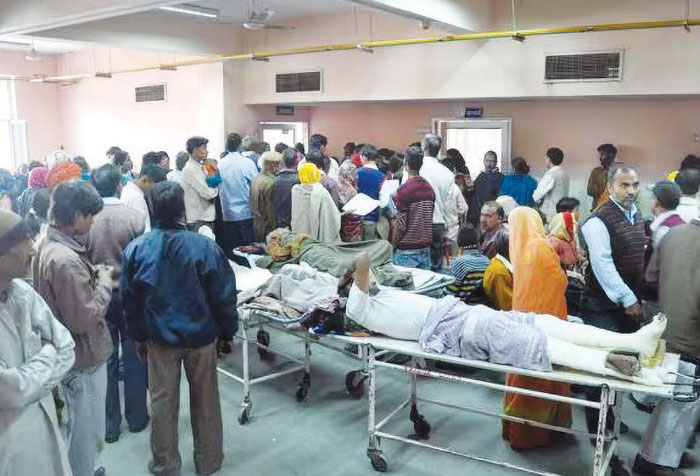
The full speech of Emeritus Prof. Janaka De Silva, former director of the Postgraduate Institute of Medicine (PGIM) as chief guest at the inauguration of the Annual Academic Sessions (AAS) of the Sri Lanka College of Oncologists (SLCO) on October 13 in Colombo.
Prof. De Silva was speaking on ‘Postgraduate training and the professional practice of medicine’: As I am not qualified to talk to you about oncology, I thought I will speak briefly from my experience of working at the PGIM and the Sri Lanka Medical Council (SLMC) on a few issues that concern our postgraduate training, the professionalism that society expects from specialists and the challenges we face in fulfilling them.
Our postgraduate training system is one of the finest in the region and our post-MD trainees also have the privilege of being trained overseas. Several of our qualifications are recognized overseas, and some, like the MD Surgery have been granted equivalence by Colleges in the United Kingdom. There can little doubt that those who undergo this type of training have the necessary knowledge and skills to practice as specialists.
But, in addition to being knowledgeable and skilled, fitness to practise is also determined by professional conduct – maintaining a high standard of professional and moral ethics and being aware of and respecting the rights of patients. And although genuine efforts are being made in our training programmes, it is here that I feel there is room for improvement.
Doctors are expected to make the care of their patients their first concern. They should be competent in all aspects of their patient care related responsibilities and keep their professional knowledge and skills up-to-date. They should recognize and work within the limits of their competence and refer where it is considered necessary, prescribe drugs or treatments based on the best available evidence, be satisfied that consent is obtained before carrying out any examination, investigation, or treatment, and communicate effectively with patients and those who take care of them.
Doctors should not express personal beliefs (including religious beliefs) to patients in ways that exploit their vulnerability or cause them distress, and should maintain patient confidentiality at all times, especially when communicating publicly, be open and honest with patients if and when mistakes occur, and be honest about their experience and qualifications.
They should also be honest and trustworthy when completing or signing documents, when giving evidence to courts and in financial and commercial dealings. Doctors should also be fully aware of the rights of the patients they treat. Patients’ rights include the right to informed consent which refers to their agreeing to undergo treatments or procedures only after receiving accurate information wherever possible. This should include the names of healthcare providers and their qualifications and the estimated costs of investigations, procedures and treatments.
I am sorry if that felt like I was lecturing you, because what I have said is hardly new and should be common practice. But we all know that this is not the case. We have only to listen to the news, read the newspapers or log onto social media to hear ever increasing incidents of patients subjected to unnecessary investigations and procedures, given irrational prescriptions, issued false medical certificates and being charged unconscionable fees.
As our country becomes more developed, admittedly rather slowly, the medical profession has a duty to ensure that the health benefits of this gradual affluence reaches all communities in all parts of Sri Lanka. There can be little argument about that. But for this to happen, we need more specialist doctors, so that specialist medical services can be expanded to cover the more remote areas of our country. And, as we progress, we must also strive to improve, not only the coverage, but also the quality of care given to our patients. At present we are struggling with both, mainly because of the current brain drain and, paradoxically, protectionism within the profession.
Almost all of us specialists here have had the benefit of free education at some time or another – at school, at university or when we went overseas for our postgraduate training. It was certainly the case for me. It is something extraordinary for a lower middle income country to provide. So, we owe Sri Lanka and her people a debt of gratitude. Giving something back to the system that nurtured us are duties that are noble and proper.
I therefore, feel sad when I read the news of some specialist doctors cold-heartedly and without notice abandoning their posts and patients, and leaving the country, and worse, doing so secretively to avoid paying their service bonds and other dues. This is disgraceful and brings our whole profession into disrepute. The shame, however, is not only theirs, but should be shared equally by the affluent countries that poach them from this not-too-well-off country.
But, our system is also at fault. While our regulator, the SLMC is currently well into the process of drafting a new Medical Act to address some of the issues I mentioned earlier, our system also needs to fulfil a social obligation – that is to provide career opportunities for the nearly 2,000-odd doctors graduating from local and foreign medical schools joining our workforce each year – may I remind you at this point that we now have 12 state medical schools. If we fail, the lack of opportunities will continue to result in our brightest young doctors leaving the country.
There are several ways that we may be able to deal with this issue: one is to develop more specialties, once adequate numbers of generalists have been trained. Another is to increase the number of mid-level qualifications like Postgraduate Diplomas and Masters Degrees; doctors with middle-level qualifications can play a very important role in our health service, provided their services are utilized optimally.
To achieve these, the medical profession needs to overcome its protectionist ideology that sadly pervades even our professional colleges. In fact, when I was Director of the PGIM, I found that some colleges were actually the biggest obstacle to developing sub-specialties and awarding mid-level qualifications and the reasons given by them were not even remotely academic. It is in matters such as this that the support of professional bodies is needed. I thought I will speak freely about these inconvenient and uncomfortable truths, firstly, because I have been waiting a very long time to do it, and secondly, because I do so at the induction of a man, who is an oncologist of the highest integrity, who, as a professional, is a role model. I am proud to have made a small and very early contribution to his professional career.

By Sanath Nanayakkare
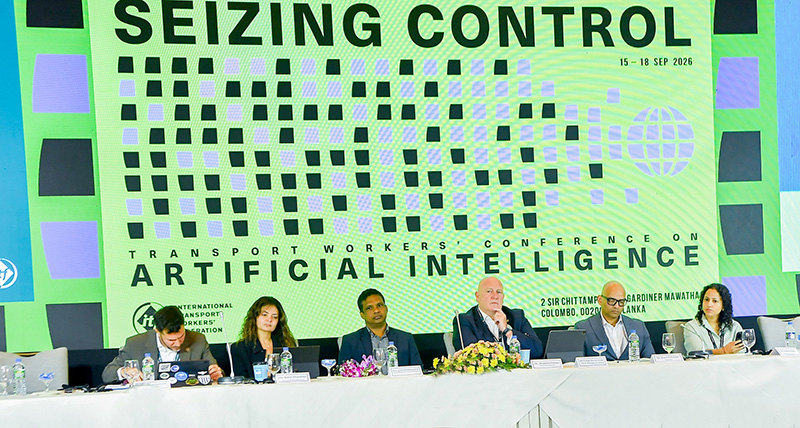
Artificial intelligence and automation present serious challenges for workers – such as job consequences seen in docks and rail systems – and emphasises that workers cannot simply stop technological progress. By gathering young trade unionists in Sri Lanka, the ITF aims to establish key principles for engaging with technology, ensuring workers have a strong voice at the bargaining table, and encouraging constructive social dialogue with corporations and governments.
These compelling words from ITF General Secretary Stephen Cotton underscored the urgent reality facing modern labor as rapid technological advancements sweep across global industries.
Confronting this shifting landscape head-on, the International Transport Workers’ Federation (ITF), in partnership with the National Union of Seafarers of Sri Lanka (NUSS), convened a ground-breaking conference on artificial intelligence in Colombo from September 15–17.
As the ITF’s first-ever AI-focused global conference and the first of its kind hosted in Sri Lanka, the landmark event marked a critical milestone in balancing technological innovation with worker-centered safeguards.
Representing over 16.6 million transport workers worldwide, the ITF designed the gathering to tackle the multifaceted impacts of AI on safety, operations, workforce development, and governance. Rather than resisting progress, the conference focused on proactive engagement, establishing guiding principles to protect workers’ rights and privacy both at sea and on land.
Key discussions centred on sharing best practices for upskilling and reskilling transport personnel, ensuring that human oversight remains central to AI-driven logistics, routing, and maintenance.
Reflecting on the historic nature of the event, Boa Athu, CEO of National Union of Seafarers Asia Pacific, noted that the conference represented a monumental moment as AI emerges as a permanent fixture of contemporary life.
Highlighting NUSS’s pride in hosting the event in Colombo, Athu emphasised that AI offers transformative potential when guided by strong social dialogue, equitable access to training, and robust governance safeguards.
Ultimately, the Colombo conference demonstrated that the future of transport must be shaped by those who keep the world moving. By uniting international labour leaders, affiliates, port operators, and regulators, the event laid a vital foundation for inclusive policy frameworks that champion fair labour standards, securing a powerful voice for workers in an automated tomorrow.
By Sanath Nanayakkare
As Sri Lanka experiences a surge in visitors from its largest tourist market, India, a modern administrative hurdle has emerged at Bandaranaike International Airport (BIA).
While nations like India and Pakistan have successfully transitioned to fully digital driving licences and cashless ecosystems, Sri Lanka’s Department of Motor Traffic counter still requires a physical card to issue temporary local permits, The Island Financial Review learns.
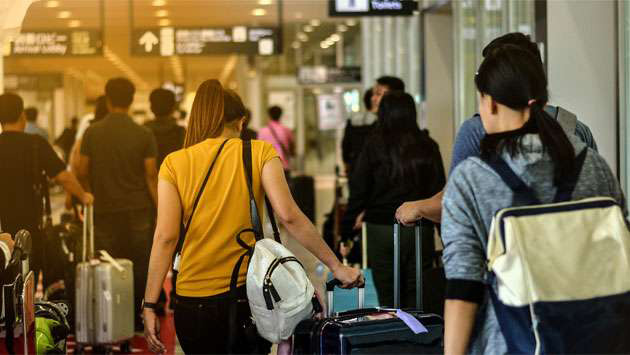
This mismatch creates significant friction for independent travelers who rely entirely on smartphones and cloud-stored credentials. Tourists turned away at the airport – and sometimes redirected to the Werahera office in vain – find themselves unable to legally rent and drive vehicles. Consequently, this policy gap harms local car rental operators, causes tourist frustration, and deprives the government of valuable permit revenue.
The situation highlights a distinct irony: Sri Lankan motorists easily travel abroad using International Driving Permits that are readily accepted in India and Pakistan, yet local infrastructure cannot reciprocate due to outdated verification systems.
Recognizing the problem, Department of Motor Traffic officials have noted that upgrades and new equipment are currently in the works to integrate foreign digital platforms.
For a nation aggressively pursuing a national digitalisation drive, rapidly modernising these transport protocols is essential to keeping pace with global travelers and unlocking the full potential of its tourism economy.
Business
International Afro-Latin Dance Festival in Colombo to grow into a larger regional tourism draw


ALIF-SL, Sri Lanka’s first-ever international Afro-Latin dance festival, returns for its 4th edition from 25 to 27 September 2026 at the Galle Face Hotel, Colombo. The festival will bring together over 30 international and national artists and 175–200 participants from more than 20 countries, reaffirming its place as the region’s leading platform for Salsa, Bachata and Kizomba.
This year’s edition is headlined by Tropical Gem, the world’s No. 1 salsa team, travelling from Italy to perform and teach alongside a stellar international line-up. Attendees can also look forward to the ALIF Cup Sri Lanka Open, a keenly contested competition judged by an international panel, giving local dancers a rare opportunity to compete and connect with world-class talent.
“Every year, ALIF connects Sri Lanka to the world. With this year’s artist line-up and the ALIF Cup competition, we’re not just hosting a festival, we’re putting Sri Lanka on the map as a top destination for dance,” said JD Ruban, Founder and Director of ALIF-SL
Beyond the dance floor, ALIF-SL continues to support Sri Lanka’s tourism sector, drawing dancers, judges and enthusiasts from across the globe to Colombo and positioning the capital as an emerging regional hub for social dance. Organizers plan to grow the festival into a larger regional tourism draw, introduce new competition categories, and bring in even bigger headline acts in future editions.

Kenya’s Ngetich breaks women-only half-marathon world record by a second

Showers about 100 mm are likely at times in the Western, Sabaragamuwa and North-western provinces and in Galle, Matara, Kandy and Nuwara-Eliya Districts

New Constitution to decide fate of executive presidency, PCs: NPP

NBRI issues landslide warning for three districts

Mahaweli rises as heavy rain triggers flood, landslide fears

SC determination on 22A to be conveyed to Speaker shortly

‘Dates have the highest sugar content to fight Coronavirus’

Sunday Island 27 December – Headlines

#SundayIsland 17th December – Headlines

Sunday Island – 28th March

Sunday Island Headlines – 21 March

Sunday Island – 21st February – Headlines
-

 News4 days ago
US embassy won’t comment on IGP’s probe into joint drug raid
-

 News3 days ago
Bid for Basil’s extradition nears final stage: Police
-
 Features6 days ago
The emptying university: why are academics leaving?
-

 Business4 days ago
All-new Bolero MaXX unveiled in Sri Lanka
-

 News2 days ago
Shanakiyan urges urgent action over reported death sentence for Lankan in Saudi Arabia
-
 Opinion6 days ago
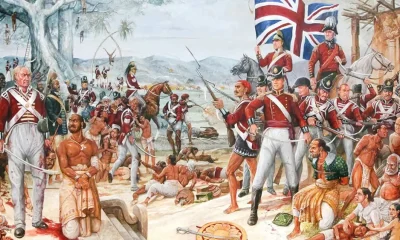
Who committed genocide and created mass graves in Sri Lanka?
-

 Opinion4 days ago
A journalist who wrote across the divide
-

 Weather6 days ago
Showers above 100 mm expected at times in the Western, Sabaragamuwa, Central, Uva and Southern provinces, and in Ampara and Batticaloa districts