
Business
Importance of ethics in the medical profession

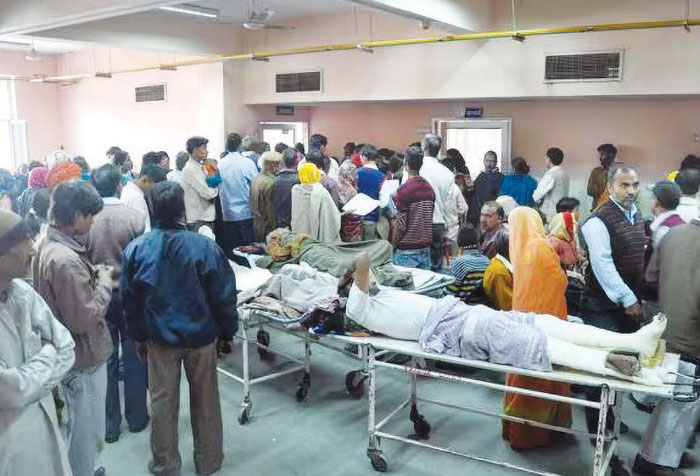
The full speech of Emeritus Prof. Janaka De Silva, former director of the Postgraduate Institute of Medicine (PGIM) as chief guest at the inauguration of the Annual Academic Sessions (AAS) of the Sri Lanka College of Oncologists (SLCO) on October 13 in Colombo.
Prof. De Silva was speaking on ‘Postgraduate training and the professional practice of medicine’: As I am not qualified to talk to you about oncology, I thought I will speak briefly from my experience of working at the PGIM and the Sri Lanka Medical Council (SLMC) on a few issues that concern our postgraduate training, the professionalism that society expects from specialists and the challenges we face in fulfilling them.
Our postgraduate training system is one of the finest in the region and our post-MD trainees also have the privilege of being trained overseas. Several of our qualifications are recognized overseas, and some, like the MD Surgery have been granted equivalence by Colleges in the United Kingdom. There can little doubt that those who undergo this type of training have the necessary knowledge and skills to practice as specialists.
But, in addition to being knowledgeable and skilled, fitness to practise is also determined by professional conduct – maintaining a high standard of professional and moral ethics and being aware of and respecting the rights of patients. And although genuine efforts are being made in our training programmes, it is here that I feel there is room for improvement.
Doctors are expected to make the care of their patients their first concern. They should be competent in all aspects of their patient care related responsibilities and keep their professional knowledge and skills up-to-date. They should recognize and work within the limits of their competence and refer where it is considered necessary, prescribe drugs or treatments based on the best available evidence, be satisfied that consent is obtained before carrying out any examination, investigation, or treatment, and communicate effectively with patients and those who take care of them.
Doctors should not express personal beliefs (including religious beliefs) to patients in ways that exploit their vulnerability or cause them distress, and should maintain patient confidentiality at all times, especially when communicating publicly, be open and honest with patients if and when mistakes occur, and be honest about their experience and qualifications.
They should also be honest and trustworthy when completing or signing documents, when giving evidence to courts and in financial and commercial dealings. Doctors should also be fully aware of the rights of the patients they treat. Patients’ rights include the right to informed consent which refers to their agreeing to undergo treatments or procedures only after receiving accurate information wherever possible. This should include the names of healthcare providers and their qualifications and the estimated costs of investigations, procedures and treatments.
I am sorry if that felt like I was lecturing you, because what I have said is hardly new and should be common practice. But we all know that this is not the case. We have only to listen to the news, read the newspapers or log onto social media to hear ever increasing incidents of patients subjected to unnecessary investigations and procedures, given irrational prescriptions, issued false medical certificates and being charged unconscionable fees.
As our country becomes more developed, admittedly rather slowly, the medical profession has a duty to ensure that the health benefits of this gradual affluence reaches all communities in all parts of Sri Lanka. There can be little argument about that. But for this to happen, we need more specialist doctors, so that specialist medical services can be expanded to cover the more remote areas of our country. And, as we progress, we must also strive to improve, not only the coverage, but also the quality of care given to our patients. At present we are struggling with both, mainly because of the current brain drain and, paradoxically, protectionism within the profession.
Almost all of us specialists here have had the benefit of free education at some time or another – at school, at university or when we went overseas for our postgraduate training. It was certainly the case for me. It is something extraordinary for a lower middle income country to provide. So, we owe Sri Lanka and her people a debt of gratitude. Giving something back to the system that nurtured us are duties that are noble and proper.
I therefore, feel sad when I read the news of some specialist doctors cold-heartedly and without notice abandoning their posts and patients, and leaving the country, and worse, doing so secretively to avoid paying their service bonds and other dues. This is disgraceful and brings our whole profession into disrepute. The shame, however, is not only theirs, but should be shared equally by the affluent countries that poach them from this not-too-well-off country.
But, our system is also at fault. While our regulator, the SLMC is currently well into the process of drafting a new Medical Act to address some of the issues I mentioned earlier, our system also needs to fulfil a social obligation – that is to provide career opportunities for the nearly 2,000-odd doctors graduating from local and foreign medical schools joining our workforce each year – may I remind you at this point that we now have 12 state medical schools. If we fail, the lack of opportunities will continue to result in our brightest young doctors leaving the country.
There are several ways that we may be able to deal with this issue: one is to develop more specialties, once adequate numbers of generalists have been trained. Another is to increase the number of mid-level qualifications like Postgraduate Diplomas and Masters Degrees; doctors with middle-level qualifications can play a very important role in our health service, provided their services are utilized optimally.
To achieve these, the medical profession needs to overcome its protectionist ideology that sadly pervades even our professional colleges. In fact, when I was Director of the PGIM, I found that some colleges were actually the biggest obstacle to developing sub-specialties and awarding mid-level qualifications and the reasons given by them were not even remotely academic. It is in matters such as this that the support of professional bodies is needed. I thought I will speak freely about these inconvenient and uncomfortable truths, firstly, because I have been waiting a very long time to do it, and secondly, because I do so at the induction of a man, who is an oncologist of the highest integrity, who, as a professional, is a role model. I am proud to have made a small and very early contribution to his professional career.

Business
Mahindra Ideal Motors celebrates gala ‘Excellence Awards’ honouring outstanding performance and innovation

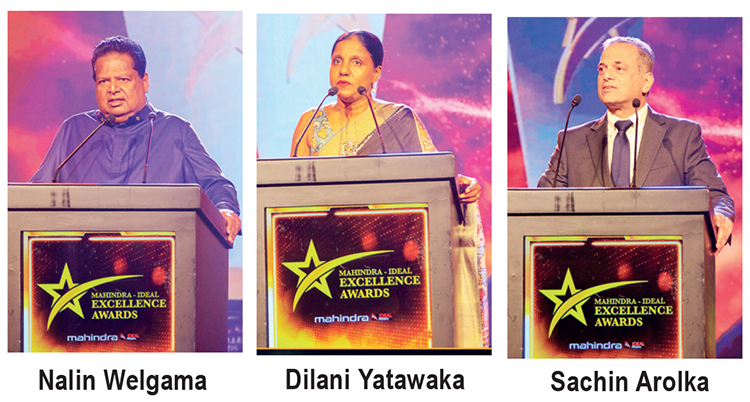
The Mahindra Ideal Motors Excellence Awards ceremony, a grand celebration to recognize dealers and other stakeholders of Ideal Motors, was held at the Wave n’ Lake Banquet Hall & Restaurant in Welisara recently.
The event was graced by the presence of special guests including Nalin Welgama, Founder and Chairman Ideal Motors, Dilani Yatawaka, Group Managing Director/CEO Ideal Motors, Nimisha Welgama, Director Legal and Corporate Affairs Ideal Motor, Sachin Arolka, Head International Operations, Auto Division Mahindra & Mahindra India. Senthil Selvaraju, Head International Operations and Customer Service Automotive Division Mahindra & Mahindra India, Sujeeth Jayant, Country Head Mahindra & Mahindra India and Shitam Kundu, Head Domestic Services Mahindra & Mahindra India.
Also, in attendance from Ideal Motors were Kasun Fernando, General Manager Commercial Vehicle Sales Division, Sameera Bamunuarachchi, Deputy General Manager Spare Parts, Logistics & Inventory and Prasanna Manamperi, Deputy General Manager After Seles Service.
Speaking at the event, Nalin Welgama Ideal Motors Founder and Chairman said, “When we began our journey with Mahindra in 2009, the previous company had sold 300 vehicles in the country, of which nearly 150 had various defects. At that time our journey began by engaging with the parent company in India and repairing those vehicles free of charge. That commitment has brought us to where we are today. As we believe, our journey truly begins after the sale. We are dedicated to strengthening our customers, and in doing so, strengthening ourselves. That is how we transformed the after-sales service experience.”
He added, “Our main strength is the Mahindra Bolero, which has sold more than 10,000 units in just two years. In a very short period, we grew from zero to over 100,000 vehicles sold. This is not my victory, but the victory of all of you who contributed to it. Despite the challenges of the COVID-19 pandemic and the economic crisis we faced, this awards ceremony was organized to express our gratitude to all of you who trusted our institution and stood by us. Let us continue our victorious journey together.”
Dilani Yatawaka, Group Managing Director Ideal Motors, said: “Today is a very happy day for us. This is the first time in history of the organisation, that representatives of our vehicles, spare parts, services, and financial institutions are meeting together under one roof.”
Speaking on the occasion, Sachin Arolka, Head International Operations, Auto Division Mahindra & Mahindra India, stated that Ideal Motors in Sri Lanka is one of the largest seller of Mahindra vehicles in Asia.
More than 300 dealers and finance partners participated in the event which concluded with dinner, fellowship and entertainment.
Strengthening conservation through active law enforcement
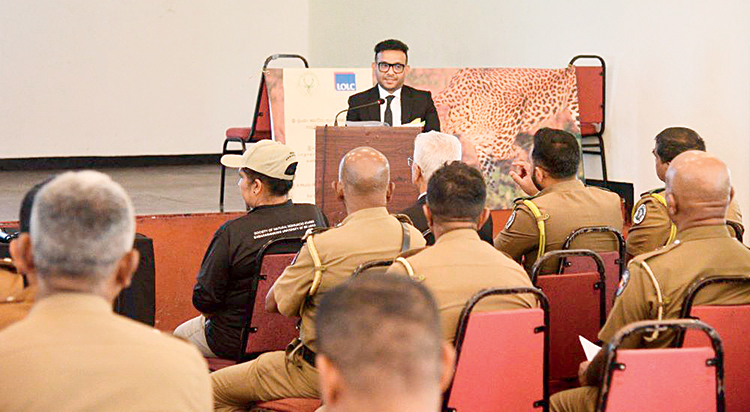
An awareness and capacity-building program on wildlife crime prevention, with a special focus on the Sri Lankan leopard (Panthera pardus kotiya), was successfully conducted on March 20 at the Dimbula Athletics & Cricket Club, Radella.
The session was organized under the ongoing Multi-Regional Leopard Research and Conservation Project implemented by the Wildlife & Nature Protection Society (WNPS), in collaboration with LOLC. It brought together senior officers representing 28 Police stations across the Nuwara Eliya and Kandy districts, underscoring the growing importance of law enforcement in conservation efforts within multi-use landscapes, a WNPS news release said.
The Central Highlands present a unique conservation challenge, where increasing habitat loss and fragmentation, depletion of natural prey, and use of snares continue to threaten leopards inhabiting these landscapes majority outside formally protected areas. The session therefore focused on strengthening the capacity of Police officers to identify, prevent, and respond to wildlife crimes, while fostering closer coordination with conservation stakeholders, it explained.
Co-Chair of the Wildcats Subcommittee, Prof. Enoka Kudavidanage, highlighted the ecological and economic significance of leopards as apex predators, emphasizing their role in maintaining ecosystem balance and supporting nature-based tourism. She also outlined the current conservation challenges in the Hill Country and presented ongoing interventions under the WNPS–LOLC project.
Dr. Sanjaya Weerakody, Postdoctoral Fellow at the Xishuangbanna Tropical Botanical Garden (XTBG), Chinese Academy of Sciences, shared key research findings on leopard mortality trends over the past 17 years revealing concerning patterns, including the disproportionate loss of mature male individuals and the increasing prevalence of snaring as a primary cause of death highlighting an urgent need for targeted enforcement.
Attorney – at – Law Charaka Jayaratne provided an in-depth overview of the legal provisions under the Fauna and Flora Protection Ordinance, with particular attention to offences related to snaring. He discussed how Police can take more proactive and effective action, identifying gaps in current approaches and suggesting practical measures to strengthen enforcement outcomes.
Adding further perspective, Samantha Gunasekara, former Deputy Director of Customs and Chairman of the Marine Environment Protection Authority (MEPA), spoke on the broader context of illegal wildlife trade in Sri Lanka. Drawing from past cases and recent observations, he highlighted emerging trends and risks associated with wildlife trafficking.
Representing the Department of Wildlife Conservation, Ranger Srinath Dissanayake of the Hakgala Wildlife Range shared recent cases on leopard deaths and rescue operations recorded in 2025. He emphasized on personal observations, importance of timely intervention, and strong collaboration between field officers and the Police to mitigate human–wildlife conflict and prevent avoidable losses.
An interactive discussion followed, allowing officers to raise questions, clarify procedures, and exchange experiences while sharing their feedback as well. This dialogue contributed to reinforcing the value of strategic engagement between the Police, the Department of Wildlife Conservation, and conservation partners while strengthening inter-agency understanding and highlighting the need for coordinated responses during leopard-related incidents.
The session commenced with opening remarks by WNPS President Graham Marshall, who expressed appreciation for the participation of the Sri Lanka Police and reiterated the critical role of law enforcement in safeguarding biodiversity beyond protected areas.
WNPS Past President and WNPS LOLC Project Head Spencer Manuelpillai, Project Coordinator Gihani Hettiarachchi, Regional Center Coordinators, Thilanka Dissanayake and Attorney-at-Law Malaka Palliyaguruge were also present as part of the WNPS team.
WNPS extends its sincere appreciation to all officers who participated for their commitment and active engagement. Supported by LOLC, these initiatives form part of a broader effort to strengthen practical conservation through collaboration, knowledge sharing, and effective enforcement in Sri Lanka’s Hill Country.

Fashion retail leader Mangala Tex celebrated the grand opening of its newest branch in Kurunegala on Saturday, March 14, 2026, adding a vibrant new dimension to the city’s commercial landscape.
Since its inception, Mangala Tex has been synonymous with style, durability, and quality, earning a lasting reputation as a premier clothing retailer. Guided by the visionary leadership of Chairman Ronald Nimal Hope, the brand has successfully established a strong presence with thriving outlets in Yatinuwara Veediya, Kandy, Cross Street, Kandy, and Peradeniya, Kandy.
The Kurunegala expansion marks a significant milestone in the company’s growth, bringing its signature fashion offerings closer to a wider customer base. True to its slogan, “Let Your Clothing Do The Talking,” the new store features an extensive range of apparel catering to all age groups, blending contemporary style with durable, high-quality fabrics.
Shoppers at the Kurunegala branch are greeted by a welcoming atmosphere and attentive staff, which long-time customers cite as key reasons for their loyalty. The store’s combination of trendy designs, reliable quality, and customer-centric service continues to set it apart in Sri Lanka’s competitive fashion retail sector.
Mangala Tex now employs more than 120 staff members across its branches, remaining a proudly family-driven enterprise alongside Managing Director Pahan Dissanayaka and Directress M M G P Dissanayaka.
With the official opening in Kurunegala, Mangala Tex demonstrates that consistent quality, style, and service can drive sustained growth, expanding the brand’s reach to new communities while reinforcing its status as a trusted name in Sri Lankan fashion.
Text and Pix by SK Samaranayake

National Namal Uyana Declared a ‘National Heritage of Sri Lanka’

Philippine transport strikers say Marcos Jr failing to control oil prices

One ant for $220: the new frontier of wildlife trafficking

Three Lebanese journalists killed in Israeli strike, say broadcasters

Showers will occur at a few places in the Sabaragamuwa province and in Colombo, Kaluthara, Galle, and Matara districts after 2.00 pm

War-linked power crunch pushes Lanka to four-day week

‘Dates have the highest sugar content to fight Coronavirus’

Sunday Island 27 December – Headlines

#SundayIsland 17th December – Headlines

Sunday Island – 28th March

Sunday Island Headlines – 21 March

Sunday Island – 21st February – Headlines
-

 News5 days ago
Senior citizens above 70 years to receive March allowances on Thursday (26)
-

 Features2 days ago
A World Order in Crisis: War, Power, and Resistance
-

 Features7 days ago
Trincomalee oil tank farm: An engineering marvel
-

 News3 days ago
Energy Minister indicted on corruption charges ahead of no-faith motion against him
-

 News4 days ago
US dodges question on AKD’s claim SL denied permission for military aircraft to land
-

 Features7 days ago
The scientist who was finally heard
-

 Business4 days ago
Dialog Unveils Dialog Play Mini with Netflix and Apple TV
-

 Sports3 days ago
SLC to hold EGM in April