
Business
How U.S. tariffs and a fragile rupee are exposing Sri Lanka’s export vulnerabilities


As Sri Lanka navigates the delicate path of economic recovery, two mounting challenges have converged to expose deep-rooted vulnerabilities in its export economy: the appreciation of the rupee over the past two years and a fresh wave of reciprocal tariffs imposed by the United States. For a country where nearly a quarter of exports are US-bound, these developments carry serious implications—not just for revenue, but for investment, competitiveness, and long-term growth.
According to leading economist Prof. Sirimal Abeyratne, these pressures should be seen less as external shocks and more as symptoms of underlying structural gaps. “The problem isn’t just what Trump did,” he explains. “It’s the fact that Sri Lanka has been running an overly protective and inefficient trade regime for decades. What this tariff move has done is hold a mirror up to our own weaknesses.”
The newly proposed US tariff regime, introduced under the justification of ‘reciprocal trade fairness,’ penalises countries running large bilateral trade surpluses with the US. Sri Lanka, despite its relatively small export volume, is among the top targets. Apparel exporters—already grappling with squeezed margins—will be faced with an additional 44% duty from the 8th of July, on top of the existing Most Favoured Nation tariff rate, threatening their foothold in key global markets. The bigger risk, Prof. Abeyratne warns, is not just losing market share, but losing investments altogether. “If it becomes cheaper to produce in Vietnam or Bangladesh, export oriented companies especially apparel will follow the logic of survival—and shift operations.
Currency volatility adds another layer to this precarious equation. While the Central Bank’s recent management has kept the rupee around the Rs. 300 mark against the dollar, exporters have seen reduced earnings due to rupee appreciation in the past six months. “You can’t have an appreciating currency, shrinking export margins, and increased external tariffs all at once. It strangles competitiveness,” notes Prof. Abeyratne. “And if the US dollar begins to weaken globally—which is likely, given their own trade contraction and inflationary pressure—that adds a whole new level of unpredictability for us.”
Behind the scenes of these challenges lies an even bigger issue: Sri Lanka’s failure to diversify its markets, modernise its trade policy, and connect to global value chains. “We’ve been talking about export-led growth since liberalisation in 1977,” Dr. Abeyratne says. “Yet, we’re still stuck at US$12–13 billion in annual exports. That’s not a success story—that’s a serious policy failure.”
Part of the problem, he argues, is self-inflicted. Complex para-tariffs, erratic import controls, and domestic taxes on inputs have made production more expensive and unpredictable. “Even taxes on imports hurt exports—especially in sectors like apparel, where imported raw materials are critical. When you overtax imports, you essentially tax your exporters too.”
While countries like India have signed over 17 comprehensive Free Trade Agreements, Sri Lanka has struggled to expand beyond a handful of partial trade agreements. Public resistance, politicisation, and poor implementation have all contributed to missed opportunities in integrating with regional supply chains. “We’ve isolated ourselves from global trade patterns, while others moved ahead. Our trade controls are not just outdated—they are counterproductive.”
On the fiscal side, the country’s overdependence on manufacturing and service taxes—nearly 14% of government revenue—presents a further obstacle to reform. Reducing tariffs requires a broader restructuring of the tax system, including stronger mechanisms for direct taxation and digital traceability. “We need a technology-driven way to monitor income and spending. If India can do this with a population of 1.5 billion, why can’t we manage 22 million?” he asks.
The road ahead is not without options. Prof. Abeyratne believes the 90-day window before full implementation of the US tariffs presents a rare opportunity for introspection—and action. “This isn’t just about salvaging our trade with the US. It’s a wake-up call. We must overhaul our trade policy, streamline our tariff structure Eg: removing para-tarrifs, and make it easier for exporters to compete globally.”
He also points to the need for a market driven exchange rate policy that supports exporters without destabilising inflation targets. “Letting the rupee gradually depreciate, when done right, can be a powerful tool to maintain export momentum—especially when external conditions are stacked against us.”
In closing, Prof. Abeyratne offers a sobering reminder: “The damage we’ve done to our export economy over the years—through poor policies and neglect—is far greater than what any foreign government could impose on us. The question now is whether we are willing to fix it.”
Sirimal Abeyratne PhD is Emeritus Professor of Economics at the University of Colombo, Sri Lanka. Currently, he serves as Chair of the Stakeholder Engagement Committee of the Central Bank of Sri Lanka and Executive Director of the Centre for Poverty Analysis (CEPA), while contributing to the development policy dialogue and green financing efforts of the country.


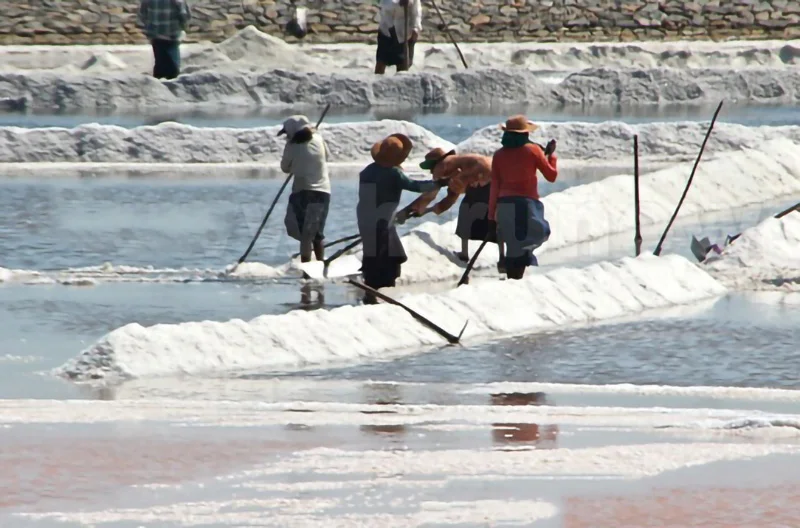
…Business impact worsens as 50,000 MT remain idle
The government has suffered an estimated foreign exchange loss exceeding USD100 million following a delay of more than a year in deciding the fate of over 50,000 metric tonnes of imported salt, raising fresh concerns over policy uncertainty, regulatory inefficiencies and their impact on trade, logistics and food security.
According to the Customs House Agents & Traders Association (CHATA), approximately 42,000 metric tonnes of salt imported in around 1,500 containers, together with another 10,000 metric tonnes brought in as bulk cargo, remain stranded due to the absence of a final government decision.
When contacted, CHATA president Mohamed Niyas said the prolonged delay has resulted in mounting financial losses through container detention, shipping line demurrage, port storage charges and deterioration in product quality, while tying up valuable foreign exchange.
“The country has already paid for these imports, yet neither businesses nor consumers have derived any benefit from them. The longer the delay, the greater the economic loss to the country, he noted.
The imports were originally permitted after severe rainfall disrupted local salt production during the first quarter of 2025, prompting the government to temporarily relax import licensing requirements through Extraordinary Gazette No. 2437/04 to prevent shortages.
However, while the emergency measure eased import restrictions, it did not impose a ceiling on import volumes, resulting in substantially larger quantities entering the country than required.
The Association said several consignments subsequently failed to comply with shipment deadlines or mandatory quality standards, particularly iodine content requirements, leaving authorities with complex regulatory issues that remain unresolved more than a year later.
From a business perspective, industry observers warn that the delay has also affected shipping, logistics and port operations, with thousands of containers occupying valuable storage space while importers continue to incur escalating charges.
Adding to the challenge is the expiry of the recommended shelf life of much of the iodised salt. With an average shelf life of around 18 months, prolonged storage has reduced the commercial value of the consignments and may require further testing and processing before any possible release to the market.
Niyas urged the government to adopt a practical solution by transferring the consignments to the National Salt Limited for technical evaluation, possible reprocessing and controlled utilisation instead of pursuing re-export, which he said is no longer commercially viable.
He said such a move could help recover part of the economic value locked in the consignments, minimise further financial losses and ease the burden on both importers and the national economy.
By Ifham Nizam
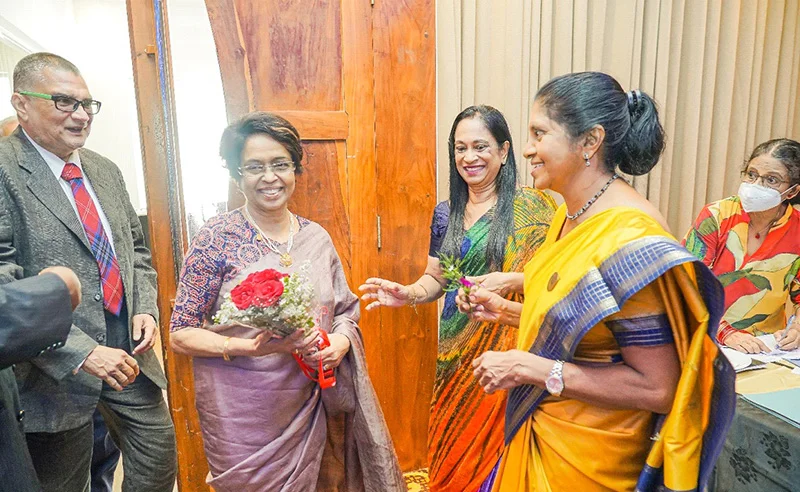
Y’s Men International, Sri Lanka Region officially celebrated its landmark 50th Annual Convention at the Hotel Ramadia, Moratuwa on June 20, 2026. The milestone event brought together members from across the island to celebrate half a century of community empowerment and international fellowship.
Originally founded in 1922 in Ohio, USA, Y’s Men International established its footprint in Sri Lanka in 1930. The movement experienced rapid local growth, leading to its 95 years of existence. The organization celebrates 95 years of uninterrupted, dedicated service to vulnerable communities through diverse humanitarian projects.
Its 50th Annual Convention paid tribute to the region’s foundational leadership. It also recognized the long line of dedicated leaders who headed the Sri Lanka region.
The 50th Regional Convention was headed by Regional Director Y’s Man Ranarajh Serasinhe, who guided the 2025/26 term with immense devotion and distinction.
Past Asia Area President, Y’s Lady Rita Hettiarachchi, graced the event as the Chief Guest. Her address featured a unique, retrospective video presentation capturing the history and impact of the past 50 Regional Directors with their regnal years.
The highlight of the evening was the official installation of the 2026/27 Regional Council by the Chief Guest Rita Hettiarachchi, ushering in a new year themed around “Caring and Sharing where God sends us.” The newly appointed office bearers include:
Regional Director: Y’s Lady Jayanthi Rodrigo
Immediate Past Regional Director: Y’s Man Ranarajh Serasinhe
Regional Director Elect: Y’s Man Anton Kandiah
Regional Secretary: Y’s man Heshan Dissanayake
Regional Treasurer: Y’s man V. Rajendran
The incoming office bearers alongside the newly appointed Service Directors pledged to continue the organization’s legacy of uplifting the needy and expanding its civic footprint across Sri Lanka in the coming years.
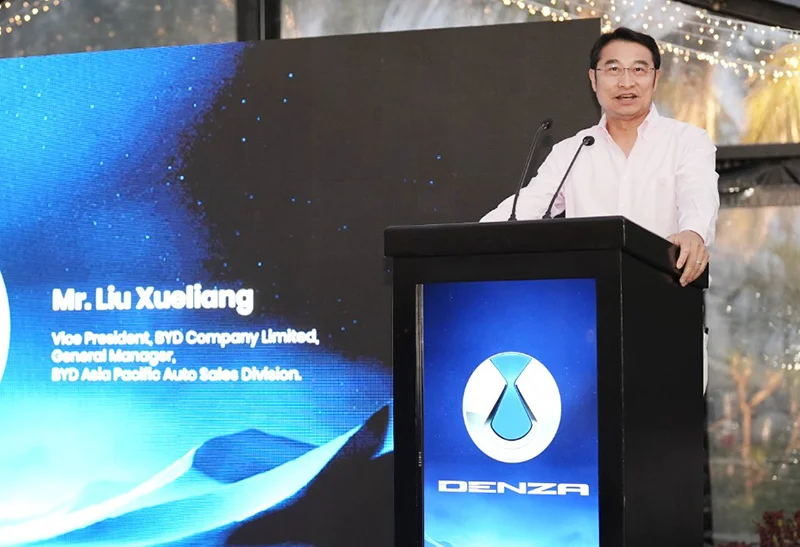
John Keells CG Auto (JKCG Auto), the authorised distributor of BYD and DENZA, recently welcomed BYD Vice President, Liu Xueliang to Sri Lanka as part of an official visit reviewing the remarkable growth of both brands across sales and aftersales.
The visit reflects the company’s long-term confidence in Sri Lanka’s transition towards New Energy Mobility and its place within that broader global momentum.
“Sri Lanka holds a strategic place in BYD’s regional outlook for South Asia. What stands out to us is the enthusiasm and loyalty Sri Lankan customers have shown towards the brand, and that response has shaped how seriously we view this market’s potential
“We recognise and are grateful for the trust placed in BYD and DENZA by our valued Sri Lankan customers. Our focus going forward is to ensure that they will continue to have access to the same quality products and technology that have earned us recognition globally, and backed by robust customer support. We also commend the JKCG Auto team for their outstanding work in seamlessly giving life to our brand in Sri Lanka,” Liu said.
His visit follows another landmark year for BYD, which in 2026 emerged as the globally dominant leader in New Energy Vehicles (NEVs), recording 4.6 million units in sales in 2025, and well on track to surpass that figure in 2026.
BYD was also celebrated as the World’s Most Innovative Automotive Group in the Automotive INNOVATIONS Report 2026 by Germany’s Center of Automotive Management (CAM) — the first time a Chinese automaker has topped the ranking in its 21-year history.
Locally too, BYD is become a fast favourite with Sri Lankan customers. Within nine months of vehicle imports resuming, BYD accounted for approximately 37% of all brand-new vehicle registrations and over 70% of electric vehicle registrations in Sri Lanka.

Several spells of showers will occur in the Western and Sabaragamuwa provinces and in Galle, Matara, Kandy and Nuwara-Eliya districts

Prison officers urge Justice Minister to protect their colleague who opened fire

Negombo Prison riot: Ensuring protection of prisoners fundamental responsibility of the state – UN

Govt. considers banning or restricting social media for children under 16: PM

Brandix donates vital ECG machine to Mirigama Base Hospital Emergency Care Unit

High-scoring draw gives West Indies rare series win

‘Dates have the highest sugar content to fight Coronavirus’

Sunday Island 27 December – Headlines

#SundayIsland 17th December – Headlines

Sunday Island – 28th March

Sunday Island Headlines – 21 March

Sunday Island – 21st February – Headlines
-

 News4 days ago
Singapore-based Buddhist monk marks nearly four decades of humanitarian service
-

 News6 days ago
CIABOC to question Harak Kata on Rs. 200 mn bribery allegation
-

 News5 days ago
Freedom 250: US Embassy celebrates America’s 250th Independence Day through magic of American cinema
-
 News6 days ago
SLAF conducts successful rescue mission under UN command in Central African Republic
-

 News3 days ago
AI concerned over proposed SL military deployment in Haiti
-

 Business6 days ago
‘Dialog Air Fibre powers a new era of Ultra Fast Home WiFi’
-
 News6 days ago
UNEP support pledged to strengthen Sri Lanka’s Environmental Priorities
-

 Midweek Review1 day ago
Unexpected focus on ‘pieces of tin’ worn by military men