
Sports
How home teams are thriving in ICC Men’s Cricket World Cups

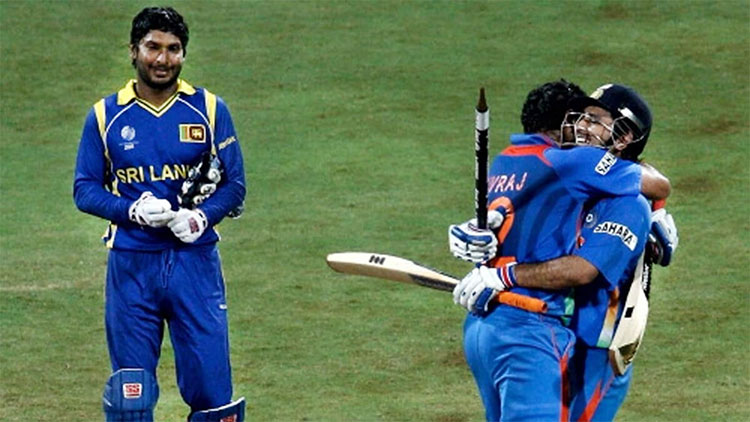
Pressure or advantage? The conundrum that faces the hosts of each ICC Men’s Cricket World Cup.
If the last three editions are anything to go by, it is an advantage to be playing at home.
But, up until the 2011 edition, only one team had ever won as hosts, and that was Sri Lanka in 1996 when they co-hosted with India and Pakistan.
Even then, they only played two games at home, winning the final in Lahore.
Since 2011, a home team has triumphed every time with India setting the trend which Australia and, most recently, England followed.
Each team had unique challenges to face en route to the trophy, but what worked for the home teams?
2011:
India’s legends lead them home
Legends were made, celebrated, and inspired at the ICC Men’s Cricket World Cup 2011.
The final on 2 April was the most memorable day for the great Sachin Tendulkar as he was finally part of a World Cup-winning squad.
He made only 18 runs in the showpiece, but he had stewarded India there with a Player-of-the-Match- performance in the semi-final against Pakistan.
Yuvraj Singh had also done his job, winning Player of the Tournament after piling up 362 runs and 15 wickets, doing so without knowing he was suffering from cancer.
Each player was facing a personal Everest as well as the collective one of attempting to win a World Cup under what felt like insurmountable pressure.
To prepare, they spoke with Mike Horn, an adventurer who became the first person to solo circumnavigate the Equator, who put into perspective the challenge ahead of them.
The first challenge they faced was opening the tournament against Bangladesh, Virender Sehwag began with a boundary and that is how the tournament ended – MS Dhoni hit the winning six in the final against Sri Lanka.
The captain had moved himself above usual No.5 Singh, the change paying off as he then compiled 91 runs from 79 balls to see India to a second title and send the nation into ecstasy.
Doing so, the pressure was released and the curse of the hosts winning on home soil was broken.
2015:
Australia surge to fifth trophy
The most successful team in the competition’s history, Australia were never going to be able to fly under the radar, and their performances in 2015 certainly caught the eye.
The World Cup started on a positive note when they beat their old rivals England by 111 runs at the MCG.
But spirits were dampened by a washout against Bangladesh before New Zealand took a low-scoring thriller at Eden Park, winning by just one wicket.
And hell hath no fury like an Aussie team beaten.
Michael Clarke’s men responded by putting on the highest score at a World Cup, crashing 417 against Afghanistan in a 275-run win.
Comfortable defeats of Sri Lanka and Scotland followed before Australia brushed aside Pakistan and India in the knockouts.
The latter became the sixth team to be bowled out by Australia in the tournament as they were reduced to 233 runs, 96 short of their target.
The same fate befell New Zealand in the final in Melbourne as they were all out for 183 which Australia chased down with 101 balls to spare.
The experience of previous wins outweighed the pressure of home expectations, not something England could say four years later.
2019:
Four years in the making
England had never won the ICC Men’s Cricket World Cup before and had been burned by a disastrous campaign in 2015.
But from the ashes grew new life, as captain Eoin Morgan led a rebuild with one aim, to win the World Cup on home soil.
There was time for beauty amid the ruthlessness, Ben Stokes’ stunning catch in the opener against South Africa firing up the tournament.
Morgan broke records as he blasted the most sixes in an innings against Afghanistan before Australia were blown away in the semi-finals.
The final at Lord’s was not about beauty or ruthlessness but as England attempted to do what had previously been impossible for them, they simply just needed to be in the contest.
The game ebbed and flowed as any good one-day match should before reaching a crescendo with a Super Over.
It almost had to be like this, the team who had set out to revolutionize the game, winning the World Cup in a way it had never been won before.
Now the tournament returns to the place where the trend started, and with India acting as solo hosts for the first time, all eyes will truly be on them.
But as 2011 showed, that is how they like it.









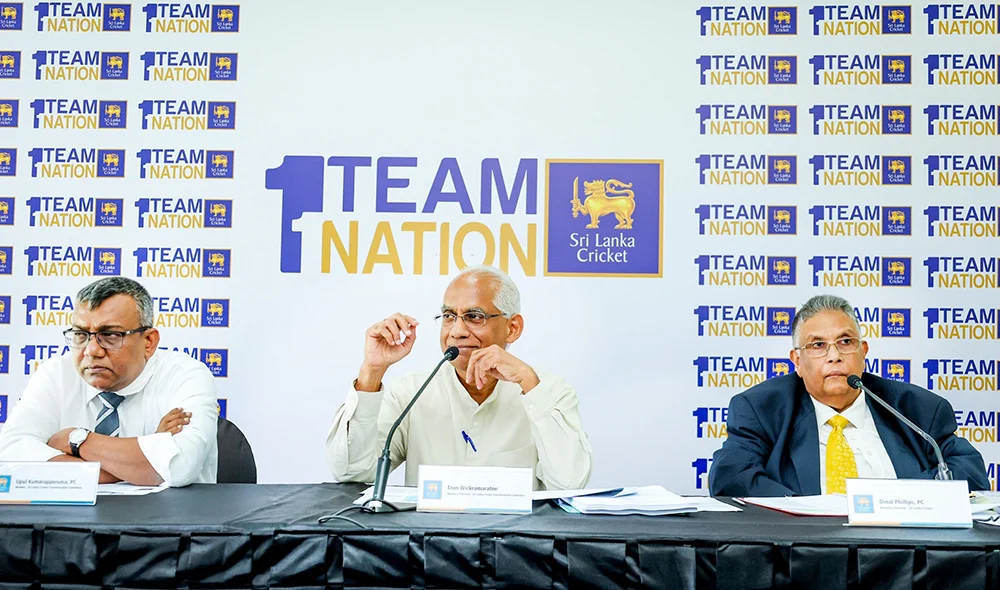
by Rex Clementine
The proposed new constitution for Sri Lanka Cricket has gathered considerable momentum over the past fortnight, with the Bill presented to Parliament, debated by MPs and now facing judicial scrutiny. The courts are examining whether the proposed reforms are consistent with the laws of the land.
The Island learns that a lawyer has challenged certain provisions of the proposed constitution, while former cricket board chief Thilanga Sumathipala has also sought judicial intervention.
The learned judges will hear their submissions and determine whether the proposed legislation passes legal muster. It is possible that the courts may require the authorities to amend certain provisions should they be found incompatible with existing laws.
Among the concerns raised by stakeholders is the proposed exclusion of district associations from having a say in SLC elections. Others are uncomfortable with the prospect of appointed members, rather than elected representatives, heading the board.
These are legitimate concerns and deserve a fair hearing. But there is a larger issue that cannot be swept under the carpet. It is the very system that has governed Sri Lankan cricket for decades that has brought the game to its knees. Unless bold decisions are taken, we will continue to languish near the bottom of the rankings, wondering where it all went wrong.
Opening the door for appointed members offers the possibility of having a well educated, professionally accomplished individual at the helm, rather than leaving the administration of a multi billion rupee organisation in the hands of individuals whose qualifications have sometimes barely extended beyond the GCE Advanced Level.
Some of those who have occupied the hot seat in recent years have spent money like drunken sailors on shore leave. The figures emerging from SLC are enough to make your eyes water.
It has emerged that SLC’s catering bill alone over the past three years has amounted to a staggering Rs. 1.2 billion. During roughly the same period, SLC has reportedly spent more than Rs. 600 million on legal fees. That is an extraordinary amount of money for an organisation whose primary responsibility is to develop and promote cricket.
Giving independent directors a greater say in the affairs of the board would also help curb the tendency of club representatives to put their own interests ahead of the greater good.
Take, for instance, SLC’s recent decision to upgrade club grounds with floodlights. The first beneficiary happened to be the very club represented by the board President. Such decisions inevitably raise questions about priorities and conflicts of interest.
The parliamentary debate on cricket reforms also provided its share of entertainment.
One former Sports Minister was busy blowing his own trumpet, claiming that cricket had flourished during his tenure. The reality, however, tells a rather different story. Far from presiding over a golden era, his constant interference in the affairs of the board did little to advance the game and on occasions, stalled much needed progress.
MP Ravi Karunanayake’s assertion that politicians should have no place in sports administration also raised a few eyebrows.
The senior parliamentarian may well have made the observation with the best of intentions, but history suggests that painting every politician with the same brush would be a mistake. Some of the finest administrators Sri Lankan cricket has produced have come from the political establishment, including several stalwarts of his own party.
J.R. Jayewardene served as President of the cricket board, while Gamini Dissanayake remains one of the most outstanding administrators the game has known. It was under Dissanayake’s leadership that Sri Lanka secured the coveted Test status in 1981, opening the doors to cricket’s most exclusive club.
Tyrone Fernando was another influential figure in cricket administration, while Lalith Athulathmudali, a former President of NCC, was widely regarded as a future cricket board President before his life was tragically cut short.
Nor was the affection for cricket confined to the political right. The leftists had their own distinguished association with the gentleman’s game. Dr. N.M. Perera and Lakshman Jayakody both served as Presidents of the cricket board.

by Reemus Fernando
Sadew Nethmina spearheaded a devastating bowling attack to rattle Lumbini College for 40 runs as Mahinda College Galle registered emphatic ten wickets win to stay alive in the Under 19 Division I Tier A Limited Overs Cricket Tournament.
The victory at Dombagoda means Mahinda will have realistic hopes of advancing to the knockout stage.
Monday’s victory was Mahinda’s third and it has wide opened their Group where Royal College Colombo, St. Peter’s College, Bambalapitiya and St. Anthony’s College, Katugastota are the other teams. While St. Anthon’s have registered two wins, Royal and St. Peter’s have recorded one win each so far.
Lumbini’s batting collapsed against a disciplined Mahinda attack as Nethmina and Vishmitha Sathsara shared nine wickets between them.
Nethmina produced an outstanding five-wicket haul, conceding only 19 runs in nine overs, including one maiden. Sathsara was equally impressive, claiming four wickets for just three runs in six overs, including three maidens. Manitha Rajapaksha took the remaining wicket as Lumbini were bundled out for a meagre total.
Mahinda needed just 4.3 overs to complete the chase.
Sehas Ashinsa led the charge with a blistering unbeaten 30 off 17 balls, striking five fours and a six.
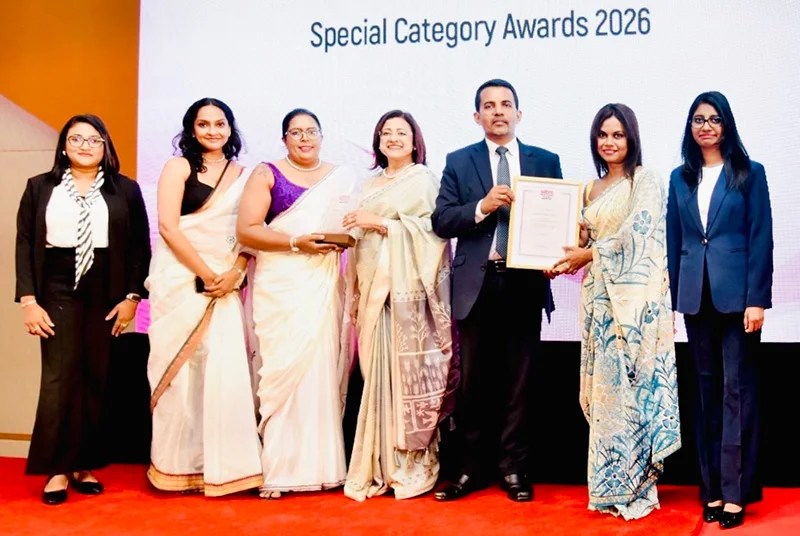
Hayleys Fentons Limited has received recognition at the Satynmag Women Friendly Workplace Awards 2026 for its approach to equal opportunities and career development within the engineering sector. The Company supports employees through merit-based progression and access to technical, leadership and professional development opportunities.
With operations spanning multiple technical disciplines, Hayleys Fentons seeks to ensure that gender does not limit access to technical or leadership careers. Employees are supported to progress based on their capabilities, experience and performance.
Career development is supported through merit-based progression and access to technical, leadership and professional development programmes.
Hayleys Fentons also recognises the importance of supporting female employees at different stages of their professional and personal lives. Flexible working arrangements, parental leave provisions and childcare support contribute towards creating a workplace where employees can balance their professional responsibilities with family commitments. The Company maintains an equal-pay approach, with remuneration and career opportunities determined by merit, experience and performance rather than gender.
“This recognition reflects the importance we place on creating an environment where people can build and progress in their careers based on their capabilities and performance. In engineering, expanding opportunities for women is particularly important to building a stronger talent pipeline, and we want our workplace to support that progression at every stage.” said Hasith Prematillake, Managing Director, Hayleys Fentons Limited.

Heavy showers (100-150) mm likely at some places in the Western, Sabaragamuwa, Central, Uva and Southern provinces showerss above 75 mm are likely in the other areas of the island.

Presidential pardons: Govt. studying Justice Thurairaja’s recommendations – Minister

Mahinda and Shiranthi hospitalised

Monks must be allowed to wear robes when produced in court: Mahanayake Theras

Jt. Opp. seeks presidential pardon for Ven. Gnanasara

Shiranthi’s anticipatory bail application rejected

‘Dates have the highest sugar content to fight Coronavirus’

Sunday Island 27 December – Headlines

#SundayIsland 17th December – Headlines

Sunday Island – 28th March

Sunday Island Headlines – 21 March

Sunday Island – 21st February – Headlines
-

 Features5 days ago
The Sri Lankan who made Scottish history
-

 Sports5 days ago
Nissanka absence opens door for Sri Lanka’s young guns
-

 News6 days ago
Gnansara Thera to be assigned to prison printing section: Officials
-

 News4 days ago
NDB fraud Rs 60mn more than reported
-

 News4 days ago
Removing monk’s robes matter for Sangha to decide: Mahanayake Theras
-

 Features5 days ago
Future of Sri Lanka’s state university system: Should it be shut down and reopened?
-
 News6 days ago
OIC of FCID summoned before Maligakanda Magistrate
-
 News5 days ago
Shiranthi R remanded until 13 Oct.