
Foreign News
Hong Kong court finds Stand News editors guilty of sedition

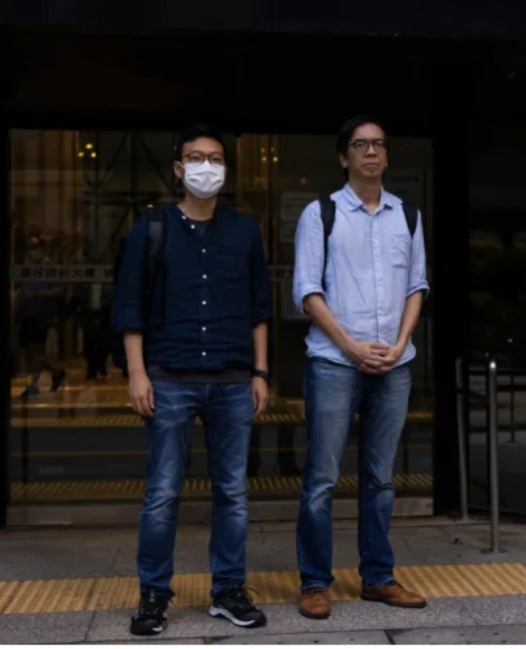
A Hong Kong court has found two former chief editors of the now-defunct pro-democracy news outlet Stand News guilty of sedition in a landmark case that has taken place amid a security crackdown in the China-ruled city.
District Court judge Kwok Wai-kin announced the verdict on Thursday, declaring former editor-in-chief Chung Pui-kuen and former acting editor-in-chief Patrick Lam guilty of conspiring to publish seditious publications based on 17 articles.
The judge did not immediately hand down a sentence, but the pair could now face a maximum sentence of up to two years in prison and a fine of 5,000 Hong Kong dollars (about $640) under a colonial-era sedition law.
Reporting from Hong Kong, Al Jazeera’s Laura Westbrook said the trial was “being seen as a litmus test for press freedom in the city”, noting that it was the first sedition trial against Hong Kong journalists since the former British colony was handed back to China in 1997.
“People will be looking at this verdict as another worrying sign that the freedoms that … Hong Kong enjoyed have been slowly diminishing,” she said, with reference to journalists and international news organisations.
Stand News was shuttered in 2021 after a massive police raid on its office in which the two journalists were arrested along with five members of staff.
It was one of the city’s last media outlets that openly criticised the government amid a crackdown on dissent that followed massive pro-democracy protests in 2019.
The sedition case centred on 17 articles, including stories featuring pro-democracy ex-politicians Nathan Law and Ted Hui, who are among a group of overseas-based activists for whom the Hong Kong police have offered bounties in exchange for capture.
Other articles featured interviews with three participants in a primary election organised by the pro-democracy camp in 2020, and commentaries by Law and veteran journalists Allan Au and Chan Pui-man.
Prosecutors claimed some of the articles helped promote “illegal ideologies,” as well as smearing the security law and law enforcement officers. They described Stand News as a political platform as well as an online news outlet.
“Freedom of speech should not be restricted on the grounds of eradicating dangerous ideas, but rather it should be used to eradicate dangerous ideas,” said Chung during the trial, which saw him deny that Stand News was a political platform. His former colleague, Lam, did not appear in court.
Best Pencil (Hong Kong) Ltd, the outlet’s holding company, was convicted on the same charge. It had no representatives during the trial, which began in October 2022.
Stand News was shut down just months after the pro-democracy Apple Daily newspaper, whose jailed founder Jimmy Lai is fighting collusion charges under a sweeping national security law enacted in 2020.
Days after its closure, independent news outlet Citizen News also announced it would cease operations, citing the deteriorating media environment and the potential risks to its staff.
Hong Kong was ranked 135 of 180 territories in Reporters Without Borders’ latest World Press Freedom Index, down from 80 in 2021. Self-censorship has also become more prominent during the political crackdown on dissent.
In March, the city government enacted another new security law that many journalists worry could further curtail media freedoms.
The Hong Kong government insists the city still enjoys press freedom, as guaranteed by its mini-constitution.
(Aljazeera)


Huge crowds of protesters have been marching through Iran’s capital and other cities, videos show, in what is said to be the largest show of force by opponents of the clerical establishment in years.
The peaceful demonstrations in Tehran and the second city of Mashhad on Thursday evening, which were not dispersed by security forces, can be seen in footage verified by BBC Persian.
Later, a monitoring group reported a nationwide internet blackout.
Protesters can be heard in the footage calling for the overthrow of Iran’s Supreme Leader Ayatollah Ali Khamenei and the return of Reza Pahlavi, the exiled son of the late former shah, who had urged his supporters to take to the streets.
It was the 12th consecutive day of unrest that has been sparked by anger over the collapse of the Iranian currency and has spread to more than 100 cities and towns across all 31 of Iran’s provinces, according to human rights groups.
The US-based Human Rights Activist News Agency (HRANA) has said at least 34 protesters – five of them children – and eight security personnel have been killed, and that 2,270 other protesters have been arrested.
Norway-based monitor Iran Human Rights (IHR) has said at least 45 protesters, including eight children, have been killed by security forces.
BBC Persian has confirmed the deaths and identities of 22 people, while Iranian authorities have reported the deaths of six security personnel.
On Thursday evening, videos on social media and verified by BBC Persian showed a large crowd of protesters moving along a major road in Mashhad, in the country’s north-east.
Chants of “Long live the shah” and “This is the final battle! Pahlavi will return” can be heard. And at one point, several men are seen climbing on an overpass and removing what appears to be surveillance cameras attached to it.
Another video posted online showed a large crowd of protesters walking along a major road in eastern Tehran.
In footage sent to BBC Persian from the north of the capital, another large crowd is heard chanting “This is the final battle! Pahlavi will return”. Elsewhere in the north, protesters were filmed shouting “Dishonourable” and “Don’t be afraid, we are all together” following a clash with security forces.
Other videos showed protestors chanting “Death to the dictator” – a reference to Khamenei – in the central city of Isfahan; “Long live the Shah” in the northern city of Babol, and “Don’t be afraid, we are all together” in the north-western city of Tabriz.
In the western city of Dezful, footage sent to BBC Persian showed a large crowd of protesters and also security personnel appearing to open fire from a central square.
The evening protests came not long after Reza Pahlavi, whose father was overthrown by the 1979 Islamic revolution and lives in Washington DC, had called on Iranians to “take to the streets and, as a united front, shout your demands”.
In a post on X, Pahlavi said “millions of Iranians demanded their freedom tonight”, describing the protesters as his “courageous compatriots”.
He thanked US President Donald Trump for holding the “regime to account”, and called on European leaders to do the same.
Pahlavi has also called for protests to continue from 20:00 local time (16:30 GMT) on Friday night.
Iranian state media downplayed the scale of Thursday’s unrest. In some cases, they denied protests had taken place altogether, posting videos of empty streets.
Meanwhile, internet watchdog NetBlocks said its metrics showed that Iran was “in the midst of a nationwide internet blackout”.
“The incident follows a series of escalating digital censorship measures targeting protests across the country and hinders the public’s right to communicate at a critical moment,” it warned, referring to previous losses of connectivity in several cities.
Earlier in the day, footage from Lomar a small town in the western province of Ilam showed a crowd chanting “Cannons, tanks, fireworks, mullahs must go” – a reference to the clerical establishment. Another showed people throwing papers into the air outside a bank that appeared to have been broken into.
Other videos showed many shuttered shops in a number of predominantly Kurdish cities and towns in Ilam, as well as Kermanshah and Lorestan provinces.
It followed a call for a general strike by exiled Kurdish opposition groups in response to the deadly crackdown on protests in the region.
At least 17 protesters have been killed by security forces in Ilam, Kermanshah and Lorestan during the unrest, and many of them have been members of the Kurdish or Lor ethnic minorities, according to Kurdish human rights group Hengaw.
On Wednesday, there were violent clashes between protesters and security forces in several cities and towns in western Iran, as well as other regions.
IHR said it had been the deadliest day of the unrest, with 13 protesters confirmed to have been killed across the country.
“The evidence shows that the scope of crackdown is becoming more violent and more extensive every day,” said the group’s director, Mahmood Amiry-Moghaddam.
Hengaw said two protesters were shot dead by security forces in Khoshk-e Bijar, in the northern province of Gilan, on Wednesday night.
Iran’s semi-official news agency Fars, which is close to the Revolutionary Guards, reported that three police officers were also killed on Wednesday.
It said two were shot dead by armed individuals among a group of “rioters” in the south-western town of Lordegan, and the third was stabbed to death “during efforts to control unrest” in Malard country, west of Tehran.
On Thursday, US President Donald Trump reiterated his threat to intervene militarily if Iranian authorities killed protesters.
“I have let them know that if they start killing people, which they tend to do during their riots – they have lots of riots – if they do it, we are going to hit them very hard,” he said in an interview with the Hugh Hewitt Show.
Separately, the US treasury secretary, Scott Bessent, said the Iranian economy was “on the ropes”.
While speaking at the Economic Club of Minnesota on Thursday, he added: “President Trump does not want them to harm more of the protesters. This is a tense moment.”
Iranian President Masoud Pezeshkian earlier called on security forces to exercise “utmost restraint” when handling peaceful protests. “Any violent or coercive behaviour should be avoided,” a statement said.
Khamenei – who has ultimate power in Iran – said on Saturday that authorities should “speak with the protesters” but that “rioters should be put in their place”.
The protests began on 28 December, when shopkeepers took to the streets of Tehran to express their anger at another sharp fall in the value of the Iranian currency, the rial, against the US dollar on the open market.
The rial has sunk to a record low over the past year and inflation has soared to 40% as sanctions over Iran’s nuclear programme squeeze an economy also weakened by government mismanagement and corruption.
University students soon joined the protests and they began spreading to other cities, with crowds frequently heard chanting slogans critical of the clerical establishment.
In messages sent to the BBC, via a UK-based activist, a woman in Tehran said despair was driving the protests. “We’re living in limbo,” she said. “I feel like I’m hanging in the air with neither wings to migrate nor hope to pursue my goals here. Life here has become unbearable.”
Another said she was protesting because her dreams had been “stolen” by the clerical establishment and she wanted it to know that “we still have a voice to shout, a fist to punch them in the face.”
A woman in the western city of Ilam said she knew of young people from families affiliated with the establishment who were taking part in protests. “My friend and her three sisters, whose father is a well-known figure in the intelligence services, are joining without their father knowing,” she said.
The protests have been the most widespread since an uprising in 2022 sparked by the death in custody of Mahsa Amini, a young Kurdish woman who was detained by morality police for allegedly not wearing her hijab properly. More than 550 people were killed and 20,000 detained by security forces over several months, according to human rights groups.
The biggest protests since the Islamic revolution took place in 2009, when millions of Iranians took to the streets of major cities after a disputed presidential election. Dozens of opposition supporters killed and thousands were detained in the ensuing crackdown.
[BBC]

A pair of twin mountain gorillas has been born in the eastern Democratic Republic of Congo – a rare occurrence for the endangered primates, conservationists at Virunga National Park say.
The community trackers, who discovered 22-year-old Mafuko hugging her newborns on Saturday, said the mother and her two baby sons all appeared to be well and healthy.
Twin births are thought to account for about 1% of all mountain gorilla births, though exact data is not widely available.
Virunga, situated in a conflict-prone part of DR Congo, is Africa’s oldest and largest national park and was set up 100 years ago to protect mountain gorillas of which there are fewer than 1,100 left in the wild
They are only found in the Virunga and in national parks over the border in Rwanda and Uganda, according to the International Union for the Conservation of Nature (IUCN), which compiles a Red List of threatened species.
The last birth of mountain gorilla twins in Virunga National Park was in September 2020.
Mafuko herself gave birth to twins in 2016, but they both died within a week.
Young gorillas rely entirely on their mothers for care and transport – and are extremely vulnerable in what can be a dangerous environment where poachers and many armed groups operate.
The authorities at the park say additional monitoring and protection measures have been put in place to ensure the twins’ survival during this critical period. Rangers would closely observe the young family and provide support if needed, they said.
A gorilla’s pregnancy lasts for about eight-and-a-half months, and females usually give birth to one infant every four years.
According to Virunga conservationists, Mafuko has had a remarkable history of survival herself.
Born in 2003 into the Kabirizi family, she lost her mother to armed attackers when she was four years old. She joined the Bageni family when she was 10 – and to date has been pregnant and given birth five times.
Conservationists at Virunga, which is a Unesco World Heritage Site, say her latest offspring represent a significant boost for efforts to protect the endangered species.
Thanks to anti-poaching patrols and community programmes – supported by the European Union and Unesco – mountain gorilla numbers in Virunga have slowly increased over the past decade.
This success which is documented by the IUCN and other partners, led to their status being upgraded from “critically endangered” to “endangered” in 2018.
Virunga spans 7,800 sq km (3,000 sq miles) and is home to an astonishingly diverse landscape – from active volcanoes and vast lakes to rainforest and mountains.
[BBC]
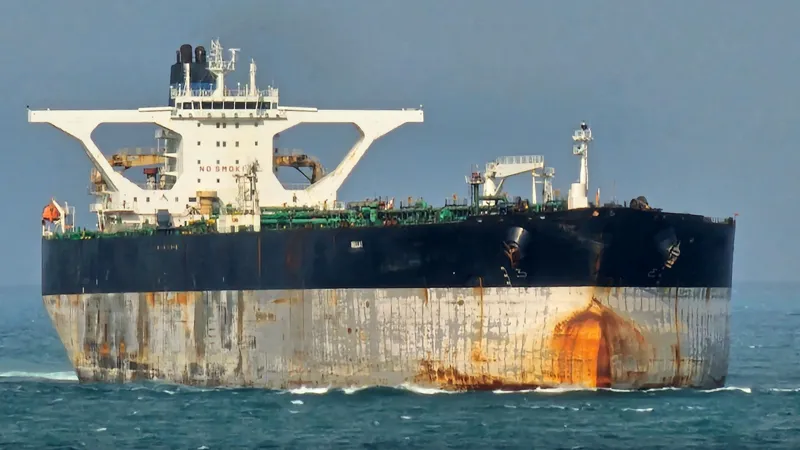
Russia has reportedly deployed a submarine and other vessels to escort an oil tanker – which is also being pursued by US forces – across the Atlantic.
The ship, currently between Iceland and the British Isles, has been accused of breaking US sanctions and shipping Iranian oil. It has historically transported Venezuelan crude oil but is reporting to be empty at the moment.
Previously named Bella 1, its name has been changed to Marinera and it has also reportedly been reflagged from a Guyanese to a Russian vessel.
President Donald Trump said last month that he was ordering a ‘blockade’ of sanctioned oil tankers entering and leaving Venezuela, a move the government there described as “theft”
Two US officials have confirmed to CBS News, the BBC’s US media partner, that Russia has sent a submarine and other navy vessels to escort the tanker.
The US Coast Guard tried to board it last month in the Caribbean when it was believed to be heading towards Venezuela. The Coast Guard had a warrant to seize the ship over its alleged breaking of sanctions.
The vessel has since dramatically changed course and its approach to Europe has coincided with the arrival of around 10 US military transport aircraft as well as helicopters.
Russia says it is “monitoring with concern” the situation around the ship.
“At present, our vessel is sailing in the international waters of the North Atlantic under the state flag of the Russian Federation and in full compliance with the norms of international maritime law,” its foreign ministry said.
“For reasons unclear to us, the Russian ship is being given increased and clearly disproportionate attention by the US and Nato military, despite its peaceful status,” it said.
Two US officials told CBS News earlier on Tuesday that American forces were planning to board the ship, and that Washington preferred to seize it rather than sink it.
BBC Verify has been looking at footage released by Russia Today, reportedly taken onboard an oil tanker, which shows a ship in the distance matching the profile of a US Coast Guard Legend-class cutter.
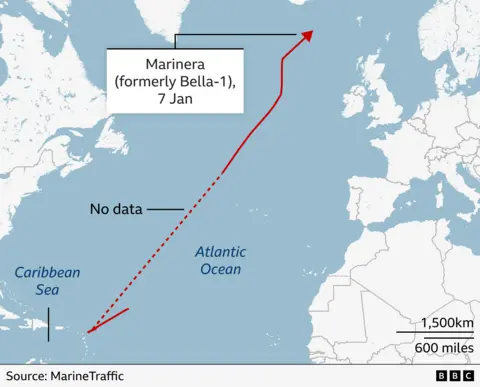
It has also been monitoring the latest reported location of the Marinera. According to AIS location data from ship-tracking platform Marine Traffic, its location as of Tuesday morning was in the North Atlantic Ocean, about 300km (186 miles) south of Iceland’s shoreline.
Previous AIS tracking data suggests it travelled north, past the western coast of the UK over the past two days.
On Tuesday, the US military’s Southern Command posted on social media that it “remains ready to support our US government agency partners in standing against sanctioned vessels and actors transiting through this region.
“Our sea services are vigilant, agile, and postured to track vessels of interest. When the call comes, we will be there.”
Before any US military operation was launched from the UK, Washington would be expected to inform its ally.
For now, the UK Ministry of Defence says it will not comment on other nations’ military activities.
The US officials quoted by CBS suggested that America could mount an operation like one conducted last month when US forces seized the Skipper, a large crude oil tanker, flagged to Guyana, that had just left port in Venezuela.
Under international law, vessels flying a country’s flag are under the protection of that nation. However, simply changing a ship’s name and flag doesn’t necessarily change much, Dimitris Ampatzidis, senior risk and compliance analyst at maritime intelligence firm Kpler, told BBC Verify.
“US action is driven by the vessel’s underlying identity [IMO number], ownership/control networks, and sanctions history, not by its painted markings or flag claim,” he said.
Michelle Bockmann, a maritime intelligence analyst at Windward, said changing to a Russian registry could “complicate US enforcement efforts”.
“Under the UN Convention of the Law of the Sea, there’s a provision that allows a stateless vessel to be boarded by authorities. By reflagging to Russia, the vessel is no longer able to be boarded under this provision,” she explained.
Bockmann adds that she has previously observed vessels changing their flag mid-voyage, but “it’s highly unusual and only seen with dark fleet tankers”.
The potential stand-off over the oil tanker comes days after the US shocked the world with the arrest of Venezuela’s Nicolás Maduro in Caracas. It bombarded targets in the city during the operation to extricate him and his wife on suspicion of weapon and drug offences.
Since he was seized, BBC Verify has identified three US-sanctioned tankers that have switched to a Russian registry, including the Marinera.
This follows a broader trend.
Since the seizure of the Skipper, BBC Verify has identified 19 US-sanctioned oil tankers that have switched to a Russian registry, with many of them having previously sailed under a false flag.
[BBC]

Harmanpreet, Mandhana return to DY Patil, on opposite sides this time

Huge anti-government protests in Tehran and other Iranian cities, videos show

Clinical Pakistan look to keep momentum going and wrap up series

Astronaut’s ‘serious medical condition’ forces Nasa to end space station mission early

Six whales die after mass stranding on remote New Zealand beach

Which are the 66 global organisations the US is leaving under Trump?

‘Dates have the highest sugar content to fight Coronavirus’

Sunday Island 27 December – Headlines

#SundayIsland 17th December – Headlines

Sunday Island – 28th March

Sunday Island Headlines – 21 March

Sunday Island – 21st February – Headlines
-

 News3 days ago
Interception of SL fishing craft by Seychelles: Trawler owners demand international investigation
-
 News3 days ago
Broad support emerges for Faiszer’s sweeping proposals on long- delayed divorce and personal law reforms
-
 News4 days ago
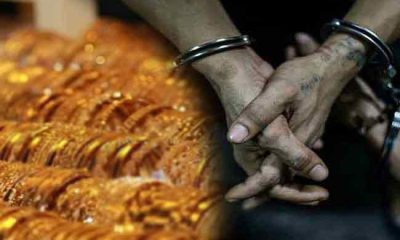
Private airline crew member nabbed with contraband gold
-

 News2 days ago
Prez seeks Harsha’s help to address CC’s concerns over appointment of AG
-

 News2 days ago
Govt. exploring possibility of converting EPF benefits into private sector pensions
-

 Latest News22 hours ago
Warning for deep depression over South-east Bay of Bengal Sea area
-

 Features3 days ago
Educational reforms under the NPP government
-

 News6 days ago
Health Minister sends letter of demand for one billion rupees in damages