
Latest News
Which are the 66 global organisations the US is leaving under Trump?


The Trump administration says it’s going to withdraw the United States from 66 international organisations, including 31 United Nations entities and 35 non-UN organisations.
Many focus on climate, labour, migration and other issues the Trump administration has categorised as catering to diversity and “woke” initiatives and that are “contrary to the interests of the United States”.
Here is a list of all the agencies that the US is exiting, according to the White House:
31 United Nations organisations
- Department of Economic and Social Affairs
- UN Economic and Social Council (ECOSOC) – Economic Commission for Africa
- ECOSOC – Economic Commission for Latin America and the Caribbean
- ECOSOC – Economic and Social Commission for Asia and the Pacific
- ECOSOC – Economic and Social Commission for Western Asia
- International Law Commission
- International Residual Mechanism for Criminal Tribunals
- International Trade Centre
- Office of the Special Adviser on Africa
- Office of the Special Representative of the Secretary-General for Children in Armed Conflict
- Office of the Special Representative of the Secretary-General on Sexual Violence in Conflict
- Office of the Special Representative of the Secretary-General on Violence Against Children
- Peacebuilding Commission
- Peacebuilding Fund
- Permanent Forum on People of African Descent
- UN Alliance of Civilizations
- UN Collaborative Programme on Reducing Emissions from Deforestation and Forest Degradation in Developing Countries
- UN Conference on Trade and Development
- UN Democracy Fund
- UN Energy
- UN Entity for Gender Equality and the Empowerment of Women
- UN Framework Convention on Climate Change (UNFCCC)
- UN Human Settlements Programme
- UN Institute for Training and Research
- UN Oceans
- UN Population Fund
- UN Register of Conventional Arms
- UN System Chief Executives Board for Coordination
- UN System Staff College
- UN Water
- UN University
In the new memorandum, the administration moved beyond the Paris Agreement to target the UN Framework Convention on Climate Change (UNFCCC) itself, which is the foundational 1992 treaty that the Paris Agreement is built upon. By withdrawing from the UNFCCC, the administration aims to exit the entire international framework for climate negotiations.
The withdrawal from the UNFCCC is particularly significant as it is a Senate-ratified treaty. The administration’s authority to unilaterally withdraw from such treaties is expected to face legal challenges.

Notably, the US remains a member of the UN Security Council, the World Food Programme (WFP), and the UN Refugee Agency (UNHCR), which the administration identified as serving essential security or humanitarian functions.
35 non-UN organisations
- 24/7 Carbon-Free Energy Compact
- Colombo Plan Council
- Commission for Environmental Cooperation
- Education Cannot Wait
- European Centre of Excellence for Countering Hybrid Threats
- Forum of European National Highway Research Laboratories
- Freedom Online Coalition
- Global Community Engagement and Resilience Fund
- Global Counterterrorism Forum
- Global Forum on Cyber Expertise
- Global Forum on Migration and Development
- Inter-American Institute for Global Change Research
- Intergovernmental Forum on Mining, Minerals, Metals, and Sustainable Development
- Intergovernmental Panel on Climate Change
- Intergovernmental Science-Policy Platform on Biodiversity and Ecosystem Services
- International Centre for the Study of the Preservation and Restoration of Cultural Property
- International Cotton Advisory Committee
- International Development Law Organization
- International Energy Forum
- International Federation of Arts Councils and Culture Agencies
- International Institute for Democracy and Electoral Assistance
- International Institute for Justice and the Rule of Law
- International Lead and Zinc Study Group
- International Renewable Energy Agency
- International Solar Alliance
- International Tropical Timber Organization
- International Union for Conservation of Nature
- Pan American Institute of Geography and History
- Partnership for Atlantic Cooperation
- Regional Cooperation Agreement on Combating Piracy and Armed Robbery against Ships in Asia
- Regional Cooperation Council
- Renewable Energy Policy Network for the 21st Century
- Science and Technology Center in Ukraine
- Secretariat of the Pacific Regional Environment Programme
- Venice Commission of the Council of Europe.
[Aljazeera]


The Rose Bowl, which has been awarded to the winner of ODI series between the women’s teams of Australia and New Zealand since 1985, has now been expanded to include T20Is as well.
New Zealand’s three match T20I tour of Australia, which begins on Sunday at the North Sydney Oval, will be the first T20I edition of the Rose Bowl. The teams will get to face off again for the trophy in March 2027 when they meet again for three ODIs, also in Australia.
For Rose Bowl series that include matches in both white-ball formats, the trophy will go to the team with the most wins overall. In case of a drawn series, the current holder will retain the trophy.
“The Rose Bowl is a prestigious trophy that holds a lot of meaning to current and past players, and it’s a series we’ve always taken a lot of pride in competing in,”Catherine Campbell, NZC’s chief cricket operations officer and a former New Zealand player, said. “With so much T20I cricket now being played, this is a brilliant opportunity to keep the Rose Bowl relevant and to build on the history between us and our Australian rivals.”
New Zealand captain Melie Kerr was excited by the broadening of opportunities to compete for the Rose Bowl.
“We’re all aware of what the Rose Bowl represents and the importance it holds in the White Ferns whakapapa [genealogy],” said Kerr. “Great players and teams have fought for it over the years and we’d love the opportunity to claim our own piece of that history.”
Australia have held the Rose Bowl continuously since wresting it back from New Zealand in 2000. Since that 3-0 win, Australia have won 18 times with one series – in 2008-09 – shared 2-2. Overall, Australia have won 26 of the 31 ODI series played for the Rose Bowl, with New Zealand winning three times and three series drawn.
North Sydney will host all three T20Is of the upcoming Rose Bowl series, on October 18, 20 and 22.
[Cricinfo]
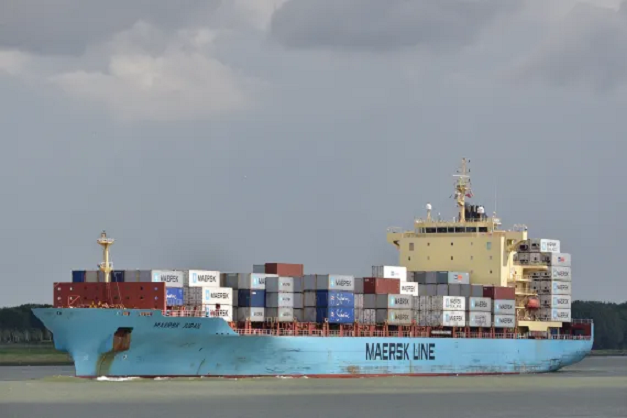
US President Donald Trump claims the US Navy’s “effective” blockade has stopped all Iranian ships from crossing the Strait of Hormuz.
Iran’s Islamic Revolutionary Guard Corps (IRGC) navy says a supertanker carrying more than two million barrels of crude oil has struck a sea mine while attempting to cross the Strait of Hormuz through an “unauthorised” route.
The collision caused a huge explosion and a major fire on board the vessel, the IRGC said in a statement reported by semi-official Tasnim news agency.
It alleged that the tanker had turned off all tracking and radar systems, attempting to pass through the strait using deception and with US military support.
‘The Strait of Hormuz is closed’, the IRGC navy warned, adding that vessels violating Iranian regulations would face severe consequences for relying on US backing.
[Aljazeera]
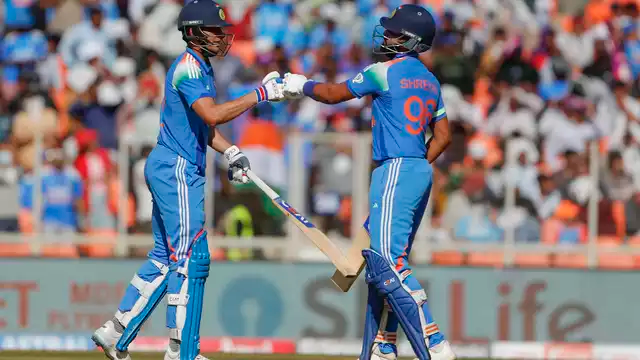
Squad for the first three ODIs: Shubman Gill [C], Rohit Sharma, Virat Kohli, Shreyas Iyer [VC], KL Rahul [WK], Nitish Kumar Reddy, Axar Patel, Naman Dhir, Anshul Kamboj, Gurnoor Brar, Ruturaj Gaikwad, Arshdeep Singh, Ishan Kishan [WK], Mohammed Siraj, Prasidh Krishna*, Kuldeep Yadav
Squad for fourth and fifth ODIs: Shreyas Iyer [C], Rohit Sharma, Virat Kohli, Tilak Varma, Ishan Kishan [WK, VC], Nitish Kumar Reddy, Axar Patel, Naman Dhir, Auqib Nabi, Gurnoor Brar, Ruturaj Gaikwad, Arshdeep Singh, Kumar Kushagra [WK], Mohammed Siraj, Yash Thakur, Kuldeep Yadav
[Cricbuzz]

Review of progress in reforms and modernisation of key state revenue-collecting institutions

Rose Bowl expanded to include Australia vs New Zealand T20Is

Trump claims US Navy blockade stops Iranian ships in Hormuz

Showers above 75 mm are likely at some places in the Western, Sabaragamuwa, Central and North-central provinces and in Trincomalee and Mullaitivu districts

Cut power bills by 3-5%, don’t hike them, consumers demand

Asgiri Mahanayake calls for immediate release of Gnanasara Thera

‘Dates have the highest sugar content to fight Coronavirus’

Sunday Island 27 December – Headlines

#SundayIsland 17th December – Headlines

Sunday Island – 28th March

Sunday Island Headlines – 21 March

Sunday Island – 21st February – Headlines
-

 News6 days ago
Sri Lanka escalates anti-graft drive with Shiranthi’s jailing
-

 News6 days ago
Iranian ships stranded, Lanka fears US sanctions
-

 Latest News5 days ago
Farhan and Sadaqat help Pakistan seal series in style
-

 Latest News4 days ago
Nissanka’s return headlines Sri Lanka’s Test squad against Pakistan
-

 Features5 days ago
Intake 16: 45 years of duty and honour
-

 News5 days ago
Malwathu Chapter issues statement on talks with President over Gnanasara Thera’s robes
-

 News6 days ago
Navi Pillay’s Lankan affairs in focus as she wins 2026 Nobel Peace Prize
-

 News5 days ago
CP alleges NPP has taken the blame for illegal US sanctions on Iranian vessels