
News
Harsha warns against potential risks of domestic debt restructuring


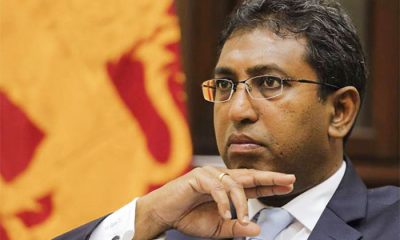
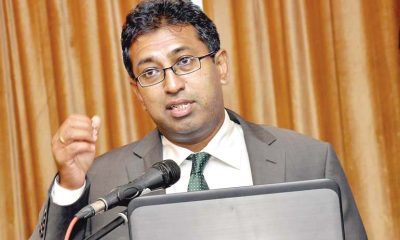
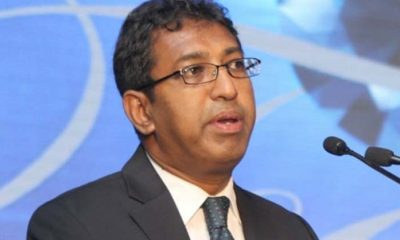
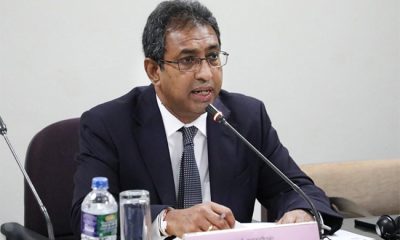
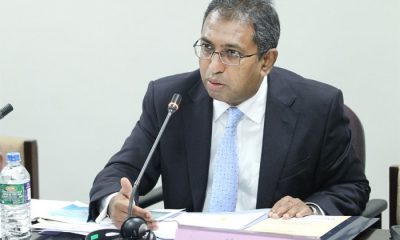
SJB MP Dr. Harsha de Silva has warned against the potential risks of domestic debt restructuring, stressing the need for extreme caution.
Addressing the media recently, Dr de Silva cautioned that if not managed carefully, domestic debt optimisation could become a burden rather than a relief for the economy.
Citing the net debt relief Laffer curve, de Silva stated that the more we increase the haircut on banks, the more likely we are to hit the curve’s negative impact zone, where debt restructuring becomes counterproductive, thus leading to a negative impact on the economy. Harsha provided another example of this phenomenon: taxes on wine and spirits. High taxation has resulted in a drop in consumption, which, in turn, has substantially reduced the expected revenue for the Excise Department. Therefore, de Silva emphasised that the risk of capital adequacy in banks could result from debt optimisation, which is when a bank’s capital falls below the recommended levels, raising questions about its stability.
Harsha emphasised the need for discussions on this complex issue to occur in the Committee on Public Finance. By summoning relevant officials and utilising data to work the numbers, the Committee could help avoid potential blame down the road.
Furthermore, Harsha proposed the establishment of a Financial Sector Support Fund to ensure macro-stability. He suggested that multilateral organisations, like the World Bank and ADB, would lend money to establish this fund, as over 1 billion dollars would be needed.
Another issue raised by Harsha concerns the Employees’ Provident Fund (EPF), where hard-earned people’s pension money lies. Harsha questioned whether the EPF, established to provide positive real interest rates, as envisioned by then Minister T.B. Illangaratne, when bringing in the Act, had fulfilled its mandate. Harsha believes that people ought to get a positive interest rate that has been adjusted for inflation, as opposed to a positive nominal interest rate. However, as per current statistics, this has not been the case. The real interest rate has been declining since 2015, with the rate being -47.2% in 2022. The EPF has already been subjected to a 32% haircut in US dollar terms, as the value of the fund in 2021 was $15.8 billion, and by the end of 2022, it was $9.5 billion due to the rupee crashing and the impact of inflation. Harsha proposed that if the interest rate given to the recipient is less than 2.5%, the Central Bank should be given a loan from the Treasury to give the recipients a minimum of 2.5% interest. Harsha hopes that this proposal would be discussed in Parliament and that necessary legislation would provide relief to the already suffering middle class.
Harsha reiterates support for the IMF programme but suggests tweaking it to make it more bearable for the people. Additionally, if Sri Lanka needs to undergo domestic debt restructuring, Harsha proposes extending a warrant, a domestic debt restructure warrant, in other words, a derivative or put option, to creditors subjected to domestic debt restructuring. Harsha suggests that since the government has promised the people stability and an increase in GDP growth to 3% by 2027, the people have agreed to tough measures, like high taxes and a reduction in subsidies. Therefore, if the economy grows beyond expectations, the extra growth should be extended to the people to honour their sacrifices. Harsha expressed support for establishing discussions on this topic. Finally, the SJB believes that the government ought to treat both foreign and domestic creditors equally and non-discriminately, with the primary goal being to stabilize the country’s debt, while minimizing its impact on the EPF and banks.








Approval has been granted at the Cabinet meeting held on 22.07.2024 to publish the draft bill of State Assets Management Act in the government gazette notification and thereby present it to the Parliament for its concurrence.
However, the draft bill couldn’t be passed in Parliament as a result of the Parliament being dissolved in the month of October 2024.
Thereafter, the draft bill was subject to further inspection by a
committee appointed which comprised of officials and authorities on the subject.
The said Committee has recognized the amendments to be made and a fundamental draft has been prepared including the proposed amendments.
Accordingly, the Cabinet of Ministers approved the resolution furnished by the President in his capacity as the Minister of Finance, Planning and Economic Development to suspend further activities regarding the draft bill of State Assets Management Act published in the extraordinary gazette of 02.08.2024, and to direct the Legal Draftsman to prepare a draft bill based on the fundamental draft prepared by the subject specialists’ committee.
Considering the compliance of the Cooperative Societies’ operations with the concurrent socio – economic circumstances as well as the changes in the common law, the requirement of amending the Cooperative Employees Commission Act No. 12 of 1972 has been recognized.
A fundamental draft including proposed amendments based on the experience gained by that Commission as well as the opinions and proposals of Cooperative societies, their director board members, cooperative employees and other interested parties has been prepared.
Accordingly, the Cabinet of Ministers granted approval to the resolution furnished by the Minister of Trade, Commerce, Food Security and Cooperative development to provide instructions to the Legal draftsman to prepare a draft bill to amend the Cooperative Employees Commission Act No. 12 0f 1972, based on the said fundamental draft.
Latest News
Dilki Wathsala Marambage appointed as Director General of the Department of Technical Education and Training

The Cabinet of Ministers granted approval to the proposal forwarded by the Prime Minister in her capacity as the Minister of Education, Higher Education and Vocational Education to appoint Mrs. Dilki Wathsala Marambage to the post of Director General of the Department of Technical Education and Training.

Cabinet approves redrafting of State Assets Management Act
Cooperative Employees Commission Act No. 12 of 1972 to be amended
Dilki Wathsala Marambage appointed as Director General of the Department of Technical Education and Training
Declaration of Naakolagane Sanctuary under the Fauna and Flora Protection Ordinance
Cabinet approves transfer and maintenance of selected roads presently under PC’s and Local Authorities to the RDA
Obtaining financial facilities for the Water Supply and Sanitation Improvement Program (Sub-program 2) from the ADB

‘Dates have the highest sugar content to fight Coronavirus’

Sunday Island 27 December – Headlines

#SundayIsland 17th December – Headlines

Sunday Island – 28th March

Sunday Island Headlines – 21 March

Sunday Island – 21st February – Headlines
-

 Features6 days ago
The Sri Lankan who made Scottish history
-

 Sports6 days ago
Nissanka absence opens door for Sri Lanka’s young guns
-

 News5 days ago
NDB fraud Rs 60mn more than reported
-

 News7 days ago
Gnansara Thera to be assigned to prison printing section: Officials
-

 News5 days ago
Removing monk’s robes matter for Sangha to decide: Mahanayake Theras
-
 News7 days ago
OIC of FCID summoned before Maligakanda Magistrate
-
 News6 days ago
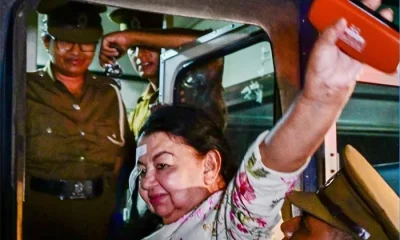
Shiranthi R remanded until 13 Oct.
-

 Features6 days ago
Future of Sri Lanka’s state university system: Should it be shut down and reopened?