
Features
Harry J turns 82: more than a hard-nosed businessman


BY Krishantha Prasad Cooray
Almost 20 years ago, I received a call from Don Harold Stassen Jayawardena. Of course, at the time I knew him as ‘Harry Jayawardena’ as did many Sri Lankans, especially in business circles. I was in England, veritably forced into exile by political circumstances which included the abduction and torture of the deputy editor of ‘The Nation,’ a newspaper published by Rivira Media Corporation, of which I was at the time the Managing Director, and a brutal attack on Upali Tennakoon, the editor of our sister newspaper in Sinhala.
These attacks came just after my friend Lasantha Wickramatunge implored me to leave the country and not too long before he himself was killed. It was a time not just of exile but abandonment; for reasons of convenience or fear almost all those I considered friends avoided me. There were a handful who didn’t give a damn about possible consequences or cared enough to be supportive. I didn’t count Harry among them.
I knew him as a prominent businessman who had personal relationships with many who walked the corridors of power. Such men take care not only to please those in power or those who may one day be in power. His mocking tone didn’t surprise me, therefore. He teased me about having to leave Sri Lanka. In the same gloating tone, he referred to a not very complimentary full page article about him that was published in ‘The Nation.’
He told me that he was quite used to his rivals using the media as puppets to attack him. He did everything, it seemed to me, to reaffirm that he was exactly the image I had of him – a ruthless business tycoon.
Then it all changed. The tone of booming mockery gave way to a more grave, measured cadence. He told me that in all his inquiries, he was surprised at how many people defended me to him privately and told him that he had the wrong impression of me. He reminded me that he had known my father’s family well. He assured me that he held no grudge, implored me to be safe, and suggested that we meet when I returned to Sri Lanka.
I do not know who spoke to him about me or what exactly he was told, but owe these people a tremendous debt of gratitude, for facilitating one of the most unique and enduring friendships I have ever had.
I took him up on his offer to visit him at his office in Ja Ela when I returned to Colombo. Seeing me in a white, short-sleeved button-down shirt, he remarked that I had inherited this personal uniform from my uncles Evans and Christy. And so we became friends. I took to calling him “Lokka” and he did the same. We still do.
Looking back, I feel that we have closely studied each other’s lives, habits and foibles and perhaps discovered similarities we hadn’t been conscious of. Quick tempered with a bark worse than the bite, we were both stubborn, generous in advice and stingy in taking it. We spoke at length about life, health, work, family and legacy. We indulged each other’s sermons on these and other subjects but would never want to get caught embracing the other’s advice.
Harry has always warned me to steer clear of politics, never more so than in late 2019, when it became clear that a Gotabaya Rajapaksa presidency was becoming inevitable. One night, he visited our home in Borella and repeated his warnings in the gravest terms. I still remember his words.
“They are angry with you and they’ll come for you. You should know that they’ll come for you. The only way to protect yourself and your family is to get out of this mess now.”
As always, he had come with a solution. He offered to recommend me for the chairmanship of a prominent business outside of his umbrella.
“I know you can do this. They can use you now. It will get you out of politics, let things cool down, and if you stay out of this election at least from now on, you’ll be safe,” he said.
I could tell at once that Harry had put an incredible amount of thought into this and would have done all he could to see it through. However, as has often been the case when we tried to help each other, my mind flew past my interests, and on to Harry’s. I proposed to him another person who I thought would be a better fit for that role. It was almost enough to make him blow a gasket.
“Obviously he would be a better fit! Do you think I don’t know that? What the hell is wrong with you?” he thundered. “When someone offers you an opportunity, who turns around and suggests that you give it to someone else? Do you realize what will happen to you?”
I replied that I had done nothing wrong, had never even gotten so much as a parking ticket, and so should not be at any risk on account of supporting a candidate at an election.
“You think these bloody politicians will help you? They’ll all save themselves. Wait and see. Most of them will use you and leave you to hang. Is anyone else even thinking of your safety, of your future? What do you think will happen when they’re all trying to save themselves?”
He was correct. The new regime was quick to pounce on perceived political enemies. Many fled, some were arrested and tortured, and others, like myself, were framed on trumped up charges that were conjured by the police and disseminated through the media but never once submitted to any court of law.
Pro-government media outlets continuously alleged that I, along with others, were part of some incoherent but supposedly treasonous international conspiracy. The CID had been ordered to search my phone records for anything that could be used to charge me. He was right; no one bothered to inquire after me when once again I incurred the wrath of the Rajapaksas.
For better, or for worse, I turned Harry down that night. His kindness and care for me were unparalleled, but it still amazed me that he had the space in his mind to conjure such a carefully thought-out plan for my well being despite being among the busiest people in the country.
To understand how that happened is to understand the sheer concentration of energy and willpower that powers Harry through a day in his life. He built his empire from the ground up, founding and turning around companies that make things and provide services. He identified and fostered leaders with good judgment, devotion, and growth mindsets, and set an example of discipline, dedication and fearlessness.
He was a man who started at the very bottom of the ladder, and was proud of the work he did to get to the top. He was proud of the loyalty he had shown to those who saw his potential. He was proud of having never let down those who gave him opportunities to prove himself. And he was proud of his instincts and ability to weigh risks and take business bets that would pay off.
Harry was not born with these traits. He fostered them through his long career, honing each of them over six decades as he went from being an employee to a manager, to a manager of managers, all the way to where the buck stopped with him. At one time or another, he has been in the shoes of someone at every level of his 20,000 strong conglomerate.
This is why he has zero patience for those who take advantage of others, take credit for work that isn’t their own, play political games in the office, try to get away with laziness or who take the opportunity in front of them for granted. As a businessman whose word is his bond, he cannot tolerate anyone who negotiates in bad faith. Having been a government servant himself, he has even less patience for sluggish government bureaucracy. And it is usually when these buttons are pushed that he ends up in the headlines.
Indeed, this same lived experience has ingrained in Harry other traits that never garner headlines. Just as Harry can see through qualities he detests; he can just as quickly identify qualities he admires. He can see potential in even the most junior employee with an instinct born of his own youth. He can sense when managers or executives are not just clocking in and out every day, but are living and breathing their work, mindful of the fact that hundreds if not thousands of families depend on their daily decisions to continue feeding and educating their children.
He can see government servants who are trying to do the right thing but are being undermined because they refuse to cut corners. His ability to identify and instinct to reward, nurture and protect promising or under-appreciated employees or others caught between a rock and a hard place is key to his success and a quality all too rare in today’s society.
Over time, I realized that Harry would often goad people to be selfish and to put themselves and their own interests first. By doing so, he amplified his own reputation as being “selfish”, but in fact, he appears to grow closest to those who sidestepped his advice and stayed true to a moral compass. As much as I admired this quality in him, I had to imagine that even Harry had limits. But after the events of December 2019, I learned that he has none.
My family and I were on holiday in Malaysia when word came down that it was not safe for us to return for some time. People I considered to be good friends succumbed to offers to cook up stories about me in exchange for favours from the incoming regime. They included several people who had spent years telling me how grateful they were for my friendship, that they would always stand by me.
Harry JayawardenaThe bearable cost, it turned out, was an official position and a modest fuel allowance. As the heavens came crashing down on me and my family, most who had called themselves my friend until just weeks before had now decided that these “serious allegations” against me must be true.
As Harry had so correctly predicted, most in the political class decided to play it safe and remain silent as my name was dragged through the mud. People tiptoed away. Harry was a rock. He was unmoved. He drew even closer to me, the consequences be damned. He called me daily, wanting to know details of my family and if our parents in Colombo needed anything, and to discuss how we could support ourselves in a foreign country.
Such friendship is rare indeed and is truly unforgettable, however many years pass and to which corners of the world our lives take us. Simply put, Harry’s loyalty and friendship and indeed the extraordinary trust he has placed in me I will cherish till the day I die.
There were many times when we met up for a good drink. We would talk about old times, our parents, our families, politics and of course other unpublishable stuff and have a good laugh. I miss those moments, but one thing that is indelibly printed in my mind is what he said to me in a particularly anxious moment in my life. It was in a restaurant in Singapore. As we went to wash our hands, he took me aside, held my hand tight, looked straight into my eyes, tapped his heart and said, ‘‘just remember that as long as I am alive I will never let Krishantha Cooray go down.’
I told him that I don’t need anything but that his word meant much to me and that it felt good to know that I have friends like him. Looking back, I remember that as close as we were and often though we spoke, he did make it a point to call me every single day after November 2019. Simply put, Harry J is a damn fine friend from head to toe. I had his confidence, and no one could come between us.
Don Harold Stassen Jayawardena will turn 82 today, August 17. If such terms can be applied to human relationships, I have no hesitation in saying it out loud and clear that Harry’s friendship is squeaky clean. He may be a hard-nosed businessman, but he possesses the softest heartbeat I’ve ever known. Saying ‘happy birthday’ is just not enough. Maybe all that needs to be said is ‘let’s meet up soon,’ as we always did.


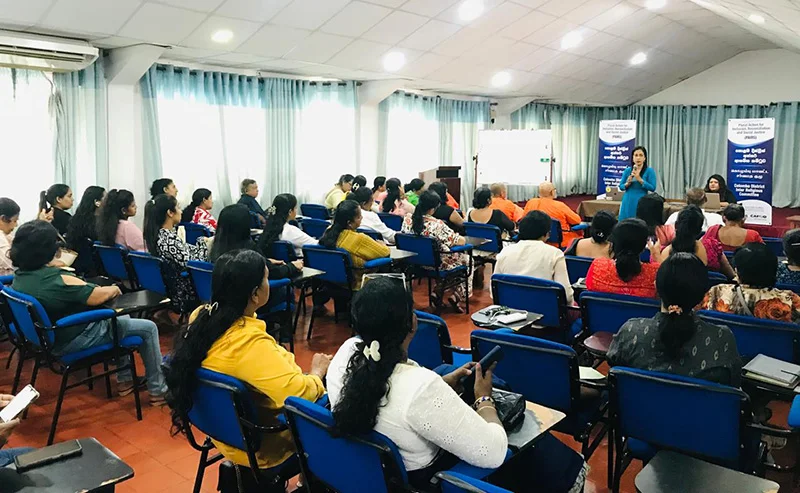
Problems and solutions in plural societies like Sri Lanka’s which have deep rooted ethnic, religious and linguistic cleavages require a consciously inclusive approach. A major challenge for any government in Sri Lanka is to correctly identify the problems faced by different groups with strong identities and find solutions to them. The durability of democratic systems in divided societies depends less on electoral victories than on institutionalised inclusion, consultation, and negotiated compromise. When problems are defined only through the lens of a single political formation, even one that enjoys a large electoral mandate, such as obtained by the NPP government, the policy prescriptions derived from that diagnosis will likely overlook the experiences of communities that may remain outside the ruling party. The result could end up being resistance to those policies, uneven implementation and eventual political backlash.
A recent survey done by the National Peace Council (NPC), in Jaffna, in the North, at a focus group discussion for young people on citizen perception in the electoral process, revealed interesting developments. The results of the NPC micro survey support the findings of the national survey by Verite Research that found that government approval rating stood at 65 percent in early February 2026. A majority of the respondents in Jaffna affirm that they feel safer and more fairly treated than in the past. There is a clear improving trend to be seen in some areas, but not in all. This survey of predominantly young and educated respondents shows 78 percent saying livelihood has improved and an equal percentage feeling safe in daily life. 75 percent express satisfaction with the new government and 64 percent believe the state treats their language and culture fairly. These are not insignificant gains in a region that bore the brunt of three decades of war.
Yet the same survey reveals deep reservations that temper this optimism. Only 25 percent are satisfied with the handling of past issues. An equal percentage see no change in land and military related concerns. Most strikingly, almost 90 percent are worried about land being taken without consent for religious purposes. A significant number are uncertain whether the future will be better. These negative sentiments cannot be brushed aside as marginal. They point to unresolved structural questions relating to land rights, demilitarisation, accountability and the locus of political power. If these issues are not addressed sooner rather than later, the current stability may prove fragile. This suggests the need to build consensus with other parties to ensure long-term stability and legitimacy, and the need for partnership to address national issues.
NPP Absence
National or local level problems solving is unlikely to be successful in the longer term if it only proceeds from the thinking of one group of people even if they are the most enlightened. Problem solving requires the engagement of those from different ethno-religious, caste and political backgrounds to get a diversity of ideas and possible solutions. It does not mean getting corrupted or having to give up the good for the worse. It means testing ideas in the public sphere. Legitimacy flows not merely from winning elections but from the quality of public reasoning that precedes decision-making. The experience of successful post-conflict societies shows that long term peace and development are built through dialogue platforms where civil society organisations, political actors, business communities, and local representatives jointly define problems before negotiating policy responses.
As a civil society organisation, the National Peace Council engages in a variety of public activities that focus on awareness and relationship building across communities. Participants in those activities include community leaders, religious clergy, local level government officials and grassroots political party representatives. However, along with other civil society organisations, NPC has been finding it difficult to get the participation of members of the NPP at those events. The excuse given for the absence of ruling party members is that they are too busy as they are involved in a plenitude of activities. The question is whether the ruling party members have too much on their plate or whether it is due to a reluctance to work with others.
The general belief is that those from the ruling party need to get special permission from the party hierarchy for activities organised by groups not under their control. The reluctance of the ruling party to permit its members to join the activities of other organisations may be the concern that they will get ideas that are different from those held by the party leadership. The concern may be that these different ideas will either corrupt the ruling party members or cause dissent within the ranks of the ruling party. But lasting reform in a plural society requires precisely this exposure. If 90 percent of surveyed youth in Jaffna are worried about land issues, then engaging them, rather than shielding party representatives from uncomfortable conversations, is essential for accurate problem identification.
North Star
The Leader of the Lanka Sama Samaja Party (LSSP), Prof Tissa Vitarana, who passed away last week, gave the example for national level problem solving. As a government minister he took on the challenge the protracted ethnic conflict that led to three decades of war. He set his mind on the solution and engaged with all but never veered from his conviction about what the solution would be. This was the North Star to him, said his son to me at his funeral, the direction to which the Compass (Malimawa) pointed at all times. Prof Vitarana held the view that in a diverse and plural society there was a need to devolve power and share power in a structured way between the majority community and minority communities. His example illustrates that engagement does not require ideological capitulation. It requires clarity of purpose combined with openness to dialogue.
The ethnic and religious peace that prevails today owes much to the efforts of people like Prof Vitarana and other like-minded persons and groups which, for many years, engaged as underdogs with those who were more powerful. The commitment to equality of citizenship, non-racism, non-extremism and non-discrimination, upheld by the present government, comes from this foundation. But the NPC survey suggests that symbolic recognition and improved daily safety are not enough. Respondents prioritise personal safety, truth regarding missing persons, return of land, language use and reduction of military involvement. They are also asking for jobs after graduation, local economic opportunity, protection of property rights, and tangible improvements that allow them to remain in Jaffna rather than migrate.
If solutions are to be lasting they cannot be unilaterally imposed by one party on the others. Lasting solutions cannot be unilateral solutions. They must emerge from a shared diagnosis of the country’s deepest problems and from a willingness to address the negative sentiments that persist beneath the surface of cautious optimism. Only then can progress be secured against reversal and anchored in the consent of the wider polity. Engaging with the opposition can help mitigate the hyper-confrontational and divisive political culture of the past. This means that the ruling party needs to consider not only how to protect its existing members by cloistering them from those who think differently but also expand its vision and membership by convincing others to join them in problem solving at multiple levels. This requires engagement and not avoidance or withdrawal.
by Jehan Perera
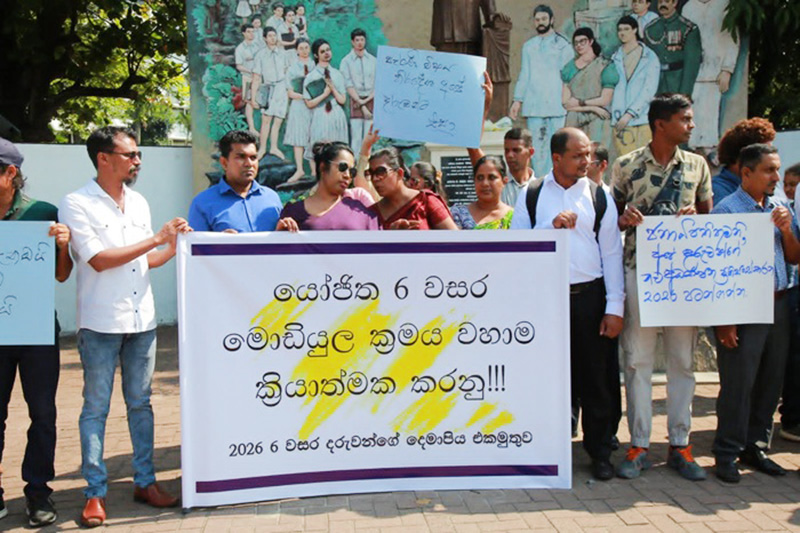
 As the debate on educational reforms rages, I find it useful to pay as much attention to the reactions they have excited as we do to the content of the reforms. Such reactions are a reflection of how education is understood in our society, and this understanding – along with the priorities it gives rise to – must necessarily be taken into account in education policy, including and especially reform. My aim in this piece, however, is to couple this public engagement with critical reflection on the historical-structural realities that structure our possibilities in the global market, and briefly discuss the role of academics in this endeavour.
Two broad reactions
The reactions to the proposed reforms can be broadly categorised into ‘pro’ and ‘anti’. I will discuss the latter first. Most of the backlash against the reforms seems to be directed at the issue of a gay dating site, accidentally being linked to the Grade 6 English module. While the importance of rigour cannot be overstated in such a process, the sheer volume of the energies concentrated on this is also indicative of how hopelessly homophobic our society is, especially its educators, including those in trade unions. These dispositions are a crucial part of the reason why educational reforms are needed in the first place. If only there was a fraction of the interest in ‘keeping up with the rest of the world’ in terms of IT, skills, and so on, in this area as well!
Then there is the opposition mounted by teachers’ trade unions and others about the process of the reforms not being very democratic, which I (and many others in higher education, as evidenced by a recent statement, available at https://island.lk/general-educational-reforms-to-what-purpose-a-statement-by-state-university-teachers/ ) fully agree with. But I earnestly hope the conversation is not usurped by those wanting to promote heteronormativity, further entrenching bigotry only education itself can save us from. With this important qualification, I, too, believe the government should open up the reform process to the public, rather than just ‘informing’ them of it.
It is unclear both as to why the process had to be behind closed doors, as well as why the government seems to be in a hurry to push the reforms through. Considering other recent developments, like the continued extension of emergency rule, tabling of the Protection of the State from Terrorism Act (PSTA), and proposing a new Authority for the protection of the Central Highlands (as is famously known, Authorities directly come under the Executive, and, therefore, further strengthen the Presidency; a reasonable question would be as to why the existing apparatus cannot be strengthened for this purpose), this appears especially suspect.
Further, according to the Secretary to the MOE Nalaka Kaluwewa: “The full framework for the [education] reforms was already in place [when the Dissanayake government took office]” (https://www.wsws.org/en/articles/2025/08/12/wxua-a12.html, citing The Morning, July 29). Given the ideological inclinations of the former Wickremesinghe government and the IMF negotiations taking place at the time, the continuation of education reforms, initiated in such a context with very little modification, leaves little doubt as to their intent: to facilitate the churning out of cheap labour for the global market (with very little cushioning from external shocks and reproducing global inequalities), while raising enough revenue in the process to service debt.
This process privileges STEM subjects, which are “considered to contribute to higher levels of ‘employability’ among their graduates … With their emphasis on transferable skills and demonstrable competency levels, STEM subjects provide tools that are well suited for the abstraction of labour required by capitalism, particularly at the global level where comparability across a wide array of labour markets matters more than ever before” (my own previous piece in this column on 29 October 2024). Humanities and Social Sciences (HSS) subjects are deprioritised as a result. However, the wisdom of an education policy that is solely focused on responding to the global market has been questioned in this column and elsewhere, both because the global market has no reason to prioritise our needs as well as because such an orientation comes at the cost of a strategy for improving the conditions within Sri Lanka, in all sectors. This is why we need a more emancipatory vision for education geared towards building a fairer society domestically where the fruits of prosperity are enjoyed by all.
The second broad reaction to the reforms is to earnestly embrace them. The reasons behind this need to be taken seriously, although it echoes the mantra of the global market. According to one parent participating in a protest against the halting of the reform process: “The world is moving forward with new inventions and technology, but here in Sri Lanka, our children are still burdened with outdated methods. Opposition politicians send their children to international schools or abroad, while ours depend on free education. Stopping these reforms is the lowest act I’ve seen as a mother” (https://www.newsfirst.lk/2026/01/17/pro-educational-reforms-protests-spread-across-sri-lanka). While it is worth mentioning that it is not only the opposition, nor in fact only politicians, who send their children to international schools and abroad, the point holds. Updating the curriculum to reflect the changing needs of a society will invariably strengthen the case for free education. However, as mentioned before, if not combined with a vision for harnessing education’s emancipatory potential for the country, such a move would simply translate into one of integrating Sri Lanka to the world market to produce cheap labour for the colonial and neocolonial masters.
According to another parent in a similar protest: “Our children were excited about lighter schoolbags and a better future. Now they are left in despair” (https://www.newsfirst.lk/2026/01/17/pro-educational-reforms-protests-spread-across-sri-lanka). Again, a valid concern, but one that seems to be completely buying into the rhetoric of the government. As many pieces in this column have already shown, even though the structure of assessments will shift from exam-heavy to more interim forms of assessment (which is very welcome), the number of modules/subjects will actually increase, pushing a greater, not lesser, workload on students.
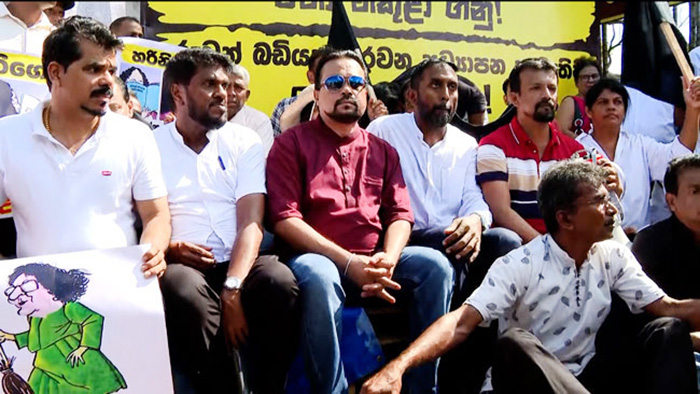
A file photo of a satyagraha against education reforms
What kind of education?
The ‘pro’ reactions outlined above stem from valid concerns, and, therefore, need to be taken seriously. Relatedly, we have to keep in mind that opening the process up to public engagement will not necessarily result in some of the outcomes, those particularly in the HSS academic community, would like to see, such as increasing the HSS component in the syllabus, changing weightages assigned to such subjects, reintroducing them to the basket of mandatory subjects, etc., because of the increasing traction of STEM subjects as a surer way to lock in a good future income.
Academics do have a role to play here, though: 1) actively engage with various groups of people to understand their rationales behind supporting or opposing the reforms; 2) reflect on how such preferences are constituted, and what they in turn contribute towards constituting (including the global and local patterns of accumulation and structures of oppression they perpetuate); 3) bring these reflections back into further conversations, enabling a mutually conditioning exchange; 4) collectively work out a plan for reforming education based on the above, preferably in an arrangement that directly informs policy. A reform process informed by such a dialectical exchange, and a system of education based on the results of these reflections, will have greater substantive value while also responding to the changing times.
Two important prerequisites for this kind of endeavour to succeed are that first, academics participate, irrespective of whether they publicly endorsed this government or not, and second, that the government responds with humility and accountability, without denial and shifting the blame on to individuals. While we cannot help the second, we can start with the first.
Conclusion
For a government that came into power riding the wave of ‘system change’, it is perhaps more important than for any other government that these reforms are done for the right reasons, not to mention following the right methods (of consultation and deliberation). For instance, developing soft skills or incorporating vocational education to the curriculum could be done either in a way that reproduces Sri Lanka’s marginality in the global economic order (which is ‘system preservation’), or lays the groundwork to develop a workforce first and foremost for the country, limited as this approach may be. An inextricable concern is what is denoted by ‘the country’ here: a few affluent groups, a majority ethno-religious category, or everyone living here? How we define ‘the country’ will centrally influence how education policy (among others) will be formulated, just as much as the quality of education influences how we – students, teachers, parents, policymakers, bureaucrats, ‘experts’ – think about such categories. That is precisely why more thought should go to education policymaking than perhaps any other sector.
(Hasini Lecamwasam is attached to the Department of Political Science, University of Peradeniya).
Kuppi is a politics and pedagogy happening on the margins of the lecture hall that parodies, subverts, and simultaneously reaffirms social hierarchies.

 Don Sherman was quite a popular figure in the entertainment scene but now he is better known as the Singing Chef and that’s because he turns out some yummy dishes at his restaurant, in Rajagiriya.
However, now the spotlight is gradually focusing on his daughter Emma Shanaya who has turned out to be a very talented singer.
In fact, we have spotlighted her in The Island a couple of times and she is in the limelight, once gain.
When Emma released her debut music video, titled ‘You Made Me Feel,’ the feedback was very encouraging and at that point in time she said “I only want to keep doing bigger and greater things and ‘You Made Me Feel’ is the very first step to a long journey.”
Emma, who resides in Melbourne, Australia, is in Sri Lanka, at the moment, and has released her very first Sinhala single.
“I’m back in Sri Lanka with a brand new single and this time it’s a Sinhalese song … yes, my debut Sinhala song ‘Sanasum Mawana’ (Bloom like a Flower).
“This song is very special to me as I wrote the lyrics in English and then got it translated and re-written by my mother, and my amazing and very talented producer Thilina Boralessa. Thilina also composed the music, and mix and master of the track.”
Emma went on to say that instead of a love song, or a young romance, she wanted to give the Sri Lankan audience a debut song with some meaning and substance that will portray her, not only as an artiste, but as the person she is.
Says Emma: “‘Sanasum Mawana’ is about life, love and the essence of a woman. This song is for the special woman in your life, whether it be your mother, sister, friend, daughter or partner. I personally dedicate this song to my mother. I wouldn’t be where I am right now if it weren’t for her.”
On Friday, 30th January, ‘Sanasum Mawana’ went live on YouTube and all streaming platforms, and just before it went live, she went on to say, they had a wonderful and intimate launch event at her father’s institute/ restaurant, the ‘Don Sherman Institute’ in Rajagiriya.
It was an evening of celebration, good food and great vibes and the event was also an introduction to Emma Shanaya the person and artiste.
Emma also mentioned that she is Sri Lanka for an extended period – a “work holiday”.
“I would like to expand my creativity in Sri Lanka and see the opportunities the island has in store for me. I look forward to singing, modelling, and acting opportunities, and to work with some wonderful people.
“Thank you to everyone that is by my side, supporting me on this new and exciting journey. I can’t wait to bring you more and continue to bloom like a flower.”

Incoming Bangladesh PM Tarique Rahman, lawmakers sworn into parliament

Samra’s record 110 in vain as Phillips and Ravindra put New Zealand in Super Eights

Canada reacts as cheating row rocks curling superpower

Long queues and confusion mar first day of India’s landmark AI summit

Ancient bone may prove legendary war elephant crossing of Alps

Nepal, Scotland chase win to close out what-if tournament

‘Dates have the highest sugar content to fight Coronavirus’

Sunday Island 27 December – Headlines

#SundayIsland 17th December – Headlines

Sunday Island – 28th March

Sunday Island Headlines – 21 March

Sunday Island – 21st February – Headlines
-
 Life style2 days ago
Marriot new GM Suranga
-

 Business1 day ago
Ministry of Brands to launch Sri Lanka’s first off-price retail destination
-
 Features2 days ago
Monks’ march, in America and Sri Lanka
-
 Midweek Review6 days ago
A question of national pride
-
 Business6 days ago
Autodoc 360 relocates to reinforce commitment to premium auto care
-
 Opinion5 days ago
Will computers ever be intelligent?
-
 Features2 days ago
The Rise of Takaichi
-
 Features2 days ago
Wetlands of Sri Lanka: