
Foreign News
‘Gruesome’ war bets fuel calls for crackdown on prediction markets


Stew, a 35-year-old from Montana, has enjoyed dabbling in sports bets since he downloaded the Kalshi app about 18 months ago.
But just a few weeks ago, after spotting reports of elevated pizza deliveries around the Pentagon during some late-night scrolling, he made a different kind of bet – wagering $10 (£7.50) on the odds that Iran’s Ayatollah Ali Khamenei would be “out” by 1 March.
It was a trade that tested the limits of the kinds of bets Americans are allowed to make.
So-called predictions markets – overseen by firms such as Kalshi – have exploded in popularity over the last year, hosting more than $44bn in trades.
They are rapidly transforming the betting landscape in the US, where sports betting was largely illegal until 2018 and gambling on elections had been off-limits for years until 2024.
While much of the activity on the platforms revolves around sporting matches, users can speculate on any number of questions, including local elections, whether the US central bank will cut interest rates and the year of Jesus Christ’s return.
The apps caught fire during America’s 2024 presidential campaign, after a legal victory cleared the way for them to accept election bets and they showed the odds tilting toward Donald Trump.
But it is more grisly wagers tied to military action involving Iran, Venezuela and Israel that have drawn attention lately.
In theory, such bets run afoul of US financial rules, which bar trading on contracts involving war, terrorism, assassination, gaming or other illegal activities.
But that hasn’t stopped firms from taking in millions of trades.
Critics have seized on the activity, calling for a crackdown on the apps, which they say are facilitating unseemly, and potentially illegal, war profiteering, generating national security risks and enabling opportunities for insider trading and corruption.
“You have now opened up gambling basically on almost anything and it has turned into this very, very gruesome type of thing on the death of a head of state,” said Craig Holman, government affairs lobbyist at the Public Citizen advocacy group, which recently filed a complaint this week over the bets.
Polymarket alone has hosted what Bloomberg estimated as more than $500m in bets related to the Iran war, at one point offering an opportunity to play the odds on the chance of nuclear detonation.
The company, which is headquartered in New York but operates on a limited basis in the US, eventually removed that market after it drew scrutiny on social media but users can still submit bets on questions like when US forces will enter Iran. It did not respond to the BBC’s request for comment.
Kalshi also ended up cancelling the Khamenei market, which had drawn $54m in trades, noting that US-regulated entities are barred from “having a market directly settling on someone’s death”.
The company, which did not respond to a request for comment for this article, has said the war bets are happening on unregulated exchanges outside the US.
Concerns about the war bets have collided with a bigger battle over how prediction market firms should be regulated.
Unlike traditional gaming firms, in which the odds are set by the company, prediction market companies function more like a stock exchange, allowing users to bet against each other on the outcome of future events using “event contracts”.
That design has allowed national financial regulators at the Commodities Futures Trading Commission (CFTC) to claim oversight.
But critics say they are sports betting and gambling operations trying to dress up as financial exchanges in a bid to avoid stricter rules and taxes faced by traditional gaming firms, which are regulated by the states.
Disagreement over who should be policing the apps has sparked dozens of legal battles across the US, as states start to assert their right to regulate the companies like other gaming firms, rather than leave oversight up to the CFTC.
Even some Republicans have voiced concerns, as traditional gaming firms have also stepped up their lobbying, enlisting a savvy former Trump official, Mick Mulvaney, to plead their case in Washington.
“Nobody is saying that gambling shouldn’t be allowed,” says Ben Schiffrin, director of securities policy at Better Markets, which advocates for financial reforms. “What the states are saying and other advocates are saying is things that are gambling should be regulated as gambling.”

Suspiciously timed bets related to military operations involving Israel, Venezuela and Iran have added fodder to those calls.
In recent weeks, Democrats have introduced legislation to bar federal officials from trading event contracts, pointing to incidents such as when a gambler new to Polymarket made nearly half a million dollars on the capture of Venezuela’s president just before it was officially announced.
They have also issued alerts to consumers about the risks of insider trading and written to the administration urging it to more clearly enforce the rules against wagering on war.
But the odds of a crackdown remain long.
Though the Biden administration had taken a hard line on the sector, proposing to ban sports and politics-related event contracts, that regulatory drive stalled after a court defeat and the 2024 election of Donald Trump, who came to power promising a lighter hand.
Last month, the CFTC said it would withdraw the proposed ban on sports and election related contracts.
It has also taken the side of prediction market firms in the legal fights they are facing in the states, which Michael Selig, Trump’s chairman of the Commodity Futures Trading Commission, condemned in a recent opinion piece as “overzealous”.
He argued that event contracts served “legitimate economic functions”, allowing businesses to hedge against risks triggered by events.
“It’s clear that Americans like the product and want to participate,” he said, while also emphasising that platforms must still follow rules.

As the pressure mounts, Polymarket has announced steps to more formally police suspicious activity, while Kalshi, which advertises its status as a “regulated exchange”, has become more vocal about what it is doing to combat insider trading.
It recently announced punishments in two cases of insider trading and disclosed that it had opened up 200 investigations over the last year.
The company also ultimately cancelled the $54m market around Khamenei’s ouster.
In series of statements explaining the decision, the firm said it did not “list markets directly tied to death”, noting that its terms had included that carve-out.
It promised to make the terms more clear from the get-go, saying it had “learned a lot” from the incident.
But in an indication of growing pains, the decision still sparked outrage among users, including Stew, who said the firm had initially “buried” those rules and its explanation seemed disingenuous, given that there were “only a handful of realistic methods” for Khamenei to go.
Stew, who received a refund, said he wasn’t sure regulation was the answer, but he was sympathetic to the idea that the debate seemed to be stumbling around semantics.
“They call it contract trading, which I guess technically speaking, that’s what it is. But if we’re all being honest here, it’s still betting,” he said.
[BBC]

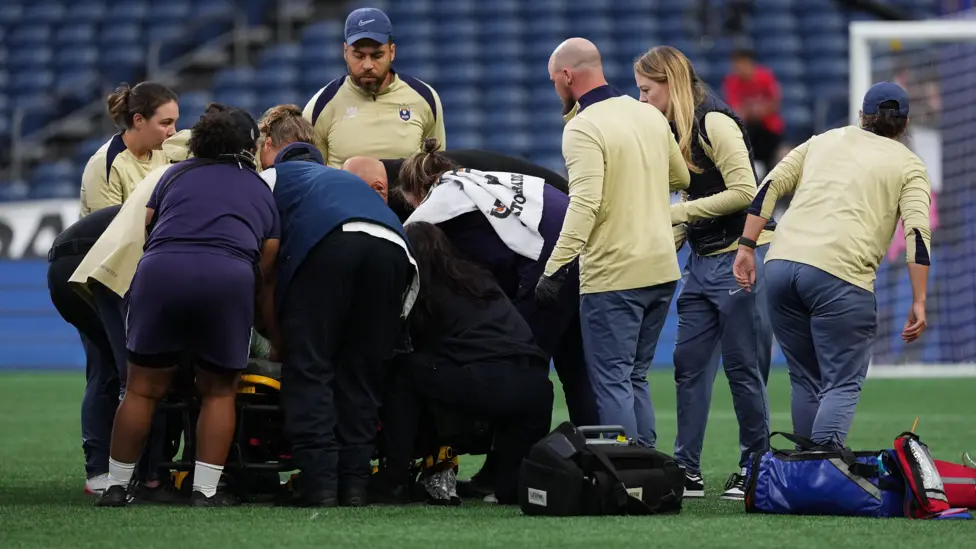
United States women’s national team player Savannah DeMelo is suing a hospital and two doctors after she suffered a cardiac arrest on the pitch last year.
Midfielder DeMelo, who has seven senior caps for the USA, has filed a lawsuit against University of Louisville Health (UofL Health) for negligence.
The 28-year-old, who plays for Racing Louisville, collapsed in the first half of a National Women’s Soccer League (NWSL) match on 14 September 2025.
According to documents seen by BBC Sport, the case was filed on Tuesday morning with Jefferson Circuit Court in Kentucky, where her club is based – a year and a day after her on-field collapse.
DeMelo’s filing claims UofL Health and two doctors, Dr Sarabjeet Suri and Dr Jennifer Daily, “failed to act as a reasonably prudent and competent medical practice, and such negligence was a substantial factor in causing DeMelo to suffer severe physical injuries, including, but not limited to, her cardiac arrest”.
Dr Daily, according to her online UofL biography, is Racing Louisville’s chief medical officer. The lawsuit states DeMelo was under the care of Dr Daily from January 2024 to July 2026.
It states that in March 2025, Dr Daily referred DeMelo to Dr Suri for “evaluation and treatment” after she had been complaining of chest pain, dizziness and shortness of air; Dr Suri obtained a history, performed a physical examination and ordered diagnostic tests.
Nearly six months later, DeMelo suffered the cardiac arrest.
“She was subsequently diagnosed and treated for ventricular tachycardia [an abnormal heart rhythm],” the suit states.
DeMelo, who has spent her entire professional career with Racing Louisville, has not played since her collapse.
In a post to her instagram page on Tuesday, De Melo – who was picked in the USA squad for the 2023 Women’s World Cup and started their first two games – marked the anniversary of the incident.
“A year ago today, while playing soccer, I collapsed due to an undiagnosed cardiac arrhythmia, that caused me to go into cardiac arrest,” she wrote.
“I respect and appreciate the privacy everyone has met me with while going through everything I have this year. I’ll never be able to fully put into words how emotionally hard this year has been. There has been a lot of uncertainty and emotions intertwined with it all.”
[BBC]

The Philippine Coast Guard says it has recovered 41 bodies from the wreckage of a ferry that caught fire this week, bringing the total death toll to 76.
More than 130 people were on board the MV June Aster when the blaze erupted on Wednesday as it neared its destination at the tourist hotspot of Coron, after departing from Manila.
The coast guard said on Saturday the number of survivors remained 43, with many receiving treatment in hospital, but 13 people remain unaccounted for.
Recovery of bodies had been hampered due to toxic fumes and lingering heat, which meant authorities were unable to board until Friday.
Geronimo Tuvilla, an official for the Philippine Coast Guard, said the priority was identifying victims and determining the cause of the blaze.
Kristine Ablana, a tourism official in Coron, said relatives were being asked to help identify family members through personal items and DNA testing.
“Once someone is able to verify that this photo or these belongings are indeed those of their relative, they will be asked to provide a DNA sample,” she said.
Coast Guard spokesperson Commodore Noemie Cayabyab said the fire began in a cargo hold before spreading.
She said survivors had described hearing a loud explosion, “the appearance of smoke and then fire. It spread very quickly”. She added that those who had made it off the ship did not have time to put on lifejackets.
A survivor who was hauled to safety on a rescue boat told the BBC he had heard frantic cries onboard when the fire erupted, and was trampled by panicked people as he tried to escape.
The ferry, built in 2002, held valid safety certificates and passed an enforcement inspection in March, but investigators are looking into potential manifest discrepancies, cargo loading integrity, and crew emergency response protocols, the Palawan Daily reported.
The vessel was carrying 117 passengers and 17 crew members.
Atienza Interisland Ferries, the vessel’s operator, has pledged full co-operation with the inquiry.
[BBC]
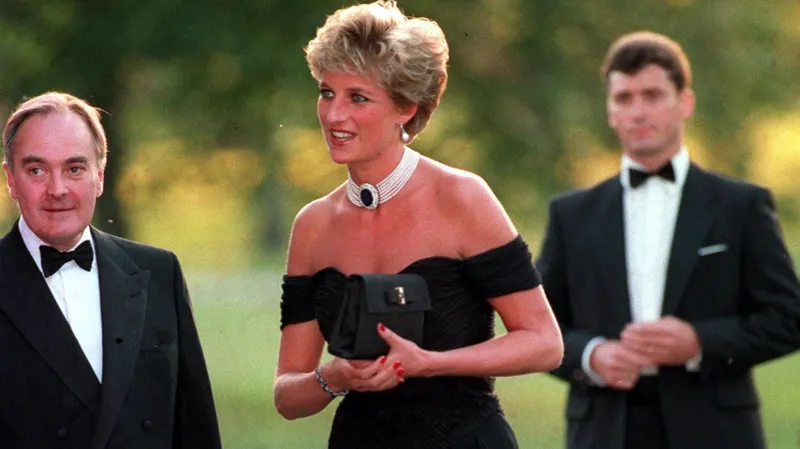
A dress worn by Princess Diana to a party in London hours after a documentary was televised in which the then-Prince Charles admitted to committing adultery during their marriage is going up for auction.
Her dramatic arrival at the Serpentine Gallery in 1994 in a custom-made black silk evening dress by designer Christina Stambolian became an iconic pop-culture moment.
The media dubbed her outfit the “revenge dress”.
Auction house Sotheby’s expects the dress to sell for up to £220,000 ($300,000) when it goes under the hammer on 9 December.
A press release from Sotheby’s said it is the first time the dress has been offered at auction since 1997, when the late princess sold 79 of her dresses to raise money for charities.
Morgane Halimi, Sotheby’s Global Head of Handbags and Fashion, said in a statement that Princess Diana “understood instinctively” that fashion can be a language in its own right.
“On her own terms, Princess Diana turned the dress into one of the most powerful messages she ever made, during one of the most scrutinised and emotionally charged episodes of her life,” Halimi said.
“She walked into a moment in which so much of her story was being told for her and, through what she chose to wear, reclaimed the narrative for herself.”

According to Sotheby’s, Anna Harvey, her stylist at the time, said Diana “wanted to look a million dollars”.
The princess made a last-minute wardrobe change for the fundraising dinner and chose the strapless evening dress by the Greek designer Christina Stambolian – which she accessorised with a royal jewel, a black clutch and black heels.
The vintage Jaguar XJ40 car that Diana arrived in at the event was sold at auction earlier this year for £66,250.
The revenge dress is expected to fetch a considerably higher price.
If it does, it will not be the first time an item from the princess’s wardrobe has sold for a significant sum.
Princess Diana’s sweater featuring a black sheep among rows of white ones was sold for £920,000 at an auction by Sotheby’s in New York in 2023.
[BBC]

Charani, Shafali power India past Japan and into Asian Games semi-finals

Athapaththu and Dilhari muscle Sri Lanka past Malaysia in mismatch

Abhishek Sharma hits record T20 ton as India beat Afghanistan by 127 runs

Trump administration approves sale of F-35 jets to Saudi Arabia

Banton steers England into unassailable 2-0 series lead

Showers expected in the Western, Norrh-western and Sabaragamuwa provinces and in Galle, Matara, Kandy and Nuwara-Eliya Districts.

‘Dates have the highest sugar content to fight Coronavirus’

Sunday Island 27 December – Headlines

#SundayIsland 17th December – Headlines

Sunday Island – 28th March

Sunday Island Headlines – 21 March

Sunday Island – 21st February – Headlines
-

 News6 days ago
Gnanasara Thero absconding after SC ruling
-

 News7 days ago
Ammunition cache found in old Kandy bungalow
-

 News7 days ago
Green Climate Fund (GCF) Regional Dialogue for East and South Asia will be held from 14 to 17 September 2026 at Cinnamon Life at City of Dreams Hotel, Colombo
-

 News7 days ago
Prof. Pieris says Buddha Dhamma recognised as source of law under Constitution
-

 Opinion5 days ago
From Galkissa (Mount Lavinia) to Tambuttegama
-

 Latest News7 days ago
ITS Giuseppe Garibaldi’ departs Colombo
-

 Business6 days ago
HNB Finance strengthens Board with four independent directors
-

 News2 days ago
US embassy won’t comment on IGP’s probe into joint drug raid