
Business
Govt. committed to building a digitized modern Sri Lanka says President

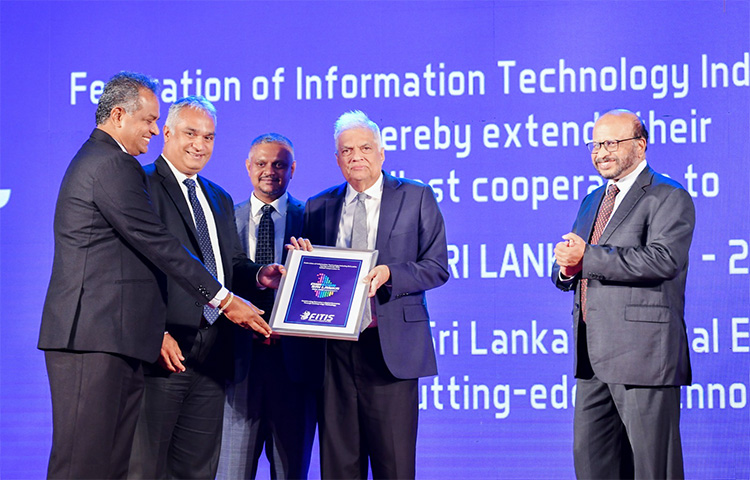
President Ranil Wickremesinghe said that the government headed by him is committed to build a digitalized modern Sri Lanka.
The President said that it is a duty of the government to accelerate digitalization by digitalizing the government sector and a Committee of Cabinet Ministers would be set up to ensure that the government sector utilization is effected rapidly.
He made this observation addressing at the launching ceremony of the DIGIECON 2030, a digital economy 2030 master plan and a regulatory policy framework aimed at developing a master plan towards transforming the country into an inclusive digital economy. This event organized by the Ministry of Technology was held at the Temple Trees.
The keynote address was delivered by Regional Cluster Lead for South Asia for Digital Development, World Bank Siddartha Raja on ‘Leveraging Digital Economy towards a Sustainable and Resilient Sri Lanka’.
The DIGIECON SRI LANKA 2023-2030 website was launched by President Ranil Wickremesinghe on this occasion and ICT associations extended their support.
The launch of DIGIECON 2030 which is a concept of President Ranil Wickremesinghe is a crucial step in Sri Lanka’s transformation towards an inclusive digital economy.
DIGIECON 2030 will also facilitate scale ups for over 50 of the most innovative start-ups, SMEs and technological developments in Sri Lanka, across a diverse range of industries with a platform to access global investors and markets.
Speaking further, President Ranil Wickremesinghe said that Rs. 100 million is set aside for universities and private sector institutions for this year to commence the development of a digital policy and another Rs. 1 billion next year for the research in the IT sector and Artificial Intelligence to develop digital economy.
The statement by President Ranil Wickremesinghe is as follows:
‘What has to be said of accelerating Sri Lanka’s digital innovation and the industry four exhibition that we are planning to hold has already been said. In fact, I have very little to add, and that I had mentioned in the morning that the IMF reforms give us a growth potential. We should grasp that opportunity and therefore we should now plan for an economy that fits the mid-century, a highly competitive social market economy.
‘Highly competitive means not being competitive in every sector. We cannot, but there are areas that we can be competitive, for instance, as regional logistics centre and in certain types of agriculture. So those are the areas that we have to identify. Secondly, that highly competitive economy should also be a green economy because there are huge potential for Sri Lanka to exploit the green economy.
‘Thirdly, the highly competitive economy must be a green economy and a digital economy. So this is where the path fits in. It is not only a digital economy, but also a green economy. The two should combine together and then it must be a highly competitive economy. So these are details which the market will have to work out as we develop further.
‘As far as the digital economy is concerned, we have now to develop our digital policy, which we haven’t done so. So there are many ideas here, many proposals, and we have to do this together with the industry. Government spending cannot drive the digital economy. The digital economy has to be driven by the private sector.
‘What we can do is to promote. We should not stand in the way. That’s going to be our policy, our digital policy, and within it, Artificial Intelligence (AI) oriented policy also of implementation. To do this, firstly, we have to build up the manpower. Now that manpower again while the Government will increase its spending in this sector. Again, this is what the private sector has to do and we will ensure that funding is made available to all those who take on this course, who follow these courses.
‘If you look at the whole digital industry, you’ll see the two leading giants, US and China. In USA it is driven by the market. In China also it is driven by the market. The whole of China’s development came through the market, so we should not think of digital policy has been centered on the Government.
‘But there is certainly a duty of the government to accelerate the digitalization by digitalizing the government sector. What we plan to do in this government is to appoint a Cabinet Committee of ministers to ensure that the g’ overnment sector utilization is done fast and quickly. That move will help you to bring digital policy forward and accelerate it.
‘We cannot wait too long. We should also coordinate and work together with our neighboring countries. I am looking forward to the economic and technological cooperation, a partnership with India, which will enable us to work together with India and specifically South India, which has grown by leaps and bounds. So this is the area that concerns the Sri Lankan policy.
‘Then, the infrastructure required will have to be provided by the private sector. Government is not in a position to do so. We will promote the provision of infrastructure by the private sector. This is one of the reasons that have led the Government to privatize Sri Lankan Telecom. We just haven’t the money to put into it.
‘We need foreign investment and let it come through the SLT and the other institutions that are involved. In this way we are laying the groundwork for the government policy on digitalization. It is necessary. It will be one of the key sectors of the new economy. It’s for you all to tell us what has to be done; it’s for you all to work with the government or for the government to work with you all.
‘So at some point, the formulation of policy will depend on the decisions of the IT sector, because all new technologies will be tried out in Sri Lanka. We want to build a new economy that is based on industry four technology. Looking at agriculture, looking at fisheries, manufacturing services, it’s a totally different world from what we know now that you will see in 20 years’ time and this growth will come into South Asia as India develops.
‘So therefore, I won’t take any more of your time. I have told you what we are planning to do. We will have this Cabinet Committee and we should also focused on areas that are easy for us to develop. One such area is Artificial Intelligence (AI). What is artificial intelligence? How does it correlate to the mind? Now, this is a topic that most of us here are familiar with being Buddhists.
‘We know that as the Dhammapada says, the mind determines everything. So what is the correlation between the mind and artificial intelligence? I think that’s one area for us to work on. Now, the second area, I would say, is research. The research is lacking in Sri Lanka. There is insufficient research being done. I don’t intend in any way to start new research institutions.
‘What we want are the universities and the private sector to link up. We will certainly help the universities with the infrastructure that is needed. But it’s the private sector that has to drive it. Private sector has to invest the money, lose some of it and gain the rest of it, because this will ensure that the private sector driven industry.
‘The universities and, if there are other institutions that can help you, certainly all of them would be combined. And to plan out this policy, the state minister will speak to you all and then report back to the Cabinet Committee. As an initiation for this year I am setting aside Rs 100 million.
‘Next year, we want the research. I want you to do the research with the main focus on the AI. And for that next year I set aside Rs. 1 billion depending on how you perform. Then we can decide what we give for 2025. This government of which many members are here, which I head with the Prime Minister and the ministers, as a whole is determined to modernize the country and to digitalize the country and you can rest assured that everything to ensure Sri Lanka comes out as one of the leading nations in the region as far as digitalization is concerned.’
State Minister of Technology Kanaka Herath delivering the welcome speech said the launch of DIGIECON 2030 marks a new chapter in Sri Lanka’s journey towards becoming an inclusive digital economy. The government aims to leap into industry accelerating our economy through sustainable tradable goods and services, supported by advanced technology.
State Minister also said that through DIGIECON 2030, the government will build a conducive business environment for investments while giving direction and commitment of the government towards facilitating a digital ecosystem to all the stakeholders. The government will take the lead in giving shelter to a series of events, which will explore partnerships that will lead to digital transformation using cutting-edge technology and leverage human-centric technology to improve productivity and efficiency to match and link with global value chains.
Ambassadors, High Commissioners, heads of foreign missions, Cabinet Ministers Nimal
Siripala de Silva, Ali Sabry, Susil Premajayantha, Kanchana Wijesekara, Ramesh Pathirana,
Nazeer Ahamed, Manusha Nanayakkara, State Ministers Suren Raghavan, Aravindh Kumar, President’s Senior Advisor on National Security and Chief of Presidential Staff Sagala
Ratnayake, Senior Advisor to the President on Climate Change Ruwan Wijewardene, World Bank representatives, other dignitaries and key stakeholders also were present at the occasion.
President’s Media Division










Senior business leaders, economists and international development experts, alongside the Prime Minister of Sri Lanka, will headline the Sri Lanka Economic & Investment Summit 2026, organised by The Ceylon Chamber of Commerce on 12 and 13 October at the Shangri-La Colombo.
The Summit will open with a keynote address by T. Krishnakumar, Chief Executive Officer, Reliance Consumer Products Ltd, who brings more than four decades of experience in the consumer brands and FMCG sectors. Having previously served as President of Coca-Cola India and Southwest Asia, with extensive experience in building businesses and driving growth across emerging markets, Krishnakumar, more popularly known as Kk, now leads Reliance Consumer Products as it expands across categories and builds new customer, partnership and market opportunities.
Day 2 will bring together four international perspectives across discussions on economic resilience, regional connectivity, sector growth and digital transformation.
Lilia Aleksanyan, Senior Country Economist for Sri Lanka at the Asian Development Bank, will open the day’s discussions with a focus on Sri Lanka’s economic resilience. Her work covers the country’s macroeconomic outlook, policy advice and macro-fiscal and financial-sector reform. Her international policy experience also includes roles at the French Ministry of Finance and the French Central Bank.
The Summit will then turn to Sri Lanka’s connections with regional markets, with P. D. Singh, Chief Executive Officer, India & South Asia, Standard Chartered Bank, delivering the keynote for the session on trade corridors and value chains. Singh counts close to three decades of experience in banking and finance, with senior leadership roles spanning Standard Chartered, JPMorgan Chase Bank and HSBC.
The Sector Deep Dives will bring international perspectives to discussions on healthcare and energy.
Tushar Shroff, Chief Financial Officer, Zydus Lifesciences Ltd, will deliver the keynote for the healthcare discussion, drawing on more than three decades of experience in corporate finance, strategic investment and financial transformation. His career spans senior finance and leadership roles with ABB, Piramal Healthcare, Intas Pharmaceuticals and Vedanta Group, giving him a broad perspective on the business and investment decisions shaping the healthcare sector.
For the energy-focused deep dive, Edore Onomakpome, Regional Infrastructure Industry Manager for Bangladesh, Sri Lanka and Nepal at the International Finance Corporation, will bring extensive experience in infrastructure investment and project finance across emerging markets. Since joining IFC in 2013, she has held senior roles across Africa and South Asia, including managing IFC’s infrastructure portfolio across 16 countries.
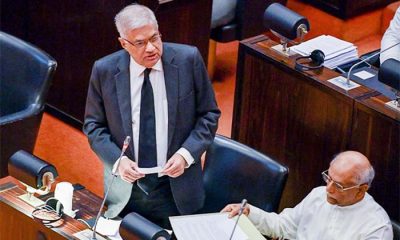
The Summit will conclude its keynote programme with Prime Minister Dr. Harini Amarasuriya, who will deliver the keynote for “Nation Building in the Digital Age.” The Prime Minister also oversees the Ministry of Education, Higher Education and Vocational Education, bringing a direct policy perspective to discussions on digital transformation, innovation, education and the skills needed for a changing economy.
Together, these perspectives will bring regional, international and policy insight to SLEIS 2026 as Sri Lanka considers how to strengthen economic resilience, attract investment, deepen regional connections and develop new sources of growth.
Held under the theme “Positioning Sri Lanka in a Changing Global Economy: Resilience, Reform, and the Future of Economic Policy,” SLEIS 2026 will take place on 12 and 13 October 2026 at the Shangri-La Colombo.
The Sri Lanka Economic & Investment Summit 2026 is supported by its valued sponsors and partners. Platinum Sponsor – Standard Chartered Bank Sri Lanka, Gold Sponsor – VISA Worldwide (Pvt) Ltd., Bronze Sponsor – South Asia Gateway Terminals (Pvt) Ltd., Strategic Development Partner – Asian Development Bank, Telecommunication Partner – Dialog Telecommunication, Television Partner – Dialog Television, Session Sponsors – David Pieris Motor Company (Pvt) Ltd., Hemas Holdings PLC, Sunshine Holdings PLC, International Construction Consortium (Pvt) Ltd., Microsoft Sri Lanka (Pvt) Limited, Official Logistics Partner – Hayleys Advantis Limited, Official Airline – SriLankan Airlines Ltd., Official Hospitality Partner – Shangri-La Colombo, Airline Partner – China Eastern Air Holding Co. Ltd.
Registrations for SLEIS 2026 are now closed. The Ceylon Chamber looks forward to welcoming participants to the discussions on Sri Lanka’s future trajectory on 12 and 13 October.
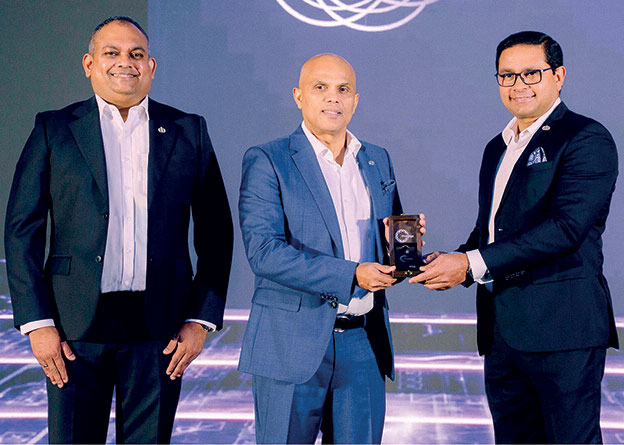
Commercial Bank of Ceylon has launched ‘Prestige’, a three-tier banking proposition aimed at high-net-worth (HNW) clients, combining wealth management, advisory services and lifestyle benefits.
The initiative replaces the bank’s existing ‘Elite’ private banking brand with Ruby, Sapphire and Diamond tiers, designed to cater to customers according to their wealth profiles and banking relationships.
The bank said Prestige would provide dedicated relationship managers, priority branch services, preferential rates on loans and deposits, enhanced card privileges, family banking programmes and offshore account solutions.
Its wealth and investment management services include access to capital-protected income solutions, dual-currency investments, institutional deals and estate and portfolio governance.
Clients will also have access to specialist financial and corporate advisory services, including assistance with international relocation, overseas property and capital repatriation.
The programme includes lifestyle benefits such as VIP airport lounge access, travel concierge services, property management and medical coordination, as well as access to selected art and culinary events.
The bank said its flagship Prestige banking residence at R.G. Senanayake Mawatha, Colombo 07, had been refurbished, with the service to be extended to other economically important cities.
Commercial Bank Managing Director/CEO Sanath Manatunge said Prestige was intended to support customers in managing their wealth, business interests, family needs and long-term legacy.
Existing Elite clients are being transitioned to the new programme, the bank said.
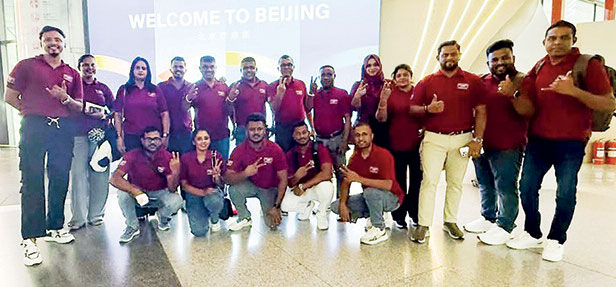
Ceylinco Life has rewarded 80 members of its sales force with overseas tours to Vietnam and China for their outstanding performance in the company’s 2025 sales competitions.
The group comprised 62 sales achievers who travelled to Vietnam and 18 who visited China.
The Vietnam tour included visits to Hanoi’s Ho Chi Minh Complex, One Pillar Pagoda, Tran Quoc Pagoda and Hoan Kiem Lake. The group also travelled to Ha Long Bay, where they went on an Aurora Cruise and explored attractions including Sung Sot Cave, Luun Cave and Titop Island.
The tour also featured a sunset party aboard the cruise, with music and refreshments.
The 18 achievers who travelled to China visited several of Beijing’s major historical and cultural attractions, including Tiananmen Square, the Forbidden City and the Summer Palace. They also took a boat ride on Kunming Lake.
A highlight of the China tour was a visit to the Mutianyu section of the Great Wall, including a round-trip cable car ride. The group also attended an acrobatic show at Chaoyang Theatre and visited the Panda Garden at Beijing Zoo.
The company said the tours were organised to recognise and reward sales personnel for their performance and achievements.

Showers above 75 mm are likely at some places in the Western, Sabaragamuwa, Central, Uva and North-Western provinces and in Galle, Matara, Anuradhapura and Mannar districts.

Iranian ships stranded, Lanka fears US sanctions

Sri Lanka CERT warns of overseas university admission scams

Navi Pillay’s Lankan affairs in focus as she wins 2026 Nobel Peace Prize

Lanka welcomes Indian SC remarks on Katchatheevu dispute

UN at Crossroads, Trump nearing End of the Road

‘Dates have the highest sugar content to fight Coronavirus’

Sunday Island 27 December – Headlines

#SundayIsland 17th December – Headlines

Sunday Island – 28th March

Sunday Island Headlines – 21 March

Sunday Island – 21st February – Headlines
-

 News6 days ago
Geneva takes up Sallay’s case and govt. ignores opportunity to answer accusations
-

 Features5 days ago
Preventing grievances from becoming communal
-

 Features3 days ago
The Sri Lankan who made Scottish history
-

 Sports3 days ago
Nissanka absence opens door for Sri Lanka’s young guns
-

 News4 days ago
Gnansara Thera to be assigned to prison printing section: Officials
-
 Features6 days ago
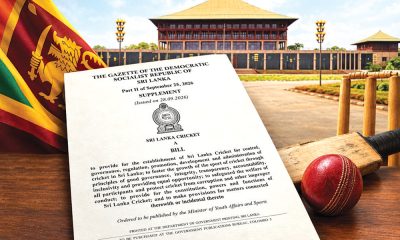
Sri Lanka Cricket Bill: Governance reform is not yet a cricket strategy
-

 Features3 days ago
Future of Sri Lanka’s state university system: Should it be shut down and reopened?
-

 News2 days ago
NDB fraud Rs 60mn more than reported