
News
Global Tamil Forum calls for strong resolution on Lanka

The Global Tamil Forum (GTF) has called for a strong resolution on Sri Lanka at the UN Human Rights Council (UNHRC) in Geneva.Issuing a statement, the GTF said that for the Tamil people who have suffered enormously during the war, and indeed for the victims of human rights violations from all communities who are denied accountability and justice in Sri Lanka, the UNHRC has consistently provided much needed hope.
The role played by the Office of the High Commissioner for Human Rights (OHCHR) is crucial in this regard. GTF expresses its sincere appreciation to Michelle Bachelet for her exemplary service as the High Commissioner till last month and welcomes the new High Commissioner Volker Turk in this important role.
It is clear from the High Commissioner’s report that the unprecedented economic crisis in Sri Lanka has its roots firmly in its long history of unaccountable governance associated with the ethnic conflict and war. The report argues that ‘deepening militarisation and lack of transparency and accountability in governance have embedded impunity for serious human rights violations and created an environment for corruption and the abuse of power.’ For the first time related to Sri Lanka, the UN review recommends ‘investigation of economic crimes that impact on human rights and the tracing and recovery of stolen assets.’
The High Commissioner’s report also recognises the opportunity provided by the economic crisis, to charter a new path spurred by broad-based demand by all communities for deeper reforms and accountability. And the report recommends ‘a more fundamental constitutional reform through broad-based consultative process to strengthen democratic checks and balances and devolution of political authority, which is integral to reconciliation and the full enjoyment of human rights by all members of its population.’
However, the report is highly critical of the hard-line approach taken by the Ranil Wickremesinghe government – including continued usage of the Prevention of Terrorism Act (PTA) to detain student leaders and to continue to detain long-term Tamil and Muslim prisoners, despite years of promises to repeal, and rescinding on the recent commitment to a de facto moratorium on its use. And the report calls to immediately end the reliance on draconian security laws to crack down on peaceful protests, reverse the drift towards militarisation and to show renewed commitment to deliver on security sector reform and ending impunity.
The OHCHR report notes that in 2022, Defence was allocated 373.1 billion rupees (then US$1.86 billion), which accounted for 15 percent of total government expenditure, and this was more than double that allocated for Health. Such high defence expenditure in a country under major financial crisis and that too for defence activities disproportionately concentrated in the North-East where their actions only prevent return to normalcy, defies logic.
GTF would like to emphasise that the genesis (from 2009) and the continuing driver of the UNHRC process have been about addressing accountability for war time atrocities committed during the war and promoting reconciliation among all communities. It is in this aspect the High Commissioner’s report is more scathing. The Easter Bombing (2019) is now part of a long list of emblematic cases where truth seeking has been intentionally made impossible.
The OHCHR report unambiguously states, ‘The Sri Lankan state, through successive governments, has consistently failed to pursue an effective Transitional Justice process to hold perpetrators to account and to uphold victims’ rights to truth, justice, and reparation. Rather, they have created political obstacles to accountability and actively promoted and incorporated some military officials credibly implicated in war crimes in the highest levels of government.’
The report identifies that even the tokenistic initiatives from the government, such as the Office on Missing Persons (OMP), has lost the confidence and trust of the relatives of victims, following a series of problematic appointments to the Chairperson and Commissioners. In effect, the OMP has not been able to trace a single disappeared person or clarified the fate of the disappeared in meaningful ways and it is focussed on expeditiously closing the files and issuing families with ‘Certificates of Absence’.
The High Commissioner’s report calls Sri Lanka to ‘re-launch a comprehensive, victim-centred strategy on Transitional Justice and accountability, to establish credible truth seeking mechanism and ad hoc special court’. This statement is unambiguous in that as per the view of the OHCHR, after 13 years of solemn promises and commitments to its citizens and to the international community, the accountability project within Sri Lanka has reached the dead end.
In reality, Sri Lanka went through many distinct phases in its dealing with war related accountability issues – outright denials initially; followed by half-hearted actions and perceived cooperation through internal investigations and co-sponsorships of UNHRC resolutions; and finally playing for time hoping that the issue will disappear. But it is to the credit of the international community, the core group of countries, the NGOs and the United Nations system that their focus never wavered. In fact, there has been progressive ramping of up of initiatives – Secretary General’s Panel of Experts on Accountability in Sri Lanka (2011); Secretary-General’s Internal Review Panel on United Nations Action in Sri Lanka (2012); OHCHR Investigation on Sri Lanka (2015) and the OHCHR Accountability Project as per the Resolution 46/1, Paragraph 6 (2021).
The High Commissioner’s report states that the OHCHR Accountability Project is fully staffed and operational since May and is focussed on four tracks – “Collecting, consolidating, analysing and preserving information and evidence”; “Developing possible strategies for further accountability processes”; “Advocating for victims and survivors” and “Supporting relevant judicial and other proceedings”. It is pleasing to note that the OHCHR has received requests from national authorities for information and evidence related to eight individuals, as well as a number of alleged violations, and we strongly support High Commissioner’s call for ‘renewing the mandate and reinforcing the capacity of OHCHR for its specialised accountability project’.
It is important to note that that the time has arrived to explore further options for advancing accountability in Sri Lanka. The High Commissioner’s report refers to communications submitted in October and November 2021 to the Prosecutor of the International Criminal Court requesting that the Prosecutor exercise jurisdiction over alleged crimes occurred partially on the territory of States Parties (to the Rome Statute).
The report calls on ‘states to cooperate in accountability efforts, including available avenues of extraterritorial and universal jurisdiction to investigate and prosecute crimes under international law’ and ‘to explore further measures including targeted sanctions, restrictive measures and travel bans in relation to those who are credibly implicated in serious crimes.’
It is in this context the international community needs to view the announcement by the Sri Lankan Foreign Minister Ali Sabri that the Ranil Wickremesinghe government would not agree to any external mechanism and looking for internal truth seeking arrangements within the framework of Sri Lankan constitution. After 13 years of dithering and deceiving, and co-sponsoring resolutions (30/1, 34/1) which called for establishing hybrid court with international participation, that too by a government when Ranil Wickremesinghe was the Prime Minister, Sri Lanka now wants to go back to square one and start all over again. The absurdity of this proposition will not be lost on any keen observer of Sri Lanka.
We also thank India for comments during the Interactive Dialogue on Sri Lanka: Indian delegation notes with concern the lack of measurable progress by Government of Sri Lanka on their commitments of a political solution to the ethnic issue — through full implementation of the 13th Amendment of the Constitution, delegation of powers to Provincial Councils and holding of Provincial Council elections at the earliest. The HRC process should facilitate devolution of political authority to the North and East provinces building up on the 13th Amendment and finding a lasting political solution to ensure non-recurrence of the violent past.
GTF is of the view that Sri Lanka is at crossroads. The nascent transformation Sri Lanka presently undergoing is significant and there is a developing environment where an unaccountable government will be under increased scrutiny. In addition to wartime accountability, legal, financial, and other governance accountabilities are also under intense focus. Unfortunately, many of the recent actions by the Ranil Wickremasinghe government are not conducive to promote this healthy development. Irrespective of that, this emerging trend needs to be conscientiously promoted by the international community, which is possible only by adopting a well-targeted UNHRC resolution. The new resolution needs to build on the key aspects of the March 2021 UNHRC resolution (A/HRC/RES/46/1) and mirror the comprehensive set of recommendations listed in the High Commissioner’s reports of February and September 2022. GTF is of the view that the reports mandated in the proposed resolution should be transmitted to all relevant United Nations Bodies and the Secretary-General for appropriate action.
The GTF also fully endorsed the request by Human Rights Watch and 3 other NGOs calling the HRC to adopt a Resolution that: Strengthens the mandate for monitoring and reporting, by establishing an expert mechanism to monitor and report (both to the Human Rights Council and the General Assembly) on the current rights situation in Sri Lanka and make concrete recommendations to ensure the protection and realization of rights. It is also the responsibility of the Member States including the Core Group of Sri Lanka to adequately fund the increased scope and capacity of the Sri Lanka Accountability Project throughout the new period envisaged in the Resolution.







Approval of the Cabinet of Ministers has been granted at their meeting held on 19.05.2025 in order to introduce amendments to the Inland Revenue Act No. 24 of 2017 including the proposed tax revisions to enhance the tax structure paving way for state financial integrity based on revenue.
Accordingly, the revised draft bill has been prepared by the legal draftsman and clearance of the Attorney General has been received.
Therefore, the Cabinet of Ministers has granted approval for
the resolution furnished by the President in his capacity as the Minister of Finance, Policy Planning and Economic Development to publish the aforementioned draft bill in the government gazette notification and subsequently, forward the same to the Parliament for its concurrence.
The National Mineral Policy was prepared for the first time in the year 1999, and the aforementioned policy has been amended in 2023 to cover matters such as preparing an updated data system related to mineral resources, adding value to the export of minerals, encouraging mineral-related industrialists, extracting mineral resources and managing the environment sustainably, and resolving the issues related to the ownership of the land arising in extracting mineral resources.
The revised National Mineral Policy has been reupdated in line with the manifesto “A Sustainable Resource Utilization – Generation of the Highest Benefit” under the policy statement of the current government” A Thriving Nation – A Beautiful Life.”
Accordingly, the Cabinet of Ministers has approved the resolution presented by the Minister of Industries and
Entrepreneurship to implement the so-formulated “National Mineral Policy—2026.”

The Gampaha High Court has sentenced Twelve (12) individuals to death over the 2022 murder of former Polonnaruwa District Member of Parliament Amarakeerthi Athukorala and his security officer.

Amendment of the Inland Revenue Act No. 24 of 2017

Cabinet nod for “National Mineral Policy” – 2026

Twelve sentenced to death by Gampaha High Court
Ten new buses with facilities for people with special needs

Ghosts of 2016 writ large as England, West Indies meet again
Amendment to the regulations for registration of Subscriber SIM Cards (Subscriber Identity Modules- SIM) and reregistration of subscriber information related to the SIM cards obtained before 02-08-2019

‘Dates have the highest sugar content to fight Coronavirus’

Sunday Island 27 December – Headlines

#SundayIsland 17th December – Headlines

Sunday Island – 28th March

Sunday Island Headlines – 21 March

Sunday Island – 21st February – Headlines
-
 Features3 days ago
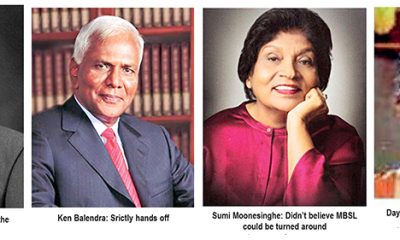
My experience in turning around the Merchant Bank of Sri Lanka (MBSL) – Episode 3
-

 Business4 days ago
Zone24x7 enters 2026 with strong momentum, reinforcing its role as an enterprise AI and automation partner
-

 Business3 days ago
Remotely conducted Business Forum in Paris attracts reputed French companies
-
 Business3 days ago
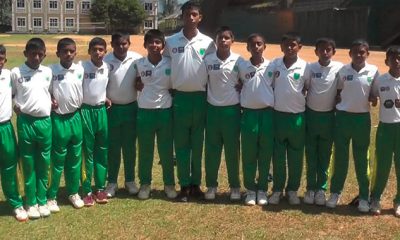
Four runs, a thousand dreams: How a small-town school bowled its way into the record books
-

 Business3 days ago
ComBank and Hayleys Mobility redefine sustainable mobility with flexible leasing solutions
-
 Business4 days ago
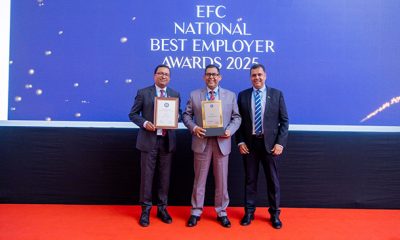
HNB recognized among Top 10 Best Employers of 2025 at the EFC National Best Employer Awards
-

 Editorial6 days ago
All’s not well that ends well?
-

 Business4 days ago
GREAT 2025–2030: Sri Lanka’s Green ambition meets a grid reality check