
Business
Trump heads to Saudi Arabia eyeing more investment in US


With US President Donald Trump due to visit Gulf states this week, a key focus will be securing significant new investment for the US economy.
“President Trump wants the announcement [of more Gulf money for the US],” says economist Karen Young, a senior fellow at the Middle East Institute think tank.
“He wants to have a big poster in a meeting that describes where these investments might go. And some estimation of what they will do to the American economy in terms of job creation or his big push, of course, on domestic manufacturing.”
Trump is due to arrive in the Saudi capital, Riyadh, on Tuesday 13 May, to meet the country’s de facto leader Crown Prince Mohammed bin Salman.
Trump is then expected to attend a summit of Gulf leaders in the city on 14 May, before travelling to Qatar that same day, and then ending his three-day trip in the United Arab Emirates (UAE) on 15 May.
The economic importance of the region to Trump is highlighted by the fact that the visit to Saudi Arabia was due to be the first overseas trip of his second term in the White House. That was before the death of Pope Francis necessitated Trump attending his funeral in Rome towards the end of April.
Saudi Arabia was also the first country that Trump visited during his first term of office, going against the modern practise of US presidents to start with the UK, Canada or Mexico.

Securing new investments in the US from Gulf states, and particularly from their state-backed sovereign wealth funds, will help Trump to signal back home that his “America First” agenda is delivering results.
The presidential visit is drawing top Wall Street and Silicon Valley leaders to Saudi Arabia. A Saudi-US investment forum on 13 May in Riyadh will feature CEOs from BlackRock, Palantir, Citigroup, IBM, Qualcomm, Alphabet, and Franklin Templeton.
The push comes amid economic headwinds, as President Trump’s new import tariffs have significantly disrupted global trade, confidence, and the US economy itself. US economic output fell in the first three months of this year, its first fall in three years.
Back in January, Prince Mohammed said that Saudi Arabia would invest $600bn (£450bn) in the US over the next years. However, Trump has already said that he’d like that to rise to $ 1tn, including purchases of more US military equipment.
According to Ali Shihabi – a Saudi commentator and author, with close ties to the Saudi government – a number of economic agreements will be signed during the trip.
“These deals will further integrate the Saudi and US economies together, joint ventures in the kingdom, in the United States, procurements of American weapons and goods,” says Mr Shihabi.
Saudi Arabia’s sovereign wealth fund, the Public Investment fund (PIF), which controls assets worth $925bn, already has numerous investments in the US. These include Uber, gaming firm Electronic Arts, and electric car firm Lucid.
Meanwhile, the UAE has already committed to investing $1.4tn in the US over the next 10 years, in sectors such as AI, semiconductors, energy and manufacturing. This was announced by the White House in March after the UAE’s national security advisor, Sheikh Tahnoon bin Zayed Al Nahyan, met President Trump in Washington.
Yet Ms Young from the Middle East Institute says that the scale of these investments is not realistic in the short term. She instead says that they are long-term strategic moves, and that the figures should be taken “with a little bit of a grain of salt”.
Regarding specific deals that could be announced during Trump’s visit, it is widely reported that Saudi Arabia will agree to buy more than $100bn of US arms and other military items.
These are said to include missiles, radar systems and transport aircraft.
The US has been a longstanding arms supplier to Saudi Arabia, but in 2021 the then Biden administration stopped selling Riyadh offensive weapons, citing concerns about the country’s role in the war in neighbouring Yemen.
The 2018 killing of Saudi journalist Jamal Khashoggi was also widely reported to be a factor. A US report said that Prince Mohammed had approved the murder.
The Biden White House resumed the sale of these weapons last year. While it cited that the Saudis had stopped bombing Yemen, some commentators said that the US was seeking Saudi assistance to help end the conflict in Gaza and aid its future reconstruction.
Mr Shihabi says Saudi Arabia will be seeking assurances from the White House that the US will implement a “more efficient procurement system”, enabling the Gulf state to access ammunition and military equipment far more quickly and easily.
“The Trump administration is initiating procedures to facilitate those deals. So, it’s expected that this process will improve immediately,” he adds.
Artificial intelligence is the other topic that will dominate the agenda during Mr Trump’s visit. Talks are expected to centre on attracting greater Gulf investment into US tech firms, and boosting the region’s access to cutting-edge American semiconductors.
The UAE and Saudi Arabia have been investing billions of dollars into tech and AI sectors as try to diversify their economies away from oil.
The Emiratis, in particular, are keen to establish themselves as a global AI hub.
Last week, the Trump administration scrapped the Biden-era chip regulations that placed restrictions on exports of advanced US chips to more than 120 countries including the Gulf states.
The White House is expected to draft new rules that would potentially involve direct negotiations with countries like the UAE.
“For the UAE, this is absolutely essential,” says Ms Young. “They are aggressively building out their AI capacity. So, for them getting access to US technology is imperative to be the best.”
While much attention will be on Trump courting Gulf capital for the US, Saudi Arabia is equally focused on drawing American investment into its ambitious Vision 2030 program.
Led by giant construction projects, such as the building of a linear city called The Line, Vision 2030 is central to the Saudi government’s continuing efforts to diversify the country’s economy away from oil.
It also involves pouring resources into entertainment, tourism, mining and sports.
However, foreign direct investment into Saudi Arabia declined for a third straight year in 2024, reflecting persistent challenges in attracting overseas capital.
The fall in global oil prices since the start of the year has further strained Riyadh’s finances, increasing pressure to either raise debt or cut spending to sustain its development goals.
Oil prices tumbled to a four-year low amid growing concerns that a trade war could dampen global economic growth.
The decline was further fuelled by the group of oil producing nations, Opec+, announcing plans to increase output.
Saudi Arabia is part of that group, and some commentators said that the rise was in part a desire to please Trump who has called for lower oil prices.
Other analysts said the reason was more that Opec+ remains confident that the global economy is growing.
The US-Saudi Business Council, is an organisation that aims to boost trade ties between the two countries.
It is hoping that Trump’s visit will push American businesses to explore more opportunities in Saudi Arabia, especially in sectors like AI, healthcare and education.
“The Saudi government is looking heavily to invest in these sectors. There is a very big appetite for Saudi companies to collaborate with American companies,” Hutham Al Jalal, who heads the Riyadh office for the organisation, tells the BBC.
Saudi officials are said to be confident that some deals in these sectors will be secured during Trump’s visit.
For Saudi Arabia, Trump’s visit is about strengthening ties with their longest-standing Western ally – a relationship that grew strained during the Biden years. For President Trump, it is about landing investment deals that can be framed as a win for his economic agenda.
“President Trump is looking for a headline of big investments in America, and he will get that from this trip,” adds Mr Shihabi.
[BBC]



The Asian Development Bank (ADB) has approved a $100 million results-based loan to help Sri Lanka transform its technical and vocational education and training (TVET) system, equip more young people with industry-relevant skills, and strengthen the country’s competitiveness and inclusive growth.
The Skills Development System Transformation Program will support the Government of Sri Lanka’s efforts in improving the quality and relevance of skills training, strengthening links between training providers and industries, and expanding employment opportunities for youth. The program will increase women’s employment opportunities in nontraditional jobs in fields including automotive technology, engineering, information and communications technology, construction, and renewable energy.
“A skilled workforce is essential to Sri Lanka’s long-term economic transformation and competitiveness,” said ADB Country Director for Sri Lanka Shannon Cowlin. “This program will help create stronger pathways from education to employment by making training more responsive to industry needs, expanding opportunities for young people and women, and ensuring that graduates have the skills required by a modern and evolving economy.”
Though Sri Lanka’s economy is recovering, it faces skills shortages in priority sectors, high youth unemployment, and low female labor force participation. Many employers report difficulty finding workers with the skills needed in a changing economy.
Aligned with the Government of Sri Lanka’s Technical and Vocational Education and Training Sector Strategic Framework 2026–2035, the nationwide program will be implemented from 2027 to 2031 and is expected to directly benefit more than 100,000 young people through improved access to quality, employment-oriented training.
By Ifham Nizam
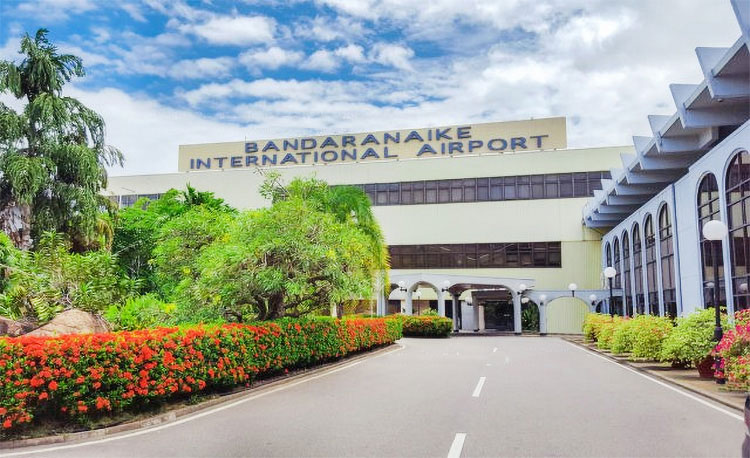
The government has cleared a USD 40.84 million and Rs. 8,548.75 million contract to build a dedicated aviation fuel pipeline from Muthurajawela to Bandaranaike International Airport (BIA), alongside a massive new fuel storage facility with a capacity of 92,000 cubic metres.
Energy Minister Anura Karunatilaka said the project represented a major investment in strengthening the infrastructure underpinning Sri Lanka’s aviation fuel supply and ensuring more reliable fuel availability at the country’s main international airport.
‘This project will provide the infrastructure required to strengthen the reliability and continuity of aviation fuel supplies to Bandaranaike International Airport, Karunatilaka said.
The contract has been awarded to China Petroleum Pipeline Engineering Company Limited, following an international competitive procurement process in which three bids were received.
The project will see a new aviation fuel storage tank complex constructed at Muthurajawela, together with the associated infrastructure required for handling and transferring aviation fuel.
By Hiran H Senewiratne
Trading activity on the Colombo Stock Exchange (CSE) gathered pace yesterday as global fuel prices began to show signs of easing, according to market analysts.In this context, both indices moved upwards. All Share Price Index up by 67.97 points while S and P SL20 up by 8.30 points.
Turnover stood at Rs 1.4 billion with seven crossings. Those crossings were reported in Sampath Bank 1.7 million shares crossed to the tune of Rs 238 million and its share price traded at Rs 140, Access Engineering two million shares crossed to the tune of Rs 159 million and its share price traded at Rs 79.50, LOLC one million shares crossed to the tune of Rs 129 million and its share price traded at Rs 129, HNB 100,000 shares crossed to the tune of Rs 38.4 million and its share price traded at Rs 384, JKH 1.9 million shares crossed to the tune of Rs 35 million and its share price traded at Rs 18.60, Hayleys 100,000 shares crossed to the tune of Rs 22.50 million and its share price traded at Rs 225 and Richard Pieris 847,000 shares crossed to the tune of Rs 22 million and its share price traded at Rs 25.50.
In the retail market top seven companies that have mainly contributed to the turnover were Sampath Bank Rs 114 million (813,000 shares traded), JKH Rs 100 million (5.3 million shares traded) LB Finance Rs 49 million (325,000 shares traded), HNB Finance Rs 30 million (27 million shares traded), HNB Rs 27 million (70000 shares traded), NTB Rs 25 million (82000 shares traded ) and Lanka IOC Rs 21 million (666,000 shares traded). During the day 65 million shares volumes changed hands in 10433 transactions.
The Banking and manufacturing sector counters performed well. In the banking sector Sampath Bank let the market while manufacturing sector especially JKH also significantly performed well. With the fuel revision Land IOC also a significant stock at the floor.
Meanwhile, First Capital Treasuries said that Ramesh Schaffter resigned as a Non-Independent Non-Executive Director with effect from October 1, to facilitate the restructuring of the company’s board.
Yesterday the Central Bank announced the US Dollar rate as against rupee. The rupee was quoted flat at Rs 330.65/80 to the US dollar in the spot market , while bond yields dropped, dealers said.

Showers or thundershowers will occur in most parts of the island after 1.00 p.m.

Unions resist tripartite EPF management plan

Two arrest warrants issued for Gnanasara thera

CA dismisses GR’s writ petition against arrest

ADB-backed virtual net metering project faces policy contradiction

Media action group flays NPP over new anti-terrorism law

‘Dates have the highest sugar content to fight Coronavirus’

Sunday Island 27 December – Headlines

#SundayIsland 17th December – Headlines

Sunday Island – 28th March

Sunday Island Headlines – 21 March

Sunday Island – 21st February – Headlines
-

 Editorial6 days ago
Birth of a bad law
-

 News4 days ago
Police remove Thileepan statue in Jaffna
-

 News6 days ago
TIN mandatory for key transactions from Nov. 1
-

 Features4 days ago
The 22nd Amendment, constitutional recovery and illiberal slippage
-

 Features4 days ago
Of foreigners as CEOs of Lankan ventures
-

 News4 days ago
Sajith rejects Jt. Opp. protest sabotage claim; SJB TU chief demands remedial action
-

 Latest News2 days ago
Gold winner Tharanga gets brand-new Honda Vezel from SLAAJ
-

 Features3 days ago
Thailand’s biggest new global star …