
Features
Generating 2,400 Employee Suggestions

Part Therteen PASSIONS OF A GLOBAL HOTELIER
Dr. Chandana (Chandi) Jayawardena DPhil
President – Chandi J. Associates Inc. Consulting, Canada
Founder & Administrator – Global Hospitality Forum
chandij@sympatico.ca
Breaking the Ice
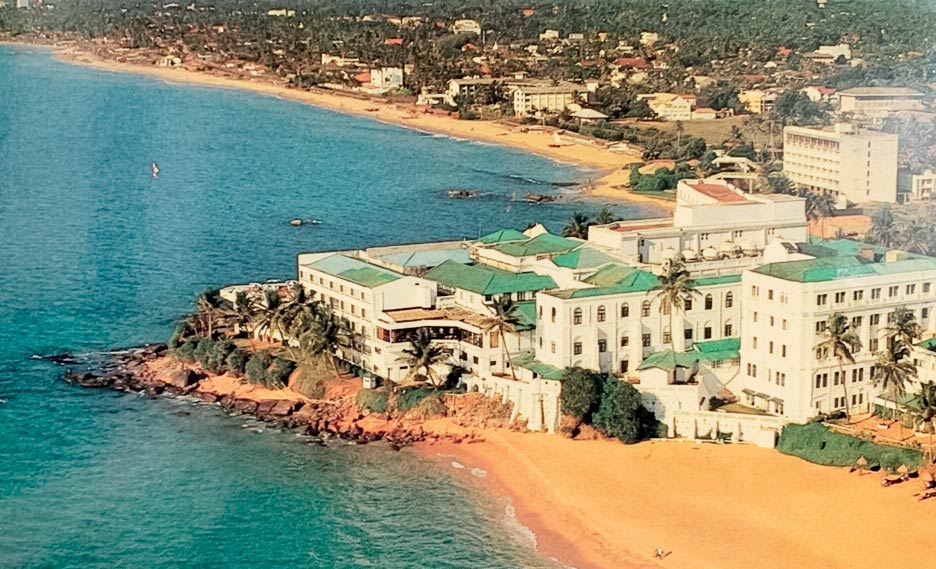
Upon returning to Sri Lanka in late December 1990, I began my tenure as General Manager at the historic Mount Lavinia Hotel (MLH). With my previous experience as Executive Chef at two resort hotels and as Food & Beverage Manager/Director at two five-star city hotels, the Resident Manager of MLH, Susil de Alwis, approached me with his first question.
“Mr. Jayawardena, would you like to review our plans for the New Year’s Eve dinner dances and give us directions?” he asked. I declined, explaining that a hotel team should not make last-minute changes simply because there is a new GM. “Susil, I will merely be a silent observer during my first week. I will share my comments in the new year when we plan events for 1991,” I replied.
During the following days, I focused on walking around, engaging with stakeholders, making observations, and taking mental notes. On New Year’s Eve, I conversed with most of the European hotel guests and Sri Lankan customers attending the events. The hotel also arranged for me to meet the Chairman of the Ceylon Tourist Board for tea, hosted two of the former GMs of MLH for lunch, and organized a casual dinner with the entire MLH management team.
When I called the Butler of the Terrace, “Somapla, meet Mr. Wimaladharma, of Ceylon Tourist Board. Usual order”, our VIP guest said, “on your first day, you already seem very familiar with the operation and staff!”, I explained to him that in 1972/1973 I was a trainee waiter at the Terrace under the supervision of Butler Somapala. These interactions helped me lay a strong foundation for my three-year contract period at MLH. I call it “Action Learning.”
My First Week at Mount Lavinia Hotel
When Mr. Sanath Ukwatte, the Chairman of the hotel company, informed me about a significant event, I was pleased. A lunch in the main ballroom was organized for nearly 500 employees to bid farewell to the outgoing GM, the esteemed international hotelier Mr. Prasanna Jayawardene, and to welcome me as his successor. The Chairman suggested that I present my vision for the next three years during my speech at this event.
Having worked at Mount Lavinia Hotel as a trainee waiter 18 years ago and being a frequent customer of its food and beverage outlets, I was somewhat familiar with the hotel. During my flight from London to Colombo the previous day, I had prepared a draft vision plan for all departments of the hotel.
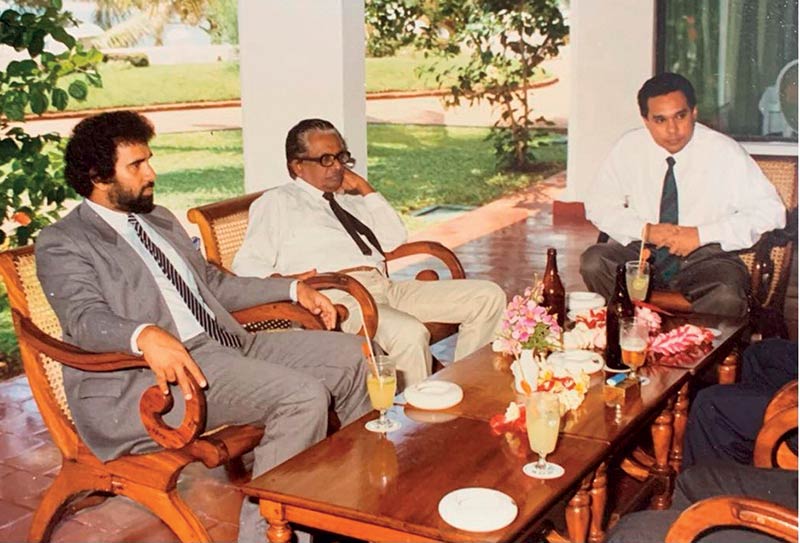
With then Chairman of Ceylon Tourist Board
My first task as the new GM
I was ready to discuss my vision with the managers and employees. However, when the Chairman made his suggestion, my immediate reaction was different. I proposed, “Chairman, instead of just sharing my vision, might it be better if I seek suggestions from the employees?” Given the past unsuccessful attempts to get employee suggestions, he was skeptical but open to my idea.
I proposed a ‘push-and-pull’ technique for gathering suggestions and suggested valuable rewards for the best ones. The Chairman agreed, and we decided to award the 10 best suggestions at the end of the year. The first prize would be a fully paid one-week trip to Singapore for the winner and three family members. The second prize would be a trip for four to Dubai, and the third prize, a trip for four to the Maldives.
Acting immediately, I designed a simple one-page questionnaire with one request and four boxes for answers. My secretary organized 700 copies of the questionnaire in Sinhala and English, asking for four suggestions per employee to make the next year “The best year of Mount Lavinia Hotel.”
The employee event
MLH always did things on a grand scale, and this event was no exception. Before heading to the packed Empire Ballroom, Prasanna and I were garlanded with flowers and escorted by Kandyan dancers and drummers from the hotel entrance to the ballroom. Guests snapped photos of us, and Prasanna humorously whispered, “Hell, these chaps must be thinking that both of us are getting married!”
After lunch, the Chairman addressed the gathering, followed by Prasanna’s farewell speech. Then it was my turn. As I spoke, the questionnaires were distributed to all employees.
Selling an Idea
My speech was brief. I shared with the employees the key aspects of my discussion with the Chairman and the rewards we planned to offer. I emphasized that instead of pushing one person’s suggestions to 700 employees, it would be more effective if 700 people participated in generating practical suggestions to make the next year the best at this great hotel. I stressed that no suggestion was too small and encouraged ideas to improve customer satisfaction, hotel products, hospitality services, employee facilities, and community relations. I challenged them to respond within a week through their respective departmental heads, pleading for their support. The enthusiastic applause from the employees as I sat down assured me that I had sold the idea to the team.
Within a week, we generated over 2,400 suggestions! The Chairman was pleasantly surprised and very happy.

Shortlist and Action Plan
Now came the action time! Given the unexpected popularity of my first initiative, I had to implement a practical process to promptly choose the better suggestions with the management team’s help. As a believer in delegation and team building, I entrusted this task to the 13 Heads of Departments, asking each to pick the 10 best suggestions per department within a week. By the end of my second week, I had 130 top suggestions on my table, supported by the Managers.
Impressed by the depth and richness of these suggestions compared to my own draft vision plan, I appointed a three-member executive committee, including myself, the Financial Controller, and the Human Resource Director, to choose the best suggestions from the shortlist. After careful consideration, we identified 39 practical and implementable suggestions for the year. These suggestions became the core of the hotel’s business plan for the next year, a far more powerful approach compared to the usual annual business plans made by a handful of managers.

Talking with Sri Lankan customers at the New Year’s Eve dinner dance
Action sub-committees
The next step was to form 39 sub-committees, each headed by the owner of the suggestion, with a maximum of three members per committee. This meant that, often, a junior employee led a sub-committee served by two managers or supervisors. While a few managers were initially resistant to my philosophy of employee empowerment, with the help of some training and development, they eventually aligned with the new leadership style. Some notable suggestions handled by these sub-committees included:
= Setting up an International Hotel School within the hotel, which has continued for 33 years.
= Establishing quality circles in all departments, earning a national award.
= Creating an image for the hotel and BMICH Catering operation as the most authentic culinary destination in Sri Lanka, led by Chef Publis, and continued for 33 years.
= Making ‘Little Hut’ the most popular nightclub in Sri Lanka within a year.
= Launching a high-quality employee monthly newsletter and a variety show to raise funds for the Staff Welfare Association within a year.
= Enhancing the neighborhood village upgrading project and commencing a beach clean-up project within a year.
Positive Outcome
This innovative initiative resulted in remarkable success. Though there were a few unforeseen challenges, most were overcome through practical changes to old-fashioned procedures and tailored training programs. After a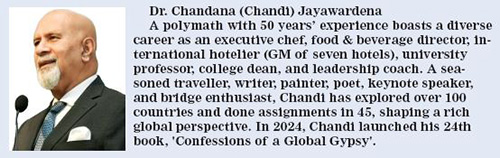 year, the winners were announced during an annual award ceremony, with rewards distributed based on the successful implementation of employee suggestions. This simple yet effective ‘win-win’ initiative significantly improved satisfaction among employees, customers, the local community, managers, and owners. The following year was the best at Mount Lavinia Hotel in terms of employee relations, customer satisfaction, public relations, and overall image.



The appointment of former minister Eran Wickremaratne to chair the Sri Lanka Cricket Transformation Committee is significant for more than the future of cricket. It signals a possible shift in the culture of governance even as it offers Sri Lankan cricket a fighting possibility to get out of the doldrums of failure. There have been glorious patches for the national cricket team since the epochal 1996 World Cup triumph. But these patches of brightness have been few and far between and virtually non-existent over the past decade. At the centre of this disaster has been the failures of governance within Sri Lanka Cricket which are not unlike the larger failures of governance within the country itself. The appointment of a new reform oriented committee therefore carries significance beyond cricket. It reflects the wider challenge facing the country which is to restore trust in public institutions for better management.
The appointment of Eran Wickremaratne brings a professional administrator with a proven track record into the cricket arena. He has several strengths that many of his immediate predecessors lacked. Before the ascent of the present government leadership to positions of power, Eran Wickremaratne was among the handful of government ministers who did not have allegations of corruption attached to their names. His reputation for financial professionalism and integrity has remained intact over many years in public life. With him in the Cricket Transformation Committee are also respected former cricketers Kumar Sangakkara, Roshan Mahanama and Sidath Wettimuny together with professionals from legal and business backgrounds. They have been tasked with introducing structural reforms and improving transparency and accountability within cricket administration.
A second reason for this appointment to be significant is that this is possibly the first occasion on which the NPP government has reached out to someone associated with the opposition to obtain assistance in an area of national importance. The commitment to bipartisanship has been a constant demand from politically non-partisan civic groups and political analysts. They have voiced the opinion that the government needs to be more inclusive in its choice of appointments to decision making authorities. The NPP government’s practice so far has largely been to limit appointments to those within the ruling party or those considered loyalists even at the cost of proven expertise. The government’s decision in this case therefore marks a potentially important departure.
National Interest
There are areas of public life where national interest should transcend party divisions and cricket, beloved of the people, is one of them. Sri Lanka cannot afford to continue treating every institution as an arena for political competition when institutions themselves are in crisis and public confidence has become fragile. It is therefore unfortunate that when the government has moved positively in the direction of drawing on expertise from outside its own ranks there should be a negative response from sections of the opposition. This is indicative of the absence of a culture of bipartisanship even on issues that concern the national interest. The SJB, of which the newly appointed cricket committee chairman was a member objected on the grounds that politicians should not hold positions in sports administration and asked him to resign from the party. There is a need to recognise the distinction between partisan political control and the temporary use of experienced administrators to carry out reform and institutional restructuring. In other countries those in politics often join academia and civil society on a temporary basis and vice versa.
More disturbing has been the insidious campaign carried out against the new cricket committee and its chairman on the grounds of religious affiliation. This is an unacceptable denial of the reality that Sri Lanka is a plural, multi ethnic and multi religious society. The interim committee reflects this diversity to a reasonable extent. The country’s long history of ethnic conflict should have taught all political actors the dangers of mobilising communal prejudice for short term political gain. Sri Lanka paid a very heavy price for decades of mistrust and division. It would be tragic if even cricket administration became another arena for communal suspicion and hostility. The present government represents an important departure from the sectarian rhetoric that was employed by previous governments. They have repeatedly pledged to protect the equal rights of all citizens and not permit discrimination or extremism in any form.
The recent international peace march in Sri Lanka led by the Venerable Bhikkhu Thich Paññākāra from Vietnam with its message of loving kindness and mindfulness to all resonated strongly with the masses of people as seen by the crowds who thronged the roadsides to obtain blessings and show respect. This message stands in contrast to the sectarian resentment manifested by those who seek to use the cricket appointments as a weapon to attack the government at the present time. The challenges before the Sri Lanka Cricket Transformation Committee parallel the larger challenges before the government in developing the national economy and respecting ethnic and religious diversity. Plugging the leaks and restoring systems will take time and effort. It cannot be done overnight and it cannot succeed without public patience and support.
New Recognition
There is also a need for realism. The appointment of Eran Wickremaratne and the new committee does not guarantee success. Reforming deeply flawed institutions is always difficult. Besides, Sri Lanka is a small country with a relatively small population compared to many other cricket playing nations. It is also a country still recovering from the economic breakdown of 2022 which pushed the majority of people into hardship and severely weakened public institutions. The country continues to face unprecedented challenges including the damage caused by Cyclone Ditwah and the wider global economic uncertainties linked to conflict in the Middle East. Under these difficult circumstances Sri Lanka has fewer resources than many larger countries to devote to both cricket and economic development.
When resources are scarce they cannot be wasted through corruption or incompetence. Drawing upon the strengths of all those who are competent for the tasks at hand regardless of party affiliation or ethnic or religious identity is necessary if improvement is to come sooner rather than later. The burden of rebuilding the country cannot rest only on the government. The crisis facing the country is too deep for any single party or government to solve alone. National recovery requires capable individuals from across society and from different sectors such as business and civil society to work together in areas where the national interest transcends party politics. There is also a responsibility on opposition political parties to support initiatives that are politically neutral and genuinely in the national interest. Not every issue needs to become a partisan battle.
Sri Lanka cricket occupies a special place in the national consciousness. At its best it once united the country and gave Sri Lankans a sense of pride and international recognition. Restoring integrity and professionalism to cricket administration can therefore become part of the larger task of national renewal. The appointment of Eran Wickremaratne and the new committee, while it does not guarantee success, is a sign that the political leadership and people of the country may be beginning to mature in their approach to governance. In recognising the need for competence, integrity and bipartisan cooperation and extending it beyond cricket into other areas of national life, Sri Lanka may find the way towards more stable and successful governance..
by Jehan Perera

Court vacation this year came with an unexpected lesson, not from a courtroom but from the streets of Dhaka — a city that moves, quite literally, on three wheels.
Above the traffic, a modern metro line glides past concrete pillars and crowded rooftops. It is efficient, clean and frequently cited as a symbol of progress in Bangladesh. For a visitor from Sri Lanka, it inevitably brings to mind our own abandoned light rail plans — a project debated, politicised and ultimately set aside.
But Dhaka’s real story is not in the air. It is on the ground.
Beneath the elevated tracks, the streets belong to three-wheelers. Known locally as CNGs, they cluster at junctions, line the edges of markets and pour into narrow roads that larger vehicles avoid. Even with a functioning rail system, these three-wheelers remain the city’s most dependable form of everyday transport.
Within hours of arriving, their importance becomes obvious. The train may take you across the city, but the journey does not end there. The last mile — often the most complicated part — belongs entirely to the three-wheeler. It is the vehicle that gets you home, to a meeting or simply through streets that no bus route properly serves.
There is a rhythm to using them. A destination is mentioned, a price is suggested and a brief negotiation follows. Then the ride begins, edging into traffic that feels permanently compressed. Drivers move with instinct, adjusting routes and squeezing through gaps with a confidence built over years.
It is not polished. But it works.
And that is where the comparison with Sri Lanka becomes less about what we lack and more about what we already have.
Back home, the three-wheeler has long been part of daily life — so familiar that it is often discussed only in terms of its problems. There are frequent complaints about fares, refusals or the absence of meters. More recently, the industry itself has become entangled in politics — from fuel subsidies to regulatory debates, from election-time promises to periodic crackdowns.
In that process, the conversation has shifted. The three-wheeler is often treated as a problem to be managed, rather than a service to be strengthened.
Yet, seen through the experience of Dhaka, Sri Lanka’s system begins to look far more settled — and, in many ways, ahead.
There is a growing structure in place. Meters, while not perfect, are widely recognised. Ride-hailing apps have added transparency and reduced uncertainty for passengers. There are clearer expectations on both sides — driver and commuter alike. Even small details, such as designated parking areas in parts of Colombo or the increasing standard of vehicles, point to an industry slowly moving towards professionalism.
Just as importantly, there is a human element that remains intact.
In Sri Lanka, a three-wheeler ride is rarely just a transaction. Drivers talk. They offer directions, comment on the day’s news, or share local knowledge. The ride becomes part of the social fabric, not just a means of getting from one point to another.
In Dhaka, the scale of the city leaves less room for that. The interaction is quicker, more direct, shaped by urgency. The service is essential, but it is under constant pressure.
What stands out, across both countries, is that the three-wheeler is not a temporary or outdated mode of transport. It is a necessity in dense, fast-growing Asian cities — one that fills gaps no rail or bus system can fully address.
Large infrastructure projects, like light rail, are important. They bring efficiency and long-term capacity. But they cannot replace the flexibility of a three-wheeler. They cannot reach into narrow streets, respond instantly to demand or provide that crucial last-mile connection.
That is why, even in a city that has invested heavily in modern rail, Dhaka still runs on three wheels.
For Sri Lanka, the lesson is not simply about what could have been built, but about what should be better managed and valued.
The three-wheeler industry does not need to be politicised at every turn. It needs steady regulation — clear fare systems, proper licensing, safety standards — alongside encouragement and recognition. It needs to be seen as part of the solution to urban transport, not as a side issue.
Because for thousands of drivers, it is a livelihood. And for millions of passengers, it is the most immediate and reliable form of mobility.
The tuk-tuk may not feature in grand policy speeches or infrastructure blueprints. It does not run on elevated tracks or attract international attention. But on the ground, where daily life unfolds, it continues to do what larger systems often struggle to do — show up, adapt and keep moving.
And after watching Dhaka’s streets — crowded, relentless, yet functioning — that small, three-wheeled vehicle feels less like something to argue over and more like something to get right.
(The writer is an Attorney-at-Law with over a decade of experience specialising in civil law, a former Board Member of the Office of Missing Persons and a former Legal Director of the Central Cultural Fund. He holds an LLM in International Business Law)
by Sampath Perera recently in Dhaka, Bangladesh

 According to reports coming my way, the entertainment scene, in Dubai, is very much opening up, and buzzing again!
After a quieter few months, May is packed with entertainment and the whole scene, they say, is shifting back into full swing.
The Seven Notes band, made up of Sri Lankans, based in Dubai, are back in the spotlight, after a short hiatus, due to the ongoing Middle East problems.
On 18th April they did Legends Night at Mercure Hotel Dubai Barsha Heights; on Thursday, 9th May, they will be at the Sports Bar of the Mercure Hotel for 70s/80s Retro Night; on 6th June, they will be at Al Jadaf Dubai to provide the music for Sandun Perera live in concert … and with more dates to follow.
These events are expected to showcase the band’s evolving sound, tighter stage coordination, and stronger audience engagement.
With each performance, the band aims to refine its identity and build a loyal following within Dubai’s vibrant nightlife and event scene.

Pasindu Umayanga: The group’s new vocalist
What makes Seven Notes standout is their versatility which has made the band a dynamic and promising act.
With a growing performance calendar, new talent integration, and international ambitions, the band is definitely entering a defining phase of its journey.
Dubai’s music industry, I’m told, thrives on diversity, energy, and audience connection, with live bands playing a crucial role in elevating events—from corporate shows to private concerts. Against this backdrop, Seven Notes is positioning itself not just as another band, but as a performance-driven musical unit focused on consistency and growth.
Adding fresh momentum to the group is Pasindu Umayanga who joins Seven Notes as their new vocalist. This move signals a strategic upgrade—not just filling a role, but strengthening the band’s front-line presence.
Looking beyond local stages, Seven Notes is preparing for an international tour, to Korea, in July.

Bassist Niluk Uswaththa: Spokesperson for Seven Notes
According to bassist Niluk Uswaththa, taking a band abroad means: Your sound must hold up against unfamiliar audiences, your performance must translate beyond language, and your discipline must be at a professional level.
“If executed well, this tour could redefine Seven Notes from a local band into an emerging international act,” added Niluk.
He went on to say that Dubai is not an easy market. It’s saturated with highly experienced, multi-genre bands that can adapt instantly to any crowd.
“To stand out consistently you need to have tight rehearsal discipline, unique sound identity (not just covers), strong stage chemistry, audience retention – not just applause.”
No doubt, Seven Notes is entering a critical growth phase—new member, multiple shows, and an international tour on the horizon. The opportunity is real, but so is the pressure.
However, there is talk that Seven Notes will soon be a recognised name in the regional music scene.

INS Sindhukesari arrives in Colombo

Minister of Health of the Russian Federation attends the Sri Lanka–Russia Medical Forum

Members of Sri Lanka Cricket Transformation Committee Officially Appointed

Three prison guards arrested following the death of an inmate

Showers or thundershowers will occur at most places of the island after 1.00 pm.

CJ urged to inquire into AKD’s remarks on May 25 court verdict

‘Dates have the highest sugar content to fight Coronavirus’

Sunday Island 27 December – Headlines

#SundayIsland 17th December – Headlines

Sunday Island – 28th March

Sunday Island Headlines – 21 March

Sunday Island – 21st February – Headlines
-
 News7 days ago
Treasury chief’s citizenship details sought from Australia
-

 News6 days ago
Rooftop Solar at Crossroads as Sri Lanka Shifts to Distributed Energy Future
-
 News5 days ago
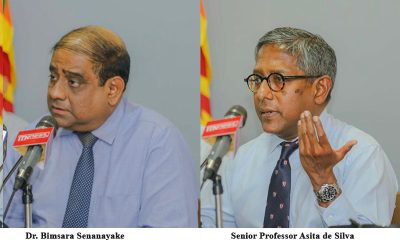
“Three-in-one blood pressure pill can significantly reduce risk of recurrent strokes”
-

 News7 days ago
Central Province one before last in AL results
-

 Sports7 days ago
Well done AKD!
-

 News2 days ago
USD 3.7 bn H’tota refinery: China won’t launch project without bigger local market share
-
 News21 hours ago
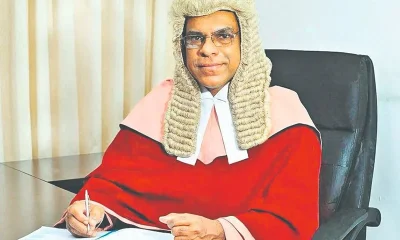
CJ urged to inquire into AKD’s remarks on May 25 court verdict
-

 News5 days ago
Alarm raised over plan to share Lanka’s biometric data with blacklisted Indian firm