
Editorial
From heyday to ‘hay day’


Monday 18th December, 2023
The SLPP’s second national convention on Friday (15) was a soft launch of its next election campaign, presidential or parliament, to all intents and purposes. The presidential election will have to be held next year, and there is no way the government can postpone it. President Ranil Wickremesinghe himself told Parliament the other day that the next presidential and parliamentary elections would be conducted in 2024, followed by the Provincial Council and local government polls in 2025. All political parties have therefore gone into overdrive to mobilise popular support with an eye to next year’s national elections. The SLPP must have expected to shore up its image, or what remains thereof, with the help of Friday’s show, which however fell short of the target.
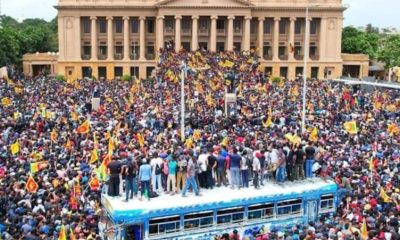
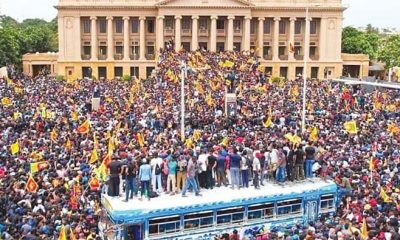
Founded in 2016 as an alternative to the SLFP, which joined the Yahapalana government, the SLPP had a meteoric rise. In May 2017, it together with the Joint Opposition led by former President Mahinda Rajapaksa, held a mammoth May Day rally at the Galle Face Green, which it turned into a sea of heads. It trounced the Yahapalana government at the local government polls held the following year, and went on to win the presidential and parliamentary elections in 2019 and 2020, respectively.
It mustered a two-thirds majority in Parliament in its heyday, and nobody expected the people to turn against it, the way they did last year. Ironically, the cradle of anti-government protesters’ struggle or Aragalaya was the Galle Face Green itself. Today, it’s the SLPP’s ‘hay day’, so to speak; its leaders and rank and file had bundles of hay (as well as grass) greeting them on the way to their party’s second national convention, on Friday, courtesy the anti-government activists. The people who turned violent last year and attacked the properties of the SLPP politicians have opted to ridicule the government members and their backers in a non-violent manner.
The Rajapaksas and their acolytes seem to think they will be able to take the people for a ride again. On Friday, they sought to arouse nationalism and lionise themselves; they said they had saved the country from terrorism and were capable of winning future elections and forming a stable government. Basil Rajapaksa went to the extent of issuing a veiled threat to the political rivals of the Rajapaksas.
He said those who hurled stones at lions had to be mindful of the consequences of their action, implying that the Rajapaksas and their backers were lions, and they would get even with their political enemies. (He seems to have forgotten that he and his brothers headed for the hills last year, fearing the irate public.) Curiously, having made boastful claims at Friday’s convention, Basil resigned as the National Organiser of the SLPP. Is it that he himself does not believe in his own rhetoric?
Grass and hay metonymically represent cattle, and those who hung them in public places on Friday did so to liken the SLPP politicians and their supporters to bovines. The organisers of that grass-hay protest may consider themselves very smart, and they are reportedly on cloud nine because the bundles of fodders became a social media sensation, but in our book, theirs was a reprehensible act, to say the least, and they must be ashamed of causing such affronts to innocents. Why should the cattle be insulted by being compared to the SLPP politicians and their backers?
Bovines are very useful to humans, as is public knowledge; they pull heavy loads, help plough fields and give milk without expecting anything in return. They are an invaluable asset to the farming community, unlike the ruling party politicians who have ruined the agricultural sector and inflicted immense suffering on farmers as well as others.
So, it is nothing but unfair to compare a bunch of corrupt, greedy, parasitic politicians to them. Similarly, the lions would be offended if they were aware of attempts being made in some quarters to liken a pack of rejected crooked politicians to them.Let the government and the Opposition be urged to stop insulting poor animals.








Friday 19th June, 2026
US President Donald Trump has revealed what really compelled him to agree to stop the Iran war. After signing an interim peace agreement with Iran, on Wednesday, he defended his deal with Tehran, telling the media that he wanted to avoid an “economic catastrophe” that could have resulted if the Iran conflict had continued. Tycoons like Trump are known to prioritise economics over everything else, but reflected in his thinking is an emerging security paradigm in the modern world. Military might alone no longer determines the outcome of an armed conflict; economic factors also play a significant role in shaping it.
Washington may have ignored the adverse impact of its Iran war if the US had been free from knock-on economic effects. But oil prices went up sharply in the US, and disruptions to about 30% of global fertiliser supplies due to the closure of the Hormuz Strait prompted American farmers’ associations to issue dire warnings of possible food price increases and shortages. Securing the sinews of war was no walk in the park for Trump. The Pentagon informed the House Armed Services Committee, a few weeks ago, that the US had spent USD 25 billion on the Iran war by that time. But Democratic leaders and several leading economists believe that the actual cost of the conflict to the US economy could be between USD 630 billion and USD 1 trillion, according to an Al Jazeera report.
What one gathers from the trajectory of the Iran conflict is that having control over a strategic oil chokepoint could prove as effective as the so-called nuclear deterrent in an asymmetrical conflict. Iran may have failed to achieve its goal of enriching uranium to the extent of being able to realise its nuclear dream, but it succeeded in using the Hormuz Strait as a strategic lever to shift the conflict to the economic front. The US naval blockade aimed at coercing Iran into submission did not yield the desired results. Washington underestimated Iran’s military capability and resilience, and had to lift sanctions on Russian oil in a bid to calm the volatile world oil market, but without much success. Not even the release of global strategic oil reserves could help stabilise petroleum prices.
The reaction of the world oil market to the signing of the US-Iran peace agreement was immediate. Brent crude futures dropped to USD 77.96 a barrel while WTI fell to USD 74.96 a barrel, much to the relief of economies around the world. Stocks rallied amidst falling oil prices. One can only hope that the US-Iran peace agreement will reach fruition, with all stakeholders making a serious effort to ensure its success.
Israeli Prime Minister Benjamin Netanyahu has not taken kindly to the US-Iran peace deal. In February, he declared the Iran war a dream come true for him. He said he had been dreaming of attacking Iran for 40 years. The unexpected end to the conflict has shattered his political dream. He was obviously relying on attacks on Iran to shore up his electoral chances ahead of the parliamentary polls scheduled for October 2026. The upcoming Knesset election has been described in some quarters as one of the most contentious electoral contests in Israel’s recent history, as it is the first national election to take place since the “October 7 attacks” followed by Israel’s war with Hamas and Hezbollah and the Iran war. Netanyahu is also standing trial in three separate corruption cases, facing charges of bribery, fraud, and breach of trust. He has denied any wrongdoing. His ongoing trial has been delayed due to his security and diplomatic schedule.
Meanwhile, sharp oil price drops will surely benefit Sri Lanka, but they are bound to throw up new challenges. The JVP-NPP government is coming under increasing pressure to bring oil prices down and do away with the QR-based fuel rationing system. If it gives in, low prices and unrestricted sales will lead to steep increases in fuel consumption and the national oil import bill, which has jumped more than fivefold from USD 98 million in February 2026 to USD 522 million in May, according to President Anura Kumara Disanayake. How the government proposes to navigate this sensitive politico-economic issue remains to be seen.

Thursday 18th June, 2026
Social media debates on issues connected to the Easter Sunday terror attacks have got down and dirty, with religious and political leaders becoming targets of scurrilous attacks. The situation is likely to take a turn for the worse. The victims of vilification are without any defence as social media activists are guided by Rafferty’s rules.
Spokesman for the Archdiocese of Colombo Rev. Fr. Cyril Gamini Fernando yesterday countered some allegations against Archbishop of Colombo His Eminence Malcolm Cardinal Ranjith and clarified the Catholic Church’s position on the ongoing investigations into the Easter Sunday terror strikes. He vehemently denied social media claims that the Cardinal had received prior information about the terror attacks from his security personnel deployed by the state and therefore did not attend the Easter Sunday events in 2019. It was only after the 2019 carnage that the Cardinal had been provided with security, and therefore the argument that the VIP protection units had been informed of possible terror attacks and his guards had warned him of the threat did not hold water, Fr. Fernando pointed out. His line of reasoning is logical and compelling.
Rev. Fr. Fernando reiterated that neither the Cardinal nor any other Church leader had ever asked the government to appoint Senior DIG (Retd.) Ravi Seneviratne and SSP (Retd.) Shani Abeysekera to any positions. Only a request had been made that the investigators removed by the Gotabaya Rajapaksa government from the Easter Sunday carnage probe be entrusted with fresh investigations into the tragedy. No particular names had been mentioned, Fr. Fernando stressed when a journalist pointed out that Minister Bimal Rathnayake had told Parliament that the government had appointed Seneviratne and Abeysekera to key positions at the Cardinal’s request. Did the government use the Church leaders’ request as an excuse to appoint two NPP members to senior positions in the public security sector to further its political interests under the pretext of probing the Easter Sunday attacks?
It is not clear from the reports of Rev. Fr. Fernando’s statements at yesterday’s media briefing whether the church leaders support the post-retirement appointments of Seneviratne and Abeysekera and their involvement in the Easter Sunday carnage probe. Their position on the issue would be of considerable interest.
There are compelling reasons why Abeysekera and Seneviratne should have been kept out of the Easter Sunday carnage investigations. In April 2019, they were serving as the Director and the Senior DIG of the CID, respectively, which failed to prevent the terror strikes, and there is a damning allegation that they did not act on the warnings of the impending attacks. Former IGP Pujith Jayasundera and former Defence Secretary Hemasiri Fernando are facing legal action for their alleged failure to prevent the 2019 terror strikes. Therefore, legal proceedings should be instituted against all others who failed to protect lives on Easter Sunday in 2019 despite the availability of actionable intelligence. After their retirement from the police, Abeysekera and Seneviratne became active members of the NPP, and campaigned hard for Anura Kumara Dissanayake in the 2024 presidential race. They were prominent members of the NPP’s Retired Police Collective, which was headed by Seneviratne. They themselves have stated this in two affidavits submitted to the Supreme Court, according to media reports. The government in its wisdom brought these two NPP politicians out of retirement, appointed them as the CID Director and Secretary to the Ministry of Public Security, and entrusted Abeysekera with the task of probing the Easter Sunday terror attacks that the duo allegedly failed to prevent. Sadly, their involvement has severely undermined the integrity of the probe.
Meanwhile, it has been revealed that the VIP security divisions had been warned of possible terror attacks on Easter Sunday in 2019 and instructed to withhold warnings from the MPs and Ministers they were protecting. In an editorial comment on 22 July 2025, we pointed out, quoting former SLPP MP Indika Anuruddha Herath, who was an Opposition MP at the time of the Easter Sunday attacks, that the police personnel providing security to him had received warnings of impending bomb attacks but they had been ordered not to inform him of the threat. He was at a church in Negombo when the Katuwapitiya Church was attacked, and it was only after the carnage that he and other MPs had been informed of the warnings. He said that if they had been informed of the threat earlier, they would definitely have alerted the Church leaders and action could have been taken to prevent the carnage. Who ordered the police personnel to withhold the warnings of the terror strikes from the MPs and ministers? This aspect of the security failure that led to the Easter Sunday tragedy must also be thoroughly probed.
The Easter Sunday terror mastermind must be traced and prosecuted, but all those who failed to prevent the terror strikes that claimed more than 275 lives and left hundreds of other seriously injured must also be brought to justice.
Wednesday 17th June, 2026
Some occupants of key positions in the public service unashamedly display their chameleon-like ability to adapt to changing political circumstances and please new leaders. They do not scruple to trade their professional dignity for expediency. So, it is not surprising that some police officers have chosen to be at the beck and call of powerful politicians, and the police go out of their way to further the interests of the powers that be. Their servility has stood in the way of efforts to depoliticise the police through constitutional safeguards.
Unsurprisingly, the police have resorted to legal action against some Opposition politicians who took up the cudgels for the rights of former State Intelligence Service Director Maj. Gen. (Retd.) Suresh Sallay in CID custody. If the CID had acted impartially and respected Sallay’s rights as a detainee, the need for protests would not have arisen. It was protests that prompted the CID to bite the bullet and rush Sallay to hospital. The Human Rights Commission of Sri Lanka (HRCSL) has reportedly expressed concern about the conditions of the detention cells at the CID headquarters.
Contrary to government claims, there have been no calls for Sallay’s release or an end to the ongoing police investigations into the Easter Sunday terror attacks. Everyone is of the view that the probe must go on and justice must be done to the carnage victims. Protests have been against the alleged ill-treatment of Sallay at the CID headquarters. Criticism of the suppression of the rights of detainees must not be misconstrued as efforts to undermine the judiciary.
Police action against the critics of the CID smacks of a sinister move to suppress democratic dissent. The incumbent government is apparently emulating the previous dispensations that resorted to draconian measures to silence dissent to consolidate their hold on power.
In a democracy, sovereignty resides in the people, who are the ultimate political authority, and they must not be denied their legitimate right to oppose the subjugation of the legal process to the political interests of the government in power. It is antithetical to democracy and amounts to an assault on the people’s freedom of expression for criticism of politically driven investigations and the abuse of suspects under the Prevention of Terrorism Act (PTA) to be framed as obstructions of the police or contempt of court.
The PTA allows the Defence Minister to order the detention of suspects arrested by police investigators to further the interests of his or her political party on some pretext or another. However, the abuse of the PTA is not of recent origin. There is hardly any law that has not been abused under successive governments, and the self-proclaimed campaigners for democracy and human rights, were abusers themselves, while in power.
The present-day UNP leaders who have condemned the alleged ill-treatment of Sallay fully endorsed numerous such violations, especially the arrest and prolonged detention of Vijaya Kumaratunga in a dark cell in the early 1980s. The JVP assassinated Kumaratunga a few years later.
The JVP vehemently opposed the PTA, politically driven investigations, etc., as it bore the brunt of repressive practices facilitated by the PTA. But the JVP-led NPP government has not only chosen to use the PTA to suppress dissent but also reached a new low; it has brought two of its active party members out of retirement and appointed them as the CID Director and Secretary to the Ministry of Public Security. Worse, it intimidates those who dare criticise the undemocratic actions of these officers and campaign for the rights of suspects in detention.
Now that the appalling conditions of the CID’s detention cells have come to light, pressure must be brought to bear on the government to take remedial action for the benefit of all suspects. Most of all, police officers loyal to the ruling party must not be allowed to subject detainees to cruel treatment in a bid to break their will and obtain confessions.

Asia’s richest man Ambani announces what could be India’s biggest share sale

Educational equipment Provided to University Students through the President’s Fund

Fears for US-Iran deal as talks delayed by Israeli strikes on Lebanon

BCCI secretary hints at early start to IPL 2027

Cricket journalist and broadcast legend Qamar Ahmed dies aged 88

Stafanie Taylor, spinners help West Indies overcome Scotland threat

‘Dates have the highest sugar content to fight Coronavirus’

Sunday Island 27 December – Headlines

#SundayIsland 17th December – Headlines

Sunday Island – 28th March

Sunday Island Headlines – 21 March

Sunday Island – 21st February – Headlines
-

 News5 days ago
Release of 2025 O/L results likely to be delayed
-

 Sports5 days ago
Tharanga set for high-profile javelin clash in Ostrava
-

 Features6 days ago
Politics of protected species
-

 News4 days ago
Beijing Capital Airlines to resume flights to Colombo signalling boost to tourism
-

 News5 days ago
Theft of USD 2.5 mn from Treasury: CoPF accused of complicity in NPP cover-up
-

 News7 days ago
Commonwealth lawyers urge Lanka to uphold rule of law
-

 Opinion5 days ago
Decoding Trump’s 12.5% “Forced Labor Tariff” on Sri Lanka
-
 Features3 days ago
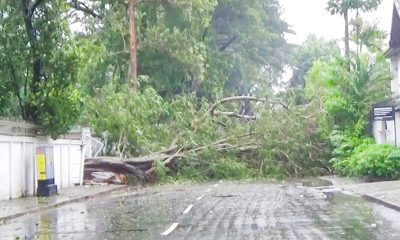
Killing of Colombo’s ancient trees — a warning on UN’s World Desertification Day – 17 June