
News
Foreign Ministry refutes claims made by Ambika Satkunanathan to the European Parliament’s Subcommittee on Human Rights


The Foreign Ministry on Friday noted with concern the numerous misleading statements contained in the testimony of the Chairperson of the Neelan Tiruchelvam Trust Ambika Satkunanathan, during an exchange of views on the situation of human and labour rights in Sri Lanka at the European Parliament’s Subcommittee on Human Rights on 27 January, 2022.
The Ministry in a release said: Ms. Satkunanathan’s testimony completely ignores the progress made by the government of Sri Lanka on many fronts and creates doubts about the government’s intents and sincerity, particularly at a time when it is engaged in a long-standing cooperation with the UN human rights mechanisms and the UN Human Rights Council and is delivering on its commitment to address accountability and reconciliation through domestic processes and institutions.
The Ministry is disappointed that among the recommendations made by Ms. Satkunanathan is that the EU uses its leverage on GSP plus facility to exert pressure on the government on human rights. If Sri Lanka loses the EU GSP plus facility, particularly at a time when livelihoods of millions of Sri Lankans belonging to all communities are already affected by the ongoing COVID-19 pandemic, the resulting losses would exacerbate poverty and income inequality. Some of the worst affected sectors will be fisheries and agriculture which are among the key industries in the North and the Eastern Provinces of Sri Lanka.
The Ministry also notes that the unfounded allegations about discrimination of ethnic communities in her testimony are reminiscent of LTTE propaganda that once stoked hatred among communities. In a multi-ethnic and multi-religious country such as Sri Lanka, such allegations need to be refuted in the interest of social harmony and to prevent the spread of dangerous fallacies about Sri Lanka in the international community.
The Ministry refutes Ms. Satkunanathan’s claims on ‘a culture of impunity’. The Ministry wishes to point out that the government is engaged in a long-standing cooperation with the UN human rights mechanisms as well as with the UN Human Rights Council. Sri Lanka is delivering on its commitment to address accountability and reconciliation through domestic processes and institutions. The government has been actively engaging the international community including the UNHRC’s Universal Periodic Review and Special Procedures to address the various concerns that have been raised. This includes the allegations of systematic torture. The Government has made it clear that additional reforms will be undertaken to further strengthen rule of law, access to justice, and accountability. It remains open to a constructive discussion on suggestions and further steps to address shortcomings.
The Ministry notes that Ms. Satkunanathan makes references to ‘Sinhala Buddhist nationalism’ and ‘militarisation’ as driving the actions of the Government. She makes vague claims of racial profiling in the absence of any concrete evidence of discrimination against minorities. In reply, the Ministry wishes to point out that Sri Lanka is a secular country and all citizens, irrespective of their religion or ethnicity share the same fundamental rights under the Constitution. Furthermore, Sri Lanka ensures access to public services such as free education and free health facilities without any discrimination on the basis of ethnicity or religion. In fact, even during the military conflict when large areas of the Northern and the Eastern Provinces were under the control of the LTTE, the government continued with the provision of such public services to the areas so that the civilians, who were mainly ethnic Tamils and Muslims, would not be affected.
Ms. Satkunanathan points to the Presidential Task Force on Archaeology which she accuses of being a tool for land grabbing and changing the demographics of minority-heavy areas and the Presidential Task Force on “One-Country One Law” which she accuses of stoking ethnic hatred and violence. After the war, as displaced persons returned to the Northern and the Eastern Provinces, there has been an increase in unauthorized encroachment into forest areas inevitably leading to destruction of archaeological sites. So, there is an urgent need to take concrete measures in order to protect these sites. There is no truth in the claims that the Presidential Task Force on Archaeology is a pretext for land grabbing and introducing the Sinhalese to these areas. It may be noted that there is representation of all ethnic communities in this Task Force. With respect to the Presidential Task Force on “One Country One Law,” it should be noted that it is expected to play an advisory role only. The Task Force’s recommendations will be first studied by the Justice Ministry, then the Cabinet of Ministers and finally the Parliament following the democratic traditions.
With regard to her allegations that the Northern and Eastern Provinces are ‘occupied’ by the military, it should be pointed out that the the majority (more than 92%) of the private lands occupied by the military at the end of the conflict in year 2009 have already been released to legitimate land owned civilians. A mechanism is already in place to expedite the process of releasing remaining private lands.
It is particularly disappointing to see Ms. Satkunanathan’s allegations that ‘civic space’ is shrinking and that informal and extra-legal processes are used to curtail the activities of civil society organizations. The Ministry asserts that government views NGOs as partners and not as adversaries. The government acknowledges the constructive contributions made by civil Society organisations in the work of the Office for National Unity and Reconciliation (ONUR) and Sustainable Development Council of Sri Lanka. It has also introduced certain policy changes to facilitate the work of NGOs such as bringing the NGO Secretariat under the Foreign Ministry. It must be reiterated that apart from operating routine security networks in the interest of national security, particularly after the devastating Easter Sunday terrorist attacks, the Security Forces and intelligence agencies are not engaged in monitoring or targeting any specific group of people in the country.
The Ministry refutes Ms. Satkunanathan’s claims of extra-judicial killings and arrests under the pretext of a “war and drugs.” With regard to the PTA, it should be noted that the government is in the process of amending the Act, which is now at the final stage and the international community is being briefed on that process.
Ms. Satkunanathan also alleges that the government is exploiting its friendship with China to “undermine the efforts of states that call for accountability for human rights violations” in Sri Lanka. On the contrary, mindful of strategic competition that is increasing in the Indo-Pacific region, our main foreign policy directive is to maintain neutrality, in line with the non-aligned foreign policy we have adopted since Independence. The Ministry wishes to point out that apart from China, Sri Lanka has entered into partnerships with several countries such as India and Japan to fill gaps in national infrastructure development. Such partnerships have no bearing on Sri Lanka’s commitment to address accountability and reconciliation through domestic processes and institutions.



A group of Tamil Progressive Alliance (TPA) members, including its Leader Mano Ganesan, met President Anura Kumara Dissanayake on Thursday (02) morning at the Presidential Secretariat.
Extensive discussions were held on the issues faced by the Malayagam communities, particularly in relation to education, housing and land, as well as on the urgent measures required to address these concerns. The President paid special attention to all these matters.
Attention was also drawn to the recruitment of qualified Tamil-medium teachers to address the teacher shortage in estate sector schools and this too was discussed at length.
Members of Parliament P. Digambaram and V. Radhakrishnan, along with several other party members, were present at the meeting.

Minister of Foreign Affairs, Vijitha Herath, held talks with Deputy Foreign Minister of Russia Andrey Rudenko at the Foreign Ministry, in Colombo, on Thursday (02), with both sides reaffirming their commitment to strengthening bilateral relations.
The Sri Lanka Ministry of Foreign Affairs said the visiting Russian Deputy Minister noted that Russia regarded Sri Lanka as a long-standing friend.
Rudenko assured that Russia stood ready to support Sri Lanka when required, including in the swift supply of Russian oil to help address the current energy challenges, encouraging Russian investors to explore new opportunities in the country and promoting increased tourist arrivals.
He also expressed Russia’s readiness to provide compensation for Sri Lankan war veterans who had lost their lives in the ongoing conflict between Russia and Ukraine.
Minister Herath welcomed Russia’s willingness to assist, emphasising that Sri Lanka valued the support extended by its “old friend”, particularly at a time when the country was facing pressing energy needs.
He noted that the two countries shared nearly seven decades of diplomatic relations and said the present moment provided an opportunity to further strengthen ties, including through long-term trade agreements.
The discussions focused on enhancing cooperation in the fields of energy, investment, tourism and diplomacy, with both sides reiterating their commitment to further deepen the longstanding friendship between Sri Lanka and Russia.

Police yesterday arrested 157 foreign nationals in connection with an alleged organised online financial scam, conducted from a hotel in the Iranawila area in Chilaw.
The suspects were taken into custody during a raid carried out by the Police while they were staying at the hotel in Iranawila.
Police said the arrested group included 143 nationals from China, 13 from Bangladesh and one from Vietnam.
Investigators suspect the group had been involved in a coordinated online financial scam, targeting victims through digital platforms.
The suspects are being detained for further questioning while investigations are continuing to determine the full extent of the operation and whether additional individuals were involved.Police said further inquiries are underway.
By Norman Palihawadane

Iran executes two convicted members of banned opposition group

Afghanistan earthquake kills eight members of same family

Breakdown of the teams and groups of the FIFA World Cup in Canada, Mexico and the US after the final playoffs

365 US service members injured since start of Iran war – Pentagon

World Cup 2026: Italy’s football chief resigns after qualifying failure

Iran says it downed two US jets as search for one pilot continues

‘Dates have the highest sugar content to fight Coronavirus’

Sunday Island 27 December – Headlines

#SundayIsland 17th December – Headlines

Sunday Island – 28th March

Sunday Island Headlines – 21 March

Sunday Island – 21st February – Headlines
-

 News3 days ago
2025 GCE AL: 62% qualify for Uni entrance; results of 111 suspended
-

 News5 days ago
Tariff shock from 01 April as power costs climb across the board
-
 News6 days ago
Inquiry into female employee’s complaint: Retired HC Judge’s recommendations ignored
-
 Features7 days ago
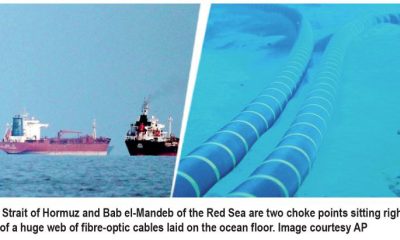
When seabed goes dark: The Persian Gulf, cable sabotage, and race for space-based monopoly
-

 Features6 days ago
New arithmetic of conflict: How the drone revolution is inverting economics of war
-

 Editorial3 days ago
Search for Easter Sunday terror mastermind
-
 Business4 days ago
Hour of reckoning comes for SL’s power sector
-

 Sports6 days ago
Sri Lanka’s 1996 World Cup heroes to play exhibition match in Kuala Lumpur