
News
Five-way tie for first place in Transparency in Corporate Reporting (TRAC) Assessment 2023 by TISL

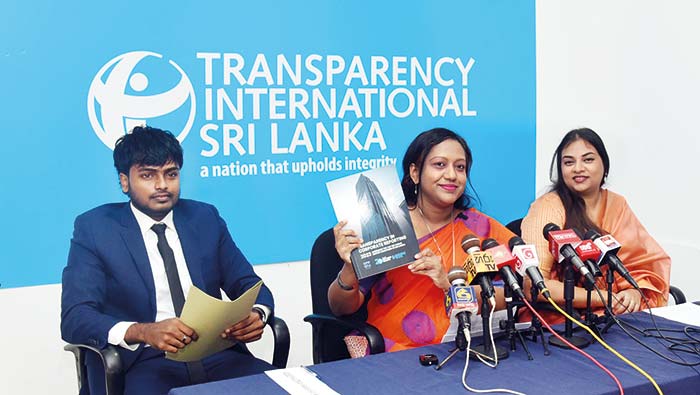
John Keells Holdings PLC and Teejay Lanka PLC who ranked first in previous Transparency in Corporate Reporting assessments are joined this year by Ceylon Tobacco Company PLC, Dialog Axiata PLC, and Dilmah Ceylon Tea Company PLC who have all achieved the full score for transparency in corporate reporting, while 27 companies are considered ‘Significantly Transparent’ in corporate reporting as per the latest TRAC assessment by Transparency International Sri Lanka (TISL).
TISL has been conducting the Transparency in Corporate Reporting (TRAC) Assessment since 2020 and has continued to do so annually. For the first time this year, there is a five-way tie for first place in corporate reporting among the top 125 public limited companies in Sri Lanka (based on market capitalisation on the Colombo Stock Exchange as of July 5th, 2023).
The TRAC 2023 Report, unveiled on Thursday (15), reveals that companies evaluated this year have achieved an average score of 5.85 out of 10. This marks a slight overall improvement compared to the previous year’s assessment, reflecting advancements in corporate transparency and reporting practices.
The TRAC Report 2023 assessed companies on their corporate disclosure practices in several important areas crucial to fighting and preventing corruption: reporting on anti-corruption programmes, organisational transparency, domestic financial reporting, reporting on gender and non-discrimination policies, country-by-country reporting, and reporting on procurement related to government contracts/tenders. Companies were then scored on a scale of 0-10, (10 being the highest and 0 being the lowest) based on publicly available information and were categorized into six groups as “Fully Transparent, Significantly Transparent, Moderately Transparent, Partially Transparent, Slightly Transparent, and Least Transparent” according to the level of transparency in their corporate disclosures. Companies were also given with the opportunity to provide feedback on their initial scores.
While congratulating the high scorers of the assessment, it is important to note that the TRAC report assesses transparency in corporate disclosures, and does not assess the actual implementation of companies’ anti-corruption policies or programmes. Therefore, a low score does not necessarily mean that a company does not have strong anti-corruption programmes, nor does it indicate any wrongdoing on the part of the company. Conversely, a high score may not always reflect operational and implementational success of anti-corruption programmes, but merely reflects strong disclosure mechanisms pertaining to anti-corruption, organisational transparency, domestic financial reporting, and policies on gender and non-discrimination.
TISL’s expectation is that periodic TRAC assessments will encourage companies to improve standards of integrity and transparency in business. The most important objective of this assessment is to encourage companies to incorporate and strengthen anti-corruption practices and to make this information publicly available.
As much as public sector corruption is a serious problem, so too is private sector corruption, wherein private sector actors can often be silent colluders or enablers of much larger public sector corruption. The newly enacted Anti-Corruption Act of 2023, for the first time in Sri Lanka recognizes bribery in the private sector as a punishable offence. This is further strengthened by the revised Listing Rules of the Colombo Stock Exchange, under which listed companies are required to adopt and maintain whistle-blower policies and anti-bribery and corruption policies and to make disclosures on said policies.
“Assessing corporate transparency through TRAC assessments will not address all grand corruption cases in Sri Lanka, as TISL also conducts research, engages in litigation and conducts other programmes and initiatives such as trainings on Anti-Bribery and Corruption for the private sector, to raise further awareness to address the issue of corruption. Nevertheless, corporate transparency is one step that companies can take to reduce the risk of corruption within their organisations” said Nadishani Perera, Executive Director, TISL. She continued to state that “Companies must commit to abide by the new regulatory standards, whilst also self-regulating to maintain higher standards than the minimum requirements. As such, periodic reviewing of corporate disclosures serves as a strong motivator for companies to regularly review their policies and improve their disclosures.”




ECONOMYNEXT –Colombo Port City (CPC) officials will head to Dubai to meet with investors on June 11, as Sri Lanka’s most ambitious economic zone looks for further foreign investments.
“We are meeting people in Dubai and the Middle East in order to demonstrate that Colombo Port City can be a supplementary zone of investment,” Harsha Amarasekara, Chairman, Colombo Port City Economic Commission (CPCEC), told Economynext.
The meeting will be organised by CPCEC, China Harbour Engineering Company, Consulate General of Sri Lanka – Dubai, and the Embassy of Sri Lanka – Abu Dhabi.
Foreign investor meetings have been a consistent factor in marketing CPC, and identifying potential markets has been a priority for CHEC and CPCEC.
“We have shortlisted and identified primary markets and we have combed the globe in that to say have a rationale behind why you would want to do certain things, a road show in a particular country,” Thulci Aluwihare, Deputy Managing Director, CHEC Port City Colombo, told Echelon Media.
“Once we kind of shortlist on that, then we aggressively go and market Port City, first Sri Lanka I should say, then Port City.”
“Sri Lanka is known in the world as a tourist destination, not essentially for a doing business capital. That is the narrative that we are trying to change,” he added.
News
Research Vessel Dr. Fridtjof Nansen Completes Marine Scientific Survey in Sri Lankan Waters and Departs Colombo
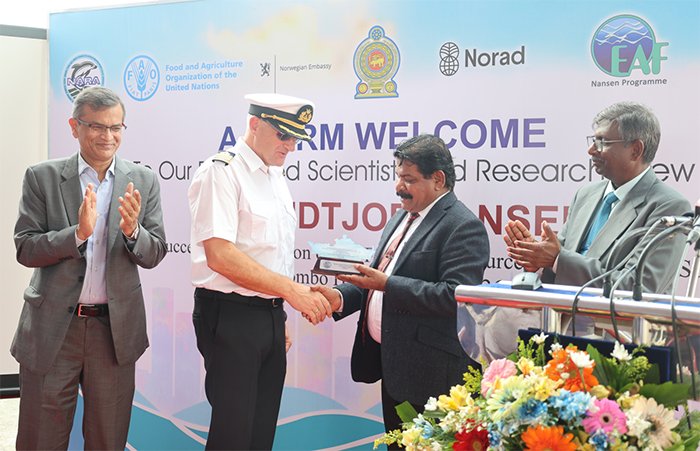
8 May 2026, Colombo –The Research Vessel Dr. Fridtjof Nansen has successfully completed a marine scientific survey in Sri Lankan waters and departed Colombo, marking the conclusion of a critical mission to strengthen the country’s ocean knowledge base.
As part of the EAF-Nansen Programme of the Food and Agriculture Organization of the United Nations (FAO) and Norway, the vessel spent several weeks collecting valuable scientific data on fish stocks, marine ecosystems, and oceanographic conditions, contributing to a deeper understanding of Sri Lanka’s marine resources.
“The successful completion of this survey represents a significant milestone for Sri Lanka’s fisheries sector,” said Hon. Ramalingam Chandrasekar, Minister of Fisheries, Aquatic and Ocean Resources. “The scientific insights gained will support evidence-based decision-making to ensure the sustainable management of our marine resources and the protection of livelihoods dependent on them.”
Being the only research vessel that flies the UN flag, the Dr. Fridtjof Nansen serves as a unique platform for international cooperation. Bringing together researchers and fisheries management institutions in partner countries, it is equipped with advanced technology to generate critical knowledge on marine resources and ecosystems, supporting countries like Sri Lanka in making informed, science-based decisions. It also provided hands-on training opportunities for Sri Lankan researchers, strengthening national capacity in fisheries science and oceanographic research.
Norway is proud to partner with Sri Lanka and FAO through the EAF-Nansen Programme to support sustainable ocean planning, where management decisions are firmly based on science,” said H.E. May-Elin Stener, Ambassador of Norway to India, Sri Lanka, Bhutan and the Maldives. “The Research Vessel Dr. Fridtjof Nansen represents a long-standing commitment to international cooperation, knowledge sharing, and capacity development. The data and expertise generated through this mission will contribute to safeguarding marine ecosystems while supporting livelihoods and strengthening food security for communities that depend on the ocean.”
The survey assessed both pelagic and demersal fish populations, while also collecting key oceanographic data such as water temperature, currents, nutrient levels, and dissolved oxygen. In addition, the potential of underutilized marine resources was explored, including cephalopods and mesopelagic species, and examined marine pollution, including microplastics, alongside nutritional and contaminant analysis of seafood.
This mission marks the fifth scientific survey conducted in Sri Lankan waters under the Nansen Programme, building on previous expeditions carried out between 1978 and 1980 and most recently in 2018. Updated data is particularly important in light of evolving marine ecosystems and changing fish stock dynamics.
The survey was implemented in close collaboration with Sri Lankan institutions, with scientists from the National Aquatic Resources Research and Development Agency (NARA) leading the scientific work, supported by experts and crew from Norway’s Institute of Marine Research (IMR) that operates the vessel and is responsible for the scientific activities and training aboard. “The departure of the Dr. Fridtjof Nansen marks not the end, but the beginning of a critical phase of data analysis and application,” said Mr Vimlendra Sharan, FAO Representative for Sri Lanka and the Maldives. “FAO remains committed to supporting Sri Lanka in translating these findings into effective policies and practices that promote sustainable fisheries and resilient marine ecosystems.”
The survey also contributes to Sri Lanka’s international reporting obligations, including requirements related to marine mammal observations necessary to maintain access to global seafood markets.
The findings from this mission will be analyzed and shared with national stakeholders to guide future fisheries management strategies and policy development, ensuring the sustainable use of Sri Lanka’s ocean resources for generations to come.
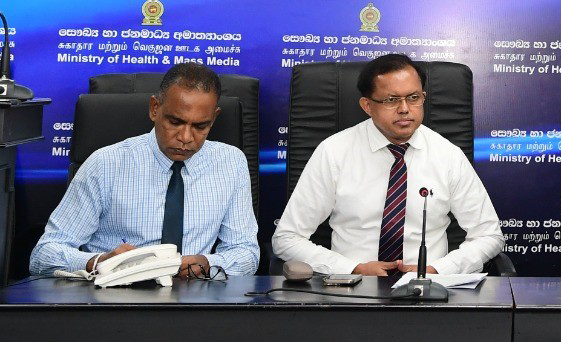
Sri Lanka has donated over one fourth of its collected corneas to foreign recipients, enabling patients abroad to regain sight, officials revealed at a media briefing marking the 15th anniversary of the National Eye Bank held at Suwasiripaya on Thursday (07).
The briefing, organised by the Ministry of Health and Mass Media, highlighted the Eye Bank’s services over the past 15 years and its future expansion plans.
Since its establishment, the National Eye Bank has collected more than 17,000 corneas, of which around 12,000 have been used for local transplant surgeries, while approximately 4,000 to 4,500 have been exported or donated overseas in response to international demand.
Director of the Eye Bank Dr. Kusum Ratnayake said Sri Lanka is now internationally recognised in corneal donation, with strong demand from countries including Singapore, South Africa and several Asian nations.
He noted that around 84 percent of Sri Lankans have expressed willingness to donate eyes, placing the country among the leading eye donation nations globally.
Director of the National Eye Hospital Dr. Jayaruwan Bandara said the Eye Bank has helped restore sight to thousands of patients free of charge, while also urging the public to rely on proper referrals for specialised treatment.
He added that early detection of eye conditions among schoolchildren remains a priority, with screening programmes in place to prevent long-term visual impairment.

Lanka Port City officials to meet investors in Dubai

Research Vessel Dr. Fridtjof Nansen Completes Marine Scientific Survey in Sri Lankan Waters and Departs Colombo

Lanka sends over one fourth of donated corneas abroad

Rotary Club donates 100 intraocular lenses for free eye surgeries

Citizenship, Devolution, Land and Language: The Vicarious Legacies of SJV Chelvanayakam

The letter that revealed the man behind the legend

‘Dates have the highest sugar content to fight Coronavirus’

Sunday Island 27 December – Headlines

#SundayIsland 17th December – Headlines

Sunday Island – 28th March

Sunday Island Headlines – 21 March

Sunday Island – 21st February – Headlines
-

 News3 days ago
MIT expert warns of catastrophic consequences of USD 2.5 mn Treasury heist
-

 News5 days ago
CJ urged to inquire into AKD’s remarks on May 25 court verdict
-

 News6 days ago
USD 3.7 bn H’tota refinery: China won’t launch project without bigger local market share
-

 Editorial3 days ago
Clean Sri Lanka and dirty politics
-

 Editorial6 days ago
Deliver or perish
-

 Opinion5 days ago
Security, perception, and trust: Sri Lanka’s delicate balancing act
-

 Editorial2 days ago
The Vijay factor
-

 News6 days ago
Administrators oppose govt. move to deploy Clean Sri Lanka agents in District and Divisional Secretariats